
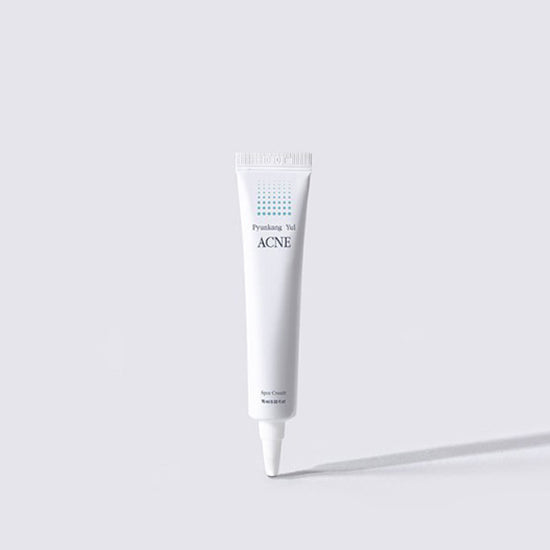

Pyunkang Yul
ACNE Spot Cream 15ml

ACNE Spot Cream 15ml
Pyunkang Yul
acne-spot-cream-15ml
Spot Treatment
9706814538021
Morning or Evening?
How often will you use this product?
Notes


Highlights
WHAT IS IT?
Acne spot treatment cream with multiple active ingredients
FEATURES
Non-sticky texture, Antibacterial effects, Soothes and calms acne-prone skin
BEST FOR
Acne-prone, sensitive skin
CHECKS
Free of parabens, artificial fragrances, colorants
Who Is It For?
Adults (18+) Both Women And MenWhat Does It Help With?
Acne Blemishes InflammationBudget
Mid-rangeHow To Use
Which routine should it be used in?
Instructions:
Key Information


What Pyunkang Yul Says
Product Description:
The Pyunkang Yul Acne Spot Cream provides effective and intensive care for acne spots with highly enriched ingredients. Licorice extract, containing Glycyrrhizin and Liquiritin, cools and soothes acne-prone skin. Silika helps with antibacterial care and prevents clogged pores, while saponin and olean acid support skin tissue regeneration. This cream includes green tea and rosemary leaf for breakout care and white willow for anti-inflammatory effects, making it a perfect solution for acne-prone skin. Recommended for use with Pyunkang Yul Facial Cleanser and Acne Toner for better results, it contains peptides that have strong antibacterial effects to calm festering acne within 12 hours. The non-sticky, soft, and highly enriched texture ensures hygienic acne care.
About the Brand:
Ingredients Overview
Ingredients List
Water Pentylene Glycol Glycerin Behenyl Alcohol Cetearyl Alcohol Niacinamide Glyceryl Stearate Dimethyl Sulfone Silica Polyacrylate-13 Polyisobutene Polysorbate 20 Allantoin Madecassoside Asiaticoside Panthenol Pyridoxine HCl Dipotassium Glycyrrhizate Salix Alba (Willow) Bark Extract Xanthan Gum Ammonium Acryloyldimethyltaurate/VP Copolymer Forsythia Suspensa Fruit Extract Butylene Glycol Centella Asiatica Extract Polygonum Cuspidatum Root Extract Scutellaria Baicalensis Root Extract Camellia Sinensis Leaf Extract Glycyrrhiza Uralensis (Licorice) Root Extract Chamomilla Recutita (Matricaria) Flower Extract Rosmarinus Officinalis (Rosemary) Leaf Extract Copper Tripeptide-1 Hydroxyacetophenone Myrtus Communis Extract Tropaeolum majus Extract Ethylhexylglycerin Disodium EDTA
Key Ingredients
Niacinamide, Madecassoside, Asiaticoside, Panthenol, Dipotassium Glycyrrhizate, Salix Alba (Willow) Bark Extract, Centella Asiatica Extract, Copper Tripeptide-1
Ingredients Details
Behenyl Alcohol
Common Name(s): Behenyl alcohol,inci ingredient,cosmetic active
CAS Number: N/a
DESCRIPTION
What It Does: Provides documented cosmetic activity from behenyl alcohol.
Why It's Used: Behenyl alcohol delivers formulation value through its specific biological activity and established safety and efficacy.
How It Works: Source: behenyl alcohol. mechanism: documented in cosmetic literature. safety: cosing-reviewed. standard cosmetic use concentrations.
Typically Found In: Skin care formulations,active products
TECHNICAL DETAILS
Primary Category: Active ingredient – antioxidant
Secondary Functions: Free radical scavenging,anti-aging
Application Areas:

Facial Skincare
Body Care

Hair Care
Beard Care
Color Cosmetics (Makeup)
Dietary/Oral Supplements
Typical Concentration Range: 0.1%–5%
SOURCING & ETHICS
Vegan Status: Yes - standard ethanol routes are non-animal; confirm denaturant origin
Halal Status: Conditional - ethanol production route and residual concentration; jurisdiction-dependent, refer to certifier stance
Source Notes: Plant-derived extract or synthetic. [audit 2026-07-29 rev2: ethanol pathway; determination depends on route, on whether the plant also produces beverage alcohol, and on residual concentration. determination requires shariah-panel sign-off.]
SKIN COMPATIBILITY
Irritancy Rating: 1/5 – very low
Comedogenicity Rating: 0/5 – non-comedogenic
Sensitivity Concerns: Non-irritating; well-tolerated.
Safe for Sensitive Skin: Yes
SAFETY & COMPATIBILITY
Safety Profile: Excellent safety profile. ewg score: 1.
Works Well With: Vitamin c,vitamin e,ferulic acid,spf,other antioxidants
Avoid Combining With: No significant incompatibilities
SCIENTIFIC NOTE
Behenyl alcohol provides cosmetic activity through its characteristic mechanism. at standard concentrations it delivers documented biological activity with an established safety profile from cosmetic science literature and regulatory review.
Last Verified: 2026-03-12
Primary Sources: Cosing database,behenyl alcohol technical literature
Cetearyl Alcohol
Common Name(s): Cetostearyl alcohol,c16-18 fatty alcohol
CAS Number: 8005-44-5
DESCRIPTION
What It Does: Provides fatty alcohol emulsification and thickening for stable, well-textured emulsions.
Why It's Used: The most widely used fatty alcohol in cosmetics – provides emulsification, thickening, and emolliency simultaneously from a single ingredient with excellent safety profile.
How It Works: Forms bilayer lamellar structures in water with emulsifiers creating a viscous structured network that thickens and stabilizes emulsions. fatty alcohol emolliency provides direct skin conditioning. bilayer formation reduces inter-droplet coalescence in emulsions.
Typically Found In: Creams,lotions,conditioners – virtually all emulsion products
TECHNICAL DETAILS
Primary Category: Functional ingredient – fatty alcohol emulsifier/thickener
Secondary Functions: Barrier sealing,softening
Application Areas:
Facial Skincare
Body Care
Hair Care
Beard Care
Color Cosmetics (Makeup)
Dietary/Oral Supplements
Typical Concentration Range: 1%–25%
SOURCING & ETHICS
Vegan Status: Yes - standard ethanol routes are non-animal; confirm denaturant origin
Halal Status: Conditional - ethanol production route and residual concentration; jurisdiction-dependent, refer to certifier stance
Source Notes: Plant-derived, synthetic or animal-derived. verify source. [audit 2026-07-29 rev2: ethanol pathway; determination depends on route, on whether the plant also produces beverage alcohol, and on residual concentration. determination requires shariah-panel sign-off.]
SKIN COMPATIBILITY
Irritancy Rating: 1/5 – very low
Comedogenicity Rating: 1/5 – low; formulation-dependent
Sensitivity Concerns: Non-irritating.
Safe for Sensitive Skin: Yes
SAFETY & COMPATIBILITY
Safety Profile: Excellent safety profile. ewg score: 1.
Works Well With: Humectants,ceramides,actives as carrier
Avoid Combining With: No significant incompatibilities
SCIENTIFIC NOTE
Cetearyl alcohol's ability to form lamellar liquid crystal structures ('krafft phases') with water and co-emulsifiers provides not only emulsion stability but also enhanced skin penetration via the lamellar skin barrier pathway. these crystalline structures can act as a reservoir for active ingredients, slowly releasing them as the lamellar structure melts on skin contact.
Last Verified: 2026-03-12
Primary Sources: Cosing database,cir safety assessment
Dimethyl Sulfone
Common Name(s): Msm,organic sulfur,anti-inflammatory sulfur
CAS Number: 67-71-0
DESCRIPTION
What It Does: Provides anti-inflammatory organic sulfur for skin strengthening from msm.
Why It's Used: Bioavailable organic sulfur anti-inflammatory — msm provides the sulfur required for keratin disulfide bonding and collagen sulfur amino acids alongside anti-inflammatory activity, making it a functional sulfur supplement for both structural skin proteins and inflammatory skin conditions.
How It Works: (ch3)2so2: highly bioavailable sulfur. anti-inflammatory: nf-kb inhibition + oxidative stress reduction. keratin: disulfide bond sulfur source. collagen: methionine + cysteine content. anti-acne: anti-inflammatory + antimicrobial. oral supplement: joint pain, anti-inflammatory. topical: skin brightening + anti-inflammatory.
Typically Found In: Anti-inflammatory skin care,strengthening products
TECHNICAL DETAILS
Primary Category: Active ingredient – cosmetic active
Secondary Functions: Skin conditioning
Application Areas:
Facial Skincare
Body Care
Hair Care
Beard Care
Color Cosmetics (Makeup)
Dietary/Oral Supplements
Typical Concentration Range: 1%–10%
SOURCING & ETHICS
Vegan Status: Conditional - supplier confirmation required
Halal Status: Unverified - supplier confirmation required
Source Notes: Commercially produced for cosmetic use. verify vegan/halal status with supplier. [audit 2026-07-29 rev2: the record's own source_notes does not assert a non-animal origin, or instructs the reader to verify with the supplier; "yes" asserts knowledge the record does not hold. determination requires shariah-panel sign-off.]
SKIN COMPATIBILITY
Irritancy Rating: 1/5 – very low
Comedogenicity Rating: 0/5 – non-comedogenic
Sensitivity Concerns: Well-tolerated by most skin types.
Safe for Sensitive Skin: Yes
SAFETY & COMPATIBILITY
Safety Profile: Good safety profile at recommended concentrations. ewg score: 1–2.
Works Well With: Standard skincare actives
Avoid Combining With: No known significant incompatibilities
SCIENTIFIC NOTE
Msm sulfur bioavailability: msm's dimethyl sulfone form provides sulfur without the digestive hydrogen sulfide issues of inorganic sulfates. topically, msm penetrates sc readily from low mw (94 da) + high oil-water partition compatibility, delivering sulfur to dermis for keratin/collagen synthesis cofactor function. this combination of sc penetration + sulfur bioavailability makes msm the most practical topical sulfur supplement.
Last Verified: 2026-03-12
Primary Sources: Cosing database,msm anti-inflammatory review
Glycerin
Common Name(s): Glycerol,glycerine,1,2,3-propanetriol
CAS Number: 56-81-5
DESCRIPTION
What It Does: Glycerin pulls water from the environment and deeper skin layers into the outer skin layer (epidermis), boosting moisture levels and keeping skin soft, smooth, and plump.
Why It's Used: It is used in virtually every moisturizer, serum, and cleanser because it is highly effective at hydrating skin, is well-tolerated by all skin types, and enhances the texture and spreadability of formulations.
How It Works: As a humectant, glycerin forms hydrogen bonds with water molecules, trapping them in the skin. it also reinforces the skin barrier by integrating into lipid structures between skin cells.
Typically Found In: Moisturizers,serums,cleansers,toners,sheet masks,sunscreens,body lotions,shampoos,conditioners
TECHNICAL DETAILS
Primary Category: Humectant
Secondary Functions: Skin barrier support,emollient,solvent
Application Areas:
Facial Skincare
Body Care
Hair Care
Beard Care
Color Cosmetics (Makeup)
Dietary/Oral Supplements
Typical Concentration Range: 1%–30% (typical: 3–10%)
SOURCING & ETHICS
Vegan Status: Conditional - feedstock declaration required
Halal Status: Unverified - feedstock declaration required (plant, animal and petrochemical routes all exist)
Source Notes: Derived from plant oils via hydrolysis or saponification; synthetic versions also available. palm-derived glycerin carries sustainability concerns. [audit 2026-07-29 rev2: origin-dependent: the same inci exists in plant, animal and petrochemical versions and the name does not discriminate. determination requires shariah-panel sign-off.]
SKIN COMPATIBILITY
Irritancy Rating: 1/5 – very low; non-irritating at all standard concentrations
Comedogenicity Rating: 0/5 – non-comedogenic
Sensitivity Concerns: Extremely rare allergic reactions; generally safe for all skin types including sensitive and baby skin
Safe for Sensitive Skin: Yes
SAFETY & COMPATIBILITY
Safety Profile: Widely recognized as safe. ewg hazard score: 1. no significant concerns for irritation, sensitization, or toxicity at typical concentrations (up to 50%).
Works Well With: Hyaluronic acid,ceramides,niacinamide,panthenol,urea,peptides,retinol,ahas/bhas
Avoid Combining With: No known incompatibilities at standard concentrations
SCIENTIFIC NOTE
Glycerin is an endogenous skin component found naturally in the stratum corneum. aquaporin-3 channels in keratinocytes facilitate glycerin transport, making it integral to natural skin hydration pathways.
Last Verified: 2026-03-12
Primary Sources: Cosing database,cir safety assessment,ewg skin deep,inci decoder