

AG Care
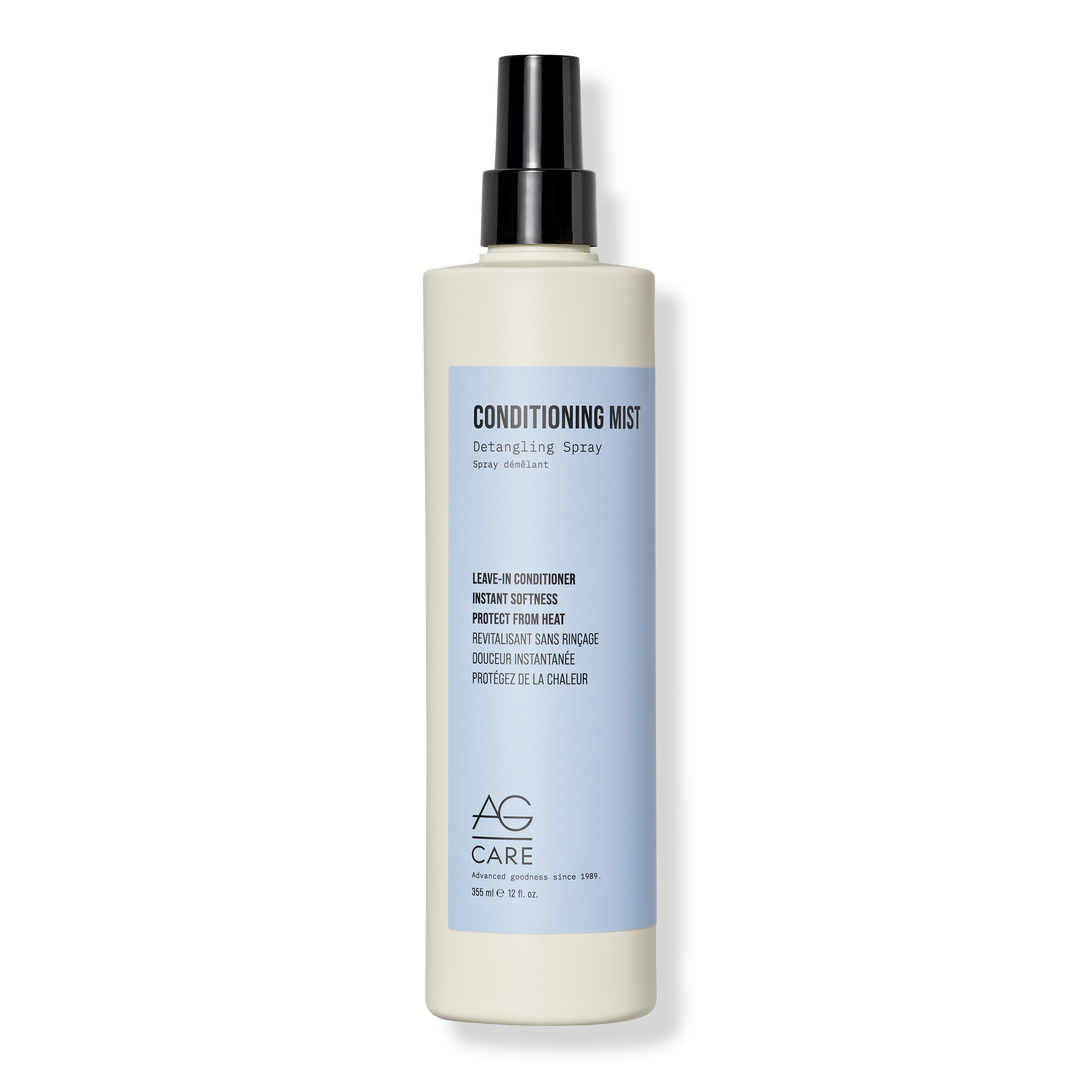
AG Care Conditioning Mist Detangling Spray
A lightweight, leave-in conditioning mist that detangles hair, restores hydration, protects from heat styling, and smooths frizz without buildup or residue.
Sulfate-free
Paraben-free
Silicone-free
Color-safe
Natural
Heat Protection
Optimized for Your Environment & Lifestyle
Nykaa
In stock
Recommended

AG Care Conditioning Mist Detangling Spray
AG Care
ag-care-conditioning-mist-detangling-spray
Conditioning Mist Detangling Spray
10355418956069
Morning or Evening?
How often will you use this product?
Notes


Secure payment protection
Your Biodata Compatibility Analysis
Based on your 6 hair health indices and environmental factors
Poor Match
Significant incompatibilities
Growth Cycle Health Index
Hair Match
Hair Health Index Alignment
Optimal for OSI, SSI, DI, HSI
Ingredient Efficacy
Matching Ingredient Score
Environment Compatibility
Current UV, Air Quality & Humidity
Why This Works for Your Specific Profile
Damage Index:
Very healthy or severely damaged hair falls outside optimal treatment parameters
Water Quality:
Fine hair becomes weighed down and greasy from heavy formulation
Hair:
Closed cuticles resist product penetration causing surface buildup without internal benefits
Active Lifestyle:
Low activity produces insufficient stress or buildup making product intensity unnecessarily harsh
Your Hair Profile Integration
Your Hair Archetype

Density Level

Washing Frequency

Shedding Level

Oil Level
Your Hair Health Indices
Oil Secretion (OSI)
Very low oil production
Scalp Sensitivity (SSI)
Very low sensitivity
Growth Rate (CMR)
Poor metabolism rate
Damage Index (DI)
Minimal damage
Hair Strength (HSI)
Very weak strength
Softness Index (SI)
Significant improvement needed
Water & Environmental Integration

Water:


Expected Results & Timeline
Key Highlights

What is it?
Leave-In Conditioner, 12.0 oz

Who Is It For
All ages, Unisex

Budget
Rs. 2,697.85 - Rs. 5,395.70

Timeline
Instant detangling and hydration
Why You’ll Love It

What Does It Help With?
Frizz, Dryness, Damage Repair

Best for
Frizz control and smoothness

Features
Seamless detangling, Restores hydration, Protects from heat styling, Softens and smooths frizz

Checks
Cruelty-Free, Vegan, Sustainable Packaging
Ingredients Overview
Ingredients List
Aqua, Amodimethicone, Phenoxyethanol, Cetrimonium Chloride, Trideceth-12, Parfum, Ethylhexylglycerin, Panthenol, Citric Acid, Benzotriazolyl Dodecyl P-Cresol, Hydrolyzed Pea Protein, Hydrolyzed Vegetable Protein, Benzyl Alcohol, Achillea Millefolium Extract, Calendula Officinalis Flower Extract, Chamomilla Recutita Flower Extract, Cymbopogon Schoenanthus Extract, Humulus Lupulus Extract, Melissa Officinalis Leaf Extract, Prunus Serotina Bark Extract, Rosmarinus Officinalis Leaf Extract, Salvia Officinalis Leaf Extract, Sodium PCA, Urtica Dioica Extract
Key Ingredients
Chamomile Extract, Wild Cherry Bark Extract, Hops Extract, Nettle Extract, Rosemary Extract, Sage Extract
Ingredients Details
Achillea Millefolium Extract
Common Name(s): Achillea millefolium extract
DESCRIPTION
What It Does: Provides antioxidant protection, soothing anti-inflammatory effects, and skin-conditioning benefits through plant-derived polyphenols and phytochemicals.
Why It's Used: Plant extracts concentrate bioactive phytochemicals evolved for environmental protection — uv, microbial, and oxidative stressors — that translate to skin benefits.
How It Works: Polyphenols (flavonoids, phenolic acids) inhibit nf-κb-mediated inflammatory signaling, scavenge reactive oxygen species through electron donation, and chelate pro-oxidant metal ions to reduce oxidative skin damage.
Typically Found In: Serums,toners,moisturizers,masks,essences
TECHNICAL DETAILS
Primary Category: Botanical extracts
Secondary Functions: Antioxidant,anti-inflammatory
Application Areas:

Facial Skincare

Body Care
Hair Care
Beard Care
Color Cosmetics (Makeup)
Dietary/Oral Supplements
Typical Concentration Range: 0.1–10%
SOURCING & ETHICS
Vegan Status: Yes
Halal Status: Yes
Source Notes: Plant-derived extract; no animal components.
SKIN COMPATIBILITY
Irritancy Rating: 1
Comedogenicity Rating: 0
Sensitivity Concerns: Low sensitization potential at recommended use concentrations.
Safe for Sensitive Skin: Yes
SAFETY & COMPATIBILITY
Safety Profile: Well-characterized cosmetic ingredient with established safety profile. generally non-irritating at typical use concentrations. suitable for leave-on and rinse-off cosmetics.
Works Well With: Niacinamide,hyaluronic acid,vitamin c,ceramides
Avoid Combining With: Strong oxidizing agents
SCIENTIFIC NOTE
Plant secondary metabolites (flavonoids, terpenes, phenolic acids) are biosynthesized as defense compounds against uv, herbivores, and pathogens. their anti-inflammatory activity typically derives from competitive inhibition of cox-2 and 5-lox enzymes (ic50 1–50 µm), while antioxidant activity involves single electron transfer (set) and hydrogen atom transfer (hat) mechanisms with structure-dependent rate constants.
Last Verified: 2025-01-15
Primary Sources: Cosing eu database; pcpc cosmetic ingredient safety reviews; phytochemical and ethnobotanical literature
Amodimethicone
Common Name(s): Aminosilicone,amino-modified polydimethylsiloxane
CAS Number: 71750-79-3
DESCRIPTION
What It Does: Provides amino group-mediated preferential adsorption to damaged hair for targeted conditioning.
Why It's Used: Premium hair conditioning silicone – amino groups provide substantive adsorption to hair far exceeding pdms, with automatic targeting to the most damaged areas requiring conditioning.
How It Works: Amino (nh2) groups on silicone chain provide cationic character at normal ph, electrostatic adsorption to anionic hair surface. higher charge density at damaged sites increases adsorption where conditioning is most needed. si-o-si backbone provides permanent conditioning film with heat protection.
Typically Found In: Intensive conditioners,anti-frizz products,damage repair conditioners
TECHNICAL DETAILS
Primary Category: Functional ingredient – amino-functional silicone
Secondary Functions: Skin conditioning
Application Areas:
Facial Skincare
Body Care
Hair Care
Beard Care
Color Cosmetics (Makeup)
Dietary/Oral Supplements
Typical Concentration Range: 0.1%–5%
SOURCING & ETHICS
Vegan Status: Conditional - supplier confirmation required
Halal Status: Unverified - supplier confirmation required
Source Notes: Commercially produced for cosmetic use. verify vegan/halal status with supplier. [audit 2026-07-29 rev2: the record's own source_notes does not assert a non-animal origin, or instructs the reader to verify with the supplier; "yes" asserts knowledge the record does not hold. determination requires shariah-panel sign-off.]
SKIN COMPATIBILITY
Irritancy Rating: 1/5 – very low
Comedogenicity Rating: 0/5 – non-comedogenic
Sensitivity Concerns: Well-tolerated by most skin types.
Safe for Sensitive Skin: Yes
SAFETY & COMPATIBILITY
Safety Profile: Good safety profile at recommended concentrations. ewg score: 1–2.
Works Well With: Standard skincare actives
Avoid Combining With: No known significant incompatibilities
SCIENTIFIC NOTE
Amodimethicone's amino group-driven substantivity to damaged hair is dramatically greater than non-functionalized pdms. studies show amodimethicone deposits 50-200× more mass on bleach-damaged hair vs virgin hair, providing an automatic 'damage detection' conditioning system that directs the most conditioning to the hair areas that need it most.
Last Verified: 2026-03-12
Primary Sources: Cosing database,robbins hair science,cir safety assessment
Benzotriazolyl Dodecyl P-cresol
Common Name(s): Benzotriazolyl dodecyl p-cresol
DESCRIPTION
What It Does: Reduces surface tension at oil-water interfaces, enabling effective cleansing, emulsification, and formulation stability.
Why It's Used: Surface-active agents are essential for emulsification, cleansing, and stabilization of cosmetic formulations containing both aqueous and lipid phases.
How It Works: The amphiphilic molecular structure positions the hydrophilic head in water and the lipophilic tail in oils, creating micelles that solubilize sebum, dirt, and oil-soluble impurities for rinsing in cleansers or stable emulsions in leave-on products.
Typically Found In: Cleansers,shampoos,body washes,foaming treatments
TECHNICAL DETAILS
Primary Category: Surfactants
Secondary Functions: Emulsifying,cleansing
Application Areas:
Facial Skincare
Body Care
Hair Care
Beard Care
Color Cosmetics (Makeup)
Dietary/Oral Supplements
Typical Concentration Range: 0.5–30%
SOURCING & ETHICS
Vegan Status: Yes
Halal Status: Yes
Source Notes: Synthetic or semi-synthetic surfactant; no animal components.
SKIN COMPATIBILITY
Irritancy Rating: 2
Comedogenicity Rating: 0
Sensitivity Concerns: May cause irritation or stinging in sensitive or barrier-compromised skin at high concentrations; patch test recommended.
Safe for Sensitive Skin: Conditional
SAFETY & COMPATIBILITY
Safety Profile: Well-characterized cosmetic ingredient with established safety profile. mildly irritating to some individuals at typical use concentrations. suitable for leave-on and rinse-off cosmetics.
Works Well With: Other surfactants,thickeners,conditioning agents
Avoid Combining With: High concentrations in sensitive skin formulations
SCIENTIFIC NOTE
Surfactant critical micelle concentration (cmc) determines the threshold for emulsification: above the cmc, amphiphilic molecules self-assemble into micelles with hydrophobic cores that solubilize oils. hlb (hydrophile-lipophile balance) value predicts surfactant function: hlb 3–6 for w/o emulsifiers, 8–18 for o/w emulsifiers, >15 for solubilizers.
Last Verified: 2025-01-15
Primary Sources: Cosing eu database; pcpc cosmetic ingredient safety reviews; ingredient-specific safety and efficacy literature
Benzyl Alcohol
Common Name(s): Phenylcarbinol,benzenemethanol,alpha-hydroxytoluene
CAS Number: 100-51-6
DESCRIPTION
What It Does: Provides dual fragrance and preservative activity as an aromatic alcohol.
Why It's Used: Multi-function ingredient serving as both fragrance component and preservative – reduces formulation complexity by providing both functions in one ingredient.
How It Works: Phenylcarbinol provides antimicrobial activity via membrane disruption (effective vs gram-positive bacteria and moulds). solvent for fragrances and difficult-to-dissolve actives. mild oxidative conversion to benzaldehyde provides sweet almond-like fragrance.
Typically Found In: Fragrances,preserved cosmetics,solvent systems
TECHNICAL DETAILS
Primary Category: Fragrance component / preservative
Secondary Functions: Skin conditioning
Application Areas:
Facial Skincare
Body Care
Hair Care
Beard Care
Color Cosmetics (Makeup)
Dietary/Oral Supplements
Typical Concentration Range: 0.001%–1% (fragrance); up to 1% as preservative
SOURCING & ETHICS
Vegan Status: Yes - standard ethanol routes are non-animal; confirm denaturant origin
Halal Status: Conditional - ethanol production route and residual concentration; jurisdiction-dependent, refer to certifier stance
Source Notes: Commercially produced for cosmetic use. verify vegan/halal status with supplier. [audit 2026-07-29 rev2: ethanol pathway; determination depends on route, on whether the plant also produces beverage alcohol, and on residual concentration. determination requires shariah-panel sign-off.]
SKIN COMPATIBILITY
Irritancy Rating: 1/5 – very low
Comedogenicity Rating: 0/5 – non-comedogenic
Sensitivity Concerns: Well-tolerated by most skin types.
Safe for Sensitive Skin: Yes
SAFETY & COMPATIBILITY
Safety Profile: Eu cosmetics regulation: declared fragrance allergen. also listed as approved preservative (annex v, max 1%). dual regulatory status (fragrance + preservative) depending on function and concentration.
Works Well With: Standard skincare actives
Avoid Combining With: No known significant incompatibilities
SCIENTIFIC NOTE
Benzyl alcohol's dual regulatory status (fragrance allergen and approved preservative) creates a formulation paradox: it must be listed as a fragrance allergen if present >0.001% (leave-on) regardless of whether it was added for fragrance or preservation. this regulatory dual identity means a preservative added for antimicrobial function triggers the same allergen declaration requirement as a fragrance added for scent.
Last Verified: 2026-03-12
Primary Sources: Cosing database,ifra standards,eu preservative annex v
Personalized Usage Instructions
How to Use
Step 1
Mist damp or dry hair and comb through
Step 2
Ideal on children's tangles
Medical Chemicals

Protein/Moisture
- Moisture
pH Level
- Acidic

Porosity Taget
- Normal Porosity
Customized for Your Profile
Scalp Condtions
Sensitive Scalp, pH Balanced
Climate Suitability
Humid, Dry, Winter, Summer
Clinical Claims
No specific clinical test results available
Frequency
Mist damp or dry hair and comb through. Ideal on children's tangles.
Product Information

Cruelty-Free
Vegan
Sustainable Packaging