

Andrew Fitzsimons
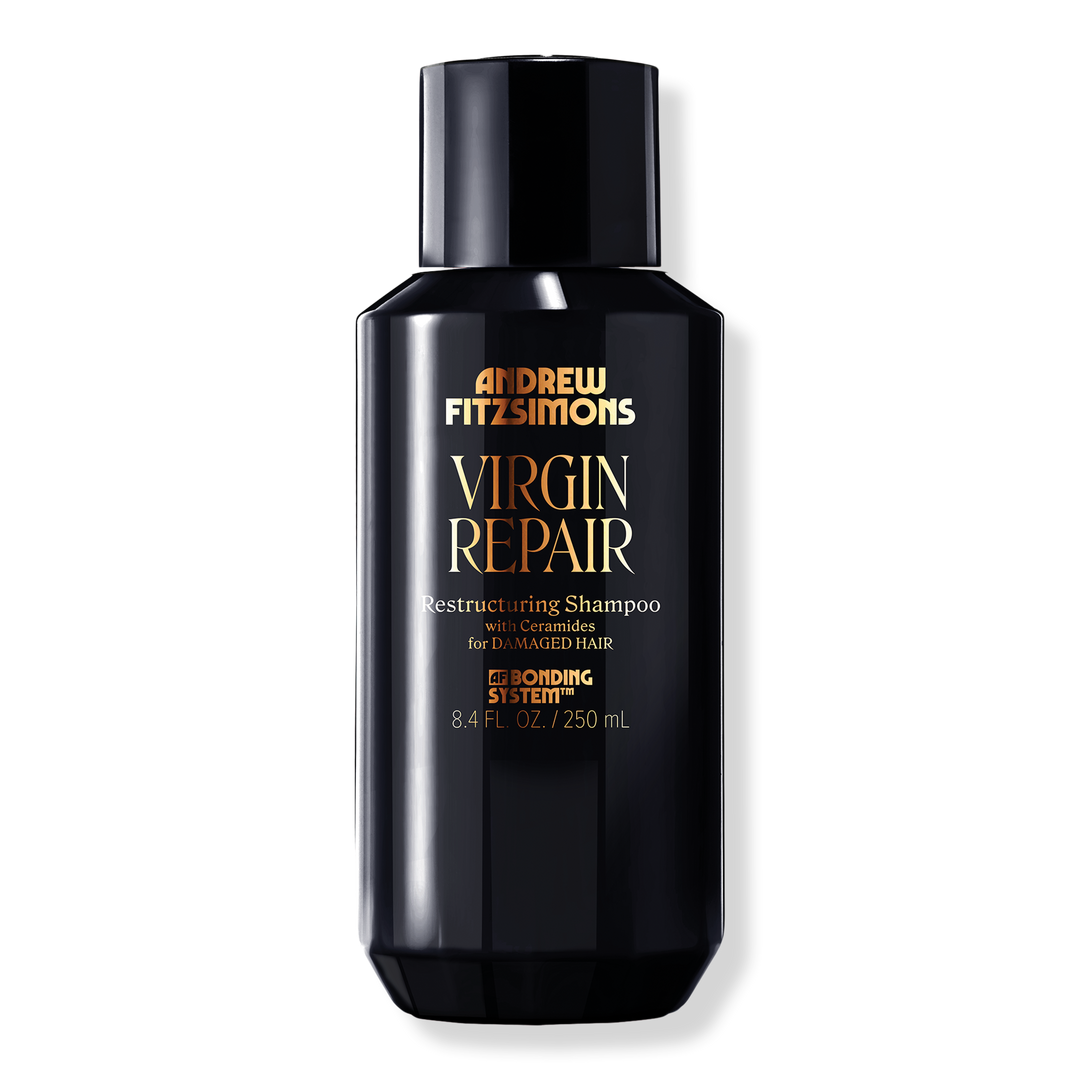
Andrew Fitzsimons Virgin Repair Restructuring Shampoo
Andrew Fitzsimons' Virgin Repair Restructuring Shampoo is formulated with ceramides that help increase strength and elasticity to damaged hair, assisting in reducing breakage and further damage that may be caused by heat, styling, or chemical factors.
Sulfate-free
Paraben-free
Color-safe
Silicone-free
Vegan
Cruelty-free
Optimized for Your Environment & Lifestyle
Nykaa
In stock
Recommended

Andrew Fitzsimons Virgin Repair Restructuring Shampoo
Andrew Fitzsimons
andrew-fitzsimons-virgin-repair-restructuring-shampoo
Shampoo
10407569916197
Morning or Evening?
How often will you use this product?
Notes


Secure payment protection
Your Biodata Compatibility Analysis
Based on your 6 hair health indices and environmental factors
Poor Match
Significant incompatibilities
Growth Cycle Health Index
Hair Match
Hair Health Index Alignment
Optimal for OSI, SSI, DI, HSI
Ingredient Efficacy
Matching Ingredient Score
Environment Compatibility
Current UV, Air Quality & Humidity
Why This Works for Your Specific Profile
Damage Index:
Healthy to moderately damaged hair experiences over-conditioning or protein overload causing limpness or rigidity
Water Quality:
Soft or moderately hard water does not require intensive treatment causing over-cleansing and dryness
Hair:
Closed cuticles resist product penetration causing surface buildup without internal benefits
Active Lifestyle:
Activity levels outside optimal range affect product performance and maintenance requirements
Your Hair Profile Integration
Your Hair Archetype

Density Level

Washing Frequency

Shedding Level

Oil Level
Your Hair Health Indices
Oil Secretion (OSI)
Very low oil production
Scalp Sensitivity (SSI)
Very low sensitivity
Growth Rate (CMR)
Poor metabolism rate
Damage Index (DI)
Minimal damage
Hair Strength (HSI)
Very weak strength
Softness Index (SI)
Significant improvement needed
Water & Environmental Integration

Water:


Expected Results & Timeline
Key Highlights

What is it?
Shampoo with ceramides

Who Is It For
All ages and genders

Budget
Rs. 1,369.45 - Rs. 2,738.90

Timeline
Immediate improvement in hair strength and elasticity
Why You’ll Love It

What Does It Help With?
Repairing damaged hair, increasing strength and elasticity, reducing breakage

Best for
Damage Repair

Features
Helps repair damaged hair, moisturizes, detangles and strengthens all hair types, ideal for damaged and dry hair, vegan and cruelty-free

Checks
Vegan, Cruelty-free
Ingredients Overview
Ingredients List
water-aqua-eau, sodium-c14-16-olefin-sulfonate, cocamidopropyl-betaine, fragrance-parfum, cocamide-mipa, panthenol, ceramide-np, phenoxyethanol, glycol-distearate, guar-hydroxypropyltrimonium-chloride, hydroxypropylgluconamide, hydroxypropylammonium-gluconate, polyquaternium-44, polyquaternium-7, citric-acid, sodium-gluconate, sodium-chloride, polysorbate-20, aminomethyl-propanol, yellow-6-ci-15985, red-40-ci-16035, blue-1-ci-42090, benzyl-salicylate, linalool, benzyl-benzoate, limonene, coumarin, benzyl-alcohol, citral
Key Ingredients
Ceramide NP, Panthenol
Ingredients Details
Ceramide Np
Common Name(s): Ceramide 3,n-stearoyl phytosphingosine,ceramide type iii
CAS Number: 100403-19-8
DESCRIPTION
What It Does: Provides the most abundant natural skin ceramide for precise stratum corneum barrier lipid replacement.
Why It's Used: The primary skin ceramide — ceramide np's identity as the dominant stratum corneum ceramide fraction makes it the most physiologically relevant barrier lipid replacement for dry skin and eczema.
How It Works: N-stearoyl-phytosphingosine provides the exact molecular structure of the most abundant natural skin ceramide. integrates into stratum corneum lamellar lipid bilayers restoring barrier architecture. reduces tewl, improves corneometer moisture, restores barrier integrity. synergistic with cholesterol and fatty acids in barrier restoration.
Typically Found In: Barrier repair moisturisers,eczema care,dry skin treatment
TECHNICAL DETAILS
Primary Category: Active ingredient – phytosphingosine ceramide
Secondary Functions: Skin conditioning
Application Areas:

Facial Skincare

Body Care
Hair Care
Beard Care
Color Cosmetics (Makeup)
Dietary/Oral Supplements
Typical Concentration Range: 0.01%–5%
SOURCING & ETHICS
Vegan Status: Conditional - feedstock declaration required
Halal Status: Unverified - feedstock declaration required (plant, animal and petrochemical routes all exist)
Source Notes: Commercially produced for cosmetic use. verify vegan/halal status with supplier. [audit 2026-07-29 rev2: origin-dependent: the same inci exists in plant, animal and petrochemical versions and the name does not discriminate. determination requires shariah-panel sign-off.]
SKIN COMPATIBILITY
Irritancy Rating: 1/5 – very low
Comedogenicity Rating: 0/5 – non-comedogenic
Sensitivity Concerns: Well-tolerated by most skin types.
Safe for Sensitive Skin: Yes
SAFETY & COMPATIBILITY
Safety Profile: Good safety profile at recommended concentrations. ewg score: 1–2.
Works Well With: Standard skincare actives
Avoid Combining With: No known significant incompatibilities
SCIENTIFIC NOTE
Ceramide np's structural identity to natural skin ceramide 3 (the dominant sc ceramide at approximately 18% of total sc ceramide fraction) means it integrates into the stratum corneum's lamellar bilayer structure with perfect molecular recognition. no other moisturising ingredient can achieve this level of structural identity to the natural barrier component it replaces — providing barrier repair rather than simply occlusive surface coating.
Last Verified: 2026-03-12
Primary Sources: Cosing database,elias skin barrier ceramide review,cir safety assessment
Citral
Common Name(s): 3,7-dimethyl-2,6-octadienal,geranial+neral mix
CAS Number: 5392-40-5
DESCRIPTION
What It Does: Provides the defining intense lemon-citrus fragrance note.
Why It's Used: The lemon scent compound – citral defines the fresh lemon scent in lemon essential oil and lemongrass with potent antimicrobial activity.
How It Works: Mixture of e-isomer (geranial) and z-isomer (neral). antimicrobial via michael addition to thiol enzymes. inhibits nf-kb for anti-inflammatory activity. antioxidant via allylic aldehyde.
Typically Found In: Citrus fragrances,antibacterial products,lemon-scented cosmetics
TECHNICAL DETAILS
Primary Category: Fragrance component – lemon aldehyde
Secondary Functions: Skin conditioning
Application Areas:
Facial Skincare
Body Care
Hair Care
Beard Care
Color Cosmetics (Makeup)
Dietary/Oral Supplements
Typical Concentration Range: 0.001%–0.5%
SOURCING & ETHICS
Vegan Status: Conditional - supplier confirmation required
Halal Status: Unverified - supplier confirmation required
Source Notes: Commercially produced for cosmetic use. verify vegan/halal status with supplier. [audit 2026-07-29 rev2: the record's own source_notes does not assert a non-animal origin, or instructs the reader to verify with the supplier; "yes" asserts knowledge the record does not hold. determination requires shariah-panel sign-off.]
SKIN COMPATIBILITY
Irritancy Rating: 1/5 – very low
Comedogenicity Rating: 0/5 – non-comedogenic
Sensitivity Concerns: Well-tolerated by most skin types.
Safe for Sensitive Skin: Yes
SAFETY & COMPATIBILITY
Safety Profile: Eu cosmetics regulation: declared fragrance allergen. high sensitisation potential from alpha,beta-unsaturated aldehyde structure. ifra strict limits.
Works Well With: Standard skincare actives
Avoid Combining With: No known significant incompatibilities
SCIENTIFIC NOTE
Citral's high sensitisation potential (llna ec3 ~0.11%) is a consequence of its alpha,beta-unsaturated aldehyde structure providing a highly reactive michael acceptor for skin protein covalent binding. the e/z mixture (geranial/neral) in natural citral means both isomers contribute to the sensitisation burden – explaining why lemongrass oil (very high citral content, ~60-80%) is one of the more common essential oil allergens.
Last Verified: 2026-03-12
Primary Sources: Cosing database,ifra standards
Coumarin
Common Name(s): 2h-chromen-2-one,1,2-benzopyrone,tonka bean compound
CAS Number: 91-64-5
DESCRIPTION
What It Does: Provides the characteristic sweet hay-vanilla warmth central to fougère fragrance compositions.
Why It's Used: The fougère fragrance family-defining compound – coumarin is the essential warm-sweet note in lavender-oakmoss-coumarin fougère compositions that define men's cologne classics.
How It Works: Bicyclic lactone provides sweet hay-vanilla scent from its conjugated carbonyl system. good skin absorption for lasting fragrance. low volatility provides fixative properties.
Typically Found In: Fougère fragrances,men's cologne,warm oriental fragrances
TECHNICAL DETAILS
Primary Category: Fragrance component – lactone
Secondary Functions: Skin conditioning
Application Areas:
Facial Skincare
Body Care
Hair Care
Beard Care
Color Cosmetics (Makeup)
Dietary/Oral Supplements
Typical Concentration Range: 0.001%–1%
SOURCING & ETHICS
Vegan Status: Conditional - supplier confirmation required
Halal Status: Unverified - supplier confirmation required
Source Notes: Commercially produced for cosmetic use. verify vegan/halal status with supplier. [audit 2026-07-29 rev2: the record's own source_notes does not assert a non-animal origin, or instructs the reader to verify with the supplier; "yes" asserts knowledge the record does not hold. determination requires shariah-panel sign-off.]
SKIN COMPATIBILITY
Irritancy Rating: 1/5 – very low
Comedogenicity Rating: 0/5 – non-comedogenic
Sensitivity Concerns: Well-tolerated by most skin types.
Safe for Sensitive Skin: Yes
SAFETY & COMPATIBILITY
Safety Profile: Eu cosmetics regulation: declared fragrance allergen. ifra guidelines restrict due to hepatotoxicity at high oral doses (not from topical use).
Works Well With: Standard skincare actives
Avoid Combining With: No known significant incompatibilities
SCIENTIFIC NOTE
Coumarin's natural source (tonka beans, dipteryx odorata) led to its historical use in food flavouring until toxicological studies revealed hepatotoxicity at high oral doses. the restriction of coumarin from food flavouring (eu and fda) drove fragrance reformulation in some cosmetic categories, though topical exposure levels from cosmetics are orders of magnitude below hepatotoxic doses.
Last Verified: 2026-03-12
Primary Sources: Cosing database,ifra standards
Hydroxypropylgluconamide
Common Name(s): Hydroxypropylgluconamide
DESCRIPTION
What It Does: Delivers targeted skin-conditioning or bioactive benefits through a specific mechanism of action suited to the formulation's intended purpose.
Why It's Used: Specialty actives address specific skin concerns through targeted molecular mechanisms, providing efficacy beyond what base formulation ingredients alone can achieve.
How It Works: The bioactive compound interacts with specific molecular targets in skin cells or the extracellular matrix — enzymes, receptors, structural proteins, or signaling molecules — triggering beneficial biological responses.
Typically Found In: Serums,treatments,moisturizers,specialty products
TECHNICAL DETAILS
Primary Category: Specialty actives
Secondary Functions: Skin-conditioning,anti-aging
Application Areas:
Facial Skincare
Body Care
Hair Care
Beard Care
Color Cosmetics (Makeup)
Dietary/Oral Supplements
Typical Concentration Range: 0.01–5%
SOURCING & ETHICS
Vegan Status: Conditional - supplier confirmation required
Halal Status: Unverified - supplier confirmation required
Source Notes: Specialty active ingredient; check individual sourcing for vegan status. [audit 2026-07-29 rev2: the record's own source_notes does not assert a non-animal origin, or instructs the reader to verify with the supplier; "yes" asserts knowledge the record does not hold. determination requires shariah-panel sign-off.]
SKIN COMPATIBILITY
Irritancy Rating: 1
Comedogenicity Rating: 0
Sensitivity Concerns: Low sensitization potential at recommended use concentrations.
Safe for Sensitive Skin: Yes
SAFETY & COMPATIBILITY
Safety Profile: Well-characterized cosmetic ingredient with established safety profile. generally non-irritating at typical use concentrations. suitable for leave-on and rinse-off cosmetics.
Works Well With: Niacinamide,hyaluronic acid,vitamin c,peptides
Avoid Combining With: Incompatible with oxidizing agents; check ph stability
SCIENTIFIC NOTE
Specialty actives typically work through enzyme inhibition (e.g., tyrosinase inhibition for brightening, mmp inhibition for anti-aging), receptor activation (e.g., retinoid receptors, ppar-γ for barrier genes), or transcription factor modulation (e.g., nrf2 for antioxidant gene upregulation). structure-activity relationships determine potency and selectivity.
Last Verified: 2025-01-15
Primary Sources: Cosing eu database; pcpc cosmetic ingredient safety reviews; ingredient-specific safety and efficacy literature
Personalized Usage Instructions
How to Use
Step 1
Apply Shampoo to wet hair
Step 2
Massage throughout hair
Step 3
Rinse and follow with Restructuring Conditioner or Mask
Medical Chemicals

Protein/Moisture
- Protein/Moisture balance
pH Level
- Acidic

Porosity Taget
- High Porosity
Customized for Your Profile
Scalp Condtions
Sensitive Scalp, pH Balanced
Climate Suitability
Humid, Dry, Hard Water, Soft Water, UV Protection, Pollution Shield, Winter, Summer
Clinical Claims
N/A
Frequency
Apply Shampoo to wet hair. Massage throughout hair. Rinse and follow with Restructuring Conditioner or Mask.
Product Information

Vegan
Cruelty-free