

Mario Badescu
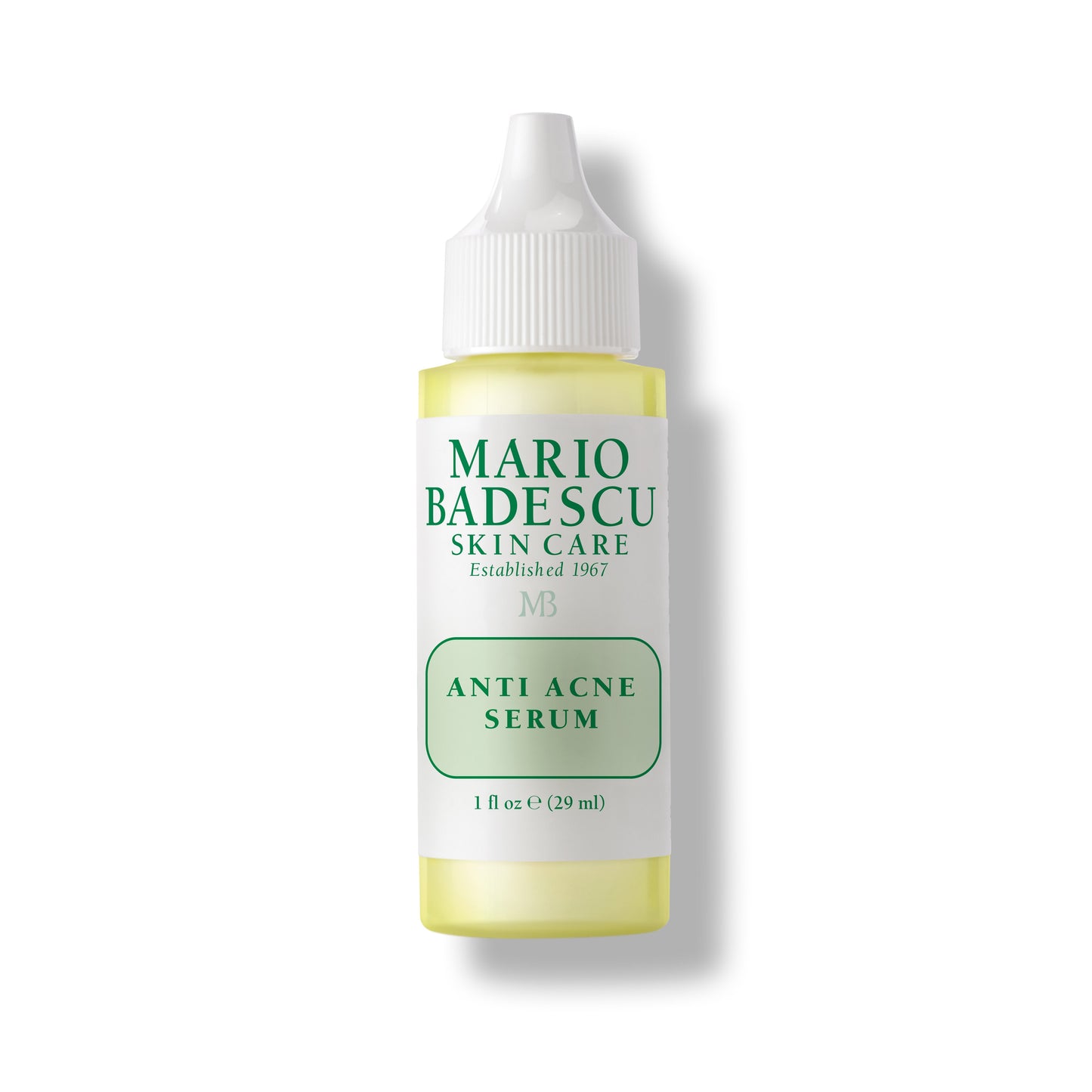
Anti Acne Serum

Anti Acne Serum
Mario Badescu
anti-acne-serum
Serum
9818357432613
Morning or Evening?
How often will you use this product?
Notes


Highlights
WHAT IS IT?
Gel-based anti-acne serum
FEATURES
Lightweight, pore-cleansing, clarifying, and replenishing
BEST FOR
oily, combination
CHECKS
Free of sulfates, silicon, oil, fragrance
Who Is It For?
All Ages With Acne-prone SkinWhat Does It Help With?
Reduces Facial Congestion Cleanses Pores Brightens Skin Reduces Sebum Secretion Helps Fade Acne ScarringBudget
Affordable (under $30)How To Use
Which routine should it be used in?
Instructions:
Key Information


What Mario Badescu Says
Product Description:
Mario Badescu's lightweight Anti-Acne Serum is an oil-free, gel-based serum, specially formulated to reduce facial congestion by cleansing pores and brightening skin.
About the Brand:
Ingredients Overview
Ingredients List
Aqua (water, eau), glycerin, triethanolamine, isopropyl alcohol, salicylic acid, propylene glycol, carbomer, thymus vulgaris (thyme) leaf extract, sodium chloride, methylparaben, propylparaben, diazolidinyl urea, ci 19140 (yellow 5), ci 15985 (yellow 6)
Key Ingredients
Salicylic Acid, Thyme Leaf Extract, Glycerin
Ingredients Details
Glycerin
Common Name(s): Glycerol,glycerine,1,2,3-propanetriol
CAS Number: 56-81-5
DESCRIPTION
What It Does: Glycerin pulls water from the environment and deeper skin layers into the outer skin layer (epidermis), boosting moisture levels and keeping skin soft, smooth, and plump.
Why It's Used: It is used in virtually every moisturizer, serum, and cleanser because it is highly effective at hydrating skin, is well-tolerated by all skin types, and enhances the texture and spreadability of formulations.
How It Works: As a humectant, glycerin forms hydrogen bonds with water molecules, trapping them in the skin. it also reinforces the skin barrier by integrating into lipid structures between skin cells.
Typically Found In: Moisturizers,serums,cleansers,toners,sheet masks,sunscreens,body lotions,shampoos,conditioners
TECHNICAL DETAILS
Primary Category: Humectant
Secondary Functions: Skin barrier support,emollient,solvent
Application Areas:

Facial Skincare
Body Care
Hair Care
Beard Care

Color Cosmetics (Makeup)
Dietary/Oral Supplements
Typical Concentration Range: 1%–30% (typical: 3–10%)
SOURCING & ETHICS
Vegan Status: Conditional - feedstock declaration required
Halal Status: Unverified - feedstock declaration required (plant, animal and petrochemical routes all exist)
Source Notes: Derived from plant oils via hydrolysis or saponification; synthetic versions also available. palm-derived glycerin carries sustainability concerns. [audit 2026-07-29 rev2: origin-dependent: the same inci exists in plant, animal and petrochemical versions and the name does not discriminate. determination requires shariah-panel sign-off.]
SKIN COMPATIBILITY
Irritancy Rating: 1/5 – very low; non-irritating at all standard concentrations
Comedogenicity Rating: 0/5 – non-comedogenic
Sensitivity Concerns: Extremely rare allergic reactions; generally safe for all skin types including sensitive and baby skin
Safe for Sensitive Skin: Yes
SAFETY & COMPATIBILITY
Safety Profile: Widely recognized as safe. ewg hazard score: 1. no significant concerns for irritation, sensitization, or toxicity at typical concentrations (up to 50%).
Works Well With: Hyaluronic acid,ceramides,niacinamide,panthenol,urea,peptides,retinol,ahas/bhas
Avoid Combining With: No known incompatibilities at standard concentrations
SCIENTIFIC NOTE
Glycerin is an endogenous skin component found naturally in the stratum corneum. aquaporin-3 channels in keratinocytes facilitate glycerin transport, making it integral to natural skin hydration pathways.
Last Verified: 2026-03-12
Primary Sources: Cosing database,cir safety assessment,ewg skin deep,inci decoder
Salicylic Acid
Common Name(s): Bha,2-hydroxybenzoic acid,orthohydroxybenzoic acid,willow bark acid
CAS Number: 69-72-7
DESCRIPTION
What It Does: Salicylic acid exfoliates the skin surface and inside pores, dissolves the 'glue' holding dead skin cells together, reduces sebum production, and combats acne-causing bacteria.
Why It's Used: Its oil solubility makes it uniquely effective at penetrating pores and dissolving sebum plugs – a function that water-soluble ahas cannot perform. it is the preferred exfoliant for oily, acne-prone, and congested skin.
How It Works: Salicylic acid disrupts desmosomal bonds between corneocytes, promoting exfoliation. its oil solubility allows it to penetrate the sebaceous follicle, dissolving sebum and dead cells. it also has anti-inflammatory properties by inhibiting prostaglandin synthesis.
Typically Found In: Cleansers,toners,serums,spot treatments,masks,chemical peels,anti-dandruff shampoos,acne treatments
TECHNICAL DETAILS
Primary Category: Active ingredient – beta hydroxy acid (bha)
Secondary Functions: Anti-acne,anti-dandruff,keratolytic
Application Areas:
Facial Skincare
Body Care
Hair Care
Beard Care
Color Cosmetics (Makeup)
Dietary/Oral Supplements
Typical Concentration Range: 0.5%–2% (otc acne treatment in us); up to 30% in professional chemical peels
SOURCING & ETHICS
Vegan Status: Yes – synthetic or willow bark derived
Halal Status: Yes
Source Notes: Naturally occurring in willow bark (salix alba) and wintergreen oil. commercially produced synthetically via kolbe-schmitt reaction for cosmetic use.
SKIN COMPATIBILITY
Irritancy Rating: 3/5 – moderate; can cause dryness, peeling, and irritation, especially at higher concentrations
Comedogenicity Rating: 0/5 – non-comedogenic; actually anti-comedogenic
Sensitivity Concerns: Can cause irritation, dryness, and sun sensitivity. avoid contact with eyes. not recommended during pregnancy at high concentrations. can be drying – follow with moisturizer.
Safe for Sensitive Skin: Use with caution – start with lower concentrations and frequency; may not be suitable for reactive or rosacea-prone skin
SAFETY & COMPATIBILITY
Safety Profile: Safe at otc concentrations (0.5–2%). regulated as a drug in some countries (us: fda category i acne treatment). avoid in pregnancy at high concentrations.
Works Well With: Niacinamide,zinc,tea tree oil,benzoyl peroxide (at different times),hyaluronic acid (to counteract dryness)
Avoid Combining With: High concentrations of retinol (cumulative irritation),multiple exfoliating acids simultaneously,benzoyl peroxide in same step (can increase irritation)
SCIENTIFIC NOTE
Salicylic acid is a member of the salicylate family and shares structural similarity with aspirin. its anti-inflammatory mechanism mirrors aspirin's cox inhibition pathway, making it uniquely effective for inflammatory acne.
Last Verified: 2026-03-12
Primary Sources: Cosing database,cir safety assessment,us fda acne monograph,journal of the american academy of dermatology