

April Skin
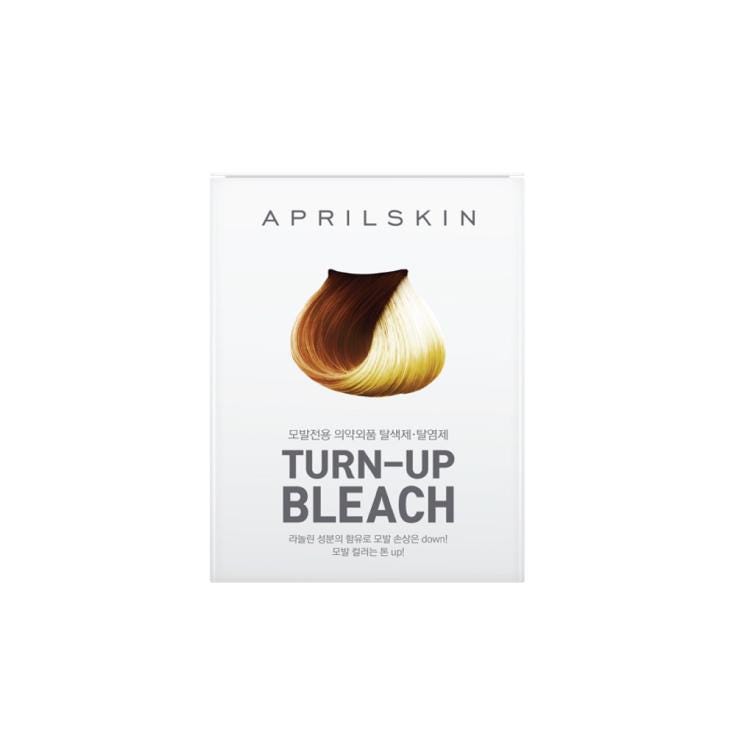
April Skin Turn Up Bleach

April Skin Turn Up Bleach
April Skin
april-skin-turn-up-bleach
10085472403749
Morning or Evening?
How often will you use this product?
Notes


Highlights
WHAT IS IT?
Hair bleach kit with Hydrolyzed Keratin and Jojoba Oil
FEATURES
Lightens hair evenly, suitable for full bleaching, highlights, or ombre effects; includes bleaching powder and oxidizing emulsion; formulated to minimize hair damage
BEST FOR
CHECKS
Who Is It For?
What Does It Help With?
Budget
Affordable (under $30)How To Use
Which routine should it be used in?
Instructions:
Key Information

What April Skin Says
Product Description:
A DIY lightening kit designed for even bleaching, allowing for all-over lightening, highlights, or ombre effects. The kit includes bleaching powder and oxidizing emulsion, formulated with Hydrolyzed Keratin and Jojoba Oil to minimize hair damage.
About the Brand:
Ingredients Overview
Ingredients List
hydrolyzed-silk, hydrolyzed-keratin, refined-lanolin, jojoba-oil
Key Ingredients
Hydrolyzed Silk, Hydrolyzed Keratin, Refined Lanolin, Jojoba Oil
Ingredients Details
Hydrolyzed Keratin
Common Name(s): Keratin peptides,soluble keratin,hydrolyzed wool protein
CAS Number: 69430-36-0
DESCRIPTION
What It Does: Repairs hair structure by penetrating and rebonding with damaged hair keratin proteins.
Why It's Used: The authentic hair repair ingredient – same protein composition as hair itself, providing structural repair from within the cortex rather than surface coating alone.
How It Works: Hydrolyzed keratin peptides (500-2000 da) penetrate cuticle and cortex. cysteine thiol groups form disulfide bonds with oxidized keratin (rebonding). cross-links damaged cortex protein for improved tensile strength and reduced breakage. surface film formation fills cuticle gaps.
Typically Found In: Damage repair conditioners,hair masks,professional treatments
TECHNICAL DETAILS
Primary Category: Active ingredient – keratin peptide
Secondary Functions: Skin conditioning
Application Areas:

Facial Skincare
Body Care

Hair Care
Beard Care
Color Cosmetics (Makeup)
Dietary/Oral Supplements
Typical Concentration Range: 0.5%–10%
SOURCING & ETHICS
Vegan Status: No - animal-derived
Halal Status: Conditional - halal slaughter certificate required (species declaration and slaughter method)
Source Notes: From hydrolyzed wool or feather keratin. plant-based (wheat keratin analog) available but different amino acid profile. marine keratin from squid pen also available. [audit 2026-07-29 rev2: name declares rendered fat or animal tissue; halal status depends on species and slaughter, neither of which is in the record. determination requires shariah-panel sign-off.]
SKIN COMPATIBILITY
Irritancy Rating: 1/5 – very low
Comedogenicity Rating: 0/5 – non-comedogenic
Sensitivity Concerns: Well-tolerated by most skin types.
Safe for Sensitive Skin: Yes
SAFETY & COMPATIBILITY
Safety Profile: Good safety profile at recommended concentrations. ewg score: 1–2.
Works Well With: Standard skincare actives
Avoid Combining With: No known significant incompatibilities
SCIENTIFIC NOTE
Hair keratin is unique in its high cysteine content (~14%) forming extensive disulfide bond crosslinks. these disulfide bonds are disrupted by bleaching, heat, and chemical processing. hydrolyzed keratin's cysteine groups physically rebond into these disrupted sites – a structural repair mechanism specific to keratin chemistry not achievable with any other protein hydrolysate.
Last Verified: 2026-03-12
Primary Sources: Cosing database,robbins hair science,cir safety assessment
Hydrolyzed Silk
Common Name(s): Hydrolyzed silk,conditioning protein hydrolysate,amino acid film-former
CAS Number: N/a
DESCRIPTION
What It Does: Deposits conditioning protein film on skin and hair through electrostatic and h-bonding surface adsorption, provides amino acid humectancy, reduces friction and improves combability in hair, and temporarily smooths skin surface texture.
Why It's Used: Hydrolysed proteins provide dual-weight-dependent function: high-mw fractions (>5000 da) adsorb on surfaces for film-forming conditioning; low-mw fractions (<500 da) penetrate sc for deeper conditioning and metabolic amino acid delivery.
How It Works: Enzymatic hydrolysis yields a distribution of peptide fragments 100–10,000 da. positively charged (basic) amino acid residues (lysine, arginine) in the peptide fragments electrostatically bind the negatively charged hair cuticle surface; hydrophobic residues provide lipophilic anchoring. the resulting protein film reduces tewl and surface friction while providing amino acid nutrients.
Typically Found In: Hair conditioners,skin serums,protein formulas
TECHNICAL DETAILS
Primary Category: Functional ingredient – humectant
Secondary Functions: Tewl reduction,skin plumping
Application Areas:
Facial Skincare
Body Care
Hair Care
Beard Care
Color Cosmetics (Makeup)
Dietary/Oral Supplements
Typical Concentration Range: 0.1%–5%
SOURCING & ETHICS
Vegan Status: No - animal-derived
Halal Status: Contested - insect-derived; jurisdiction-dependent, refer to certifier stance (region rules)
Source Notes: Synthetic or naturally derived. excellent aqueous solubility. [audit 2026-07-29 rev2: insect-derived; genuinely contested between certifying bodies, not resolvable by documentation. determination requires shariah-panel sign-off.]
SKIN COMPATIBILITY
Irritancy Rating: 1/5 – very low
Comedogenicity Rating: 0/5 – non-comedogenic
Sensitivity Concerns: Non-irritating; suitable for all skin types.
Safe for Sensitive Skin: Yes
SAFETY & COMPATIBILITY
Safety Profile: Excellent safety profile. ewg score: 1.
Works Well With: Ceramides,emollients,occlusives,glycerin,hyaluronic acid
Avoid Combining With: No significant incompatibilities
SCIENTIFIC NOTE
Optimal hydrolysis degree for hair conditioning uses mw 1,000–5,000 da fragments — large enough for stable cuticle adsorption but small enough to penetrate damaged cuticle cracks and access internal cortex protein repair sites.
Last Verified: 2026-03-12
Primary Sources: Cosing database,hydrolyzed silk protein conditioning review
Jojoba Oil
Common Name(s): Jojoba oil,jojoba seed oil
CAS Number: 61789-91-1
DESCRIPTION
What It Does: Provides sebum-identical emolliency with outstanding oxidative stability and non-comedogenic profile.
Why It's Used: The most sebum-compatible plant oil – its wax ester composition mimics human sebum for superior skin compatibility across all skin types including oily and acne-prone.
How It Works: Liquid wax ester composition (primarily c20:1 and c22:1 wax esters) provides exceptional molecular mimicry of human sebum wax esters. regulates sebum production via negative feedback to sebaceous glands. remarkable oxidative stability from fully unsaturated wax ester structure vs polyunsaturated triglycerides.
Typically Found In: Facial oils,hair oils,serums,body care,lip care,virtually all product categories
TECHNICAL DETAILS
Primary Category: Functional ingredient – emollient
Secondary Functions: Sebum balancing,oxidative stability,non-comedogenic
Application Areas:
Facial Skincare
Body Care
Hair Care
Beard Care
Color Cosmetics (Makeup)
Dietary/Oral Supplements
Typical Concentration Range: 1%–100%
SOURCING & ETHICS
Vegan Status: Yes – from simmondsia chinensis (jojoba) seeds
Halal Status: Yes
Source Notes: Cold-pressed from jojoba seeds. among the most oxidation-stable plant oils (shelf life 5+ years). desert-grown, drought-resistant crop.
SKIN COMPATIBILITY
Irritancy Rating: 1/5 – very low
Comedogenicity Rating: 0/5 – non-comedogenic; sebum-identical composition
Sensitivity Concerns: Non-irritating.
Safe for Sensitive Skin: Yes
SAFETY & COMPATIBILITY
Safety Profile: Excellent safety profile. ewg score: 1.
Works Well With: Humectants,ceramides,actives as carrier
Avoid Combining With: No significant incompatibilities
SCIENTIFIC NOTE
Jojoba oil's wax ester composition is uniquely different from all other plant oils (which are triglycerides). human sebum contains approximately 25% wax esters – the proportion matched by jojoba. this structural identity explains jojoba's superior skin and hair compatibility versus conventional triglyceride oils.
Last Verified: 2026-03-12
Primary Sources: Cosing database,gad et al. jojoba review,cir safety assessment