

Aqualogica
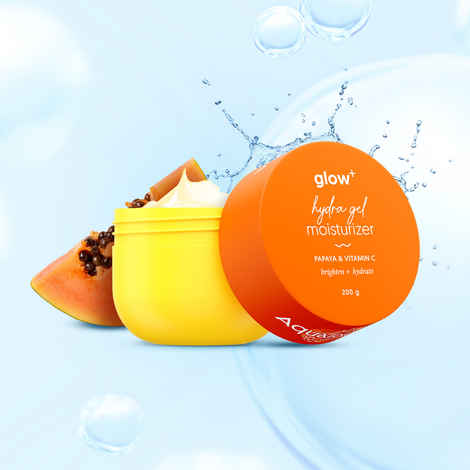
Aqualogica Glow+ Hydra Gel Moisturizer with Vitamin C & Papaya - 200 gm 24-Hour Intense Hydration | Weightless Water-Like Gel Texture | Non Sticky & Quick Absrobing for Glowing Skin I For Normal to Combination Skin I Men & Women

Aqualogica Glow+ Hydra Gel Moisturizer with Vitamin C & Papaya - 200 gm 24-Hour Intense Hydration | Weightless Water-Like Gel Texture | Non Sticky & Quick Absrobing for Glowing Skin I For Normal to Combination Skin I Men & Women
Aqualogica
aqualogica-glow-hydra-gel-moisturizer-with-vitamin-c-papaya-200-gm-24-hour-intense-hydration-weightless-water-like-gel-texture-non-sticky-quick-absrobing-for-glowing-skin-i-for-normal-to-combination-skin-i-men-women
Moisturize
10084870062373
Morning or Evening?
How often will you use this product?
Notes


Highlights
WHAT IS IT?
Gel Moisturizer with Vitamin C, Papaya and Hyaluronic Acid
FEATURES
24 hours of intense hydration, Weightless water-like gel texture, Non sticky and quick absorbing texture, Brightens skin, Fights hyperpigmentation, Gentle exfoliation, Instantly plump and moisturized skin
BEST FOR
normal, combination
CHECKS
Non sticky, Quick Absorbing
Who Is It For?
Men & Women For Normal To Combination SkinWhat Does It Help With?
Hydration Brightening Hyperpigmentation Smooth And Even SkinBudget
Affordable (under $30)How To Use
Which routine should it be used in?
Instructions:
Key Information


What Aqualogica Says
Product Description:
THIRST TRAP ALERT! Your dry & dehydrated skin might obsess over our newest launch. Introducing Glow+ Hydra Gel Moisturizer - an ultra light gel moisturizer that passes the vibe check because it gives you 24 hours of intense hydration. A first-of-our-kind water-like gel texture, this Hydra Gel seeps deep into your skin in a blink! The result? Instantly plump and moisturized skin. Vitamin C, the powerhouse of antioxidants, fights hyperpigmentation, brightens skin and adds a luminous glow. Papaya, a gentle exfoliant, removes dead skin cells & helps unlock smooth and even skin. Packed with the power of Hyaluronic Acid, the Glow+ Hydra Gel Moisturizer makes sure your skin keeps its hydration notification on all the time. With a weightless texture that melts in no time, you will love this hydra highness if you have normal to combination skin. Scoop this moisturizing marvel & let your skin chill with a refreshing splash of hydration.
About the Brand:
Ingredients Overview
Ingredients List
Aqua, Dimethicone, Glycerin, Butylene Glycol, Ammonium Acryloyldimethyltaurate/VPCopolymer, Ethylhexylglycerin (and) Phenoxyethanol, Linoleamidopropyl PG Dimonium ChloridePhosphate, Ammonium Acryloyldimethyltaurate Crosspolymer, Dimethicone (and)Dimethicone Crosspolymer, Capric Caprylic Triglyceride, Hyaluronic Acid, Niacinamide,Sodium PCA, Xylitylglucoside (and) Anhydroxylitol (and) Xylitol, Beheneth-25 MethacrylateCrosspolymer, Vitamin C, Papaya Extract, IFRA Certified Allergen Free Fragrance, CI 19140
Key Ingredients
Vitamin C, Papaya, Hyaluronic Acid
Ingredients Details
Ammonium Acryloyldimethyltaurate Crosspolymer
Common Name(s): Synthetic polymer,rheology or film-forming modifier,performance polymer
CAS Number: N/a
DESCRIPTION
What It Does: Provides polymer-based thickening, film formation, or emulsion stabilisation through the specific molecular weight and monomer composition.
Why It's Used: Synthetic polymers deliver precisely engineered performance unavailable from natural biopolymers — molecular weight, composition, and architecture are controlled for specific application outcomes.
How It Works: Polymer chain entanglement and network formation above overlap concentration c* provides viscosity. film formation by solvent evaporation above tg. crosslinked networks provide yield stress gel for suspension stabilisation.
Typically Found In: Skin care,hair care,colour cosmetics
TECHNICAL DETAILS
Primary Category: Active ingredient – cosmetic active
Secondary Functions: Skin conditioning
Application Areas:

Facial Skincare

Body Care
Hair Care
Beard Care
Color Cosmetics (Makeup)
Dietary/Oral Supplements
Typical Concentration Range: 0.1%–10%
SOURCING & ETHICS
Vegan Status: Conditional - supplier confirmation required
Halal Status: Unverified - supplier confirmation required
Source Notes: Commercially produced for cosmetic use. verify vegan/halal status with supplier. [audit 2026-07-29 rev2: the record's own source_notes does not assert a non-animal origin, or instructs the reader to verify with the supplier; "yes" asserts knowledge the record does not hold. determination requires shariah-panel sign-off.]
SKIN COMPATIBILITY
Irritancy Rating: 1/5 – very low
Comedogenicity Rating: 0/5 – non-comedogenic
Sensitivity Concerns: Well-tolerated by most skin types.
Safe for Sensitive Skin: Yes
SAFETY & COMPATIBILITY
Safety Profile: Good safety profile at recommended concentrations. ewg score: 1–2.
Works Well With: Standard skincare actives
Avoid Combining With: No known significant incompatibilities
SCIENTIFIC NOTE
Eu microplastic regulation 2023/2055 may affect certain synthetic polymers — formulators verify their specific polymer meets non-microplastic criteria (soluble, biodegradable, or approved exemption).
Last Verified: 2026-03-12
Primary Sources: Cosing database,ammonium acryloyldimethyltaurate cr synthetic polymer review
Butylene Glycol
Common Name(s): 1,3-butanediol,bg,1,3-butylene glycol
CAS Number: 107-88-0
DESCRIPTION
What It Does: Provides humectant hydration and active ingredient solubilization with excellent skin feel.
Why It's Used: Preferred glycol humectant in premium and k-beauty formulations for superior skin feel vs propylene glycol with equivalent functionality.
How It Works: Two hydroxyl groups at 1,3-positions provide water binding and solvent activity. better tolerated than propylene glycol with minimal sensitization risk. 4-carbon backbone provides slightly greater hydrophobic character enabling dissolution of less polar actives vs pg.
Typically Found In: Toners,essences,serums,k-beauty formulas
TECHNICAL DETAILS
Primary Category: Functional ingredient – glycol humectant
Secondary Functions: Tewl reduction,skin plumping
Application Areas:
Facial Skincare
Body Care
Hair Care
Beard Care
Color Cosmetics (Makeup)
Dietary/Oral Supplements
Typical Concentration Range: 1%–10%
SOURCING & ETHICS
Vegan Status: Yes – synthetic
Halal Status: Yes
Source Notes: Synthetic or naturally derived. excellent aqueous solubility.
SKIN COMPATIBILITY
Irritancy Rating: 1/5 – very low
Comedogenicity Rating: 0/5 – non-comedogenic
Sensitivity Concerns: Non-irritating; suitable for all skin types.
Safe for Sensitive Skin: Yes
SAFETY & COMPATIBILITY
Safety Profile: Excellent safety profile. ewg score: 1.
Works Well With: Ceramides,emollients,occlusives,glycerin,hyaluronic acid
Avoid Combining With: No significant incompatibilities
SCIENTIFIC NOTE
K-beauty's preference for butylene glycol over propylene glycol is driven by two factors: bg's superior skin feel (less tacky than pg's higher viscosity) and its lower sensitization potential (1,3-bg has better spatial distribution of hydroxyl groups that reduces protein interaction vs pg's 1,2-position oh groups).
Last Verified: 2026-03-12
Primary Sources: Cosing database,cir safety assessment
Ci 19140
Common Name(s): Ci 19140,approved cosmetic colorant,fd&c yellow 5 pigment
CAS Number: N/a
DESCRIPTION
What It Does: Provides colour in cosmetic formulations within permitted application areas (eye, lip, or general) as specified per ci 19140 in fda 21 cfr 73/74 and eu annex iv.
Why It's Used: Regulatory compliance requires verifying permitted use category (fd&c, d&c, ext. d&c) and approved application area for each target market before formulating.
How It Works: Colour from electronic transitions in the chromophore structure — metal d-orbital transitions (inorganic pigments) or π→π* transitions (organic chromophores) absorb specific visible wavelengths providing the perceived complementary colour.
Typically Found In: Colour cosmetics
TECHNICAL DETAILS
Primary Category: Active ingredient – mineral / metal active
Secondary Functions: Antimicrobial,sebum regulation,antioxidant enzyme cofactor
Application Areas:
Facial Skincare
Body Care
Hair Care
Beard Care
Color Cosmetics (Makeup)
Dietary/Oral Supplements
Typical Concentration Range: Per fda/eu permitted list
SOURCING & ETHICS
Vegan Status: Conditional - supplier confirmation required
Halal Status: Conditional - basis not stated in source record; supplier origin confirmation required to determine what evidence applies
Source Notes: Mineral/inorganic compound. cosmetic or pharmaceutical grade. [audit 2026-07-29 rev2: status downgraded on audit. determination requires shariah-panel sign-off.]
SKIN COMPATIBILITY
Irritancy Rating: 1/5 – very low
Comedogenicity Rating: 0/5 – non-comedogenic
Sensitivity Concerns: Non-irritating at recommended concentrations.
Safe for Sensitive Skin: Yes at recommended concentrations
SAFETY & COMPATIBILITY
Safety Profile: Excellent safety profile at cosmetic concentrations. ewg score: 1–2.
Works Well With: Niacinamide,salicylic acid,other actives
Avoid Combining With: No significant incompatibilities at standard concentrations
SCIENTIFIC NOTE
Us fda requires batch certification per lot; eu annex iv restricts by product type. both markets require verifying the specific permitted use category for each colorant.
Last Verified: 2026-03-12
Primary Sources: Fda 21 cfr 73/74,eu annex iv cosmetic colorant
Dimethicone
Common Name(s): Pdms,polydimethylsiloxane,silicone fluid
CAS Number: 9006-65-9
DESCRIPTION
What It Does: Provides silicone-characteristic silky feel and skin protection with adjustable viscosity.
Why It's Used: The benchmark cosmetic silicone – sets the gold standard for silky application feel, spreadability, and skin protection in virtually all skin care categories.
How It Works: Polydimethylsiloxane chain flexibility provides extremely low surface tension and high spreadability. inert si-o backbone provides chemical stability and excellent skin tolerance. occlusive film formation reduces tewl. higher viscosity grades provide more intense conditioning.
Typically Found In: Moisturizers,foundations,primers,sunscreens – nearly universal
TECHNICAL DETAILS
Primary Category: Functional ingredient – polydimethylsiloxane
Secondary Functions: Barrier sealing,softening
Application Areas:
Facial Skincare
Body Care
Hair Care
Beard Care
Color Cosmetics (Makeup)
Dietary/Oral Supplements
Typical Concentration Range: 0.1%–30%
SOURCING & ETHICS
Vegan Status: Conditional - supplier confirmation required
Halal Status: Unverified - supplier confirmation required
Source Notes: Plant-derived, synthetic or animal-derived. verify source. [audit 2026-07-29 rev2: the record's own source_notes does not assert a non-animal origin, or instructs the reader to verify with the supplier; "yes" asserts knowledge the record does not hold. determination requires shariah-panel sign-off.]
SKIN COMPATIBILITY
Irritancy Rating: 1/5 – very low
Comedogenicity Rating: 1/5 – low; formulation-dependent
Sensitivity Concerns: Non-irritating.
Safe for Sensitive Skin: Yes
SAFETY & COMPATIBILITY
Safety Profile: Excellent safety profile. ewg score: 1.
Works Well With: Humectants,ceramides,actives as carrier
Avoid Combining With: No significant incompatibilities
SCIENTIFIC NOTE
Dimethicone's exceptional silky feel arises from its very low intermolecular attractive forces (weak van der waals forces due to non-polar methyl groups) that allow silicone chains to slide freely over skin. the coefficient of kinetic friction for pdms against skin (~0.04) is among the lowest of any cosmetic material – explaining why even small amounts transform product feel.
Last Verified: 2026-03-12
Primary Sources: Cosing database,cir safety assessment