

Josie Maran Cosmetics
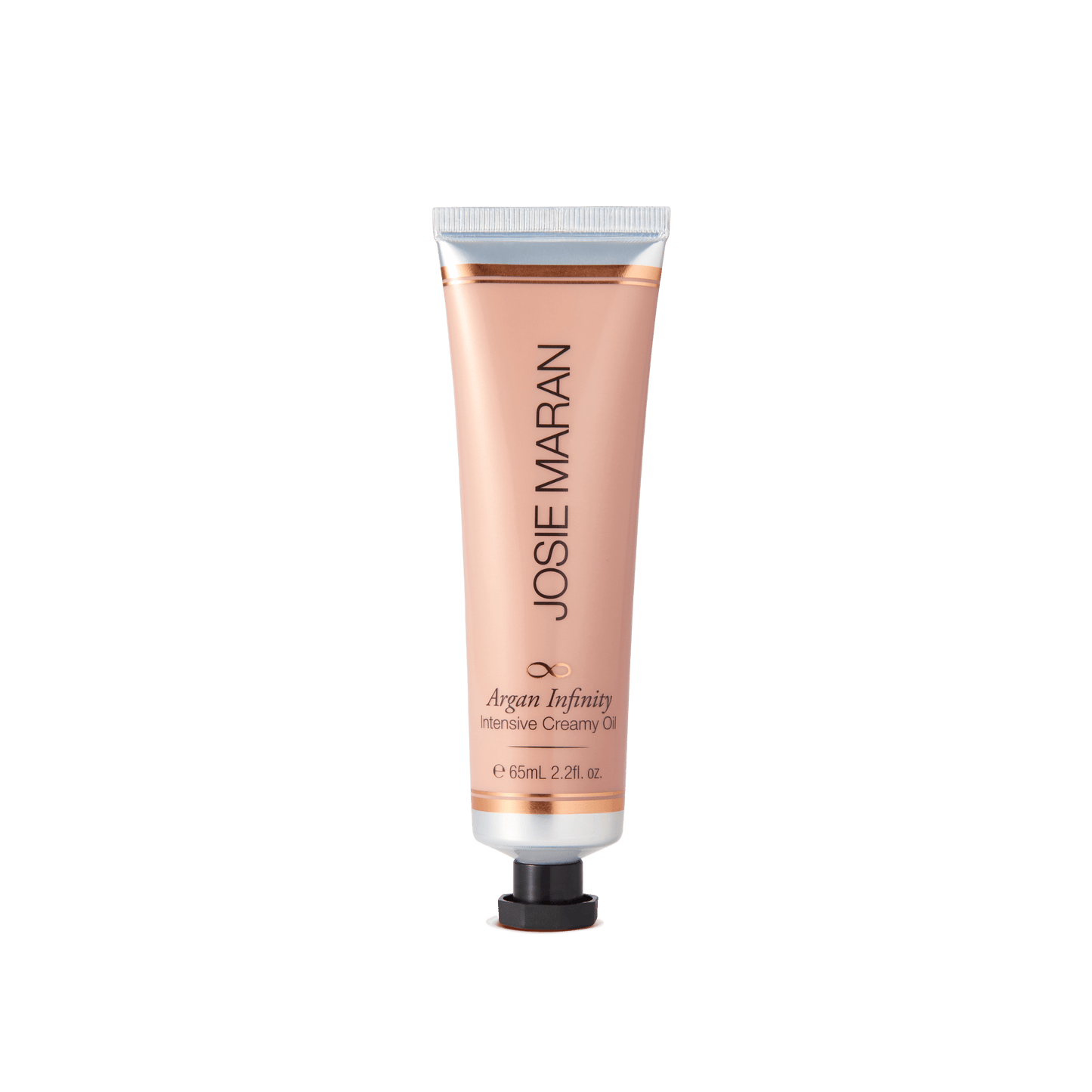
Argan Infinity Intensive Creamy Oil

Argan Infinity Intensive Creamy Oil
Josie Maran Cosmetics
argan-infinity-intensive-creamy-oil
Moisturize
9628171010341
Morning or Evening?
How often will you use this product?
Notes


Highlights
WHAT IS IT?
A multitasking moisturizing cream-oil hybrid
FEATURES
Transformative texture starts as a velvety cream and melts into a fast-absorbing oil. Powered by Argan Oil to hydrate, soothe, nourish, and illuminate skin, hair, and nails.
BEST FOR
Acne Prone
CHECKS
Free from parabens, synthetic fragrances, mineral oil, formaldehyde, PEGs
Who Is It For?
Not Specified Suitable For AdultsWhat Does It Help With?
Hydration Soothing Nourishing And Illuminating Skin Hair And NailsBudget
Mid-rangeHow To Use
Which routine should it be used in?
Instructions:
Key Information


What Josie Maran Cosmetics Says
Product Description:
This texture-transforming multitasker delivers endless benefits to eyes, lips, elbows—and everywhere in between.
About the Brand:
Ingredients Overview
Ingredients List
Carthamus Tinctorius (Safflower) Seed Oil, Butyrospermum Parkii (Shea Butter) Fruit, Coco-Caprylate/Caprate, Beeswax, Butyrospermum Parkii (Shea Butter), Glyceryl Dibehenate, Tribehenin, Glyceryl Behenate, Citrus Tangerina (Tangerine) Peel Oil, Tocopherol, Argania Spinosa (Argan) Kernel Oil, Persea Gratissima (Avocado) Oil, Abyssinian Oil (Crambe Abyssinica) Seed Oil, Cocos Nucifera (Coconut) Oil, Aloe Barbadensis (Aloe Vera) Leaf Extract, Soybean Glycerides, Linoleic Acid, Simmondsia Chinensis (Jojoba) Seed Oil Mangifera Indica (Mango) Seed Butter, Aleurites Moluccana Seed (Kukui Nut) Oil, Macadamia Ternifolia (Macadamia) Seed Oil.
Key Ingredients
Argan Oil
Ingredients Details
Beeswax
Common Name(s): Cera alba (white),cera flava (yellow),apis mellifera wax
CAS Number: 8012-89-3
DESCRIPTION
What It Does: Provides natural wax structure and emolliency for cosmetic texture and lip balm applications.
Why It's Used: The original cosmetic wax – provides natural, hard-texture structure for lip balms, sticks, and creams with emollient skin conditioning.
How It Works: Complex mixture of esters (wax esters), hydrocarbons (hentriacontane), and fatty acids provides semi-crystalline structure. melting point 62-65°c enables stable solid products. emulsifying capacity from free cerotic acid content.
Typically Found In: Lip balms,cosmetic sticks,creams,natural cosmetics
TECHNICAL DETAILS
Primary Category: Functional ingredient – natural wax
Secondary Functions: Natural wax structure,occlusive conditioning
Application Areas:

Facial Skincare

Body Care
Hair Care
Beard Care
Color Cosmetics (Makeup)
Dietary/Oral Supplements
Typical Concentration Range: 2%–30%
SOURCING & ETHICS
Vegan Status: No - animal-derived
Halal Status: Conditional - bee-derived; widely held permissible, confirm certifier stance
Source Notes: Plant-derived, synthetic or animal-derived. verify source. [audit 2026-07-29 rev2: bee-derived; permissibility widely accepted but fatwa varies by jurisdiction. determination requires shariah-panel sign-off.]
SKIN COMPATIBILITY
Irritancy Rating: 1/5 – very low
Comedogenicity Rating: 1/5 – low; formulation-dependent
Sensitivity Concerns: Non-irritating.
Safe for Sensitive Skin: Yes
SAFETY & COMPATIBILITY
Safety Profile: Excellent safety profile. ewg score: 1.
Works Well With: Humectants,ceramides,actives as carrier
Avoid Combining With: No significant incompatibilities
SCIENTIFIC NOTE
Beeswax's multi-component wax ester composition (myricyl palmitate as primary component) provides a unique crystalline structure that gives lip balms and cosmetic sticks their characteristic 'dragée' glide – different from synthetic wax esters that lack this crystalline lattice diversity.
Last Verified: 2026-03-12
Primary Sources: Cosing database,cir safety assessment
Coco Caprylate/caprate
Common Name(s): Coco caprylate/caprate
DESCRIPTION
What It Does: Smooths and softens skin by filling intercorneocyte spaces, reducing friction, and providing a pleasant aesthetic skin feel in formulations.
Why It's Used: Synthetic esters provide tailored aesthetic properties — spreadability, skin feel, volatility, refractive index — that natural oils alone cannot consistently deliver.
How It Works: The ester molecule fills microscopic surface irregularities between corneocytes, reducing coefficient of friction, reflecting light uniformly, and providing a lubrication layer that protects the skin surface.
Typically Found In: Moisturizers,sunscreens,color cosmetics,body lotions,lip products
TECHNICAL DETAILS
Primary Category: Synthetic emollients
Secondary Functions: Emollient
Application Areas:
Facial Skincare
Body Care
Hair Care
Beard Care
Color Cosmetics (Makeup)
Dietary/Oral Supplements
Typical Concentration Range: 1–20%
SOURCING & ETHICS
Vegan Status: Conditional - feedstock declaration required
Halal Status: Unverified - feedstock declaration required (plant, animal and petrochemical routes all exist)
Source Notes: Synthetically produced ester emollient; no animal components. [audit 2026-07-29 rev2: origin-dependent: the same inci exists in plant, animal and petrochemical versions and the name does not discriminate. determination requires shariah-panel sign-off.]
SKIN COMPATIBILITY
Irritancy Rating: 1
Comedogenicity Rating: 1
Sensitivity Concerns: Low sensitization potential at recommended use concentrations.
Safe for Sensitive Skin: Yes
SAFETY & COMPATIBILITY
Safety Profile: Well-characterized cosmetic ingredient with established safety profile. generally non-irritating at typical use concentrations. suitable for leave-on and rinse-off cosmetics.
Works Well With: Silicones,uv filters,other emollients
Avoid Combining With: Strongly alkaline conditions (risk of saponification of ester-type emollients)
SCIENTIFIC NOTE
The spreading coefficient of an emollient is governed by its surface tension, viscosity, and polarity. esters with branched alkyl chains (e.g., isopropyl, isostearyl) spread rapidly and leave a non-tacky film; linear long-chain esters provide more substantive moisturization. hlb value determines the preferred formulation system (w/o vs o/w emulsions).
Last Verified: 2025-01-15
Primary Sources: Cosing eu database; pcpc cosmetic ingredient safety reviews; ingredient-specific safety and efficacy literature
Glyceryl Behenate
Common Name(s): Glyceryl behenate,cosmetic active,established function
CAS Number: N/a
DESCRIPTION
What It Does: Delivers characteristic cosmetic function — skin conditioning, antioxidant protection, active biological benefit, or formulation function — at recommended use concentration.
Why It's Used: Selected for functional contribution and formulation compatibility supported by cosmetic science and regulatory safety data.
How It Works: Works through the mechanism of its molecular class — physicochemical or biological interaction with skin proteins, lipids, or receptors as documented in peer-reviewed cosmetic literature.
Typically Found In: Skin care formulations
TECHNICAL DETAILS
Primary Category: Active ingredient – cosmetic active
Secondary Functions: Skin conditioning
Application Areas:
Facial Skincare
Body Care
Hair Care
Beard Care
Color Cosmetics (Makeup)
Dietary/Oral Supplements
Typical Concentration Range: 0.1%–10%
SOURCING & ETHICS
Vegan Status: Conditional - feedstock declaration required
Halal Status: Unverified - feedstock declaration required (plant, animal and petrochemical routes all exist)
Source Notes: Commercially produced for cosmetic use. verify vegan/halal status with supplier. [audit 2026-07-29 rev2: origin-dependent: the same inci exists in plant, animal and petrochemical versions and the name does not discriminate. determination requires shariah-panel sign-off.]
SKIN COMPATIBILITY
Irritancy Rating: 1/5 – very low
Comedogenicity Rating: 0/5 – non-comedogenic
Sensitivity Concerns: Well-tolerated by most skin types.
Safe for Sensitive Skin: Yes
SAFETY & COMPATIBILITY
Safety Profile: Good safety profile at recommended concentrations. ewg score: 1–2.
Works Well With: Standard skincare actives
Avoid Combining With: No known significant incompatibilities
SCIENTIFIC NOTE
Glyceryl behenate has an established safety and efficacy profile within the cosmetic regulatory framework at standard use concentrations.
Last Verified: 2026-03-12
Primary Sources: Cosing database,glyceryl behenate technical literature
Glyceryl Dibehenate
Common Name(s): Glyceryl dibehenate,glyceryl dibehenate,glyceryl ester,natural glycerol-derived emollient
CAS Number: N/a
DESCRIPTION
What It Does: Provides c22 behenic fatty acid emolliency from the glycerol ester with two of three glycerol positions esterified providing hlb ~3–5, plus gentle glycerol humectancy from the backbone after sc esterase hydrolysis.
Why It's Used: Glyceryl dibehenate is selected for c22 behenic glyceryl ester emolliency — the glycerol carrier provides natural origin, biodegradability, and mild glycerol humectancy co-delivery alongside very-long-chain crystalline wax emolliency with low hlb for w/o architectures from the c22 behenic fatty acid chain.
How It Works: Glyceryl diester: glycerol backbone → mild humectancy + natural origin; c22 behenic chain → very-long-chain crystalline wax emolliency with low hlb for w/o architectures; sc esterase hydrolysis → free glycerol + fatty acid metabolites.
Typically Found In: Emollient skin care,barrier repair
TECHNICAL DETAILS
Primary Category: Functional ingredient – emollient
Secondary Functions: Barrier sealing,softening
Application Areas:
Facial Skincare
Body Care
Hair Care
Beard Care
Color Cosmetics (Makeup)
Dietary/Oral Supplements
Typical Concentration Range: 0.5%–30%
SOURCING & ETHICS
Vegan Status: Conditional - feedstock declaration required
Halal Status: Unverified - feedstock declaration required (plant, animal and petrochemical routes all exist)
Source Notes: Plant-derived, synthetic or animal-derived. verify source. [audit 2026-07-29 rev2: origin-dependent: the same inci exists in plant, animal and petrochemical versions and the name does not discriminate. determination requires shariah-panel sign-off.]
SKIN COMPATIBILITY
Irritancy Rating: 1/5 – very low
Comedogenicity Rating: 1/5 – low; formulation-dependent
Sensitivity Concerns: Non-irritating.
Safe for Sensitive Skin: Yes
SAFETY & COMPATIBILITY
Safety Profile: Excellent safety profile. ewg score: 1.
Works Well With: Humectants,ceramides,actives as carrier
Avoid Combining With: No significant incompatibilities
SCIENTIFIC NOTE
Glyceryl mono/diesters are biodegradable alternatives to petro-derived esters — the glycerol backbone ensures ecocert and cosmos certification compatibility.
Last Verified: 2026-03-22
Primary Sources: Cosing database,glyceryl dibehenate glyceryl ester emollient review