

Aroma Magic
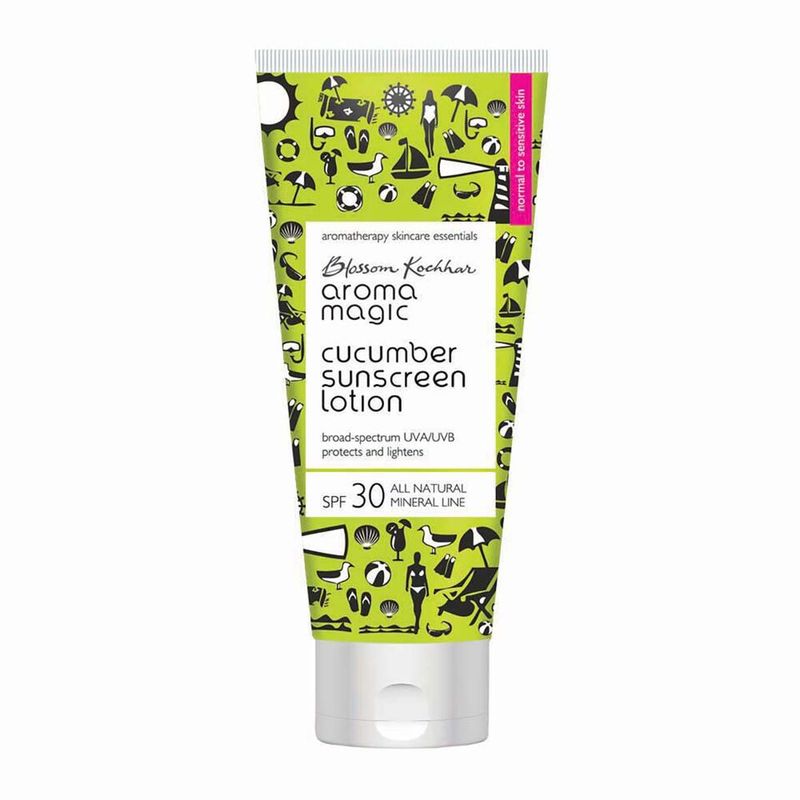
Aroma Magic Cucumber Sunscreen Lotion SPF 30 UVA/UVB All Natural Mineral Line

Aroma Magic Cucumber Sunscreen Lotion SPF 30 UVA/UVB All Natural Mineral Line
Aroma Magic
aroma-magic-cucumber-sunscreen-lotion-spf-30-uva-uvb-all-natural-mineral-line
Suncare
10084952310053
Morning or Evening?
How often will you use this product?
Notes


Highlights
WHAT IS IT?
Sunscreen lotion with natural sun blocking agents
FEATURES
Full spectrum UVA & UVB protection, Non greasy & light texture, Comfortable on skin, Prevents tanning, Helps lighten skin
BEST FOR
sensitive
CHECKS
No whitening cast, No greasy feel
Who Is It For?
All Ages All GendersWhat Does It Help With?
Sun Protection Prevents Tanning Skin LighteningBudget
Affordable (under $30)How To Use
Which routine should it be used in?
Instructions:
Key Information


What Aroma Magic Says
Product Description:
This lotion provides full spectrum protection against harmful UVA & UVB sun rays by combining natural sun blocking agents with sunscreens. Non greasy & light, it feels comfortable on your skin. Prevents tanning & also helps to lighten the skin.
About the Brand:
Ingredients Overview
Ingredients List
Purified Water, Organic Beeswax, Zinc Oxide, Cucumis Sativus Extract, Vegetable Glycerin, Triticum Vulgare Germ Oil, Cocos Nucifera Oil, Aloe Babadenis Gel, Ascorbic Acid, Anthemis Nobilis Essential Oil, Commiphora Myrrha Essential Oil, Boswellia Carteri Essential Oil, Sodium Riboflavin Phosphate, Panthenol, Glycine Soja Oil
Key Ingredients
Cucumber, Aloe Vera
Ingredients Details
Ascorbic Acid
Common Name(s): Vitamin c,l-ascorbic acid,l-ascorbate
CAS Number: 50-81-7
DESCRIPTION
What It Does: Ascorbic acid neutralizes free radicals, stimulates collagen production, inhibits melanin synthesis for a brighter complexion, and supports skin repair.
Why It's Used: It is used because it offers comprehensive antioxidant and brightening benefits supported by extensive clinical evidence. it is the most bioavailable form of vitamin c for topical application.
How It Works: As an antioxidant, it donates electrons to neutralize reactive oxygen species. it is an essential cofactor for the hydroxylation of proline and lysine in collagen synthesis. it inhibits tyrosinase, the enzyme responsible for melanin production, reducing hyperpigmentation.
Typically Found In: Vitamin c serums,brightening moisturizers,antioxidant formulations,spf products,eye creams
TECHNICAL DETAILS
Primary Category: Active ingredient – vitamin c
Secondary Functions: Collagen booster,tyrosinase inhibitor,ph adjuster
Application Areas:

Facial Skincare
Body Care

Hair Care
Beard Care
Color Cosmetics (Makeup)
Dietary/Oral Supplements
Typical Concentration Range: 5%–20% (effective range: 10–20%; ph must be below 3.5 for activity)
SOURCING & ETHICS
Vegan Status: Yes – synthetically produced or corn/plant-derived
Halal Status: Yes
Source Notes: Commercially produced by reichstein synthesis or guangxi fermentation process from glucose. some plant-derived versions exist.
SKIN COMPATIBILITY
Irritancy Rating: 2/5 – low to moderate; low ph formulations can cause initial tingling or stinging, especially at concentrations above 15%
Comedogenicity Rating: 0/5 – non-comedogenic
Sensitivity Concerns: Acidic ph can irritate sensitive or compromised skin barriers. highly unstable – oxidizes rapidly when exposed to air, light, and heat (turns orange/brown). use in the morning under spf.
Safe for Sensitive Skin: Use with caution – start at lower concentrations (5–10%). stabilized derivative forms (vitamin c derivatives) may be better tolerated.
SAFETY & COMPATIBILITY
Safety Profile: Very safe; well-studied. key concern is formulation stability, not safety. ewg hazard score: 1.
Works Well With: Vitamin e (tocopherol) – synergistic antioxidant effect,ferulic acid – stabilizing and boosting,spf,hyaluronic acid,niacinamide (use at different times if concentrations are high)
Avoid Combining With: Retinol (use at separate times – ph incompatibility),benzoyl peroxide (oxidizes vitamin c),ahas/bhas (cumulative irritation risk)
SCIENTIFIC NOTE
L-ascorbic acid is the only form of vitamin c that is proven bioactive in skin at the molecular level. its instability (rapid oxidation) has driven development of numerous stable derivatives including ascorbyl glucoside, magnesium ascorbyl phosphate, and ascorbyl tetraisopalmitate.
Last Verified: Cosing database,cir safety assessment,pinnell et al. studies,journal of the american academy of dermatology
Primary Sources: 2026-03-12
Cocos Nucifera Oil
Common Name(s): Coconut oil,vco virgin coconut,high-lauric mct oil
CAS Number: 8001-31-8
DESCRIPTION
What It Does: Provides mct lauric acid antimicrobial emolliency with hair conditioning.
Why It's Used: Traditional mct antimicrobial emollient — very high lauric acid provides genuine antimicrobial activity alongside the documented hair shaft protein-loss reduction that makes coconut oil uniquely effective as a pre-wash hair treatment.
How It Works: Lauric (47-51%): antimicrobial. myristic (18-21%): emollient. caprylic/capric (8-12%): fast penetration. hair: penetrates shaft reducing protein loss during washing (rele & mohile 2003). vco: higher polyphenols. moderate comedogenicity.
Typically Found In: Hair pre-wash treatment,antimicrobial body oil,traditional body care
TECHNICAL DETAILS
Primary Category: Functional ingredient – emollient
Secondary Functions: Barrier sealing,softening
Application Areas:
Facial Skincare
Body Care
Hair Care
Beard Care
Color Cosmetics (Makeup)
Dietary/Oral Supplements
Typical Concentration Range: 1%–100%
SOURCING & ETHICS
Vegan Status: Yes
Halal Status: Yes
Source Notes: Plant-derived, synthetic or animal-derived. verify source.
SKIN COMPATIBILITY
Irritancy Rating: 1/5 – very low
Comedogenicity Rating: 2026-04-05 00:00:00 -0700
Sensitivity Concerns: Non-irritating.
Safe for Sensitive Skin: Yes
SAFETY & COMPATIBILITY
Safety Profile: Excellent safety profile. ewg score: 1.
Works Well With: Humectants,ceramides,actives as carrier
Avoid Combining With: No significant incompatibilities
SCIENTIFIC NOTE
Coconut oil's unique hair shaft penetration (vs mineral oil and sunflower which cannot penetrate) reflects mct triglyceride small molecular size: small c8-c12 mct molecules penetrate the hair cortex completely, filling interstices and preventing hygral fatigue protein loss during washing. this size-dependent penetration is why only coconut oil shows this protective effect.
Last Verified: Cosing database,rele & mohile 2003 hair oil penetration study
Primary Sources: 2026-03-12
Cucumis Sativus Extract
Common Name(s): Cucumis sativus extract,botanical extract,phytochemical active
CAS Number: N/a
DESCRIPTION
What It Does: Provides antioxidant protection, anti-inflammatory activity, and skin conditioning from polyphenols, terpenoids, and phytochemicals in the extract.
Why It's Used: Natural plant extracts provide multi-functional phytochemical profiles supporting concurrent skin care claims from one ingredient with authentic botanical heritage.
How It Works: Polyphenols scavenge ros via h• donation; terpenoids inhibit nf-kb or cox inflammatory pathways; vitamins and minerals provide cofactor skin nutrition.
Typically Found In: Botanical skin care,natural products
TECHNICAL DETAILS
Primary Category: Active ingredient – antioxidant
Secondary Functions: Free radical scavenging,anti-aging
Application Areas:
Facial Skincare
Body Care
Hair Care
Beard Care
Color Cosmetics (Makeup)
Dietary/Oral Supplements
Typical Concentration Range: 0.1%–30%
SOURCING & ETHICS
Vegan Status: Conditional
Halal Status: Conditional
Source Notes: Plant-derived extract or synthetic.
SKIN COMPATIBILITY
Irritancy Rating: 1/5 – very low
Comedogenicity Rating: 0/5 – non-comedogenic
Sensitivity Concerns: Non-irritating; well-tolerated.
Safe for Sensitive Skin: Yes
SAFETY & COMPATIBILITY
Safety Profile: Excellent safety profile. ewg score: 1.
Works Well With: Vitamin c,vitamin e,ferulic acid,spf,other antioxidants
Avoid Combining With: No significant incompatibilities
SCIENTIFIC NOTE
Plant secondary metabolites evolved for uv photoprotection and pathogen defence — mechanisms directly applicable to cosmetic antioxidant and anti-inflammatory activity in human skin.
Last Verified: Cosing database,cucumis sativus extract botanical review
Primary Sources: 2026-03-12
Glycine Soja Oil
Common Name(s): Glycine soja oil,botanical oil,phytochemical active
CAS Number: N/a
DESCRIPTION
What It Does: Provides antioxidant protection from reactive oxygen species, reduces inflammatory cytokine production in skin, and conditions skin through the plant's phytochemical complex.
Why It's Used: Natural origin narrative, traditional use heritage, and multi-functional phytochemical profile supporting concurrent skin care claims from one ingredient.
How It Works: Polyphenols, terpenoids, and alkaloids scavenge ros via h• donation, inhibit nf-kb or cox-2 inflammatory pathways, and interact with skin surface proteins for conditioning.
Typically Found In: Botanical skin care,natural products
TECHNICAL DETAILS
Primary Category: Active ingredient – antioxidant
Secondary Functions: Free radical scavenging,anti-aging
Application Areas:
Facial Skincare
Body Care
Hair Care
Beard Care
Color Cosmetics (Makeup)
Dietary/Oral Supplements
Typical Concentration Range: 0.1%–10%
SOURCING & ETHICS
Vegan Status: Conditional
Halal Status: Yes
Source Notes: Plant-derived extract or synthetic.
SKIN COMPATIBILITY
Irritancy Rating: 1/5 – very low
Comedogenicity Rating: 0/5 – non-comedogenic
Sensitivity Concerns: Non-irritating; well-tolerated.
Safe for Sensitive Skin: Yes
SAFETY & COMPATIBILITY
Safety Profile: Excellent safety profile. ewg score: 1.
Works Well With: Vitamin c,vitamin e,ferulic acid,spf,other antioxidants
Avoid Combining With: No significant incompatibilities
SCIENTIFIC NOTE
Plant secondary metabolites evolved as photoprotectants and antimicrobials — mechanisms directly applicable to cosmetic antioxidant and anti-inflammatory activity in human skin.
Last Verified: Cosing database,glycine soja oil botanical review
Primary Sources: 2026-03-12
