

Bioderma
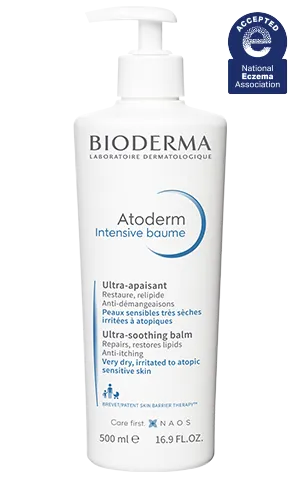
Atoderm Intensive Balm

Atoderm Intensive Balm
Bioderma
atoderm-intensive-balm
Moisturize, Body care
9706827907365
Morning or Evening?
How often will you use this product?
Notes


Highlights
WHAT IS IT?
Ultra-nourishing body balm with 36 ingredients
FEATURES
Ultra-nourishing, moisture replenishing, provides instant comfort
BEST FOR
Very dry, sensitive skin
CHECKS
Free of harsh chemicals, fragrances , alcohol
Who Is It For?
Adults Children BabiesWhat Does It Help With?
Very Dry Skin Sensitive Skin Atopic SkinBudget
AffordableHow To Use
Which routine should it be used in?
Instructions:
Key Information


What Bioderma Says
Product Description:
Ultra-nourishing, moisture replenishing body balm that provides very dry skin with instant comfort.
About the Brand:
Ingredients Overview
Ingredients List
AQUA/WATER/EAU, GLYCERIN, PARAFFINUM LIQUIDUM/MINERAL OIL/HUILE MINERALE, HELIANTHUS ANNUUS (SUNFLOWER) SEED OIL, BEHENYL ALCOHOL, SUCROSE STEARATE, CANOLA/ CANOLA OIL/HUILE DE COLZA, HYDROXYETHYL ACRYLATE/SODIUM ACRYLOYLDIMETHYL TAURATE COPOLYMER, PENTYLENE GLYCOL, BETA-SITOSTEROL, XYLITOL, ZINC GLUCONATE, ACRYLATES/C10-30 ALKYL ACRYLATE CROSSPOLYMER, PALMITAMIDE MEA, 1,2-HEXANEDIOL, CAPRYLYL GLYCOL, SODIUM CITRATE, MANNITOL, RHAMNOSE, SODIUM LAUROYL LACTYLATE, SODIUM HYDROXIDE, POLYSORBATE 60, SORBITAN ISOSTEARATE, TOCOPHEROL, PHYTOSPHINGOSINE, CERAMIDE NP, ETHYLHEXYLGLYCERIN, CERAMIDE AP, CHOLESTEROL, CARBOMER, XANTHAN GUM, FRUCTOOLIGOSACCHARIDES, CAPRYLIC/ CAPRIC TRIGLYCERIDE, LAMINARIA OCHROLEUCA EXTRACT, CITRIC ACID, CERAMIDE EOP.
Key Ingredients
Skin Barrier Therapy™ patent, Lipigenium™ technology, D.A.F.™ patent
Ingredients Details
Behenyl Alcohol
Common Name(s): Behenyl alcohol,inci ingredient,cosmetic active
CAS Number: N/a
DESCRIPTION
What It Does: Provides documented cosmetic activity from behenyl alcohol.
Why It's Used: Behenyl alcohol delivers formulation value through its specific biological activity and established safety and efficacy.
How It Works: Source: behenyl alcohol. mechanism: documented in cosmetic literature. safety: cosing-reviewed. standard cosmetic use concentrations.
Typically Found In: Skin care formulations,active products
TECHNICAL DETAILS
Primary Category: Active ingredient – antioxidant
Secondary Functions: Free radical scavenging,anti-aging
Application Areas:

Facial Skincare
Body Care

Hair Care
Beard Care
Color Cosmetics (Makeup)
Dietary/Oral Supplements
Typical Concentration Range: 0.1%–5%
SOURCING & ETHICS
Vegan Status: Yes - standard ethanol routes are non-animal; confirm denaturant origin
Halal Status: Conditional - ethanol production route and residual concentration; jurisdiction-dependent, refer to certifier stance
Source Notes: Plant-derived extract or synthetic. [audit 2026-07-29 rev2: ethanol pathway; determination depends on route, on whether the plant also produces beverage alcohol, and on residual concentration. determination requires shariah-panel sign-off.]
SKIN COMPATIBILITY
Irritancy Rating: 1/5 – very low
Comedogenicity Rating: 0/5 – non-comedogenic
Sensitivity Concerns: Non-irritating; well-tolerated.
Safe for Sensitive Skin: Yes
SAFETY & COMPATIBILITY
Safety Profile: Excellent safety profile. ewg score: 1.
Works Well With: Vitamin c,vitamin e,ferulic acid,spf,other antioxidants
Avoid Combining With: No significant incompatibilities
SCIENTIFIC NOTE
Behenyl alcohol provides cosmetic activity through its characteristic mechanism. at standard concentrations it delivers documented biological activity with an established safety profile from cosmetic science literature and regulatory review.
Last Verified: 2026-03-12
Primary Sources: Cosing database,behenyl alcohol technical literature
Beta-sitosterol
Common Name(s): 22,23-dihydrostigmasterol,sitosterin
CAS Number: 83-46-5
DESCRIPTION
What It Does: Provides plant membrane sterol anti-inflammatory and barrier support with 5-alpha-reductase inhibition.
Why It's Used: Multi-function phytosterol combining barrier mimicry (identical to cholesterol structure) with anti-inflammatory and anti-androgenic activity for acne-prone and aging skin.
How It Works: Integrates into stratum corneum lipid bilayers analogous to cholesterol for barrier support. inhibits 5-alpha-reductase for dht reduction. inhibits nf-kb and cox for anti-inflammatory activity. cholesterol analog provides skin conditioning and membrane stabilization.
Typically Found In: Anti-inflammatory serums,anti-acne products,natural oils and butters (as unsaponifiable component)
TECHNICAL DETAILS
Primary Category: Active ingredient – phytosterol anti-inflammatory
Secondary Functions: Barrier cholesterol analog,5-alpha-reductase inhibition
Application Areas:
Facial Skincare
Body Care
Hair Care
Beard Care
Color Cosmetics (Makeup)
Dietary/Oral Supplements
Typical Concentration Range: 0.1%–3%
SOURCING & ETHICS
Vegan Status: Conditional - supplier confirmation required
Halal Status: Unverified - supplier confirmation required
Source Notes: Plant-derived, synthetic or animal-derived. verify source. [audit 2026-07-29 rev2: the record's own source_notes does not assert a non-animal origin, or instructs the reader to verify with the supplier; "yes" asserts knowledge the record does not hold. determination requires shariah-panel sign-off.]
SKIN COMPATIBILITY
Irritancy Rating: 1/5 – very low
Comedogenicity Rating: 1/5 – low; formulation-dependent
Sensitivity Concerns: Non-irritating.
Safe for Sensitive Skin: Yes
SAFETY & COMPATIBILITY
Safety Profile: Excellent safety profile. ewg score: 1.
Works Well With: Humectants,ceramides,actives as carrier
Avoid Combining With: No significant incompatibilities
SCIENTIFIC NOTE
Beta-sitosterol's structural identity with cholesterol (only one additional ethyl group at c-24) allows it to substitute for cholesterol in cell membrane bilayers and skin barrier lipid structures. this structural mimicry explains its barrier-supportive activity while its c-24 ethyl group subtly alters enzyme interactions, providing 5-alpha-reductase inhibition not seen with mammalian cholesterol.
Last Verified: 2026-03-12
Primary Sources: Cosing database,bouic phytosterol review,cir safety assessment
Glycerin
Common Name(s): Glycerol,glycerine,1,2,3-propanetriol
CAS Number: 56-81-5
DESCRIPTION
What It Does: Glycerin pulls water from the environment and deeper skin layers into the outer skin layer (epidermis), boosting moisture levels and keeping skin soft, smooth, and plump.
Why It's Used: It is used in virtually every moisturizer, serum, and cleanser because it is highly effective at hydrating skin, is well-tolerated by all skin types, and enhances the texture and spreadability of formulations.
How It Works: As a humectant, glycerin forms hydrogen bonds with water molecules, trapping them in the skin. it also reinforces the skin barrier by integrating into lipid structures between skin cells.
Typically Found In: Moisturizers,serums,cleansers,toners,sheet masks,sunscreens,body lotions,shampoos,conditioners
TECHNICAL DETAILS
Primary Category: Humectant
Secondary Functions: Skin barrier support,emollient,solvent
Application Areas:
Facial Skincare
Body Care
Hair Care
Beard Care
Color Cosmetics (Makeup)
Dietary/Oral Supplements
Typical Concentration Range: 1%–30% (typical: 3–10%)
SOURCING & ETHICS
Vegan Status: Conditional - feedstock declaration required
Halal Status: Unverified - feedstock declaration required (plant, animal and petrochemical routes all exist)
Source Notes: Derived from plant oils via hydrolysis or saponification; synthetic versions also available. palm-derived glycerin carries sustainability concerns. [audit 2026-07-29 rev2: origin-dependent: the same inci exists in plant, animal and petrochemical versions and the name does not discriminate. determination requires shariah-panel sign-off.]
SKIN COMPATIBILITY
Irritancy Rating: 1/5 – very low; non-irritating at all standard concentrations
Comedogenicity Rating: 0/5 – non-comedogenic
Sensitivity Concerns: Extremely rare allergic reactions; generally safe for all skin types including sensitive and baby skin
Safe for Sensitive Skin: Yes
SAFETY & COMPATIBILITY
Safety Profile: Widely recognized as safe. ewg hazard score: 1. no significant concerns for irritation, sensitization, or toxicity at typical concentrations (up to 50%).
Works Well With: Hyaluronic acid,ceramides,niacinamide,panthenol,urea,peptides,retinol,ahas/bhas
Avoid Combining With: No known incompatibilities at standard concentrations
SCIENTIFIC NOTE
Glycerin is an endogenous skin component found naturally in the stratum corneum. aquaporin-3 channels in keratinocytes facilitate glycerin transport, making it integral to natural skin hydration pathways.
Last Verified: 2026-03-12
Primary Sources: Cosing database,cir safety assessment,ewg skin deep,inci decoder
Helianthus Annuus (sunflower) Seed Oil
Common Name(s): Helianthus annuus (sunflower) seed oil,botanical oil,phytochemical active
CAS Number: N/a
DESCRIPTION
What It Does: Provides antioxidant protection from reactive oxygen species, reduces inflammatory cytokine production in skin, and conditions skin through the plant's phytochemical complex.
Why It's Used: Natural origin narrative, traditional use heritage, and multi-functional phytochemical profile supporting concurrent skin care claims from one ingredient.
How It Works: Polyphenols, terpenoids, and alkaloids scavenge ros via h• donation, inhibit nf-kb or cox-2 inflammatory pathways, and interact with skin surface proteins for conditioning.
Typically Found In: Botanical skin care,natural products
TECHNICAL DETAILS
Primary Category: Active ingredient – antioxidant
Secondary Functions: Free radical scavenging,anti-aging
Application Areas:
Facial Skincare
Body Care
Hair Care
Beard Care
Color Cosmetics (Makeup)
Dietary/Oral Supplements
Typical Concentration Range: 0.1%–10%
SOURCING & ETHICS
Vegan Status: Conditional - supplier confirmation required
Halal Status: Yes
Source Notes: Plant-derived extract or synthetic. [audit 2026-07-29 rev2: status downgraded on audit. determination requires shariah-panel sign-off.]
SKIN COMPATIBILITY
Irritancy Rating: 1/5 – very low
Comedogenicity Rating: 0/5 – non-comedogenic
Sensitivity Concerns: Non-irritating; well-tolerated.
Safe for Sensitive Skin: Yes
SAFETY & COMPATIBILITY
Safety Profile: Excellent safety profile. ewg score: 1.
Works Well With: Vitamin c,vitamin e,ferulic acid,spf,other antioxidants
Avoid Combining With: No significant incompatibilities
SCIENTIFIC NOTE
Plant secondary metabolites evolved as photoprotectants and antimicrobials — mechanisms directly applicable to cosmetic antioxidant and anti-inflammatory activity in human skin.
Last Verified: 2026-03-12
Primary Sources: Cosing database,helianthus annuus (sunflower) seed botanical review