

Nykaa E retail limited
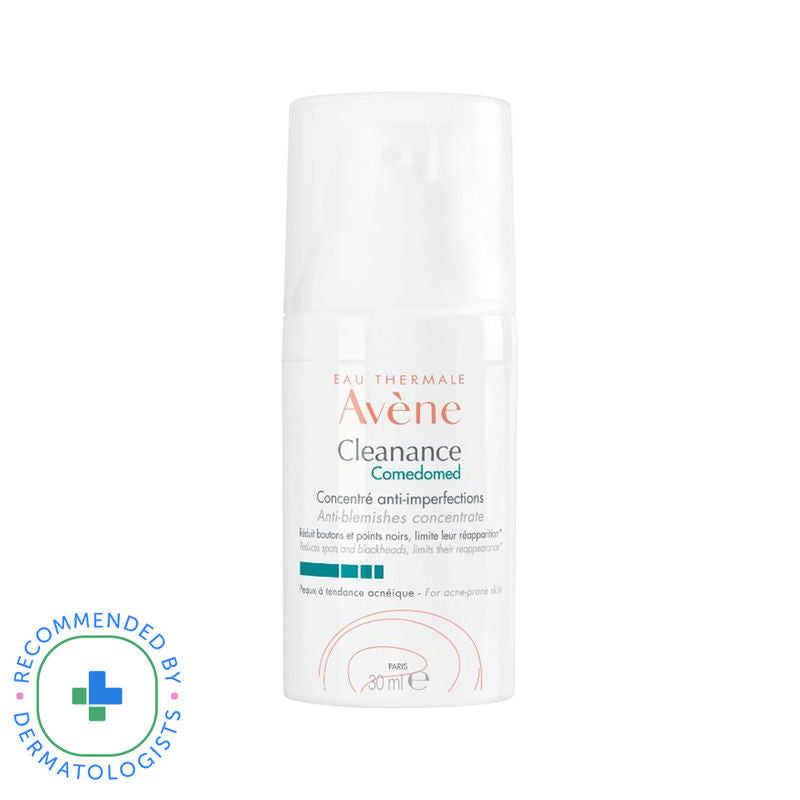
Avene Cleanance Comedomed Anti-Blemish Control Serum

Avene Cleanance Comedomed Anti-Blemish Control Serum
Nykaa E retail limited
avene-cleanance-comedomed-anti-blemish-control-serum
Serum
10085061394725
Morning or Evening?
How often will you use this product?
Notes


Highlights
WHAT IS IT?
Anti-Blemish Control Serum with 11 blemish fighting ingredients
FEATURES
Minimalist formulation, reduces excess oil, visibly reduces blemishes, fragrance-free, paraben-free, mineral oil-free, AHA/BHA-free, vegan, clinically tested
BEST FOR
oily
CHECKS
Fragrance,Paraben,Mineral oil,AHA/BHA
Who Is It For?
Ages 18 To 35 Years All GendersWhat Does It Help With?
Blemishes Excess Oil Acne Skin Clarity Skin RebalancingBudget
Premium ($76-$150)How To Use
Which routine should it be used in?
Instructions:
Key Information


What Nykaa E retail limited Says
Product Description:
Innovative serum is free from harsh ingredients and formulated with plant-based extracts and Avène Thermal Spring Water to help reduce excess oil and appearance of blemishes for visibly clearer skin in as soon as 7 days. Cleanance concentrate blemish control serum: Minimalist formulated with only 11 blemish fighting ingredients. Rebalances: Helps restore and re-establish a healthy skin environment. Results: Long-lasting results to help visibly reduce appearance of blemishes. Formulated to minimize risk of allergic reactions, won't clog pores. Fragrance-free, paraben-free, mineral oil-free, AHA/BHA-free, vegan. Clinical results: 45% saw visible reduction of blemishes after 8 weeks. Visibly clearer skin in 7 days. Clinically shown to help reduce the severity of blemishes after 8 weeks. Evaluation according to the IGA score observed by a dermatologist: Applying Cleanance Concentrate twice a day for 8 weeks. 56 subjects aged 18 to 35 years with mild to moderate acne on the face. Evaluations takes at D1, D8, D28 and D57 - noting IGA score decreased by 1 grade. About the Brand: Discover EAU THERMALE AVENE - the leading skin care line in European pharmacies. Rooted in dermatology and hydrotherapy, Avène has over 270 years of expertise in caring for sensitive skin and is trusted by millions worldwide. At the heart of the brand is Avène Thermal Spring Water, a natural soothing source clinically shown by over 150 studies to soothe, soften and calm the skin.
About the Brand:
Ingredients Overview
Ingredients List
avene-thermal-spring-water,isopropyl-alcohol,peg-6,glycerin,silybum-marianum-fruit-extract,silica,polyacrylate-13,polyisobutene,polysorbate-20,sorbitan-isostearate,water
Key Ingredients
Avene Thermal Spring Water, Silybum Marianum Fruit Extract, Glycerin
Ingredients Details
Glycerin
Common Name(s): Glycerol,glycerine,1,2,3-propanetriol
CAS Number: 56-81-5
DESCRIPTION
What It Does: Glycerin pulls water from the environment and deeper skin layers into the outer skin layer (epidermis), boosting moisture levels and keeping skin soft, smooth, and plump.
Why It's Used: It is used in virtually every moisturizer, serum, and cleanser because it is highly effective at hydrating skin, is well-tolerated by all skin types, and enhances the texture and spreadability of formulations.
How It Works: As a humectant, glycerin forms hydrogen bonds with water molecules, trapping them in the skin. it also reinforces the skin barrier by integrating into lipid structures between skin cells.
Typically Found In: Moisturizers,serums,cleansers,toners,sheet masks,sunscreens,body lotions,shampoos,conditioners
TECHNICAL DETAILS
Primary Category: Humectant
Secondary Functions: Skin barrier support,emollient,solvent
Application Areas:

Facial Skincare
Body Care
Hair Care
Beard Care

Color Cosmetics (Makeup)
Dietary/Oral Supplements
Typical Concentration Range: 1%–30% (typical: 3–10%)
SOURCING & ETHICS
Vegan Status: Conditional - feedstock declaration required
Halal Status: Unverified - feedstock declaration required (plant, animal and petrochemical routes all exist)
Source Notes: Derived from plant oils via hydrolysis or saponification; synthetic versions also available. palm-derived glycerin carries sustainability concerns. [audit 2026-07-29 rev2: origin-dependent: the same inci exists in plant, animal and petrochemical versions and the name does not discriminate. determination requires shariah-panel sign-off.]
SKIN COMPATIBILITY
Irritancy Rating: 1/5 – very low; non-irritating at all standard concentrations
Comedogenicity Rating: 0/5 – non-comedogenic
Sensitivity Concerns: Extremely rare allergic reactions; generally safe for all skin types including sensitive and baby skin
Safe for Sensitive Skin: Yes
SAFETY & COMPATIBILITY
Safety Profile: Widely recognized as safe. ewg hazard score: 1. no significant concerns for irritation, sensitization, or toxicity at typical concentrations (up to 50%).
Works Well With: Hyaluronic acid,ceramides,niacinamide,panthenol,urea,peptides,retinol,ahas/bhas
Avoid Combining With: No known incompatibilities at standard concentrations
SCIENTIFIC NOTE
Glycerin is an endogenous skin component found naturally in the stratum corneum. aquaporin-3 channels in keratinocytes facilitate glycerin transport, making it integral to natural skin hydration pathways.
Last Verified: 2026-03-12
Primary Sources: Cosing database,cir safety assessment,ewg skin deep,inci decoder
Peg-6
Common Name(s): Peg-6,peg-6,polyethylene glycol low mw,humectant co-solvent emulsifier
CAS Number: N/a
DESCRIPTION
What It Does: Provides hygroscopic moisture retention and co-solvent activity for active ingredient dissolution from the polyether backbone's multiple ether oxygen water-binding groups.
Why It's Used: Peg molecular weight determines primary function: low mw (co-solvent/humectant), medium mw (emulsifier/solubiliser), high mw (film-former/thickener) — enabling the same chemical class to address multiple formulation needs across the mw range.
How It Works: Peg ether oxygens (1 per ch₂ch₂o repeat unit) provide 2-3 h-bond acceptors per unit — the chain of ether oxygens binding water molecules creating the hygroscopic character. at low mw (liquid state), provides co-solvent dissolution; at high mw (waxy solid), provides film-forming character through chain entanglement.
Typically Found In: Versatile formulations
TECHNICAL DETAILS
Primary Category: Active ingredient – cosmetic active
Secondary Functions: Skin conditioning
Application Areas:
Facial Skincare
Body Care
Hair Care
Beard Care
Color Cosmetics (Makeup)
Dietary/Oral Supplements
Typical Concentration Range: 0.5%–20%
SOURCING & ETHICS
Vegan Status: Conditional - supplier confirmation required
Halal Status: Unverified - supplier confirmation required
Source Notes: Commercially produced for cosmetic use. verify vegan/halal status with supplier. [audit 2026-07-29 rev2: the record's own source_notes does not assert a non-animal origin, or instructs the reader to verify with the supplier; "yes" asserts knowledge the record does not hold. determination requires shariah-panel sign-off.]
SKIN COMPATIBILITY
Irritancy Rating: 1/5 – very low
Comedogenicity Rating: 0/5 – non-comedogenic
Sensitivity Concerns: Well-tolerated by most skin types.
Safe for Sensitive Skin: Yes
SAFETY & COMPATIBILITY
Safety Profile: Good safety profile at recommended concentrations. ewg score: 1–2.
Works Well With: Standard skincare actives
Avoid Combining With: No known significant incompatibilities
SCIENTIFIC NOTE
1,4-dioxane contamination monitoring: ethylene oxide polymerisation generates trace 1,4-dioxane — eu and us regulations require <10 ppm in finished products. supplier coa confirming dioxane level is required for regulatory compliance.
Last Verified: 2026-03-22
Primary Sources: Cosing database,peg-6 peg polyethylene glycol review
Polyacrylate-13
Common Name(s): Polyacrylate-13,linear acrylate film-forming polymer,film-former styling polymer
CAS Number: N/a
DESCRIPTION
What It Does: Forms a clear, flexible film on hair or skin providing styling hold or long-wear cosmetic performance — film hardness and flexibility controlled by the copolymer monomer ratio and molecular weight.
Why It's Used: Linear acrylate copolymers deliver tg-controlled films — hard monomers (mma, styrene, isobornyl acrylate) raise tg for strong hold; soft monomers (n-ba, 2-eha) lower tg for flexible conditioning films. this tg engineering provides precise sensory and performance control.
How It Works: Above tg, chains have mobility to coalesce forming a continuous film on drying. hard monomers (tg 100-130c) increase overall film tg providing rigidity; soft monomers (tg -50 to -70c) provide flexibility. ionic monomers (acrylic acid) provide ph-responsive charge for neutralised thickener function. fox equation predicts copolymer tg from monomer weight fractions.
Typically Found In: Hair care,nail products,skin care,colour cosmetics
TECHNICAL DETAILS
Primary Category: Active ingredient – cosmetic active
Secondary Functions: Skin conditioning
Application Areas:
Facial Skincare
Body Care
Hair Care
Beard Care
Color Cosmetics (Makeup)
Dietary/Oral Supplements
Typical Concentration Range: 0.1%–10%
SOURCING & ETHICS
Vegan Status: Conditional - supplier confirmation required
Halal Status: Unverified - supplier confirmation required
Source Notes: Commercially produced for cosmetic use. verify vegan/halal status with supplier. [audit 2026-07-29 rev2: the record's own source_notes does not assert a non-animal origin, or instructs the reader to verify with the supplier; "yes" asserts knowledge the record does not hold. determination requires shariah-panel sign-off.]
SKIN COMPATIBILITY
Irritancy Rating: 1/5 – very low
Comedogenicity Rating: 0/5 – non-comedogenic
Sensitivity Concerns: Well-tolerated by most skin types.
Safe for Sensitive Skin: Yes
SAFETY & COMPATIBILITY
Safety Profile: Good safety profile at recommended concentrations. ewg score: 1–2.
Works Well With: Standard skincare actives
Avoid Combining With: No known significant incompatibilities
SCIENTIFIC NOTE
Eu 2023/2055: acrylate polymers forming water-soluble solutions (neutralised polyacrylic acids, sulfonated polymers) are exempt from microplastic restrictions. insoluble film-forming polymers may require compliance assessment depending on particle-size specification.
Last Verified: 2026-03-12
Primary Sources: Cosing database,polyacrylate-13 linear film-former review
Polyisobutene
Common Name(s): Polyisobutene,cosmetic active,functional ingredient
CAS Number: N/a
DESCRIPTION
What It Does: Delivers characteristic cosmetic function at recommended use concentration.
Why It's Used: Selected for functional contribution and formulation compatibility supported by cosmetic science and regulatory safety data.
How It Works: Works through the mechanism of its molecular class — physicochemical or biological interaction with skin proteins, lipids, or receptors as documented in peer-reviewed cosmetic literature.
Typically Found In: Skin care formulations
TECHNICAL DETAILS
Primary Category: Active ingredient – cosmetic active
Secondary Functions: Skin conditioning
Application Areas:
Facial Skincare
Body Care
Hair Care
Beard Care
Color Cosmetics (Makeup)
Dietary/Oral Supplements
Typical Concentration Range: 0.1%–10%
SOURCING & ETHICS
Vegan Status: Conditional - supplier confirmation required
Halal Status: Unverified - supplier confirmation required
Source Notes: Commercially produced for cosmetic use. verify vegan/halal status with supplier. [audit 2026-07-29 rev2: the record's own source_notes does not assert a non-animal origin, or instructs the reader to verify with the supplier; "yes" asserts knowledge the record does not hold. determination requires shariah-panel sign-off.]
SKIN COMPATIBILITY
Irritancy Rating: 1/5 – very low
Comedogenicity Rating: 0/5 – non-comedogenic
Sensitivity Concerns: Well-tolerated by most skin types.
Safe for Sensitive Skin: Yes
SAFETY & COMPATIBILITY
Safety Profile: Good safety profile at recommended concentrations. ewg score: 1–2.
Works Well With: Standard skincare actives
Avoid Combining With: No known significant incompatibilities
SCIENTIFIC NOTE
Polyisobutene has an established safety and efficacy profile within the cosmetic regulatory framework at standard use concentrations.
Last Verified: 2026-03-12
Primary Sources: Cosing database,polyisobutene technical literature