

Nykaa E retail limited
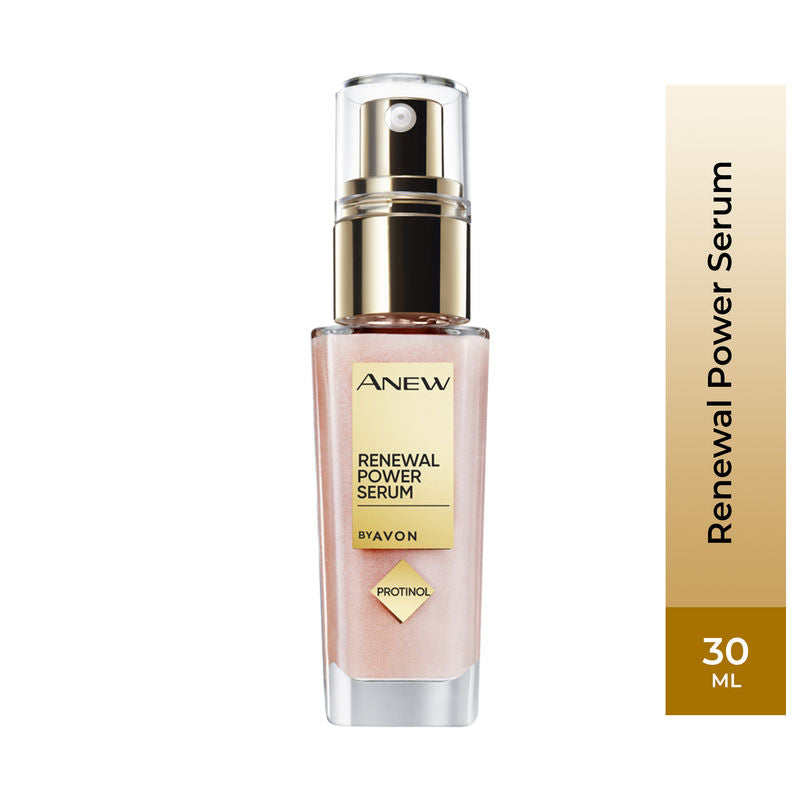
Avon Anew Renewal Power Serum Restage

Avon Anew Renewal Power Serum Restage
Nykaa E retail limited
avon-anew-renewal-power-serum-restage
Serum
10084943692069
Morning or Evening?
How often will you use this product?
Notes


Highlights
WHAT IS IT?
Collagen boosting serum with World Exclusive Protinol and Niacinamide
FEATURES
Lightweight, collagen boosting, easily absorbed, delivers 7 skin strengthening benefits in 7 days, allergy tested
BEST FOR
sensitive
CHECKS
Who Is It For?
What Does It Help With?
Skin Strengthening Collagen BoostingBudget
Premium ($76-$150)How To Use
Which routine should it be used in?
Instructions:
Key Information


What Nykaa E retail limited Says
Product Description:
Fall in love with our lightweight, collagen boosting serum developed with World Exclusive Protinol + Niacinamide that gets absorbed easily into your skin, and delivers 7 skin strengthening benefits in just 7 days. Benefits: Allergy Tested. About the Brand: For 135+ years Avon has stood for women providing innovative, quality beauty products which are primarily sold to women, through women.
About the Brand:
Ingredients Overview
Ingredients List
Aqua/Water/Eau, Glycerin, Cetearyl Alcohol, Myristyl Myristate, Cannabis Sativa Seed Oil, Caprylic/Capric Triglyceride, Theobroma Cacao Seed Butter/Theobroma Cacao (Cocoa) Seed Butter, Glyceryl Stearate, PEG-1 Stearate, Cocos Nucifera Shell Powder/Cocos Nucifera (Coconut) Shell Powder, Helianthus Annuus Seed Wax/Helianthus Annuus (Sunflower) Seed Wax, Glycine Soja Oil/Glycine Soja (Soybean) Oil, Parfum/Fragrance, Benzyl Alcohol, Phenoxyethanol, Prunus Amygdalus Dulcis Shell Powder/Prunus Amygdalus Dulcis (Sweet Almond) Shell Powder, Potassium Sorbate, Xanthan Gum, Citric Acid, Talc, CI 77288/Chromium Oxide Greens, CI 77492/Iron Oxides, CI 77491/Iron Oxides, CI 77499/Iron Oxides
Key Ingredients
Protinol, Niacinamide, Cannabis Sativa Seed Oil
Ingredients Details
Aqua/water/eau
Common Name(s): Aqua/water/eau extract
DESCRIPTION
What It Does: Provides antioxidant protection, soothing anti-inflammatory effects, and skin-conditioning benefits through plant-derived polyphenols and phytochemicals.
Why It's Used: Plant extracts concentrate bioactive phytochemicals evolved for environmental protection — uv, microbial, and oxidative stressors — that translate to skin benefits.
How It Works: Polyphenols (flavonoids, phenolic acids) inhibit nf-κb-mediated inflammatory signaling, scavenge reactive oxygen species through electron donation, and chelate pro-oxidant metal ions to reduce oxidative skin damage.
Typically Found In: Serums,toners,moisturizers,masks,essences
TECHNICAL DETAILS
Primary Category: Botanical extracts
Secondary Functions: Antioxidant,anti-inflammatory
Application Areas:

Facial Skincare

Body Care
Hair Care
Beard Care
Color Cosmetics (Makeup)
Dietary/Oral Supplements
Typical Concentration Range: 0.1–10%
SOURCING & ETHICS
Vegan Status: Yes
Halal Status: Yes
Source Notes: Plant-derived extract; no animal components.
SKIN COMPATIBILITY
Irritancy Rating: 1
Comedogenicity Rating: 0
Sensitivity Concerns: Low sensitization potential at recommended use concentrations.
Safe for Sensitive Skin: Yes
SAFETY & COMPATIBILITY
Safety Profile: Well-characterized cosmetic ingredient with established safety profile. generally non-irritating at typical use concentrations. suitable for leave-on and rinse-off cosmetics.
Works Well With: Niacinamide,hyaluronic acid,vitamin c,ceramides
Avoid Combining With: Strong oxidizing agents
SCIENTIFIC NOTE
Plant secondary metabolites (flavonoids, terpenes, phenolic acids) are biosynthesized as defense compounds against uv, herbivores, and pathogens. their anti-inflammatory activity typically derives from competitive inhibition of cox-2 and 5-lox enzymes (ic50 1–50 µm), while antioxidant activity involves single electron transfer (set) and hydrogen atom transfer (hat) mechanisms with structure-dependent rate constants.
Last Verified: 2025-01-15
Primary Sources: Cosing eu database; pcpc cosmetic ingredient safety reviews; phytochemical and ethnobotanical literature
Benzyl Alcohol
Common Name(s): Phenylcarbinol,benzenemethanol,alpha-hydroxytoluene
CAS Number: 100-51-6
DESCRIPTION
What It Does: Provides dual fragrance and preservative activity as an aromatic alcohol.
Why It's Used: Multi-function ingredient serving as both fragrance component and preservative – reduces formulation complexity by providing both functions in one ingredient.
How It Works: Phenylcarbinol provides antimicrobial activity via membrane disruption (effective vs gram-positive bacteria and moulds). solvent for fragrances and difficult-to-dissolve actives. mild oxidative conversion to benzaldehyde provides sweet almond-like fragrance.
Typically Found In: Fragrances,preserved cosmetics,solvent systems
TECHNICAL DETAILS
Primary Category: Fragrance component / preservative
Secondary Functions: Skin conditioning
Application Areas:
Facial Skincare
Body Care
Hair Care
Beard Care
Color Cosmetics (Makeup)
Dietary/Oral Supplements
Typical Concentration Range: 0.001%–1% (fragrance); up to 1% as preservative
SOURCING & ETHICS
Vegan Status: Yes - standard ethanol routes are non-animal; confirm denaturant origin
Halal Status: Conditional - ethanol production route and residual concentration; jurisdiction-dependent, refer to certifier stance
Source Notes: Commercially produced for cosmetic use. verify vegan/halal status with supplier. [audit 2026-07-29 rev2: ethanol pathway; determination depends on route, on whether the plant also produces beverage alcohol, and on residual concentration. determination requires shariah-panel sign-off.]
SKIN COMPATIBILITY
Irritancy Rating: 1/5 – very low
Comedogenicity Rating: 0/5 – non-comedogenic
Sensitivity Concerns: Well-tolerated by most skin types.
Safe for Sensitive Skin: Yes
SAFETY & COMPATIBILITY
Safety Profile: Eu cosmetics regulation: declared fragrance allergen. also listed as approved preservative (annex v, max 1%). dual regulatory status (fragrance + preservative) depending on function and concentration.
Works Well With: Standard skincare actives
Avoid Combining With: No known significant incompatibilities
SCIENTIFIC NOTE
Benzyl alcohol's dual regulatory status (fragrance allergen and approved preservative) creates a formulation paradox: it must be listed as a fragrance allergen if present >0.001% (leave-on) regardless of whether it was added for fragrance or preservation. this regulatory dual identity means a preservative added for antimicrobial function triggers the same allergen declaration requirement as a fragrance added for scent.
Last Verified: 2026-03-12
Primary Sources: Cosing database,ifra standards,eu preservative annex v
Cannabis Sativa Seed Oil
Common Name(s): Cannabis sativa seed oil
DESCRIPTION
What It Does: Nourishes and softens skin through its balanced fatty acid profile, while antioxidant compounds protect against oxidative skin damage.
Why It's Used: Plant oils provide physiologically compatible lipid structures that integrate into the skin barrier and deliver fat-soluble antioxidants directly to skin cells.
How It Works: Fatty acids integrate into stratum corneum lipid lamellae, reinforcing the lipid barrier. antioxidants (tocopherols, carotenoids, polyphenols) neutralize ros through electron donation or singlet oxygen quenching.
Typically Found In: Face oils,serums,moisturizers,hair treatments,body oils
TECHNICAL DETAILS
Primary Category: Plant oils
Secondary Functions: Emollient,antioxidant
Application Areas:
Facial Skincare
Body Care
Hair Care
Beard Care
Color Cosmetics (Makeup)
Dietary/Oral Supplements
Typical Concentration Range: 0.5–30%
SOURCING & ETHICS
Vegan Status: Yes
Halal Status: Yes
Source Notes: Cold-pressed or solvent-extracted plant oil; no animal components.
SKIN COMPATIBILITY
Irritancy Rating: 1
Comedogenicity Rating: 2
Sensitivity Concerns: Low sensitization potential at recommended use concentrations.
Safe for Sensitive Skin: Yes
SAFETY & COMPATIBILITY
Safety Profile: Well-characterized cosmetic ingredient with established safety profile. generally non-irritating at typical use concentrations. suitable for leave-on and rinse-off cosmetics.
Works Well With: Vitamin e,ceramides,other plant oils,squalane
Avoid Combining With: Strong oxidizers (accelerate rancidity)
SCIENTIFIC NOTE
Vegetable oils are triglyceride matrices where the fatty acid composition determines skin compatibility, barrier function, and comedogenicity. oleic acid-rich oils (>60%) soften barrier lipids and enhance penetration; linoleic acid-rich oils reinforce ceramide-poor stratum corneum; saturated fatty acid-rich oils provide occlusion without skin penetration.
Last Verified: 2025-01-15
Primary Sources: Cosing eu database; pcpc cosmetic ingredient safety reviews; aocs plant oil composition databases; fatty acid pharmacology reviews
Caprylic/capric Triglyceride
Common Name(s): Mct oil,fractionated coconut oil,c8/c10 triglyceride
CAS Number: 73398-61-5
DESCRIPTION
What It Does: Lightweight, stable emollient that solubilizes oil-soluble actives for excellent delivery without greasy feel.
Why It's Used: Universal lightweight emollient base and solubilizer for oil-soluble actives in serums and low-viscosity formulations where mineral oil or petrolatum would be too heavy.
How It Works: Medium-chain length provides ideal balance of spreading coefficient, penetration rate, and barrier-sealing properties. excellent solubilizer for vitamin e, retinoids, and other lipophilic actives.
Typically Found In: Serums,facial oils,sunscreens,anti-aging products,hair products
TECHNICAL DETAILS
Primary Category: Active ingredient – medium-chain triglyceride emollient
Secondary Functions: Active solubilizer,spreading agent
Application Areas:
Facial Skincare
Body Care
Hair Care
Beard Care
Color Cosmetics (Makeup)
Dietary/Oral Supplements
Typical Concentration Range: 1%–50%
SOURCING & ETHICS
Vegan Status: Conditional - feedstock declaration required
Halal Status: Unverified - feedstock declaration required (plant, animal and petrochemical routes all exist)
Source Notes: Fractionated by hydrolysis and re-esterification of coconut oil. only c8 and c10 fatty acids retained. [audit 2026-07-29 rev2: origin-dependent: the same inci exists in plant, animal and petrochemical versions and the name does not discriminate. determination requires shariah-panel sign-off.]
SKIN COMPATIBILITY
Irritancy Rating: 1/5 – very low
Comedogenicity Rating: 1/5 – very low; medium-chain length generally non-comedogenic
Sensitivity Concerns: Non-irritating.
Safe for Sensitive Skin: Yes
SAFETY & COMPATIBILITY
Safety Profile: Excellent safety profile. ewg score: 1.
Works Well With: Humectants,ceramides,actives as carrier
Avoid Combining With: No significant incompatibilities
SCIENTIFIC NOTE
Mct oil's medium-chain length (c8/c10) provides superior oxidative stability vs longer polyunsaturated chains and better skin aesthetics (lighter, less greasy) vs longer chain emollients (c16/c18). excellent solubilizer for retinoic acid, tocopheryl esters, and other lipophilic actives.
Last Verified: 2026-03-12
Primary Sources: Cosing database,cir safety assessment,ewg skin deep