

Nykaa E retail limited
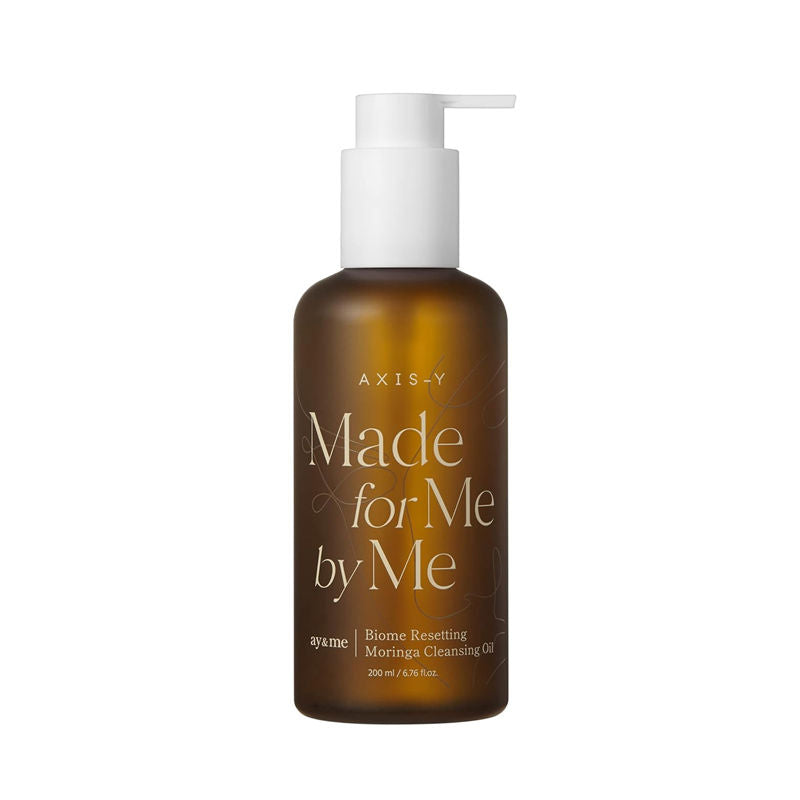
AXIS-Y Biome Resetting Moringa Cleansing Oil

AXIS-Y Biome Resetting Moringa Cleansing Oil
Nykaa E retail limited
axis-y-biome-resetting-moringa-cleansing-oil
Cleanse
10084717560101
Morning or Evening?
How often will you use this product?
Notes


Highlights
WHAT IS IT?
Cleansing Oil, More than 20 ingredients
FEATURES
Lightweight oil, Removes makeup and impurities, Contains Moringa oil and Special Biome Blend with prebiotics and probiotics, Hypoallergenic, No need for double cleansing, Suitable for daily use including oily skin
BEST FOR
sensitive
CHECKS
Does not contain irritants causing over-cleansing or heaviness
Who Is It For?
All Genders Suitable For Sensitive Skin TypesWhat Does It Help With?
Makeup Removal Removing Excess Sebum And Dead Skin Cells Brightening Dull Skin Preventing Skin IrritationBudget
Premium ($76-$150)How To Use
Which routine should it be used in?
Instructions:
Key Information


What Nykaa E retail limited Says
Product Description:
The AXIS-Y Biome Resetting Moringa Cleansing Oil is a lightweight oil that cleanses away makeup and impurities on every inch of the skin, for an easy one-step deep cleanse. Moringa oil gently removes impurities clogging the pores to clean the skin and AXIS-Y's Special Biome Blend helps to remove excess sebum and dead skin cells, as well as brighten dull skin. It slides easily over the skin without any heaviness, providing a light refreshing feeling and can be used daily even on oily skin types. Benefits: This cleansing oil helps quickly cleanse makeup and dead skin cells with its speedy wash-off formula. Special Biome Blend contains 5 different prebiotics and probiotics combined at the optimal ratios for benefits such as improving complexion and skin health. Moringa Oil purifies and softens the skin, and contains nutrients and vitamins to restore skin. Hypoallergenic cleansing oil that does not require double cleansing, which helps prevent sensitive skin from becoming irritated from over-cleansing.
About the Brand:
Ingredients Overview
Ingredients List
Ethylhexyl-Palmitate,Isopropyl-Palmitate,Sorbeth-30-Tetraoleate,Isohexadecane,Caprylic/Capric-Triglyceride,Propylene-Glycol-Dicaprylate/Dicaprate,Isododecane,Ethylhexyl-Pelargonate,Moringa-Oleifera-Seed-Oil,Helianthus-Annuus-(Sunflower)-Seed-Oil,Hippophae-Rhamnoides-Fruit-Oil,Calendula-Officinalis-Flower-Oil,Glycine-Soja-(Soybean)-Oil,Retinol,Galactomyces-Ferment-Filtrate,Lactobacillus-Ferment,Bifida-Ferment-Lysate,Saccharomyces/-Xylinum/Black-Tea-Ferment,Saccharomyces-Ferment-Filtrate,Pentaerythrity-Tetra-di-t-butyl-Hydroxyhydrocinnamate,Pentylene-Glycol,Water,Tocopherol,Tocopheryl-Linoleate,Caprylyl-Glycol,1,2-Hexanediol,Juniperus-Virginiana-Oil,Cedrus-Atlantica-Bark-Oil,Amyris-Balsamifera-Bark-Oil,Copaifera-Officinalis-(Balsam-Copaiba)-Resin,Pogostemon-Cablin-Oil
Key Ingredients
Moringa-Oleifera-Seed-Oil,Special-Biome-Blend including prebiotics and probiotics,Retinol
Ingredients Details
1-2-hexanediol
Common Name(s): 1-2-hexanediol,cosmetic active,functional ingredient
CAS Number: N/a
DESCRIPTION
What It Does: Delivers characteristic cosmetic function at recommended use concentration.
Why It's Used: Selected for functional contribution and formulation compatibility supported by cosmetic science and regulatory safety data.
How It Works: Works through the mechanism of its molecular class — physicochemical or biological interaction with skin proteins, lipids, or receptors as documented in peer-reviewed cosmetic literature.
Typically Found In: Skin care formulations
TECHNICAL DETAILS
Primary Category: Active ingredient – cosmetic active
Secondary Functions: Skin conditioning
Application Areas:

Facial Skincare

Body Care
Hair Care
Beard Care
Color Cosmetics (Makeup)
Dietary/Oral Supplements
Typical Concentration Range: 0.1%–10%
SOURCING & ETHICS
Vegan Status: Conditional - supplier confirmation required
Halal Status: Unverified - supplier confirmation required
Source Notes: Commercially produced for cosmetic use. verify vegan/halal status with supplier. [audit 2026-07-29 rev2: the record's own source_notes does not assert a non-animal origin, or instructs the reader to verify with the supplier; "yes" asserts knowledge the record does not hold. determination requires shariah-panel sign-off.]
SKIN COMPATIBILITY
Irritancy Rating: 1/5 – very low
Comedogenicity Rating: 0/5 – non-comedogenic
Sensitivity Concerns: Well-tolerated by most skin types.
Safe for Sensitive Skin: Yes
SAFETY & COMPATIBILITY
Safety Profile: Good safety profile at recommended concentrations. ewg score: 1–2.
Works Well With: Standard skincare actives
Avoid Combining With: No known significant incompatibilities
SCIENTIFIC NOTE
1-2-hexanediol has an established safety and efficacy profile within the cosmetic regulatory framework at standard use concentrations.
Last Verified: 2026-03-12
Primary Sources: Cosing database,1-2-hexanediol technical literature
Isododecane
Common Name(s): Permethyl 99a,c12 isoparaffin,volatile hydrocarbon
CAS Number: 31807-55-3
DESCRIPTION
What It Does: Provides quick-dry volatile hydrocarbon carrier for colour cosmetics with complete evaporation and no residue.
Why It's Used: Primary colour cosmetic carrier — isododecane's volatility and excellent pigment dispersion combined with complete evaporation make it the standard carrier for long-wear foundations and colour cosmetics.
How It Works: Volatile isoparaffin (bp 177-188°c) evaporates from skin within 10-20 minutes. excellent pigment dispersion for colour cosmetics. spreading enhancement from low surface tension. no residue after evaporation provides clean, long-wear finish.
Typically Found In: Long-wear foundations,colour cosmetics,primers,sunscreens
TECHNICAL DETAILS
Primary Category: Functional ingredient – volatile hydrocarbon
Secondary Functions: Barrier sealing,softening
Application Areas:
Facial Skincare
Body Care
Hair Care
Beard Care
Color Cosmetics (Makeup)
Dietary/Oral Supplements
Typical Concentration Range: 5%–60%
SOURCING & ETHICS
Vegan Status: Conditional - supplier confirmation required
Halal Status: Unverified - supplier confirmation required
Source Notes: Plant-derived, synthetic or animal-derived. verify source. [audit 2026-07-29 rev2: the record's own source_notes does not assert a non-animal origin, or instructs the reader to verify with the supplier; "yes" asserts knowledge the record does not hold. determination requires shariah-panel sign-off.]
SKIN COMPATIBILITY
Irritancy Rating: 1/5 – very low
Comedogenicity Rating: 1/5 – low; formulation-dependent
Sensitivity Concerns: Non-irritating.
Safe for Sensitive Skin: Yes
SAFETY & COMPATIBILITY
Safety Profile: Excellent safety profile. ewg score: 1.
Works Well With: Humectants,ceramides,actives as carrier
Avoid Combining With: No significant incompatibilities
SCIENTIFIC NOTE
Isododecane's position as the preferred colour cosmetic carrier arises from a unique combination of properties that no other solvent provides simultaneously: volatility (complete evaporation for clean finish), pigment dispersion (superior to water or alcohols), compatibility with silicones (unlike many solvents), and skin safety (inert hydrocarbon without irritation potential of polar solvents).
Last Verified: 2026-03-12
Primary Sources: Cosing database,cir safety assessment
Isohexadecane
Common Name(s): Permethyl 101a,c16 isoparaffin
DESCRIPTION
What It Does: Provides ultra-lightweight dry-touch emolliency with excellent pigment dispersion for lightweight formulations.
Why It's Used: Premium lightweight emollient for dry-touch formulations — isohexadecane's highly branched structure provides the lightest, driest application feel of common cosmetic hydrocarbons.
How It Works: Highly branched c16 isoparaffin provides very low surface tension for fast spreading. completely non-polar structure provides no water retention (dry feel). excellent pigment wetting for colour cosmetics. very low viscosity (2.5 cst) for fluid application.
Typically Found In: Lightweight foundations,sunscreens,colour cosmetics,dry-touch products
TECHNICAL DETAILS
Primary Category: Functional ingredient – branched hydrocarbon emollient
Secondary Functions: Barrier sealing,softening
Application Areas:
Facial Skincare
Body Care
Hair Care
Beard Care
Color Cosmetics (Makeup)
Dietary/Oral Supplements
Typical Concentration Range: 1%–30%
SOURCING & ETHICS
Vegan Status: Conditional - supplier confirmation required
Halal Status: Unverified - supplier confirmation required
Source Notes: Plant-derived, synthetic or animal-derived. verify source. [audit 2026-07-29 rev2: the record's own source_notes does not assert a non-animal origin, or instructs the reader to verify with the supplier; "yes" asserts knowledge the record does not hold. determination requires shariah-panel sign-off.]
SKIN COMPATIBILITY
Irritancy Rating: 1/5 – very low
Comedogenicity Rating: 0/5 – non-comedogenic
Sensitivity Concerns: Non-irritating.
Safe for Sensitive Skin: Yes
SAFETY & COMPATIBILITY
Safety Profile: Excellent safety profile. ewg score: 1.
Works Well With: Humectants,ceramides,actives as carrier
Avoid Combining With: No significant incompatibilities
SCIENTIFIC NOTE
Isohexadecane's highly branched structure (methyl-substituted hexadecane) prevents the close molecular packing that creates liquid crystalline phases in linear hydrocarbons, resulting in a permanently disordered liquid state with very low viscosity and surface tension. this structural disorder from branching is the molecular basis for the lighter, faster-spreading application feel vs equivalent linear hydrocarbons.
Last Verified: 2026-03-12
Primary Sources: Cosing database,cir safety assessment
Retinol
Common Name(s): Vitamin a,all-trans retinol,(all-e)-3,7-dimethyl-9-(2,6,6-trimethyl-1-cyclohexen-1-yl)-2,4,6,8-nonatetraen-1-ol
CAS Number: 68-26-8
DESCRIPTION
What It Does: Retinol accelerates skin cell turnover, stimulates collagen production, reduces fine lines and wrinkles, fades hyperpigmentation, and helps normalize pore size.
Why It's Used: It is the most evidence-backed anti-aging ingredient available without a prescription. it provides comprehensive skin renewal benefits that no other single cosmetic ingredient can match.
How It Works: Retinol is converted in the skin to retinoic acid, which binds to retinoid receptors in cell nuclei. this activates gene expression changes that accelerate cell turnover, boost collagen synthesis, and inhibit matrix metalloproteinases (collagen-degrading enzymes).
Typically Found In: Night creams,serums,eye creams,targeted treatment products,anti-aging formulations
TECHNICAL DETAILS
Primary Category: Active ingredient – vitamin a derivative
Secondary Functions: Exfoliating,anti-acne,brightening
Application Areas:
Facial Skincare
Body Care
Hair Care
Beard Care
Color Cosmetics (Makeup)
Dietary/Oral Supplements
Typical Concentration Range: 0.025%–1% (otc); start at low concentrations and build up slowly
SOURCING & ETHICS
Vegan Status: Conditional - feedstock declaration required
Halal Status: Unverified - feedstock declaration required (plant, animal and petrochemical routes all exist)
Source Notes: Cosmetic retinol is predominantly synthetically manufactured. some natural sources include fish liver oils. synthetic is preferred for purity and sustainability. [audit 2026-07-29 rev2: origin-dependent: the same inci exists in plant, animal and petrochemical versions and the name does not discriminate. determination requires shariah-panel sign-off.]
SKIN COMPATIBILITY
Irritancy Rating: 3/5 – moderate; can cause dryness, peeling, redness, especially during adjustment period (retinization)
Comedogenicity Rating: 0/5 – non-comedogenic; actually helps clear pores
Sensitivity Concerns: Retinization period: 2–6 weeks of potential dryness, flaking, and sensitivity. photosensitizing – must use spf when using retinol. avoid during pregnancy.
Safe for Sensitive Skin: Use with caution – start at 0.025%, buffer with moisturizer, use every 2–3 nights initially
SAFETY & COMPATIBILITY
Safety Profile: Safe for general use at otc concentrations. not recommended during pregnancy. avoid with waxing. use spf daily. ewg hazard score: varies by concentration.
Works Well With: Niacinamide (soothes irritation),peptides,ceramides,hyaluronic acid,spf (mandatory)
Avoid Combining With: Benzoyl peroxide (may inactivate retinol),ahas/bhas (when new to retinol – overexfoliation risk),vitamin c (use at different times)
SCIENTIFIC NOTE
Retinol is approximately 20 times less potent than prescription tretinoin (retinoic acid) but significantly better tolerated. the conversion rate of retinol to retinoic acid in skin is the rate-limiting step in its efficacy.
Last Verified: 2026-03-12
Primary Sources: Cosing database,cir safety assessment,journal of investigative dermatology,kligman et al. studies