

Cetaphil
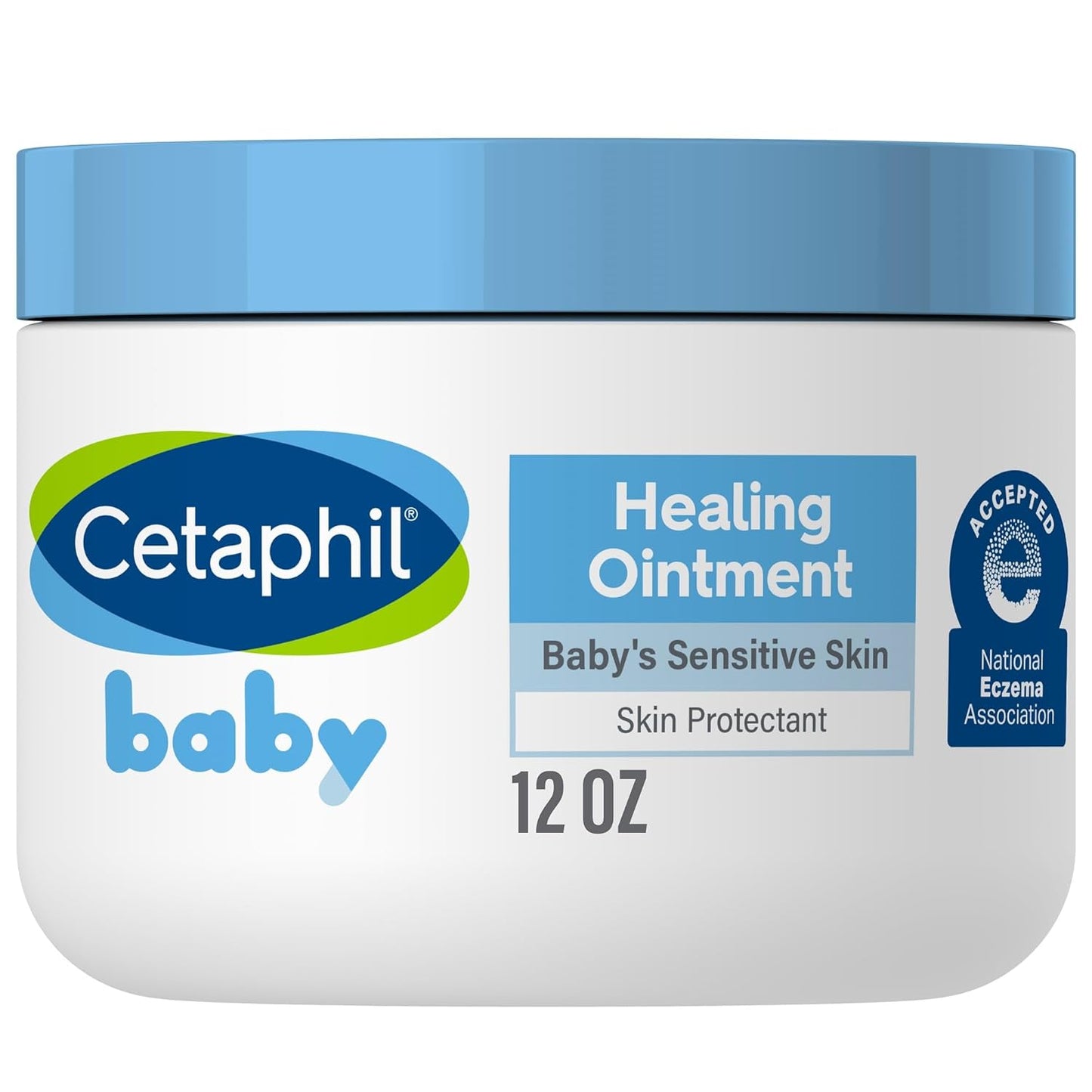
Baby Healing Ointment

Baby Healing Ointment
Cetaphil
baby-healing-ointment
Body care
9643556176165
Morning or Evening?
How often will you use this product?
Notes


Highlights
WHAT IS IT?
A healing ointment for babies with 8 ingredients
FEATURES
Multi-purpose ointment is clinically proven to be safe on baby's delicate skin, designed for daily soothing relief of minor skin irritations and diaper rash
BEST FOR
Sensitive skin
CHECKS
Does not contain fragrances, parabens, lanolin, preservatives
Who Is It For?
Babies 3 Months And OlderWhat Does It Help With?
Minor Skin Irritations Diaper Rash Dry SkinBudget
Mid-rangeHow To Use
Which routine should it be used in?
Instructions:
Key Information


What Cetaphil Says
Product Description:
Multi-purpose ointment is clinically proven to be safe on baby's delicate skin, designed for daily soothing relief of minor skin irritations and diaper rash
About the Brand:
Ingredients Overview
Ingredients List
Petrolatum, Cetearyl Ethylhexanoate, Butyrospermum Parkii (Shea) Butter, Beeswax, Microcrystalline Wax, Tocopheryl Acetate (Vitamin E Acetate)
Key Ingredients
Petrolatum, Shea Butter, Vitamin E
Ingredients Details
Beeswax
Common Name(s): Cera alba (white),cera flava (yellow),apis mellifera wax
CAS Number: 8012-89-3
DESCRIPTION
What It Does: Provides natural wax structure and emolliency for cosmetic texture and lip balm applications.
Why It's Used: The original cosmetic wax – provides natural, hard-texture structure for lip balms, sticks, and creams with emollient skin conditioning.
How It Works: Complex mixture of esters (wax esters), hydrocarbons (hentriacontane), and fatty acids provides semi-crystalline structure. melting point 62-65°c enables stable solid products. emulsifying capacity from free cerotic acid content.
Typically Found In: Lip balms,cosmetic sticks,creams,natural cosmetics
TECHNICAL DETAILS
Primary Category: Functional ingredient – natural wax
Secondary Functions: Natural wax structure,occlusive conditioning
Application Areas:

Facial Skincare

Body Care
Hair Care
Beard Care
Color Cosmetics (Makeup)
Dietary/Oral Supplements
Typical Concentration Range: 2%–30%
SOURCING & ETHICS
Vegan Status: No – honeybee-derived
Halal Status: Conditional – animal-derived; verify halal certification
Source Notes: Plant-derived, synthetic or animal-derived. verify source.
SKIN COMPATIBILITY
Irritancy Rating: 1/5 – very low
Comedogenicity Rating: 1/5 – low; formulation-dependent
Sensitivity Concerns: Non-irritating.
Safe for Sensitive Skin: Yes
SAFETY & COMPATIBILITY
Safety Profile: Excellent safety profile. ewg score: 1.
Works Well With: Humectants,ceramides,actives as carrier
Avoid Combining With: No significant incompatibilities
SCIENTIFIC NOTE
Beeswax's multi-component wax ester composition (myricyl palmitate as primary component) provides a unique crystalline structure that gives lip balms and cosmetic sticks their characteristic 'dragée' glide – different from synthetic wax esters that lack this crystalline lattice diversity.
Last Verified: Cosing database,cir safety assessment
Primary Sources: 2026-03-12
Cetearyl Ethylhexanoate
Common Name(s): Cetearyl ethylhexanoate,cosmetic active,functional ingredient
CAS Number: N/a
DESCRIPTION
What It Does: Delivers characteristic cosmetic function at recommended use concentration.
Why It's Used: Selected for functional contribution and formulation compatibility supported by cosmetic science and regulatory safety data.
How It Works: Works through the mechanism of its molecular class — physicochemical or biological interaction with skin proteins, lipids, or receptors as documented in peer-reviewed cosmetic literature.
Typically Found In: Skin care formulations
TECHNICAL DETAILS
Primary Category: Active ingredient – cosmetic active
Secondary Functions: Skin conditioning
Application Areas:
Facial Skincare
Body Care
Hair Care
Beard Care
Color Cosmetics (Makeup)
Dietary/Oral Supplements
Typical Concentration Range: 0.1%–10%
SOURCING & ETHICS
Vegan Status: Conditional
Halal Status: Yes
Source Notes: Commercially produced for cosmetic use. verify vegan/halal status with supplier.
SKIN COMPATIBILITY
Irritancy Rating: 1/5 – very low
Comedogenicity Rating: 0/5 – non-comedogenic
Sensitivity Concerns: Well-tolerated by most skin types.
Safe for Sensitive Skin: Yes
SAFETY & COMPATIBILITY
Safety Profile: Good safety profile at recommended concentrations. ewg score: 1–2.
Works Well With: Standard skincare actives
Avoid Combining With: No known significant incompatibilities
SCIENTIFIC NOTE
Cetearyl ethylhexanoate has an established safety and efficacy profile within the cosmetic regulatory framework at standard use concentrations.
Last Verified: Cosing database,cetearyl ethylhexanoate technical literature
Primary Sources: 2026-03-12
Microcrystalline Wax
Common Name(s): Microcrystalline wax,petrowax micro,microwax
CAS Number: 63231-60-7
DESCRIPTION
What It Does: Provides flexible, adhesive structure for cosmetic sticks and pencils with superior oil-binding vs paraffin.
Why It's Used: Premium stick cosmetic wax – superior flexibility and oil binding vs paraffin for smooth-applying, non-brittle lip and eye products.
How It Works: Highly branched c30-c75 isoalkanes provide irregular microcrystalline structure (smaller crystals than paraffin). irregular packing provides more flexible, less brittle wax. better oil retention in interstices between microcrystals. higher melting point (60-90°c) than paraffin.
Typically Found In: Lipsticks,eye pencils,solid stick products
TECHNICAL DETAILS
Primary Category: Functional ingredient – microcrystalline petroleum wax
Secondary Functions: Skin conditioning
Application Areas:
Facial Skincare
Body Care
Hair Care
Beard Care
Color Cosmetics (Makeup)
Dietary/Oral Supplements
Typical Concentration Range: 1%–25%
SOURCING & ETHICS
Vegan Status: No – petroleum-derived
Halal Status: Yes
Source Notes: Commercially produced for cosmetic use. verify vegan/halal status with supplier.
SKIN COMPATIBILITY
Irritancy Rating: 1/5 – very low
Comedogenicity Rating: 0/5 – non-comedogenic
Sensitivity Concerns: Well-tolerated by most skin types.
Safe for Sensitive Skin: Yes
SAFETY & COMPATIBILITY
Safety Profile: Good safety profile at recommended concentrations. ewg score: 1–2.
Works Well With: Standard skincare actives
Avoid Combining With: No known significant incompatibilities
SCIENTIFIC NOTE
Microcrystalline wax's flexibility advantage over paraffin arises from its branched molecular structure preventing the tight, regular crystalline packing that makes paraffin brittle. the irregular microcrystal structure interlocks with liquid oil molecules, providing superior oil binding that prevents sweating (oil migration to surface) in finished stick products during storage.
Last Verified: Cosing database,cir safety assessment
Primary Sources: 2026-03-12
Petrolatum
Common Name(s): Petroleum jelly,vaseline,white petrolatum
DESCRIPTION
What It Does: Provides the highest level of skin occlusion and wound healing protection of any cosmetic ingredient.
Why It's Used: The most effective skin barrier protection ingredient available – fda-approved otc skin protectant with unparalleled occlusive moisturization and wound healing evidence.
How It Works: Semi-solid blend of long-chain hydrocarbons creates an extremely cohesive, impermeable occlusive film. physically prevents bacterial and irritant ingress while completely preventing tewl. does not absorb into skin. promotes moist wound healing environment by maintaining wound surface hydration.
Typically Found In: Intensive moisturizers,wound healing ointments,lip balms,baby products,eczema treatments
TECHNICAL DETAILS
Primary Category: Functional ingredient – petroleum ointment base / gold-standard occlusive
Secondary Functions: Maximum occlusion,wound healing,otc skin protectant
Application Areas:
Facial Skincare
Body Care
Hair Care
Beard Care
Color Cosmetics (Makeup)
Dietary/Oral Supplements
Typical Concentration Range: 1%–100%
SOURCING & ETHICS
Vegan Status: Yes – petroleum-derived
Halal Status: Yes
Source Notes: Plant-derived, synthetic or animal-derived. verify source.
SKIN COMPATIBILITY
Irritancy Rating: 1/5 – very low
Comedogenicity Rating: 0/5 – non-comedogenic (clinical evidence)
Sensitivity Concerns: Non-irritating.
Safe for Sensitive Skin: Yes
SAFETY & COMPATIBILITY
Safety Profile: Fda category i grase otc skin protectant. ewg score: 1.
Works Well With: Humectants,ceramides,actives as carrier
Avoid Combining With: No significant incompatibilities
SCIENTIFIC NOTE
Petrolatum's wound healing mechanism (moist wound healing) was first systematically studied by george winter (1962) and demonstrated that wounds heal 2× faster under occlusion than air-exposed. all subsequent wound dressings and occlusive skin treatments are based on this fundamental finding, with petrolatum remaining the most effective occlusive agent 60 years later.
Last Verified: Cosing database,fda otc skin protectant monograph,winter (1962) moist wound healing study
Primary Sources: 2026-03-12
