

Nykaa E retail limited
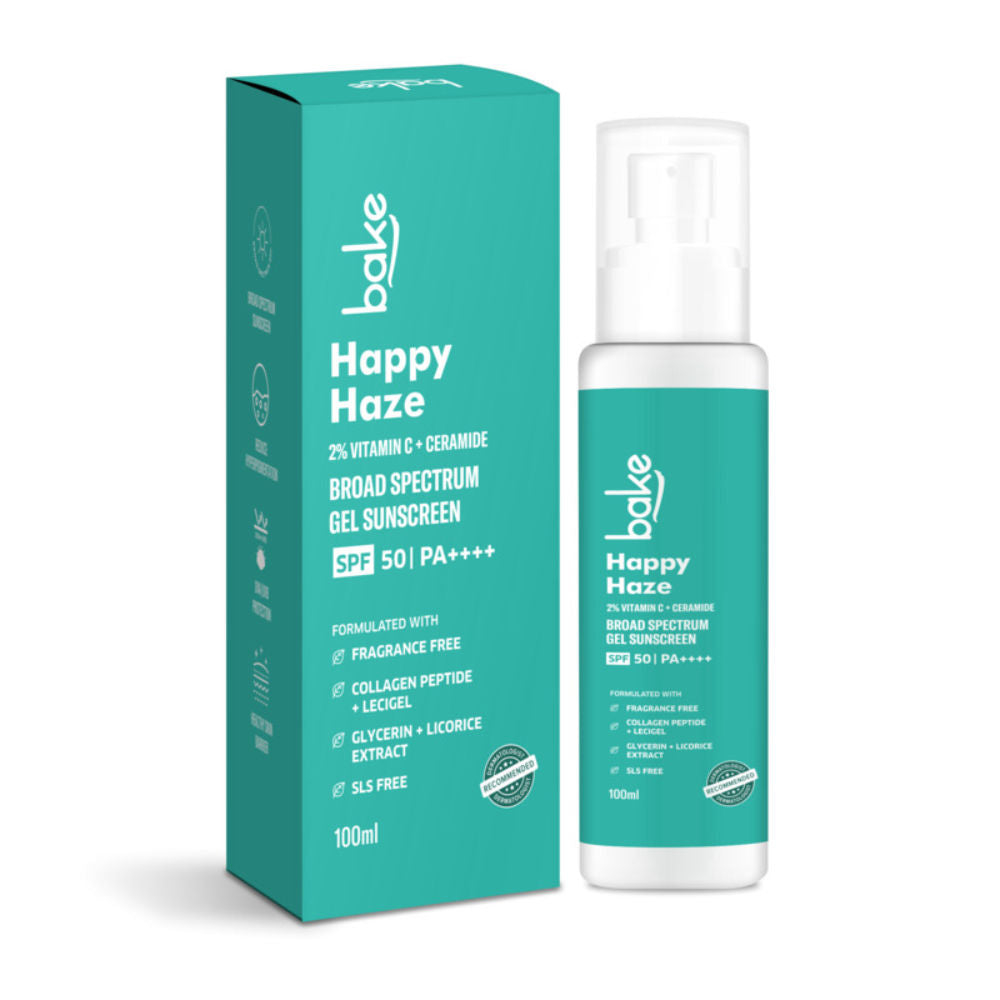
BAKE Happy Haze 100% Mineral Sunscreen SPF 50 PA++++ with 2% Vitamin C , Ceramide

BAKE Happy Haze 100% Mineral Sunscreen SPF 50 PA++++ with 2% Vitamin C , Ceramide
Nykaa E retail limited
bake-happy-haze-100-mineral-sunscreen-spf-50-pa-with-2-vitamin-c-ceramide
Suncare
10085007917349
Morning or Evening?
How often will you use this product?
Notes


Highlights
WHAT IS IT?
100% Mineral Sunscreen with 2% Vitamin C and Ceramide
FEATURES
Non Comedogenic texture, SPF 50 PA++++ protection, Contains papaya extract and lemongrass for gentle exfoliation, Vitamin C for skin brightening, 2% Ceramides for moisture retention and strengthening skin barrier
BEST FOR
sensitive
CHECKS
No fragrance or alcohol info explicitly stated
Who Is It For?
Adults UnisexWhat Does It Help With?
Sun Protection Skin Brightening Moisture Retention Gentle ExfoliationBudget
Mid-range ($30-$75)How To Use
Which routine should it be used in?
Instructions:
Key Information


What Nykaa E retail limited Says
Product Description:
Non Comedogenic: Lecigel is a natural gelling agent that gives this sunscreen a smooth and non-greasy texture. It also helps the sunscreen spread evenly on your skin, making it easier to apply. Sun Protection: The SPF 50 PA+++ protection in this sunscreen protects your skin from harmful UVA and UVB rays that can cause sunburn and skin damage. Skin Brightening & Exfoliation: This sunscreen contains papaya extract and lemongrass which provide gentle exfoliation, while vitamin C helps brighten the skin by reducing dark spots and promoting collagen synthesis. Moisture Retention: The potent 2% ceramides help to strengthen the skin's natural moisture barrier, preventing transepidermal water loss (TEWL) and maintaining hydration levels. This helps to lock in moisture and prevent dryness caused by sun exposure. About The Brand: BAKE is a dermatologically backed active skincare brand which aims at revolutionising skincare.
About the Brand:
Ingredients Overview
Ingredients List
Distilled-Water,Sodium-Benzoate,Zinc-Oxide,Titanium-Dioxide,Sesame-Oil,Papaya-Extract,Licorice-Extract,Olive-Oil,EDTA,Citric-Acid,Glycerin,Aloevera-Gel,Tea,Jojoba-Oil,Vitamin-E,Lemongrass-Oil,Ceramides,Lecigel-Soy-Gel,Vitamin-C
Key Ingredients
Vitamin C,Ceramides,Papaya Extract,Lemongrass Oil,Lecigel
Ingredients Details
Ceramides
Common Name(s): Ceramides,ceramide sphingolipid,sc barrier lipid
CAS Number: N/a
DESCRIPTION
What It Does: Restores sc lamellar lipid bilayers, reduces trans-epidermal water loss, repairs barrier dysfunction in dry and eczematous skin, and strengthens the physical barrier against environmental irritants.
Why It's Used: Provides direct structural barrier lipid replacement — unlike humectants that attract water, ceramides physically rebuild the lipid bilayer architecture required to retain moisture within the skin.
How It Works: Ceramides integrate into the sc intercellular lamellar bilayer, restoring the ordered orthorhombic packing disrupted in barrier-compromised skin. the sphingosine backbone's amide bond and hydroxyl groups form the h-bonding network that stabilises the lamellar structure.
Typically Found In: Barrier repair,dry skin,eczema-prone
TECHNICAL DETAILS
Primary Category: Functional ingredient – emollient
Secondary Functions: Barrier sealing,softening
Application Areas:

Facial Skincare
Body Care
Hair Care

Beard Care
Color Cosmetics (Makeup)
Dietary/Oral Supplements
Typical Concentration Range: 0.01%–5%
SOURCING & ETHICS
Vegan Status: Conditional
Halal Status: Yes
Source Notes: Plant-derived, synthetic or animal-derived. verify source.
SKIN COMPATIBILITY
Irritancy Rating: 1/5 – very low
Comedogenicity Rating: 1/5 – low; formulation-dependent
Sensitivity Concerns: Non-irritating.
Safe for Sensitive Skin: Yes
SAFETY & COMPATIBILITY
Safety Profile: Excellent safety profile. ewg score: 1.
Works Well With: Humectants,ceramides,actives as carrier
Avoid Combining With: No significant incompatibilities
SCIENTIFIC NOTE
Sc ceramides comprise ~50% of the sc lipid mass (by weight) and are essential for barrier function; ceramide depletion in atopic dermatitis and aged skin is a primary driver of barrier dysfunction and tewl elevation.
Last Verified: Cosing database,ceramides ceramide barrier review
Primary Sources: 2026-03-12
Edta
Common Name(s): Edta,inci ingredient,cosmetic active
CAS Number: N/a
DESCRIPTION
What It Does: Provides documented cosmetic activity from edta.
Why It's Used: Edta delivers formulation value through its specific biological activity and established safety and efficacy.
How It Works: Source: edta. mechanism: documented in cosmetic literature. safety: cosing-reviewed. standard cosmetic use concentrations.
Typically Found In: Skin care formulations,active products
TECHNICAL DETAILS
Primary Category: Active ingredient – antioxidant
Secondary Functions: Free radical scavenging,anti-aging
Application Areas:
Facial Skincare
Body Care
Hair Care
Beard Care
Color Cosmetics (Makeup)
Dietary/Oral Supplements
Typical Concentration Range: 0.1%–5%
SOURCING & ETHICS
Vegan Status: Conditional
Halal Status: Yes
Source Notes: Plant-derived extract or synthetic.
SKIN COMPATIBILITY
Irritancy Rating: 1/5 – very low
Comedogenicity Rating: 0/5 – non-comedogenic
Sensitivity Concerns: Non-irritating; well-tolerated.
Safe for Sensitive Skin: Yes
SAFETY & COMPATIBILITY
Safety Profile: Excellent safety profile. ewg score: 1.
Works Well With: Vitamin c,vitamin e,ferulic acid,spf,other antioxidants
Avoid Combining With: No significant incompatibilities
SCIENTIFIC NOTE
Edta provides cosmetic activity through its characteristic mechanism. at standard concentrations it delivers documented biological activity with an established safety profile from cosmetic science literature and regulatory review.
Last Verified: Cosing database,edta technical literature
Primary Sources: 2026-03-12
Glycerin
Common Name(s): Glycerol,glycerine,1,2,3-propanetriol
CAS Number: 56-81-5
DESCRIPTION
What It Does: Glycerin pulls water from the environment and deeper skin layers into the outer skin layer (epidermis), boosting moisture levels and keeping skin soft, smooth, and plump.
Why It's Used: It is used in virtually every moisturizer, serum, and cleanser because it is highly effective at hydrating skin, is well-tolerated by all skin types, and enhances the texture and spreadability of formulations.
How It Works: As a humectant, glycerin forms hydrogen bonds with water molecules, trapping them in the skin. it also reinforces the skin barrier by integrating into lipid structures between skin cells.
Typically Found In: Moisturizers,serums,cleansers,toners,sheet masks,sunscreens,body lotions,shampoos,conditioners
TECHNICAL DETAILS
Primary Category: Humectant
Secondary Functions: Skin barrier support,emollient,solvent
Application Areas:
Facial Skincare
Body Care
Hair Care
Beard Care
Color Cosmetics (Makeup)
Dietary/Oral Supplements
Typical Concentration Range: 1%–30% (typical: 3–10%)
SOURCING & ETHICS
Vegan Status: Yes – plant-derived (coconut, soy, palm) or synthetic
Halal Status: Yes – when plant-derived or synthetic; verify source with supplier
Source Notes: Derived from plant oils via hydrolysis or saponification; synthetic versions also available. palm-derived glycerin carries sustainability concerns.
SKIN COMPATIBILITY
Irritancy Rating: 1/5 – very low; non-irritating at all standard concentrations
Comedogenicity Rating: 0/5 – non-comedogenic
Sensitivity Concerns: Extremely rare allergic reactions; generally safe for all skin types including sensitive and baby skin
Safe for Sensitive Skin: Yes
SAFETY & COMPATIBILITY
Safety Profile: Widely recognized as safe. ewg hazard score: 1. no significant concerns for irritation, sensitization, or toxicity at typical concentrations (up to 50%).
Works Well With: Hyaluronic acid,ceramides,niacinamide,panthenol,urea,peptides,retinol,ahas/bhas
Avoid Combining With: No known incompatibilities at standard concentrations
SCIENTIFIC NOTE
Glycerin is an endogenous skin component found naturally in the stratum corneum. aquaporin-3 channels in keratinocytes facilitate glycerin transport, making it integral to natural skin hydration pathways.
Last Verified: Cosing database,cir safety assessment,ewg skin deep,inci decoder
Primary Sources: 2026-03-12
Tea
Common Name(s): Tea,cosmetic active,functional ingredient
CAS Number: N/a
DESCRIPTION
What It Does: Delivers characteristic cosmetic function at recommended use concentration.
Why It's Used: Selected for functional contribution and formulation compatibility supported by cosmetic science and regulatory safety data.
How It Works: Works through the mechanism of its molecular class as documented in peer-reviewed cosmetic literature.
Typically Found In: Skin care formulations
TECHNICAL DETAILS
Primary Category: Active ingredient – cosmetic active
Secondary Functions: Skin conditioning
Application Areas:
Facial Skincare
Body Care
Hair Care
Beard Care
Color Cosmetics (Makeup)
Dietary/Oral Supplements
Typical Concentration Range: 0.1%–10%
SOURCING & ETHICS
Vegan Status: Conditional
Halal Status: Yes
Source Notes: Commercially produced for cosmetic use. verify vegan/halal status with supplier.
SKIN COMPATIBILITY
Irritancy Rating: 1/5 – very low
Comedogenicity Rating: 0/5 – non-comedogenic
Sensitivity Concerns: Well-tolerated by most skin types.
Safe for Sensitive Skin: Yes
SAFETY & COMPATIBILITY
Safety Profile: Good safety profile at recommended concentrations. ewg score: 1–2.
Works Well With: Standard skincare actives
Avoid Combining With: No known significant incompatibilities
SCIENTIFIC NOTE
Tea has an established safety profile within the cosmetic regulatory framework at standard use concentrations.
Last Verified: Cosing database,tea technical literature
Primary Sources: 2026-03-12
