

Batiste
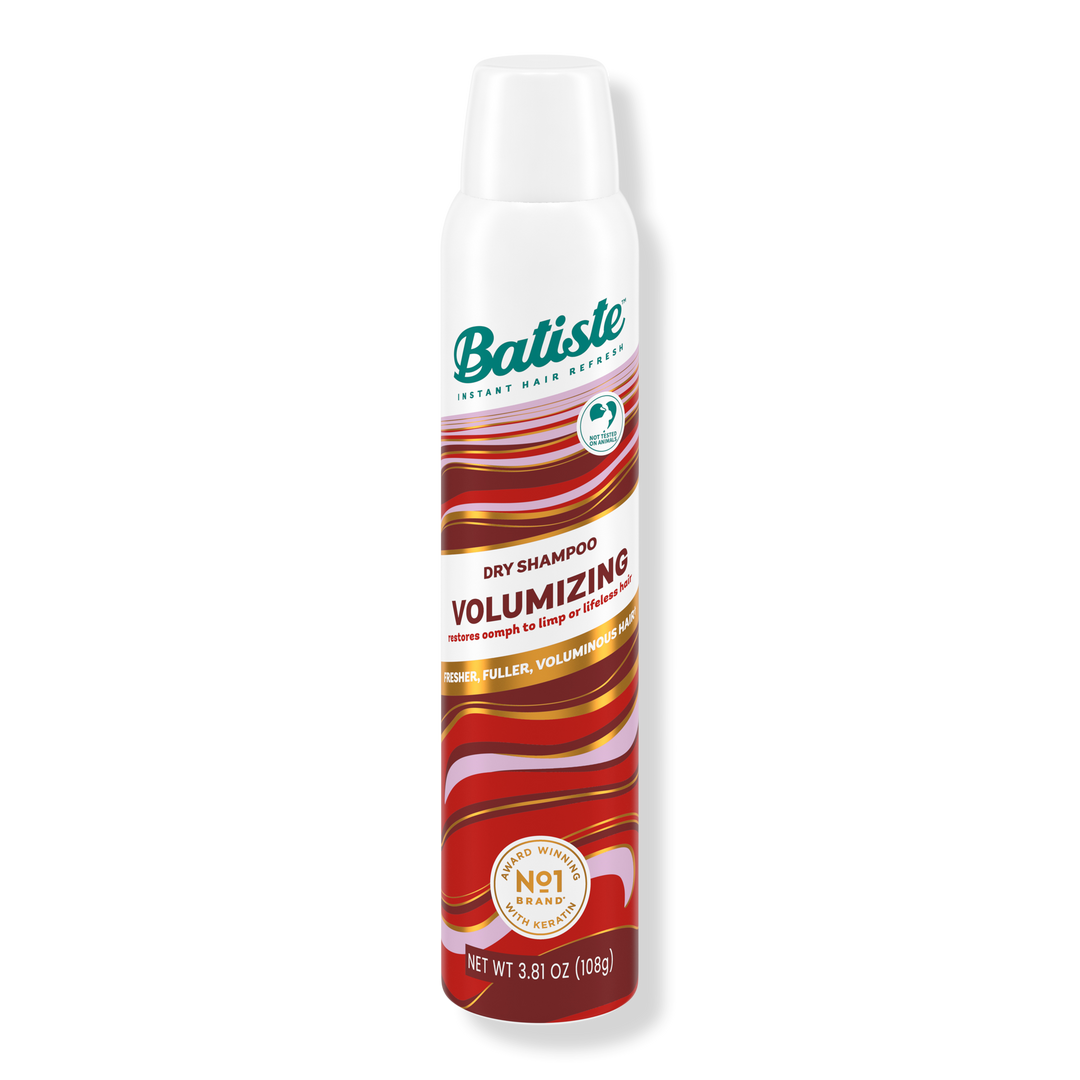
Batiste Volumizing Dry Shampoo
Batiste Volumizing Dry Shampoo is specially formulated with talc & silica to absorb oil while volumizing hair. This waterless formula revitalizes dull and lifeless hair, removing oil from roots and adding show-stopping volume with scents of grapefruit, rose, and amber.
Sulfate-free
Paraben-free
Color-safe
Silicone-free
Volume
Oily Scalp
Optimized for Your Environment & Lifestyle
Nykaa
In stock
Recommended

Batiste Volumizing Dry Shampoo
Batiste
batiste-volumizing-dry-shampoo
Dry Shampoo
10407571226917
Morning or Evening?
How often will you use this product?
Notes


Secure payment protection
Your Biodata Compatibility Analysis
Based on your 6 hair health indices and environmental factors
Poor Match
Significant incompatibilities
Growth Cycle Health Index
Hair Match
Hair Health Index Alignment
Optimal for OSI, SSI, DI, HSI
Ingredient Efficacy
Matching Ingredient Score
Environment Compatibility
Current UV, Air Quality & Humidity
Why This Works for Your Specific Profile
Damage Index:
Damaged hair structure cannot withstand product intensity causing increased breakage and further compromise
Water Quality:
Soft or moderately hard water does not require intensive treatment causing over-cleansing and dryness
Hair:
Porous structure over-absorbs product leading to buildup, stiffness, or excessive dryness
Active Lifestyle:
High activity and frequent washing rapidly strip product benefits requiring excessive reapplication
Your Hair Profile Integration
Your Hair Archetype

Density Level

Washing Frequency

Shedding Level

Oil Level
Your Hair Health Indices
Oil Secretion (OSI)
Very low oil production
Scalp Sensitivity (SSI)
Very low sensitivity
Growth Rate (CMR)
Poor metabolism rate
Damage Index (DI)
Minimal damage
Hair Strength (HSI)
Very weak strength
Softness Index (SI)
Significant improvement needed
Water & Environmental Integration

Water:


Expected Results & Timeline
Key Highlights

What is it?
Dry Shampoo with 9 ingredients

Who Is It For
Adults, All Genders

Budget
Rs. 1,328.96 - Rs. 2,657.92

Timeline
Immediate
Why You’ll Love It

What Does It Help With?
Oily Scalp, Flat Hair

Best for
Flat Hair

Features
Absorbs oil, Adds volume, Refreshes hair, No water required, Keratin-infused, Grapefruit, rose, and amber scent

Checks
Sulfate-free, Paraben-free, Color-safe, Silicone-free
Ingredients Overview
Ingredients List
butane, hydrofluorocarbon-152a, oryza-sativa-rice-starch, alcohol-denat, fragrance, talc, silica, distearyldimonium-chloride, cocoyl-hydrolyzed-keratin, hydrolyzed-collagen, cetrimonium-chloride
Key Ingredients
oryza-sativa-rice-starch, cocoyl-hydrolyzed-keratin, hydrolyzed-collagen
Ingredients Details
Butane
Common Name(s): Butane,butane,hydrocarbon aerosol propellant,spray dispensing gas
CAS Number: N/a
DESCRIPTION
What It Does: Generates the vapour pressure required for aerosol dispensing — the propellant expands on valve opening providing the driving force that atomises the formulation into fine spray droplets for even, controlled application.
Why It's Used: Propellant selection determines aerosol performance characteristics: spray pattern, droplet size, particle distribution, and environmental profile. the propellant balance sets container pressure throughout the product's use life for consistent spray from full to near-empty.
How It Works: Propellant liquefies under pressure inside the container — vapour pressure (~4-10 bar) provides the driving force for spray dispensing. hydrocarbon propellants: vapour pressure from van der waals attraction in liquid phase; hfcs: vapour pressure from f-atom electronic effects on boiling point; co₂/n₂: dissolved compressed gas providing pressure from henry's law equilibrium.
Typically Found In: Aerosol products
TECHNICAL DETAILS
Primary Category: Active ingredient – cosmetic active
Secondary Functions: Skin conditioning
Application Areas:

Facial Skincare

Body Care
Hair Care
Beard Care
Color Cosmetics (Makeup)
Dietary/Oral Supplements
Typical Concentration Range: Functional — sufficient for product pressure
SOURCING & ETHICS
Vegan Status: Conditional - supplier confirmation required
Halal Status: Unverified - supplier confirmation required
Source Notes: Commercially produced for cosmetic use. verify vegan/halal status with supplier. [audit 2026-07-29 rev2: the record's own source_notes does not assert a non-animal origin, or instructs the reader to verify with the supplier; "yes" asserts knowledge the record does not hold. determination requires shariah-panel sign-off.]
SKIN COMPATIBILITY
Irritancy Rating: 1/5 – very low
Comedogenicity Rating: 0/5 – non-comedogenic
Sensitivity Concerns: Well-tolerated by most skin types.
Safe for Sensitive Skin: Yes
SAFETY & COMPATIBILITY
Safety Profile: Good safety profile at recommended concentrations. ewg score: 1–2.
Works Well With: Standard skincare actives
Avoid Combining With: No known significant incompatibilities
SCIENTIFIC NOTE
Hydrocarbons (butane/propane/isobutane) are flammable — aerosol formulations require explosion-proof manufacture, safety valve testing, and flammability labelling.
Last Verified: 2026-03-22
Primary Sources: Eu regulation 75/324/eec aerosol,eu f-gas regulations,butane propellant review
Fragrance
Common Name(s): Fragrance ingredient,eu allergen or aromatic component,olfactory/flavour
CAS Number: N/a
DESCRIPTION
What It Does: Provides the complete fragrance profile contributing to product sensory experience and consumer appeal.
Why It's Used: Fragrance is a major consumer purchase driver — up to 70% of consumers make purchasing decisions partially based on product scent.
How It Works: Fragrance blends interact with olfactory receptors providing the sensory profile — complex mixtures activate multiple receptor types for rich, multidimensional scent experiences.
Typically Found In: All fragrance products
TECHNICAL DETAILS
Primary Category: Active ingredient – cosmetic active
Secondary Functions: Skin conditioning
Application Areas:
Facial Skincare
Body Care
Hair Care
Beard Care
Color Cosmetics (Makeup)
Dietary/Oral Supplements
Typical Concentration Range: Standard use levels
SOURCING & ETHICS
Vegan Status: Conditional - supplier confirmation required
Halal Status: Unverified - supplier confirmation required
Source Notes: Commercially produced for cosmetic use. verify vegan/halal status with supplier. [audit 2026-07-29 rev2: the record's own source_notes does not assert a non-animal origin, or instructs the reader to verify with the supplier; "yes" asserts knowledge the record does not hold. determination requires shariah-panel sign-off.]
SKIN COMPATIBILITY
Irritancy Rating: 1/5 – very low
Comedogenicity Rating: 0/5 – non-comedogenic
Sensitivity Concerns: Well-tolerated by most skin types.
Safe for Sensitive Skin: Yes
SAFETY & COMPATIBILITY
Safety Profile: Good safety profile at recommended concentrations. ewg score: 1–2.
Works Well With: Standard skincare actives
Avoid Combining With: No known significant incompatibilities
SCIENTIFIC NOTE
Ifra guidelines set usage limits for fragrance ingredients based on skin sensitisation and phototoxicity assessment for each application category.
Last Verified: 2026-03-12
Primary Sources: Eu regulation 1223/2009 annex iii,ifra standards,fragrance allergen declaration requirements
Silica
Common Name(s): Silica,cosmetic active,functional ingredient
CAS Number: N/a
DESCRIPTION
What It Does: Delivers characteristic cosmetic function at recommended use concentration.
Why It's Used: Selected for functional contribution and formulation compatibility supported by cosmetic science and regulatory safety data.
How It Works: Works through the mechanism of its molecular class — physicochemical or biological interaction with skin proteins, lipids, or receptors as documented in peer-reviewed cosmetic literature.
Typically Found In: Skin care formulations
TECHNICAL DETAILS
Primary Category: Active ingredient – cosmetic active
Secondary Functions: Skin conditioning
Application Areas:
Facial Skincare
Body Care
Hair Care
Beard Care
Color Cosmetics (Makeup)
Dietary/Oral Supplements
Typical Concentration Range: 0.1%–10%
SOURCING & ETHICS
Vegan Status: Conditional - supplier confirmation required
Halal Status: Unverified - supplier confirmation required
Source Notes: Commercially produced for cosmetic use. verify vegan/halal status with supplier. [audit 2026-07-29 rev2: the record's own source_notes does not assert a non-animal origin, or instructs the reader to verify with the supplier; "yes" asserts knowledge the record does not hold. determination requires shariah-panel sign-off.]
SKIN COMPATIBILITY
Irritancy Rating: 1/5 – very low
Comedogenicity Rating: 0/5 – non-comedogenic
Sensitivity Concerns: Well-tolerated by most skin types.
Safe for Sensitive Skin: Yes
SAFETY & COMPATIBILITY
Safety Profile: Good safety profile at recommended concentrations. ewg score: 1–2.
Works Well With: Standard skincare actives
Avoid Combining With: No known significant incompatibilities
SCIENTIFIC NOTE
Silica has an established safety and efficacy profile within the cosmetic regulatory framework at standard use concentrations.
Last Verified: 2026-03-12
Primary Sources: Cosing database,silica technical literature
Talc
Common Name(s): Magnesium silicate,french chalk,soapstone powder
CAS Number: 14807-96-6
DESCRIPTION
What It Does: Provides the smoothest slip and oil absorption from the softest mineral for cosmetic powder formulations.
Why It's Used: The industry-standard cosmetic powder base – talc's unmatched softness (mohs 1 – softer than skin) provides the smoothest cosmetic feel of any mineral powder.
How It Works: Layered mg3si4o10(oh)2 structure provides inter-layer slip from weakly bonded oh surfaces. mohs hardness 1 – softer than all skin components. very low coefficient of friction from silicone-like siloxane surface. oil absorption via inter-layer capillary action.
Typically Found In: Face powders,baby powder,eyeshadow – foundational cosmetic powder ingredient
TECHNICAL DETAILS
Primary Category: Functional ingredient – talcum mineral
Secondary Functions: Skin conditioning
Application Areas:
Facial Skincare
Body Care
Hair Care
Beard Care
Color Cosmetics (Makeup)
Dietary/Oral Supplements
Typical Concentration Range: 0.1%–80%
SOURCING & ETHICS
Vegan Status: Conditional - supplier confirmation required
Halal Status: Unverified - supplier confirmation required
Source Notes: Commercially produced for cosmetic use. verify vegan/halal status with supplier. [audit 2026-07-29 rev2: the record's own source_notes does not assert a non-animal origin, or instructs the reader to verify with the supplier; "yes" asserts knowledge the record does not hold. determination requires shariah-panel sign-off.]
SKIN COMPATIBILITY
Irritancy Rating: 1/5 – very low
Comedogenicity Rating: 0/5 – non-comedogenic
Sensitivity Concerns: Well-tolerated by most skin types.
Safe for Sensitive Skin: Yes
SAFETY & COMPATIBILITY
Safety Profile: Cosmetic-grade talc must be free of asbestos contamination – asbestos is a known carcinogen. only asbestos-free cosmetic talc should be used. avoid inhalation of talc powders.
Works Well With: Standard skincare actives
Avoid Combining With: No known significant incompatibilities
SCIENTIFIC NOTE
Talc's mohs hardness of 1 (the reference mineral for mohs scale minimum) means it is softer than skin itself (estimated mohs ~0.5-1 for soft skin, 2+ for callused skin). this exceptional softness means talc particles don't scratch skin during application – physical contact between talc and skin surface is literally softer than touching skin to itself, explaining talc's unmatched 'like silk' application feel.
Last Verified: 2026-03-12
Primary Sources: Cosing database,fda talc safety,cir safety assessment
Personalized Usage Instructions
How to Use
Step 1
Shake well
Step 2
Hold can 10-12 inches from dry hair, section, and spray onto roots
Step 3
Massage thoroughly with fingertips to ensure roots are fully covered
Step 4
Brush through to remove excess residue and style as desired
Medical Chemicals

Protein/Moisture
- Protein
pH Level
-

Porosity Taget
- Normal Porosity
Customized for Your Profile
Scalp Condtions
Oil Control
Climate Suitability
Humid, Dry
Clinical Claims
Frequency
Shake well. Hold can 10-12 inches from dry hair, section, and spray onto roots. Massage thoroughly with fingertips to ensure roots are fully covered. Brush through to remove excess residue and style as desired.
Product Information

Sulfate-free
Paraben-free
Color-safe
Silicone-free