
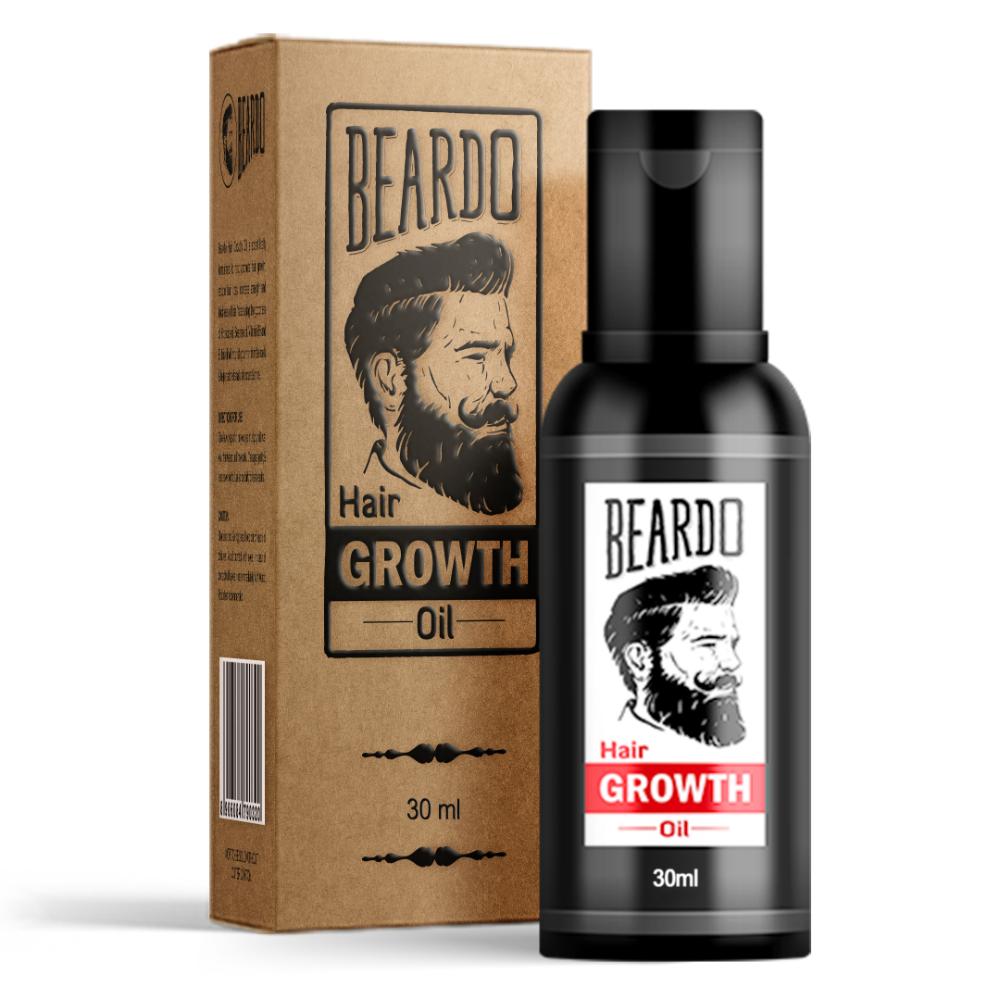

Beardo
Beardo Hair Growth Oil
Beardo Beard n Hair Growth Oil consists of natural ingredients like hibiscus oil, coconut oil, and amla, among others, to ensure root-to-tip care of your facial hair. While zinc helps to strengthen hair follicles, which in turn support the natural growth of your beard, vegetable protein is closely associated with DHT levels and testosterone. If you're looking to grow thicker and denser hair naturally, this is a fine way to make your beard sprout faster than before.
Natural
Thinning
Hair Loss
As Needed
Treatment
Scalp Care
Optimized for Your Environment & Lifestyle
Nykaa
In stock
Recommended

Beardo Hair Growth Oil
Beardo
beardo-hair-growth-oil
Hair Oil
10202915373349
Morning or Evening?
How often will you use this product?
Notes


Secure payment protection
Your Biodata Compatibility Analysis
Based on your 6 hair health indices and environmental factors
Poor Match
Significant incompatibilities
Growth Cycle Health Index
Hair Match
Hair Health Index Alignment
Optimal for OSI, SSI, DI, HSI
Ingredient Efficacy
Matching Ingredient Score
Environment Compatibility
Current UV, Air Quality & Humidity
Why This Works for Your Specific Profile
Damage Index:
Damage levels outside specified range may not benefit optimally from product formulation
Water Quality:
Fine hair becomes weighed down and greasy from heavy formulation
Hair:
No porosity-specific conflicts
Active Lifestyle:
Activity levels outside optimal range affect product performance and maintenance requirements
Your Hair Profile Integration
Your Hair Archetype

Density Level

Washing Frequency

Shedding Level

Oil Level
Your Hair Health Indices
Oil Secretion (OSI)
Very low oil production
Scalp Sensitivity (SSI)
Very low sensitivity
Growth Rate (CMR)
Poor metabolism rate
Damage Index (DI)
Minimal damage
Hair Strength (HSI)
Very weak strength
Softness Index (SI)
Significant improvement needed
Water & Environmental Integration

Water:


Expected Results & Timeline
Key Highlights

What is it?
Hair Growth Oil with natural ingredients such as hibiscus oil, coconut oil, amla, zinc, vitamin B6, and vegetable protein

Who Is It For

Budget
Rs. 498.60 - Rs. 997.20

Timeline
Why You’ll Love It

What Does It Help With?
Thinning, Hair Loss, Beard Patches

Best for
Thinning

Features
Hair oil for root-to-tip care, Infused with hibiscus oil, coconut oil, and amla, Reduces beard patches, Contains zinc to boost testosterone, Strengthens hair follicles with vitamin B6, Stimulates inactive hair follicles, Scientifically engineered for growth

Checks
100% Authentic
Ingredients Overview
Ingredients List
Sesame-Oil, Isopropyl-Myristate, Vitamin-E, Isopropyl-Palmitate, Hydrolyzed-Vegetable-Protein, Vitamin-B6, Centella-Asiatica, Hibiscus-Rosa-Sinensis, Copper-peptide, Emblica-Officinalis, Sorbitan-Oleate, Zinc, Coconut-Oil
Key Ingredients
Hibiscus oil, Coconut oil, Amla, Zinc, Vitamin B6
Ingredients Details
Coconut Oil
Common Name(s): Coconut oil,botanical oil,phytochemical active
CAS Number: N/a
DESCRIPTION
What It Does: Provides antioxidant protection from reactive oxygen species, reduces inflammatory cytokine production in skin, and conditions skin through the plant's phytochemical complex.
Why It's Used: Natural origin narrative, traditional use heritage, and multi-functional phytochemical profile supporting concurrent skin care claims from one ingredient.
How It Works: Polyphenols, terpenoids, and alkaloids scavenge ros via h• donation, inhibit nf-kb or cox-2 inflammatory pathways, and interact with skin surface proteins for conditioning.
Typically Found In: Botanical skin care,natural products
TECHNICAL DETAILS
Primary Category: Active ingredient – antioxidant
Secondary Functions: Free radical scavenging,anti-aging
Application Areas:

Facial Skincare
Body Care

Hair Care
Beard Care
Color Cosmetics (Makeup)
Dietary/Oral Supplements
Typical Concentration Range: 0.1%–10%
SOURCING & ETHICS
Vegan Status: Conditional
Halal Status: Yes
Source Notes: Plant-derived extract or synthetic.
SKIN COMPATIBILITY
Irritancy Rating: 1/5 – very low
Comedogenicity Rating: 0/5 – non-comedogenic
Sensitivity Concerns: Non-irritating; well-tolerated.
Safe for Sensitive Skin: Yes
SAFETY & COMPATIBILITY
Safety Profile: Excellent safety profile. ewg score: 1.
Works Well With: Vitamin c,vitamin e,ferulic acid,spf,other antioxidants
Avoid Combining With: No significant incompatibilities
SCIENTIFIC NOTE
Plant secondary metabolites evolved as photoprotectants and antimicrobials — mechanisms directly applicable to cosmetic antioxidant and anti-inflammatory activity in human skin.
Last Verified: Cosing database,coconut oil botanical review
Primary Sources: 2026-03-12
Vitamin B6
Common Name(s): Vitamin b6,cosmetic active,functional ingredient
CAS Number: N/a
DESCRIPTION
What It Does: Delivers characteristic cosmetic function at recommended use concentration.
Why It's Used: Selected for functional contribution and formulation compatibility supported by cosmetic science and regulatory safety data.
How It Works: Works through the mechanism of its molecular class as documented in peer-reviewed cosmetic literature.
Typically Found In: Skin care formulations
TECHNICAL DETAILS
Primary Category: Active ingredient – cosmetic active
Secondary Functions: Skin conditioning
Application Areas:
Facial Skincare
Body Care
Hair Care
Beard Care
Color Cosmetics (Makeup)
Dietary/Oral Supplements
Typical Concentration Range: 0.1%–10%
SOURCING & ETHICS
Vegan Status: Conditional
Halal Status: Yes
Source Notes: Commercially produced for cosmetic use. verify vegan/halal status with supplier.
SKIN COMPATIBILITY
Irritancy Rating: 1/5 – very low
Comedogenicity Rating: 0/5 – non-comedogenic
Sensitivity Concerns: Well-tolerated by most skin types.
Safe for Sensitive Skin: Yes
SAFETY & COMPATIBILITY
Safety Profile: Good safety profile at recommended concentrations. ewg score: 1–2.
Works Well With: Standard skincare actives
Avoid Combining With: No known significant incompatibilities
SCIENTIFIC NOTE
Vitamin b6 has an established safety profile within the cosmetic regulatory framework at standard use concentrations.
Last Verified: Cosing database,vitamin b6 technical literature
Primary Sources: 2026-03-12
Zinc
Common Name(s): Zinc
DESCRIPTION
What It Does: Provides antioxidant protection, soothing anti-inflammatory effects, and skin-conditioning benefits through plant-derived polyphenols and phytochemicals.
Why It's Used: Plant extracts concentrate bioactive phytochemicals evolved for environmental protection — uv, microbial, and oxidative stressors — that translate to skin benefits.
How It Works: Polyphenols (flavonoids, phenolic acids) inhibit nf-κb-mediated inflammatory signaling, scavenge reactive oxygen species through electron donation, and chelate pro-oxidant metal ions to reduce oxidative skin damage.
Typically Found In: Lipsticks,foundations,eye shadows,blushers,nail polish
TECHNICAL DETAILS
Primary Category: Colorants
Secondary Functions: Colorant
Application Areas:
Facial Skincare
Body Care
Hair Care
Beard Care
Color Cosmetics (Makeup)
Dietary/Oral Supplements
Typical Concentration Range: As needed for color intensity
SOURCING & ETHICS
Vegan Status: Yes
Halal Status: Yes
Source Notes: Synthetic or mineral colorant; regulatory approval required per region.
SKIN COMPATIBILITY
Irritancy Rating: 1
Comedogenicity Rating: 0
Sensitivity Concerns: Low sensitization potential at recommended use concentrations.
Safe for Sensitive Skin: Yes
SAFETY & COMPATIBILITY
Safety Profile: Well-characterized cosmetic ingredient with established safety profile. generally non-irritating at typical use concentrations. suitable for leave-on and rinse-off cosmetics.
Works Well With: Other pigments,binders,film formers
Avoid Combining With: Incompatible with highly alkaline or acidic formulations (color shift)
SCIENTIFIC NOTE
Plant secondary metabolites (flavonoids, terpenes, phenolic acids) are biosynthesized as defense compounds against uv, herbivores, and pathogens. their anti-inflammatory activity typically derives from competitive inhibition of cox-2 and 5-lox enzymes (ic50 1–50 µm), while antioxidant activity involves single electron transfer (set) and hydrogen atom transfer (hat) mechanisms with structure-dependent rate constants.
Last Verified: Cosing eu database; pcpc cosmetic ingredient safety reviews; ingredient-specific safety and efficacy literature
Primary Sources: 2025-01-15
Zinc
Common Name(s): Zinc
DESCRIPTION
What It Does: Provides antioxidant protection, soothing anti-inflammatory effects, and skin-conditioning benefits through plant-derived polyphenols and phytochemicals.
Why It's Used: Plant extracts concentrate bioactive phytochemicals evolved for environmental protection — uv, microbial, and oxidative stressors — that translate to skin benefits.
How It Works: Polyphenols (flavonoids, phenolic acids) inhibit nf-κb-mediated inflammatory signaling, scavenge reactive oxygen species through electron donation, and chelate pro-oxidant metal ions to reduce oxidative skin damage.
Typically Found In: Lipsticks,foundations,eye shadows,blushers,nail polish
TECHNICAL DETAILS
Primary Category: Colorants
Secondary Functions: Colorant
Application Areas:
Facial Skincare
Body Care
Hair Care
Beard Care
Color Cosmetics (Makeup)
Dietary/Oral Supplements
Typical Concentration Range: As needed for color intensity
SOURCING & ETHICS
Vegan Status: Yes
Halal Status: Yes
Source Notes: Synthetic or mineral colorant; regulatory approval required per region.
SKIN COMPATIBILITY
Irritancy Rating: 1
Comedogenicity Rating: 0
Sensitivity Concerns: Low sensitization potential at recommended use concentrations.
Safe for Sensitive Skin: Yes
SAFETY & COMPATIBILITY
Safety Profile: Well-characterized cosmetic ingredient with established safety profile. generally non-irritating at typical use concentrations. suitable for leave-on and rinse-off cosmetics.
Works Well With: Other pigments,binders,film formers
Avoid Combining With: Incompatible with highly alkaline or acidic formulations (color shift)
SCIENTIFIC NOTE
Plant secondary metabolites (flavonoids, terpenes, phenolic acids) are biosynthesized as defense compounds against uv, herbivores, and pathogens. their anti-inflammatory activity typically derives from competitive inhibition of cox-2 and 5-lox enzymes (ic50 1–50 µm), while antioxidant activity involves single electron transfer (set) and hydrogen atom transfer (hat) mechanisms with structure-dependent rate constants.
Last Verified: Cosing eu database; pcpc cosmetic ingredient safety reviews; ingredient-specific safety and efficacy literature
Primary Sources: 2025-01-15
Personalized Usage Instructions
How to Use
Step 1
Pour some drops of growth oil on your palm and rub your hands together
Step 2
Massage
Step 3
Wash off
Medical Chemicals

Protein/Moisture
-
pH Level
-

Porosity Taget
-
Customized for Your Profile
Scalp Condtions
Climate Suitability
Clinical Claims
Frequency
Pour some drops of growth oil on your palm and rub your hands together. Massage. Wash off.
Product Information

100% Authentic
