
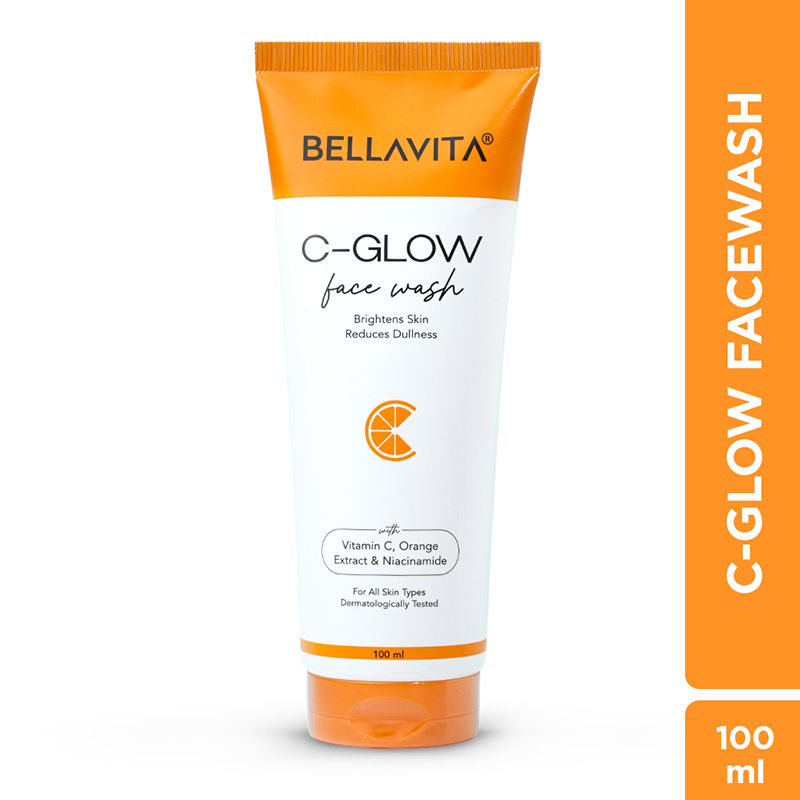

Bella Vita Organic
Bella Vita Vitamin-C Glow Face Wash Cica & Green Tea

Bella Vita Vitamin-C Glow Face Wash Cica & Green Tea
Bella Vita Organic
bella-vita-vitamin-c-glow-face-wash-cica-green-tea
Cleanse
10084811571493
Morning or Evening?
How often will you use this product?
Notes


Highlights
WHAT IS IT?
Face Wash with 6 key ingredients
FEATURES
Infused with Vitamin C; Brightens, evens skin tone; Reduces pigmentation and dark spots; Contains antioxidants and anti-inflammatory properties; Moisturizes and protects skin
BEST FOR
combination
CHECKS
Paraben-Free,Sulfate-free,Alcohol-free
Who Is It For?
Adults All GendersWhat Does It Help With?
Brightening Dark Spots Reduction Oil Control Acne HydrationBudget
Affordable (under $30)How To Use
Which routine should it be used in?
Instructions:
Key Information


What Bella Vita Organic Says
Product Description:
Get glowing and radiant skin with C-Glow Face Wash by Bella Vita Organic. Infused with Vitamin C, this face wash is perfect for bright, even-tone skin. Say goodbye to dark spots with C-Glow Face Wash.
About the Brand:
Ingredients Overview
Ingredients List
Aqua,Vitamin-C,Vitamin-B5,Vitamin-B3,Rose-Water,Sandalwood,Licorice-Extract,Honey,Aloe-Vera,Neem-Extract,Tulsi-Extract,Lemon-Oil,Coffee-Extract,Essential-Oils-Blend,Glycerine,Allantoin,Sodium-Lauroyl-Sarcosinate,Coco-Glucoside,Decyl-Glucoside,Sodium-Benzoate,Potassium-Sorbate
Key Ingredients
Vitamin C,Sandalwood,Honey,Coffee,Neem,Lemon
Ingredients Details
Allantoin
Common Name(s): 5-ureidohydantoin,glyoxyldiureide,aluminum dihydroxy allantoinate
CAS Number: 97-59-6
DESCRIPTION
What It Does: Soothes irritation, accelerates wound healing, promotes skin cell renewal, and provides mild keratolytic exfoliation.
Why It's Used: Gold standard multi-function soothing active – one of the most widely used cosmetic ingredients across all product types for its exceptional tolerability and clinically proven multi-action skin conditioning.
How It Works: Promotes keratinocyte proliferation and fibroblast migration for wound healing. mild keratolytic activity by disrupting corneocyte binding. anti-irritant via direct protein binding and anti-inflammatory cytokine reduction. humectant activity via hydroxyl groups.
Typically Found In: Post-procedure products,sensitive skin formulas,wound care,anti-acne treatments,baby products
TECHNICAL DETAILS
Primary Category: Active ingredient – soothing / anti-inflammatory
Secondary Functions: Wound healing,keratolytic,anti-irritant
Application Areas:

Facial Skincare
Body Care

Hair Care
Beard Care
Color Cosmetics (Makeup)
Dietary/Oral Supplements
Typical Concentration Range: 0.1%–2%
SOURCING & ETHICS
Vegan Status: Conditional - feedstock declaration required
Halal Status: Unverified - feedstock declaration required (plant, animal and petrochemical routes all exist)
Source Notes: Plant-derived extract or synthetic. [audit 2026-07-29 rev2: origin-dependent: the same inci exists in plant, animal and petrochemical versions and the name does not discriminate. determination requires shariah-panel sign-off.]
SKIN COMPATIBILITY
Irritancy Rating: 1/5 – very low
Comedogenicity Rating: 0/5 – non-comedogenic
Sensitivity Concerns: Exceptionally well-tolerated; suitable for all skin types including baby and compromised skin.
Safe for Sensitive Skin: Yes – particularly recommended for sensitive skin
SAFETY & COMPATIBILITY
Safety Profile: Excellent safety profile. ewg score: 1.
Works Well With: Ceramides,panthenol,allantoin,hyaluronic acid,centella asiatica
Avoid Combining With: No significant incompatibilities
SCIENTIFIC NOTE
Allantoin's keratinocyte proliferation stimulation occurs via receptor-mediated signaling (possibly machr activation) rather than non-specific irritation-driven proliferation, making it a true wound-healing stimulant rather than a pro-inflammatory proliferative signal.
Last Verified: 2026-03-12
Primary Sources: Cosing database,cir safety assessment,araújo et al. allantoin review
Coco-glucoside
Common Name(s): Coconut glucoside,apg c8-c16
CAS Number: 68515-73-1
DESCRIPTION
What It Does: Provides gentle, natural-origin cleansing with good foam from mixed coconut chain alkyl glucosides.
Why It's Used: Widely used natural surfactant for green beauty formulations requiring good foam performance with natural-origin and mild credentials.
How It Works: Mixed c8-c16 fatty alcohol chain lengths from coconut provide broader foam stability than single-chain glucosides. non-ionic glucoside headgroup provides mildness. better detergency and rinsing than individual chain-length apgs due to mixed chain distribution.
Typically Found In: Natural shampoos,body washes,facial cleansers
TECHNICAL DETAILS
Primary Category: Functional ingredient – coconut alkyl glucoside
Secondary Functions: Skin conditioning
Application Areas:
Facial Skincare
Body Care
Hair Care
Beard Care
Color Cosmetics (Makeup)
Dietary/Oral Supplements
Typical Concentration Range: 2%–20%
SOURCING & ETHICS
Vegan Status: Conditional - supplier confirmation required
Halal Status: Unverified - supplier confirmation required
Source Notes: Commercially produced for cosmetic use. verify vegan/halal status with supplier. [audit 2026-07-29 rev2: the record's own source_notes does not assert a non-animal origin, or instructs the reader to verify with the supplier; "yes" asserts knowledge the record does not hold. determination requires shariah-panel sign-off.]
SKIN COMPATIBILITY
Irritancy Rating: 1/5 – very low
Comedogenicity Rating: 0/5 – non-comedogenic
Sensitivity Concerns: Well-tolerated by most skin types.
Safe for Sensitive Skin: Yes
SAFETY & COMPATIBILITY
Safety Profile: Good safety profile at recommended concentrations. ewg score: 1–2.
Works Well With: Standard skincare actives
Avoid Combining With: No known significant incompatibilities
SCIENTIFIC NOTE
Coco-glucoside's natural chain length distribution (c8-c16) provides synergistic surfactant effects where different chain lengths optimize different properties: shorter chains provide initial foam burst, longer chains provide foam stability and soil removal, creating better overall performance than any single chain length alone.
Last Verified: 2026-03-12
Primary Sources: Cosing database,cir safety assessment
Glycerine
Common Name(s): Glycerin,universal humectant,water-binding skin conditioning
CAS Number: N/a
DESCRIPTION
What It Does: Attracts and retains moisture in the sc, improves skin barrier function at low concentrations, provides gentle keratolytic softening, and acts as a co-solvent for water-soluble actives.
Why It's Used: The reference humectant — lowest cost, best safety profile, universal formulation compatibility, and present naturally in the sc via lipase-mediated glycerolipid hydrolysis makes glycerin the industry standard against which all humectants are benchmarked.
How It Works: Three hydroxyl groups form 6 h-bonds with water molecules per glycerol unit — the highest oh-group density per carbon of any commercial humectant. glycerin also down-regulates epidermal serine proteases that overactivate in dry sc, improving desquamation and barrier integrity.
Typically Found In: All cosmetics,universal
TECHNICAL DETAILS
Primary Category: Functional ingredient – humectant
Secondary Functions: Tewl reduction,skin plumping
Application Areas:
Facial Skincare
Body Care
Hair Care
Beard Care
Color Cosmetics (Makeup)
Dietary/Oral Supplements
Typical Concentration Range: 1%–40%
SOURCING & ETHICS
Vegan Status: Yes
Halal Status: Yes
Source Notes: Synthetic or naturally derived. excellent aqueous solubility.
SKIN COMPATIBILITY
Irritancy Rating: 1/5 – very low
Comedogenicity Rating: 0/5 – non-comedogenic
Sensitivity Concerns: Non-irritating; suitable for all skin types.
Safe for Sensitive Skin: Yes
SAFETY & COMPATIBILITY
Safety Profile: Excellent safety profile. ewg score: 1.
Works Well With: Ceramides,emollients,occlusives,glycerin,hyaluronic acid
Avoid Combining With: No significant incompatibilities
SCIENTIFIC NOTE
Epidermal lipases hydrolyse sc glycerophospholipids during cornification, releasing glycerol that contributes to the natural nmf — topical glycerin directly supplements this endogenous sc humectant pool.
Last Verified: 2026-03-12
Primary Sources: Cosing database,glycerin universal humectant review
Honey
Common Name(s): Honey,bee-derived humectant antimicrobial,wound healing active
CAS Number: N/a
DESCRIPTION
What It Does: Provides humectant moisture retention from the hygroscopic fructose/glucose matrix, antimicrobial activity from enzymatically generated h₂o₂ and (in manuka) methylglyoxal, anti-inflammatory activity from phenolic compounds, and wound healing promotion from growth factor activation.
Why It's Used: Honey is the only food-derived ingredient with documented clinical wound healing efficacy in medical grade form (medihoney) — combining humectancy, antimicrobial, anti-inflammatory, and healing activity in a gras, consumer-familiar ingredient.
How It Works: Glucose oxidase in honey catalyses glucose + o₂ → gluconolactone + h₂o₂ — providing sustained low-level h₂o₂ generation that provides bactericidal activity without tissue toxicity. manuka honey's methylglyoxal (mgo) provides additional non-peroxide antimicrobial activity through protein glycation of bacterial enzymes.
Typically Found In: Wound care,anti-aging,humectant products
TECHNICAL DETAILS
Primary Category: Active ingredient – cosmetic active
Secondary Functions: Skin conditioning
Application Areas:
Facial Skincare
Body Care
Hair Care
Beard Care
Color Cosmetics (Makeup)
Dietary/Oral Supplements
Typical Concentration Range: 1%–20%
SOURCING & ETHICS
Vegan Status: No - animal-derived
Halal Status: Conditional - bee-derived; widely held permissible, confirm certifier stance
Source Notes: Commercially produced for cosmetic use. verify vegan/halal status with supplier. [audit 2026-07-29 rev2: bee-derived; permissibility widely accepted but fatwa varies by jurisdiction. determination requires shariah-panel sign-off.]
SKIN COMPATIBILITY
Irritancy Rating: 1/5 – very low
Comedogenicity Rating: 0/5 – non-comedogenic
Sensitivity Concerns: Well-tolerated by most skin types.
Safe for Sensitive Skin: Yes
SAFETY & COMPATIBILITY
Safety Profile: Good safety profile at recommended concentrations. ewg score: 1–2.
Works Well With: Standard skincare actives
Avoid Combining With: No known significant incompatibilities
SCIENTIFIC NOTE
Manuka honey's unique mānuka factor (umf) grades correlate with methylglyoxal (mgo) concentration — umf10+ (mgo 263 mg/kg) provides bactericidal activity against mrsa at concentrations achievable in topical formulation.
Last Verified: 2026-03-12
Primary Sources: Cosing database,honey manuka honey wound healing antimicrobial review