

BIO-ESSENCE
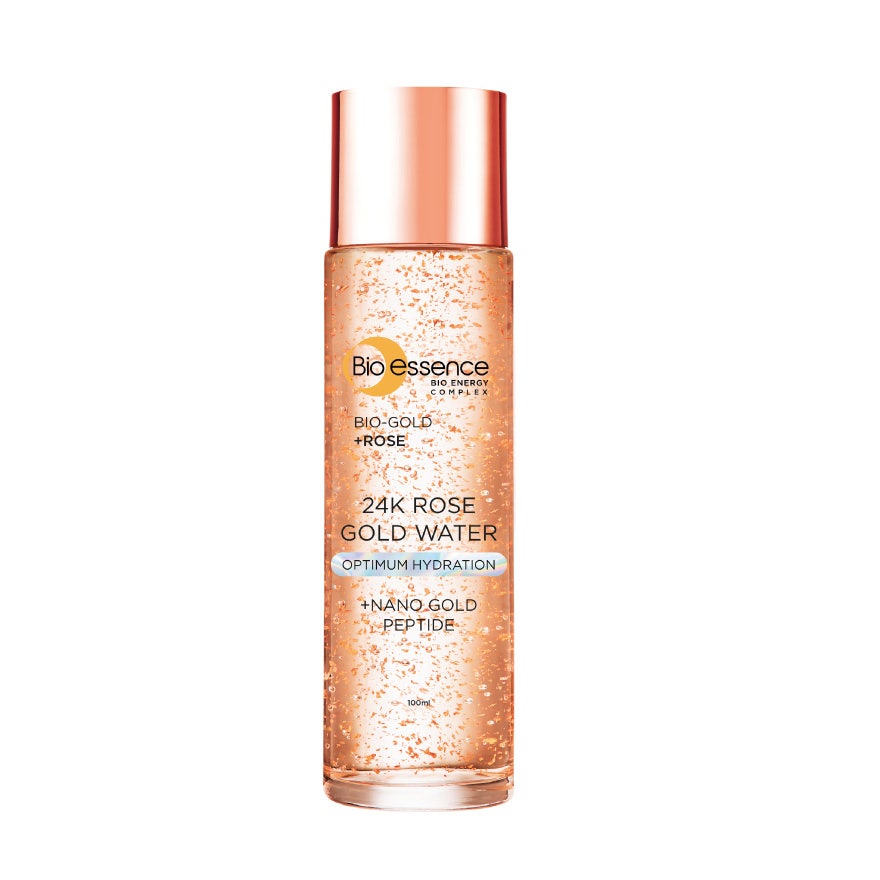
Bio Essence Bio-Gold 24K Gold Rose Gold Water 100Ml

Bio Essence Bio-Gold 24K Gold Rose Gold Water 100Ml
BIO-ESSENCE
bio-essence-bio-gold-24k-gold-rose-gold-water-100ml
Serum
10084805574949
Morning or Evening?
How often will you use this product?
Notes


Highlights
WHAT IS IT?
Essence Water with Japanese rose extract and 24K Bio-Gold, ingredient count not specified
FEATURES
Hydration, fine line reduction with antioxidant, pore tightening and moisture balance regulation
BEST FOR
normal
CHECKS
Avoids skin irritation, For external use only, Avoid direct contact with eyes
Who Is It For?
What Does It Help With?
Hydration Fine Lines Pore ReductionBudget
Premium ($76-$150)How To Use
Which routine should it be used in?
Instructions:
Key Information


What BIO-ESSENCE Says
Product Description:
Infused with unique Japanese rose extract – Eijitsu, helps to quench skin with much needed hydration and refine pores so that skin feels petal-soft and moistful. Product Efficacies: HYDRATION – Moisture is constantly restored and locked into the skin for long hours to keep it well-hydrated while skin takes on a soft and supple radiance for a youthful complexion. FINE LINES – Infused with 24K Bio-Gold which contains powerful anti-oxidant properties that help to slow down the formation of fine lines for youthful-looking skin. PORE REDUCTION – Tightens enlarged pores and regulates moisture and sebum balance for fine and smooth skin.
About the Brand:
Ingredients Overview
Ingredients List
Water,Glyceryl Polyacrylate,Niacinamide,Palmitoyl Tripeptide-5,Butylene Glycol,Glycerin,Sodium Hyaluronate,Euglena Gracilis Extract,Tocopherol,PEG-7 Glyceryl Cocoate,Ceramide 3,Dextran,Caprooyl Tetrapeptide-3,Rosa Multiflora Fruit Extract,Candida Bombicola/Glucose/Methyl Rapeseedate Ferment,Pentylene Glycol,Fructose,Urea,Citric Acid,Sodium Hydroxide,Maltose,Sodium PCA,Sodium Chloride,Sodium Lactate,Trehalose,Allantoin,Glucose,Codium Tomentosum Extract,Ecklonia Cava Extract,Gelidium Cartilagineum Extract,Hizikia Fusiforme Extract,Glycyrrhiza Glabra (Licorice) Root Extract,Hamamelis Virginiana (Witch Hazel) Bark/Leaf/Twig Extract,Sodium Carbomer,PPG-26-Buteth-26,PEG-40 Hydrogenated Castor Oil,Fragrance,Sodium Oxide,Calcium Oxide,Magnesium Oxide,Phenoxyethanol,Chlorphenesin,Colloidal Gold
Key Ingredients
Japanese rose extract (Eijitsu), 24K Bio-Gold
Ingredients Details
Allantoin
Common Name(s): 5-ureidohydantoin,glyoxyldiureide,aluminum dihydroxy allantoinate
CAS Number: 97-59-6
DESCRIPTION
What It Does: Soothes irritation, accelerates wound healing, promotes skin cell renewal, and provides mild keratolytic exfoliation.
Why It's Used: Gold standard multi-function soothing active – one of the most widely used cosmetic ingredients across all product types for its exceptional tolerability and clinically proven multi-action skin conditioning.
How It Works: Promotes keratinocyte proliferation and fibroblast migration for wound healing. mild keratolytic activity by disrupting corneocyte binding. anti-irritant via direct protein binding and anti-inflammatory cytokine reduction. humectant activity via hydroxyl groups.
Typically Found In: Post-procedure products,sensitive skin formulas,wound care,anti-acne treatments,baby products
TECHNICAL DETAILS
Primary Category: Active ingredient – soothing / anti-inflammatory
Secondary Functions: Wound healing,keratolytic,anti-irritant
Application Areas:

Facial Skincare
Body Care

Hair Care
Beard Care
Color Cosmetics (Makeup)
Dietary/Oral Supplements
Typical Concentration Range: 0.1%–2%
SOURCING & ETHICS
Vegan Status: Conditional - feedstock declaration required
Halal Status: Unverified - feedstock declaration required (plant, animal and petrochemical routes all exist)
Source Notes: Plant-derived extract or synthetic. [audit 2026-07-29 rev2: origin-dependent: the same inci exists in plant, animal and petrochemical versions and the name does not discriminate. determination requires shariah-panel sign-off.]
SKIN COMPATIBILITY
Irritancy Rating: 1/5 – very low
Comedogenicity Rating: 0/5 – non-comedogenic
Sensitivity Concerns: Exceptionally well-tolerated; suitable for all skin types including baby and compromised skin.
Safe for Sensitive Skin: Yes – particularly recommended for sensitive skin
SAFETY & COMPATIBILITY
Safety Profile: Excellent safety profile. ewg score: 1.
Works Well With: Ceramides,panthenol,allantoin,hyaluronic acid,centella asiatica
Avoid Combining With: No significant incompatibilities
SCIENTIFIC NOTE
Allantoin's keratinocyte proliferation stimulation occurs via receptor-mediated signaling (possibly machr activation) rather than non-specific irritation-driven proliferation, making it a true wound-healing stimulant rather than a pro-inflammatory proliferative signal.
Last Verified: 2026-03-12
Primary Sources: Cosing database,cir safety assessment,araújo et al. allantoin review
Butylene Glycol
Common Name(s): 1,3-butanediol,bg,1,3-butylene glycol
CAS Number: 107-88-0
DESCRIPTION
What It Does: Provides humectant hydration and active ingredient solubilization with excellent skin feel.
Why It's Used: Preferred glycol humectant in premium and k-beauty formulations for superior skin feel vs propylene glycol with equivalent functionality.
How It Works: Two hydroxyl groups at 1,3-positions provide water binding and solvent activity. better tolerated than propylene glycol with minimal sensitization risk. 4-carbon backbone provides slightly greater hydrophobic character enabling dissolution of less polar actives vs pg.
Typically Found In: Toners,essences,serums,k-beauty formulas
TECHNICAL DETAILS
Primary Category: Functional ingredient – glycol humectant
Secondary Functions: Tewl reduction,skin plumping
Application Areas:
Facial Skincare
Body Care
Hair Care
Beard Care
Color Cosmetics (Makeup)
Dietary/Oral Supplements
Typical Concentration Range: 1%–10%
SOURCING & ETHICS
Vegan Status: Yes – synthetic
Halal Status: Yes
Source Notes: Synthetic or naturally derived. excellent aqueous solubility.
SKIN COMPATIBILITY
Irritancy Rating: 1/5 – very low
Comedogenicity Rating: 0/5 – non-comedogenic
Sensitivity Concerns: Non-irritating; suitable for all skin types.
Safe for Sensitive Skin: Yes
SAFETY & COMPATIBILITY
Safety Profile: Excellent safety profile. ewg score: 1.
Works Well With: Ceramides,emollients,occlusives,glycerin,hyaluronic acid
Avoid Combining With: No significant incompatibilities
SCIENTIFIC NOTE
K-beauty's preference for butylene glycol over propylene glycol is driven by two factors: bg's superior skin feel (less tacky than pg's higher viscosity) and its lower sensitization potential (1,3-bg has better spatial distribution of hydroxyl groups that reduces protein interaction vs pg's 1,2-position oh groups).
Last Verified: 2026-03-12
Primary Sources: Cosing database,cir safety assessment
Calcium Oxide
Common Name(s): Calcium oxide,inci ingredient,cosmetic active
CAS Number: N/a
DESCRIPTION
What It Does: Provides documented cosmetic activity from calcium oxide.
Why It's Used: Calcium oxide delivers formulation value through its specific biological activity and established safety and efficacy.
How It Works: Source: calcium oxide. mechanism: documented in cosmetic literature. safety: cosing-reviewed. standard cosmetic use concentrations.
Typically Found In: Skin care formulations,active products
TECHNICAL DETAILS
Primary Category: Active ingredient – antioxidant
Secondary Functions: Free radical scavenging,anti-aging
Application Areas:
Facial Skincare
Body Care
Hair Care
Beard Care
Color Cosmetics (Makeup)
Dietary/Oral Supplements
Typical Concentration Range: 0.1%–5%
SOURCING & ETHICS
Vegan Status: Conditional - supplier confirmation required
Halal Status: Yes
Source Notes: Plant-derived extract or synthetic. [audit 2026-07-29 rev2: status downgraded on audit. determination requires shariah-panel sign-off.]
SKIN COMPATIBILITY
Irritancy Rating: 1/5 – very low
Comedogenicity Rating: 0/5 – non-comedogenic
Sensitivity Concerns: Non-irritating; well-tolerated.
Safe for Sensitive Skin: Yes
SAFETY & COMPATIBILITY
Safety Profile: Excellent safety profile. ewg score: 1.
Works Well With: Vitamin c,vitamin e,ferulic acid,spf,other antioxidants
Avoid Combining With: No significant incompatibilities
SCIENTIFIC NOTE
Calcium oxide provides cosmetic activity through its characteristic mechanism. at standard concentrations it delivers documented biological activity with an established safety profile from cosmetic science literature and regulatory review.
Last Verified: 2026-03-12
Primary Sources: Cosing database,calcium oxide technical literature
Candida Bombicola/glucose/methyl Rapeseedate Ferment
Common Name(s): Candida bombicola ferment
DESCRIPTION
What It Does: Delivers postbiotic skin-conditioning metabolites, antioxidant protection, and microbiome-balancing activity through fermentation-derived bioactives.
Why It's Used: Fermentation biotransforms parent substrates into smaller, more bioavailable molecular fractions with enhanced skin activity and postbiotic microbiome benefits.
How It Works: Fermentation-derived metabolites (organic acids, enzymes, peptides, and bioactive polyphenols) interact with skin surface receptors, modulate the microbiome, and penetrate the stratum corneum to condition and protect skin cells.
Typically Found In: Serums,toners,essences,k-beauty formulations,microbiome skincare
TECHNICAL DETAILS
Primary Category: Fermented ingredients
Secondary Functions: Antioxidant,skin-conditioning,brightening
Application Areas:
Facial Skincare
Body Care
Hair Care
Beard Care
Color Cosmetics (Makeup)
Dietary/Oral Supplements
Typical Concentration Range: 0.5–10%
SOURCING & ETHICS
Vegan Status: Yes
Halal Status: Yes
Source Notes: Produced by fermentation process; no animal components unless substrate is animal-derived.
SKIN COMPATIBILITY
Irritancy Rating: 1
Comedogenicity Rating: 0
Sensitivity Concerns: Low sensitization potential at recommended use concentrations.
Safe for Sensitive Skin: Yes
SAFETY & COMPATIBILITY
Safety Profile: Well-characterized cosmetic ingredient with established safety profile. generally non-irritating at typical use concentrations. suitable for leave-on and rinse-off cosmetics.
Works Well With: Niacinamide,hyaluronic acid,ceramides,vitamin c,probiotics
Avoid Combining With: Strong oxidizers; extreme ph
SCIENTIFIC NOTE
Fermentation typically reduces molecular weight of substrate polysaccharides and proteins through enzymatic hydrolysis, increasing skin penetration. postbiotic metabolites (short-chain fatty acids, bacteriocins, organic acids) modulate tlr receptor signaling in keratinocytes, influencing barrier gene expression (filaggrin, loricrin) and immune tone without live microorganism exposure.
Last Verified: 2025-01-15
Primary Sources: Cosing eu database; pcpc cosmetic ingredient safety reviews; postbiotic cosmetic ingredient literature; fermentation biotechnology reviews