
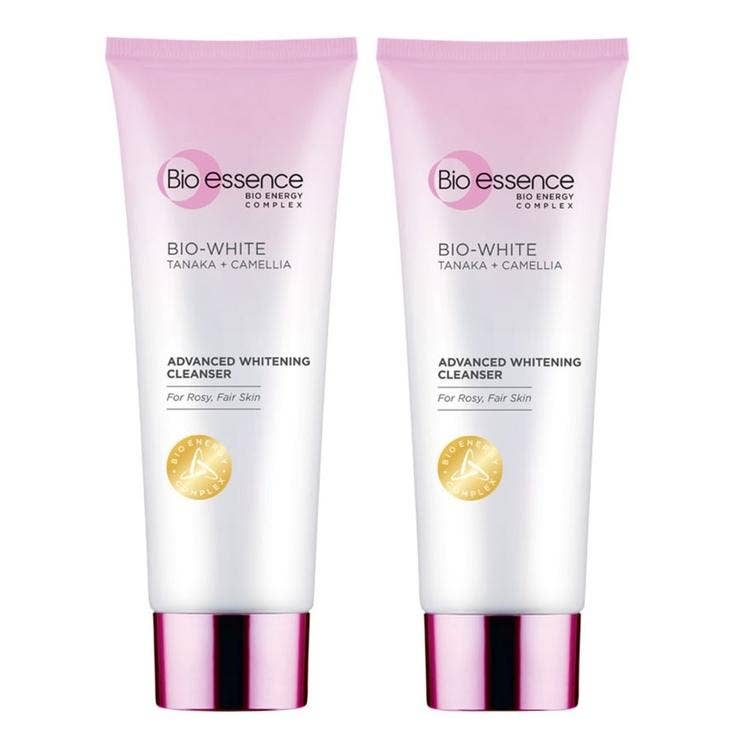

BIO-ESSENCE
Bio Essence Bio-White Advance White 100G Po2#

Bio Essence Bio-White Advance White 100G Po2#
BIO-ESSENCE
bio-essence-bio-white-advance-white-100g-po2
Cleanse
10084766777637
Morning or Evening?
How often will you use this product?
Notes


Highlights
WHAT IS IT?
Whitening Cleanser, ingredient count not specified
FEATURES
Remove dirt & impurities, Whitening and moisturizing ingredient, Refreshed & fairer look
BEST FOR
normal
CHECKS
Not Available (for contra indication), For external use only (caution)
Who Is It For?
What Does It Help With?
Whitening Moisturizing Impurities RemovalBudget
Mid-range ($30-$75)How To Use
Which routine should it be used in?
Instructions:
Key Information

What BIO-ESSENCE Says
Product Description:
- Remove dirt & impurities
- Whitening and moisturizing ingredient
- Refreshed & fairer look
About the Brand:
Ingredients Overview
Ingredients List
Water, Glycerin, Stearic Acid, Myristic Acid, Palmitic Acid, Potassium Hydroxide, Tea-Lauroyl Collagen Amino Acids, Lauric Acid, Glycol Stearate, Polyquaternium-43, Hydroxyethylcellulose, Tranexamic Acid, Limonia Acidissima Extract, Cucumis Sativus (Cucumber) Fruit Extract, Panax Ginseng Root Extract, Angelica Archangelica Root Extract, Lycium Barbarum Fruit Extract, Ginkgo Biloba Nut Extract, Tribulus Terrestris Fruit Extract, Ampelopsis Japonica Root Extract, Perilla Frutescens Leaf Extract, Niacinamide, Broussonetia Papyrifera Bark Extract, Acetyl Glucosamine, Morus Alba Bark Extract, Pyrus Malus (Apple) Fruit Extract, Camellia Japonica Flower Extract, Camellia Sinensis Leaf Extract, Madecassoside, Rhus Semialata Extract, Tricholoma Matsutake Extract, Ethylhexylglycerin, Caprylhydroxamic Acid, Arbutin, Euglena Gracilis Extract, Potassium Sorbate, Tocopherol, Fragrance, Phenoxyethanol, Chlorphenesin, Disodium EDTA
Key Ingredients
Ingredients Details
Acetyl Glucosamine
Common Name(s): Acetyl glucosamine,cosmetic active,functional ingredient
CAS Number: N/a
DESCRIPTION
What It Does: Delivers characteristic cosmetic function — skin conditioning, protection, preservation, or active biological benefit — at recommended use concentration.
Why It's Used: Selected for its functional contribution and formulation compatibility — supported by cosmetic science literature and regulatory safety assessment.
How It Works: Works through the mechanism of its molecular class — physicochemical interaction with the formulation or biological interaction with skin proteins, lipids, or receptors as documented in peer-reviewed literature.
Typically Found In: Skin care formulations
TECHNICAL DETAILS
Primary Category: Active ingredient – cosmetic active
Secondary Functions: Skin conditioning
Application Areas:

Facial Skincare

Body Care
Hair Care
Beard Care
Color Cosmetics (Makeup)
Dietary/Oral Supplements
Typical Concentration Range: 0.1%–10%
SOURCING & ETHICS
Vegan Status: Conditional - crustacean or fungal route; fungal chitosan is vegan
Halal Status: Conditional - crustacean or fungal route; feedstock declaration required
Source Notes: Commercially produced for cosmetic use. verify vegan/halal status with supplier. [audit 2026-07-29 rev2: chitin family; a fungal route exists that is both halal-simpler and vegan, so origin must be declared. determination requires shariah-panel sign-off.]
SKIN COMPATIBILITY
Irritancy Rating: 1/5 – very low
Comedogenicity Rating: 0/5 – non-comedogenic
Sensitivity Concerns: Well-tolerated by most skin types.
Safe for Sensitive Skin: Yes
SAFETY & COMPATIBILITY
Safety Profile: Good safety profile at recommended concentrations. ewg score: 1–2.
Works Well With: Standard skincare actives
Avoid Combining With: No known significant incompatibilities
SCIENTIFIC NOTE
Acetyl glucosamine delivers documented functional benefit with an established safety profile within the cosmetic regulatory framework (cosing eu, cir usa).
Last Verified: 2026-03-12
Primary Sources: Cosing database,acetyl glucosamine technical literature
Ampelopsis Japonica Root Extract
Common Name(s): Ampelopsis japonica root extract,ampelopsis japonica root extract,botanical extract,phytochemical active
CAS Number: N/a
DESCRIPTION
What It Does: Provides antioxidant protection from polyphenol radical scavenging, anti-inflammatory activity from terpenoid nf-kb/cox pathway inhibition, and skin conditioning from the phytochemical secondary metabolite complex.
Why It's Used: Ampelopsis japonica root extract is selected for the characteristic secondary metabolite signature of ampelopsis japonica — whether polyphenols, terpenoids, alkaloids, or polysaccharides, the phytochemical profile provides antioxidant, anti-inflammatory, or skin conditioning benefits specific to this botanical species.
How It Works: Botanical secondary metabolites: polyphenol catechol h-atom donation for ros scavenging (rate constants 10⁶-10⁹ m⁻¹s⁻¹); terpenoids inhibit iκb kinase blocking nf-κb; flavonoids compete at cox-1/2; alkaloids modulate specific receptors for targeted bioactivity.
Typically Found In: Botanical skin care
TECHNICAL DETAILS
Primary Category: Active ingredient – antioxidant
Secondary Functions: Free radical scavenging,anti-aging
Application Areas:
Facial Skincare
Body Care
Hair Care
Beard Care
Color Cosmetics (Makeup)
Dietary/Oral Supplements
Typical Concentration Range: 0.1%–10%
SOURCING & ETHICS
Vegan Status: Conditional - supplier confirmation required
Halal Status: Conditional - basis not stated in source record; supplier origin confirmation required to determine what evidence applies
Source Notes: Plant-derived extract or synthetic. [audit 2026-07-29 rev2: status downgraded on audit. determination requires shariah-panel sign-off.]
SKIN COMPATIBILITY
Irritancy Rating: 1/5 – very low
Comedogenicity Rating: 0/5 – non-comedogenic
Sensitivity Concerns: Non-irritating; well-tolerated.
Safe for Sensitive Skin: Yes
SAFETY & COMPATIBILITY
Safety Profile: Excellent safety profile. ewg score: 1.
Works Well With: Vitamin c,vitamin e,ferulic acid,spf,other antioxidants
Avoid Combining With: No significant incompatibilities
SCIENTIFIC NOTE
Standardise to marker compounds for consistent bioactivity — field-grown material varies 3-10× in secondary metabolite content.
Last Verified: 2026-03-22
Primary Sources: Cosing database,ampelopsis japonica root extract botanical extract review
Angelica Archangelica Root Extract
Common Name(s): Angelica archangelica root extract,angelica archangelica root extract,botanical extract,phytochemical active
CAS Number: N/a
DESCRIPTION
What It Does: Provides antioxidant protection from polyphenol radical scavenging, anti-inflammatory activity from terpenoid nf-kb/cox pathway inhibition, and multi-active skin conditioning from the botanical secondary metabolite complex.
Why It's Used: Angelica archangelica root extract is selected for the characteristic secondary metabolite signature of angelica archangelica — whether polyphenols, terpenoids, alkaloids, or polysaccharides, the phytochemical profile provides antioxidant, anti-inflammatory, or skin conditioning benefits specific to this botanical species.
How It Works: Botanical secondary metabolites provide: polyphenol catechol h-atom donation for ros scavenging; terpenoid ikb kinase inhibition blocking nf-kb; flavonoid cox-1/2 competitive inhibition reducing prostaglandins; alkaloid/iridoid receptor-specific modulation for targeted skin benefit.
Typically Found In: Botanical skin care
TECHNICAL DETAILS
Primary Category: Active ingredient – antioxidant
Secondary Functions: Free radical scavenging,anti-aging
Application Areas:
Facial Skincare
Body Care
Hair Care
Beard Care
Color Cosmetics (Makeup)
Dietary/Oral Supplements
Typical Concentration Range: 0.1%–10%
SOURCING & ETHICS
Vegan Status: Conditional - supplier confirmation required
Halal Status: Conditional - basis not stated in source record; supplier origin confirmation required to determine what evidence applies
Source Notes: Plant-derived extract or synthetic. [audit 2026-07-29 rev2: status downgraded on audit. determination requires shariah-panel sign-off.]
SKIN COMPATIBILITY
Irritancy Rating: 1/5 – very low
Comedogenicity Rating: 0/5 – non-comedogenic
Sensitivity Concerns: Non-irritating; well-tolerated.
Safe for Sensitive Skin: Yes
SAFETY & COMPATIBILITY
Safety Profile: Excellent safety profile. ewg score: 1.
Works Well With: Vitamin c,vitamin e,ferulic acid,spf,other antioxidants
Avoid Combining With: No significant incompatibilities
SCIENTIFIC NOTE
Extract standardisation to active marker compounds ensures consistent bioactivity — field-harvested plant material varies 3-10x in secondary metabolite content. standardised extracts provide reproducible clinical outcomes.
Last Verified: 2026-03-22
Primary Sources: Cosing database,angelica archangelica root extract botanical extract review
Arbutin
Common Name(s): Arbutin,cosmetic active,functional ingredient
CAS Number: N/a
DESCRIPTION
What It Does: Delivers characteristic cosmetic function — skin conditioning, protection, preservation, or active biological benefit — at recommended use concentration.
Why It's Used: Selected for its functional contribution and formulation compatibility — supported by cosmetic science literature and regulatory safety assessment.
How It Works: Works through the mechanism of its molecular class — physicochemical interaction with the formulation or biological interaction with skin proteins, lipids, or receptors as documented in peer-reviewed literature.
Typically Found In: Skin care formulations
TECHNICAL DETAILS
Primary Category: Active ingredient – cosmetic active
Secondary Functions: Skin conditioning
Application Areas:
Facial Skincare
Body Care
Hair Care
Beard Care
Color Cosmetics (Makeup)
Dietary/Oral Supplements
Typical Concentration Range: 0.1%–10%
SOURCING & ETHICS
Vegan Status: Conditional - supplier confirmation required
Halal Status: Unverified - supplier confirmation required
Source Notes: Commercially produced for cosmetic use. verify vegan/halal status with supplier. [audit 2026-07-29 rev2: the record's own source_notes does not assert a non-animal origin, or instructs the reader to verify with the supplier; "yes" asserts knowledge the record does not hold. determination requires shariah-panel sign-off.]
SKIN COMPATIBILITY
Irritancy Rating: 1/5 – very low
Comedogenicity Rating: 0/5 – non-comedogenic
Sensitivity Concerns: Well-tolerated by most skin types.
Safe for Sensitive Skin: Yes
SAFETY & COMPATIBILITY
Safety Profile: Good safety profile at recommended concentrations. ewg score: 1–2.
Works Well With: Standard skincare actives
Avoid Combining With: No known significant incompatibilities
SCIENTIFIC NOTE
Arbutin delivers documented functional benefit with an established safety profile within the cosmetic regulatory framework (cosing eu, cir usa).
Last Verified: