

Biocule
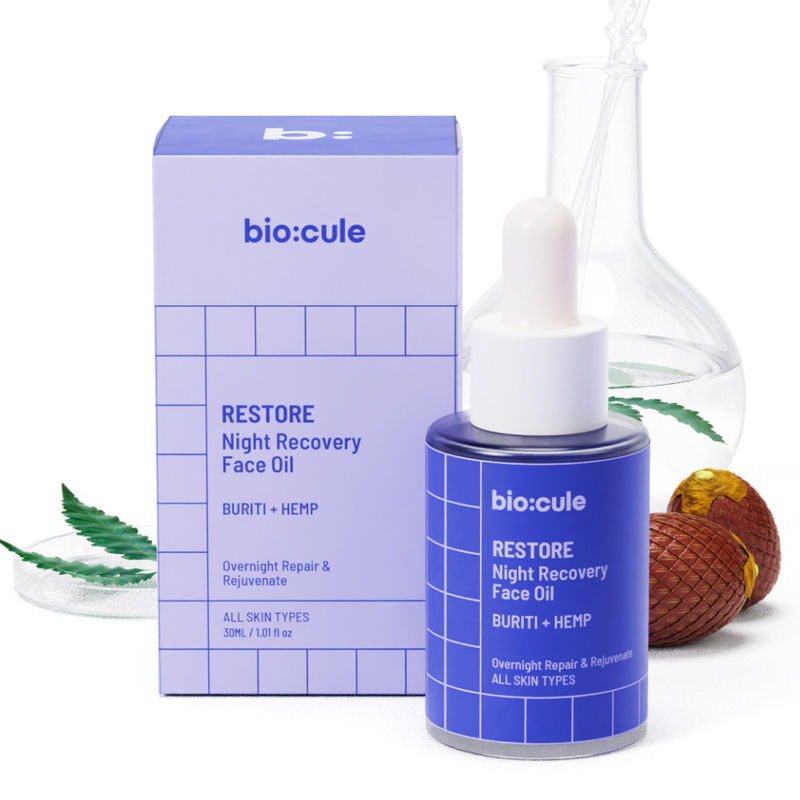
Biocule RESTORE Night Recovery Face Oil

Biocule RESTORE Night Recovery Face Oil
Biocule
biocule-restore-night-recovery-face-oil
Face Oil
10084866621733
Morning or Evening?
How often will you use this product?
Notes


Highlights
WHAT IS IT?
Face Oil with multiple natural oils (9 key oils and extracts total)
FEATURES
Repairs and restores skin barrier, provides youthful glow, calms and soothes sensitive skin, dermatologically tested, free from harmful chemicals
BEST FOR
sensitive
CHECKS
alcohol, fragrance, mineral oil, parabens, silicone, sulphates
Who Is It For?
Adults All GendersWhat Does It Help With?
Repair Skin Barrier Reduce Fine Lines Fade Dark Spots Improve Elasticity Soothe Sensitive And Irritated SkinBudget
Affordable (under $30)How To Use
Which routine should it be used in?
Instructions:
Key Information


What Biocule Says
Product Description:
Biocule Restore Night Recovery Face Oil is a velvety night restorative oil containing only pure natural oils for overnight repair and rejuvenation. Rich in omega 3, linoleic acid, and beta-carotene, it helps to deeply moisturize, fortify, and repair the skin barrier, fill visible fine lines, and improve skin elasticity and suppleness for healthy and youthful skin. Features: Repairs and restores skin barrier: Omega 3, linoleic acid and ceramides from hemp, olive, oat kernel and evening primrose oils help to restore skin's natural barrier along with deep moisturization. Provides youthful glow: Beta carotene (a pre-cursor to vitamin A) along with vitamin C from buriti and rosehip oils stimulate collagen and elastin production helping to reduce fine lines, fade dark spots and restore skin elasticity. Calms and soothes: Omega 6 from hemp oil acts as an anti-inflammatory and helps to calm and soothe sensitive and irritated skin. Know more: Dermatologically tested. Free from alcohol, fragrance, mineral oil, parabens, silicone, and sulphates. Vegan and cruelty-free.
About the Brand:
Ingredients Overview
Ingredients List
Caprylic-Capric-Triglyceride,Squalane,Rosa-Canina-Seed-Oil,Oenothera-Biensis-Flower-Oil,Bidens-Pilosa-Extract,Simmondsia-Chinensis-Seed-Oil,Mauritia-Flexuosa-Fruit-Oil,Avena-Sativa-Kernel-Oil,Olea-Europaea-Olive-Oil,Olea-Europaea-Olive-Leaf-Extract,Olea-Europaea-Olive-Fruit-Extract,Salvia-Rosmarinus-Oil,Cannabis-Sativa-Seed-Oil,Alpha-Tocopherol,Lavandula-Angustifolia-Oil,Pelargonium-Graveolens-Oil,Ceramide-NP
Key Ingredients
Buriti Oil,Hemp Seed Oil
Ingredients Details
Alpha-tocopherol
Common Name(s): Alpha-tocopherol,cosmetic active,functional ingredient
CAS Number: N/a
DESCRIPTION
What It Does: Delivers characteristic cosmetic function — skin conditioning, protection, preservation, or active biological benefit — at recommended use concentration.
Why It's Used: Selected for its functional contribution and formulation compatibility — supported by cosmetic science literature and regulatory safety assessment.
How It Works: Works through the mechanism of its molecular class — physicochemical interaction with the formulation or biological interaction with skin proteins, lipids, or receptors as documented in peer-reviewed literature.
Typically Found In: Skin care formulations
TECHNICAL DETAILS
Primary Category: Active ingredient – cosmetic active
Secondary Functions: Skin conditioning
Application Areas:

Facial Skincare

Body Care
Hair Care
Beard Care
Color Cosmetics (Makeup)
Dietary/Oral Supplements
Typical Concentration Range: 0.1%–10%
SOURCING & ETHICS
Vegan Status: Conditional - supplier confirmation required
Halal Status: Unverified - supplier confirmation required
Source Notes: Commercially produced for cosmetic use. verify vegan/halal status with supplier. [audit 2026-07-29 rev2: the record's own source_notes does not assert a non-animal origin, or instructs the reader to verify with the supplier; "yes" asserts knowledge the record does not hold. determination requires shariah-panel sign-off.]
SKIN COMPATIBILITY
Irritancy Rating: 1/5 – very low
Comedogenicity Rating: 0/5 – non-comedogenic
Sensitivity Concerns: Well-tolerated by most skin types.
Safe for Sensitive Skin: Yes
SAFETY & COMPATIBILITY
Safety Profile: Good safety profile at recommended concentrations. ewg score: 1–2.
Works Well With: Standard skincare actives
Avoid Combining With: No known significant incompatibilities
SCIENTIFIC NOTE
Alpha-tocopherol delivers documented functional benefit with an established safety profile within the cosmetic regulatory framework (cosing eu, cir usa).
Last Verified: 2026-03-12
Primary Sources: Cosing database,alpha-tocopherol technical literature
Squalane
Common Name(s): Perhydrosqualene,2,6,10,15,19,23-hexamethyltetracosane
CAS Number: 0111-01-03
DESCRIPTION
What It Does: Provides endogenous-skin-identical emolliency with exceptional stability and skin compatibility.
Why It's Used: The most skin-compatible emollient – chemically identical to human sebum squalene component with outstanding tolerability across all skin types.
How It Works: Fully saturated hydrocarbon with zero oxidation sites provides exceptional stability unlike squalene's 6 double bonds. integrates into stratum corneum lipid bilayers with near-perfect biocompatibility. provides antioxidant protection to formulation via radical quenching.
Typically Found In: Facial oils,serums,non-comedogenic moisturizers,luxury body care
TECHNICAL DETAILS
Primary Category: Functional ingredient – emollient
Secondary Functions: Maximum biocompatibility,antioxidant stabilizer,non-comedogenic
Application Areas:
Facial Skincare
Body Care
Hair Care
Beard Care
Color Cosmetics (Makeup)
Dietary/Oral Supplements
Typical Concentration Range: 1%–100%
SOURCING & ETHICS
Vegan Status: Conditional - feedstock declaration required
Halal Status: Unverified - feedstock declaration required (plant, animal and petrochemical routes all exist)
Source Notes: Sustainable plant-derived squalane from sugarcane fermentation (amyris) or olive oil fractionation is preferred over shark liver-derived. chemically identical regardless of source. [audit 2026-07-29 rev2: origin-dependent: the same inci exists in plant, animal and petrochemical versions and the name does not discriminate. determination requires shariah-panel sign-off.]
SKIN COMPATIBILITY
Irritancy Rating: 1/5 – very low
Comedogenicity Rating: 0/5 – non-comedogenic
Sensitivity Concerns: Non-irritating.
Safe for Sensitive Skin: Yes
SAFETY & COMPATIBILITY
Safety Profile: Excellent safety profile. ewg score: 1.
Works Well With: Humectants,ceramides,actives as carrier
Avoid Combining With: No significant incompatibilities
SCIENTIFIC NOTE
Squalene constitutes approximately 12-15% of human sebum – the highest proportion of any skin lipid. topical squalane (stable, hydrogenated form) replenishes this abundant endogenous skin lipid. the complete absence of oxidizable double bonds (unlike squalene's 6 double bonds) eliminates the pro-oxidant concerns of natural squalene oxidation.
Last Verified: 2026-03-12
Primary Sources: Cosing database,huang et al. squalane review,cir safety assessment