

Bioderma
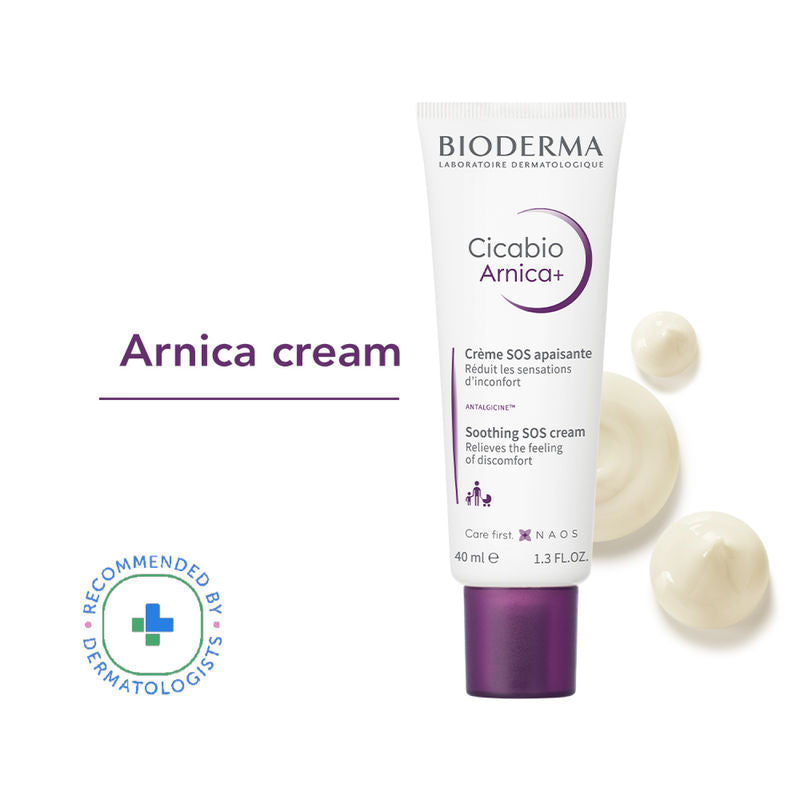
Bioderma Cicabio Arnica+ SOS Quickly Repairs and Soothes Skin Damage

Bioderma Cicabio Arnica+ SOS Quickly Repairs and Soothes Skin Damage
Bioderma
bioderma-cicabio-arnica-sos-quickly-repairs-and-soothes-skin-damage
Moisturize
10084880679205
Morning or Evening?
How often will you use this product?
Notes


Highlights
WHAT IS IT?
Face cream with 21 ingredients
FEATURES
Contains arnica extract, Antalgicine, apigenin, zinc; quickly reduces discomfort; creamy texture; non-comedogenic; fragrance-free; quick and easy application
BEST FOR
sensitive
CHECKS
No fragrance, non-comedogenic
Who Is It For?
Adults Aged 30 To 66 All GendersWhat Does It Help With?
Reduces Skin Discomfort Tightness Irritation And ItchingBudget
Mid-range ($30-$75)How To Use
Which routine should it be used in?
Instructions:
Key Information


What Bioderma Says
Product Description:
Bioderma Cicabio Arnica+ Creme is a treatment formulated to reduce sensations of discomfort in the skin. Its formula contains arnica extract, Antalgicine, apigenin and zinc. Arnica extract and apigenin promote the rapid and targeted elimination of the pigments responsible for skin color. Zinc prevents bacterial proliferation. The innovative active ingredient Antalgicine quickly relieves the feeling of discomfort and reduces the urge to scratch. Its creamy texture allows fast and easy application for optimum and immediate comfort. Benefits include quickly reducing feeling of discomfort, creamy texture, non-comedogenic, quick and easy application, and fragrance-free. Proven efficacy: Quickly reduces the feeling of discomfort and tightness sensations by 71%.
About the Brand:
Ingredients Overview
Ingredients List
Aqua/Water/Eau, Glycerin, Dicaprylyl-Carbonate, Caprylic/Capric-Triglyceride, Propylene-Glycol, Behenyl-Alcohol, Capryloyl-Glycine, Cetyl-Palmitate, Arachidyl-Alcohol, Sodium-Acrylates-Copolymer, Mannitol, Xylitol, Rhamnose, Fructooligosaccharides, Laminaria-Ochroleuca-Extract, Zinc-Sulfate, Titanium-Dioxide (Ci-77891), Arnica-Montana-Flower-Extract, Apigenin, Acetyl-Dipeptide-1-Cetyl-Ester, Helianthus-Annuus-(Sunflower)-Seed-Oil, Phospholipids, Tocopherol, Sodium-Citrate, Arachidyl-Glucoside, Polyglyceryl-10-Stearate, Xanthan-Gum, Laureth-3, Hydroxyethylcellulose, Hydrogenated-Polyisobutene, Hydrogenated-Lecithin, Butylene-Glycol, Pentylene-Glycol, Sodium-Hydroxide, Potassium-Sorbate
Key Ingredients
Arnica extract, Antalgicine, Apigenin, Zinc
Ingredients Details
Apigenin
Common Name(s): 4',5,7-trihydroxyflavone,versulin,apigenol
CAS Number: 520-36-5
DESCRIPTION
What It Does: Provides gaba-a receptor-mediated skin calming and anti-inflammatory activity from chamomile.
Why It's Used: The calming flavone — apigenin's documented gaba-a agonism provides the pharmacological basis for chamomile's well-documented calming activity, providing the most evidence-based neurocosmetic flavonoid mechanism.
How It Works: Apigenin binds gaba-a receptor benzodiazepine site (ic50 ~4μm) for calming activity. cox and 5-lox inhibition provides anti-inflammatory activity. anti-proliferative via cdk2 and cdk6 inhibition. uv-absorbing chromophore provides mild photoprotection. very low water solubility — requires formulation.
Typically Found In: Sensitive skin calming products,chamomile formulas,anti-anxiety skincare
TECHNICAL DETAILS
Primary Category: Active ingredient – soothing / anti-inflammatory
Secondary Functions: Redness reduction,anti-inflammatory,calming
Application Areas:

Facial Skincare
Body Care

Hair Care
Beard Care
Color Cosmetics (Makeup)
Dietary/Oral Supplements
Typical Concentration Range: 0.01%–2%
SOURCING & ETHICS
Vegan Status: Yes – from matricaria recutita or anthemis nobilis flowers
Halal Status: Yes
Source Notes: Plant-derived extract or synthetic.
SKIN COMPATIBILITY
Irritancy Rating: 1/5 – very low
Comedogenicity Rating: 0/5 – non-comedogenic
Sensitivity Concerns: Non-irritating; ideal for reactive and sensitive skin.
Safe for Sensitive Skin: Yes – particularly recommended for sensitive skin
SAFETY & COMPATIBILITY
Safety Profile: Excellent safety profile. ewg score: 1.
Works Well With: Ceramides,panthenol,allantoin,hyaluronic acid,centella asiatica
Avoid Combining With: No significant incompatibilities
SCIENTIFIC NOTE
Apigenin's gaba-a benzodiazepine site binding (same binding site as valium/diazepam) was first demonstrated by viola et al. (1995) confirming the pharmacological mechanism behind chamomile's traditional calming use. apigenin provides partial benzodiazepine site agonism rather than full agonism like pharmaceutical benzodiazepines — providing calming without sedative or addictive properties, explaining chamomile's safety advantage over pharmaceutical anxiolytics.
Last Verified: Cosing database,viola et al. apigenin gaba-a binding study
Primary Sources: 2026-03-12
Aqua/water/eau
Common Name(s): Aqua/water/eau extract
DESCRIPTION
What It Does: Provides antioxidant protection, soothing anti-inflammatory effects, and skin-conditioning benefits through plant-derived polyphenols and phytochemicals.
Why It's Used: Plant extracts concentrate bioactive phytochemicals evolved for environmental protection — uv, microbial, and oxidative stressors — that translate to skin benefits.
How It Works: Polyphenols (flavonoids, phenolic acids) inhibit nf-κb-mediated inflammatory signaling, scavenge reactive oxygen species through electron donation, and chelate pro-oxidant metal ions to reduce oxidative skin damage.
Typically Found In: Serums,toners,moisturizers,masks,essences
TECHNICAL DETAILS
Primary Category: Botanical extracts
Secondary Functions: Antioxidant,anti-inflammatory
Application Areas:
Facial Skincare
Body Care
Hair Care
Beard Care
Color Cosmetics (Makeup)
Dietary/Oral Supplements
Typical Concentration Range: 0.1–10%
SOURCING & ETHICS
Vegan Status: Yes
Halal Status: Yes
Source Notes: Plant-derived extract; no animal components.
SKIN COMPATIBILITY
Irritancy Rating: 1
Comedogenicity Rating: 0
Sensitivity Concerns: Low sensitization potential at recommended use concentrations.
Safe for Sensitive Skin: Yes
SAFETY & COMPATIBILITY
Safety Profile: Well-characterized cosmetic ingredient with established safety profile. generally non-irritating at typical use concentrations. suitable for leave-on and rinse-off cosmetics.
Works Well With: Niacinamide,hyaluronic acid,vitamin c,ceramides
Avoid Combining With: Strong oxidizing agents
SCIENTIFIC NOTE
Plant secondary metabolites (flavonoids, terpenes, phenolic acids) are biosynthesized as defense compounds against uv, herbivores, and pathogens. their anti-inflammatory activity typically derives from competitive inhibition of cox-2 and 5-lox enzymes (ic50 1–50 µm), while antioxidant activity involves single electron transfer (set) and hydrogen atom transfer (hat) mechanisms with structure-dependent rate constants.
Last Verified: Cosing eu database; pcpc cosmetic ingredient safety reviews; phytochemical and ethnobotanical literature
Primary Sources: 2025-01-15
Fructooligosaccharides
Common Name(s): Fos,oligofructose,short-chain inulin
CAS Number: 308066-66-2
DESCRIPTION
What It Does: Provides rapid-acting prebiotic microbiome support with humectant conditioning from short-chain fructan oligomers.
Why It's Used: Fast-acting prebiotic for rapid microbiome support — fos's shorter chain length provides faster fermentation by beneficial bacteria vs long-chain inulin, enabling quicker microbiome compositional shifts.
How It Works: Dp 2-10 fructooligomers (vs inulin's dp 10-60) provide more rapid access to bacterial fermentation enzymes. higher water solubility and humectant activity than long-chain inulin. more bioavailable to skin surface bacteria vs longer-chain inulin that penetrates deeper before fermentation.
Typically Found In: Prebiotic skin care,rapid microbiome support products
TECHNICAL DETAILS
Primary Category: Active ingredient – short-chain prebiotic
Secondary Functions: Tewl reduction,skin plumping
Application Areas:
Facial Skincare
Body Care
Hair Care
Beard Care
Color Cosmetics (Makeup)
Dietary/Oral Supplements
Typical Concentration Range: 0.5%–5%
SOURCING & ETHICS
Vegan Status: Yes – from sucrose enzymatic synthesis or inulin hydrolysis
Halal Status: Yes
Source Notes: Synthetic or naturally derived. excellent aqueous solubility.
SKIN COMPATIBILITY
Irritancy Rating: 1/5 – very low
Comedogenicity Rating: 0/5 – non-comedogenic
Sensitivity Concerns: Non-irritating; suitable for all skin types.
Safe for Sensitive Skin: Yes
SAFETY & COMPATIBILITY
Safety Profile: Excellent safety profile. ewg score: 1.
Works Well With: Ceramides,emollients,occlusives,glycerin,hyaluronic acid
Avoid Combining With: No significant incompatibilities
SCIENTIFIC NOTE
Fos's shorter chain length provides different prebiotic kinetics vs long-chain inulin: short-chain fos (dp 2-5) is fermented within 12-24 hours by surface bacteria, while long-chain inulin (dp 10-60) ferments over 48-72 hours. this temporal difference enables formulation of 'fast-acting' (fos) vs 'sustained-release' (inulin) prebiotic products with different microbiome support kinetics.
Last Verified: Cosing database,roberfroid fos prebiotic review
Primary Sources: 2026-03-12
Glycerin
Common Name(s): Glycerol,glycerine,1,2,3-propanetriol
CAS Number: 56-81-5
DESCRIPTION
What It Does: Glycerin pulls water from the environment and deeper skin layers into the outer skin layer (epidermis), boosting moisture levels and keeping skin soft, smooth, and plump.
Why It's Used: It is used in virtually every moisturizer, serum, and cleanser because it is highly effective at hydrating skin, is well-tolerated by all skin types, and enhances the texture and spreadability of formulations.
How It Works: As a humectant, glycerin forms hydrogen bonds with water molecules, trapping them in the skin. it also reinforces the skin barrier by integrating into lipid structures between skin cells.
Typically Found In: Moisturizers,serums,cleansers,toners,sheet masks,sunscreens,body lotions,shampoos,conditioners
TECHNICAL DETAILS
Primary Category: Humectant
Secondary Functions: Skin barrier support,emollient,solvent
Application Areas:
Facial Skincare
Body Care
Hair Care
Beard Care
Color Cosmetics (Makeup)
Dietary/Oral Supplements
Typical Concentration Range: 1%–30% (typical: 3–10%)
SOURCING & ETHICS
Vegan Status: Yes – plant-derived (coconut, soy, palm) or synthetic
Halal Status: Yes – when plant-derived or synthetic; verify source with supplier
Source Notes: Derived from plant oils via hydrolysis or saponification; synthetic versions also available. palm-derived glycerin carries sustainability concerns.
SKIN COMPATIBILITY
Irritancy Rating: 1/5 – very low; non-irritating at all standard concentrations
Comedogenicity Rating: 0/5 – non-comedogenic
Sensitivity Concerns: Extremely rare allergic reactions; generally safe for all skin types including sensitive and baby skin
Safe for Sensitive Skin: Yes
SAFETY & COMPATIBILITY
Safety Profile: Widely recognized as safe. ewg hazard score: 1. no significant concerns for irritation, sensitization, or toxicity at typical concentrations (up to 50%).
Works Well With: Hyaluronic acid,ceramides,niacinamide,panthenol,urea,peptides,retinol,ahas/bhas
Avoid Combining With: No known incompatibilities at standard concentrations
SCIENTIFIC NOTE
Glycerin is an endogenous skin component found naturally in the stratum corneum. aquaporin-3 channels in keratinocytes facilitate glycerin transport, making it integral to natural skin hydration pathways.
Last Verified: Cosing database,cir safety assessment,ewg skin deep,inci decoder
Primary Sources: 2026-03-12
