

Bioderma
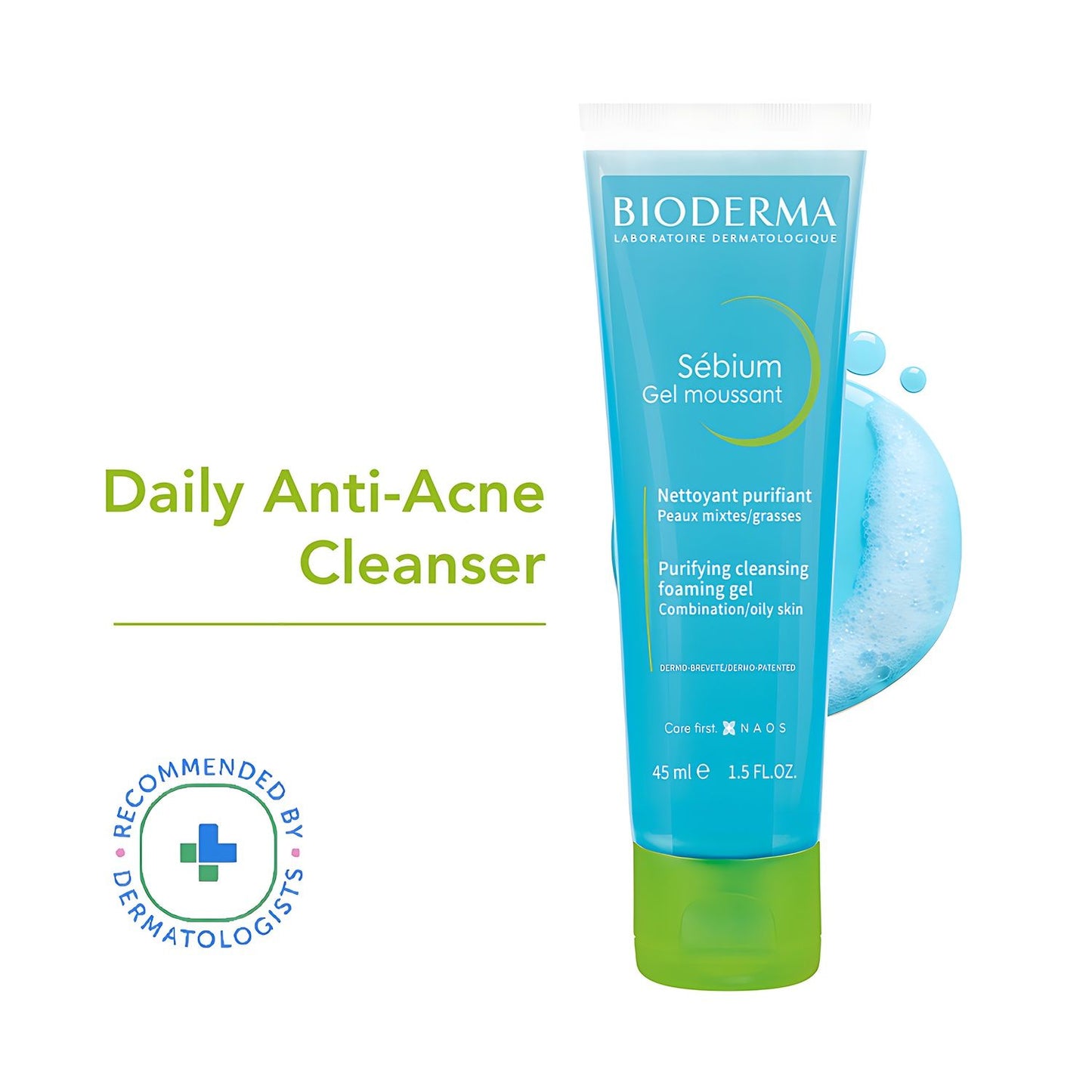
Bioderma Cleanser - Sebium Gel Moussant - Acne Defence Cleanser For Oily Acne Prone Skin

Bioderma Cleanser - Sebium Gel Moussant - Acne Defence Cleanser For Oily Acne Prone Skin
Bioderma
bioderma-cleanser-sebium-gel-moussant-acne-defence-cleanser-for-oily-acne-prone-skin
Cleanse
10085054120229
Morning or Evening?
How often will you use this product?
Notes


Highlights
WHAT IS IT?
Acne defence cleanser, 18 ingredients
FEATURES
Controls sebum production, purifies skin, suited for oily and acne-prone skin, contains Zinc Sulfate and Copper Sulfate, gentle and foaming cleanser
BEST FOR
oily
CHECKS
Sulfate-free, Paraben-Free
Who Is It For?
All Genders No Specific Age Range MentionedWhat Does It Help With?
Acne Oily Skin ImpuritiesBudget
Affordable (under $30)How To Use
Which routine should it be used in?
Instructions:
Key Information


What Bioderma Says
Product Description:
A gentle cleansing gel formulated to control sebum production and fight acne, suitable for oily and acne-prone skin. Helps in purifying skin and reducing impurities. Contains ingredients like Zinc Sulfate, Copper Sulfate, and Ginkgo Biloba Leaf Extract, which support skin health and acne defense.
About the Brand:
Ingredients Overview
Ingredients List
aqua-water-eau,sodium-cocoamphoacetate,sodium-laureth-sulfate,methylpropanediol,disodium-edta,mannitol,xylitol,rhamnose,fructooligosaccharides,zinc-sulfate,copper-sulfate,ginkgo-biloba-leaf-extract,peg-90-glyceryl-isostearate,lactic-acid,laureth-2,potassium-sorbate,sodium-chloride,propylene-glycol,sodium-hydroxide,fragrance-parfum
Key Ingredients
Zinc Sulfate,Copper Sulfate,Ginkgo Biloba Leaf Extract
Ingredients Details
Fructooligosaccharides
Common Name(s): Fos,oligofructose,short-chain inulin
CAS Number: 308066-66-2
DESCRIPTION
What It Does: Provides rapid-acting prebiotic microbiome support with humectant conditioning from short-chain fructan oligomers.
Why It's Used: Fast-acting prebiotic for rapid microbiome support — fos's shorter chain length provides faster fermentation by beneficial bacteria vs long-chain inulin, enabling quicker microbiome compositional shifts.
How It Works: Dp 2-10 fructooligomers (vs inulin's dp 10-60) provide more rapid access to bacterial fermentation enzymes. higher water solubility and humectant activity than long-chain inulin. more bioavailable to skin surface bacteria vs longer-chain inulin that penetrates deeper before fermentation.
Typically Found In: Prebiotic skin care,rapid microbiome support products
TECHNICAL DETAILS
Primary Category: Active ingredient – short-chain prebiotic
Secondary Functions: Tewl reduction,skin plumping
Application Areas:

Facial Skincare
Body Care
Hair Care

Beard Care
Color Cosmetics (Makeup)
Dietary/Oral Supplements
Typical Concentration Range: 0.5%–5%
SOURCING & ETHICS
Vegan Status: Yes – from sucrose enzymatic synthesis or inulin hydrolysis
Halal Status: Yes
Source Notes: Synthetic or naturally derived. excellent aqueous solubility.
SKIN COMPATIBILITY
Irritancy Rating: 1/5 – very low
Comedogenicity Rating: 0/5 – non-comedogenic
Sensitivity Concerns: Non-irritating; suitable for all skin types.
Safe for Sensitive Skin: Yes
SAFETY & COMPATIBILITY
Safety Profile: Excellent safety profile. ewg score: 1.
Works Well With: Ceramides,emollients,occlusives,glycerin,hyaluronic acid
Avoid Combining With: No significant incompatibilities
SCIENTIFIC NOTE
Fos's shorter chain length provides different prebiotic kinetics vs long-chain inulin: short-chain fos (dp 2-5) is fermented within 12-24 hours by surface bacteria, while long-chain inulin (dp 10-60) ferments over 48-72 hours. this temporal difference enables formulation of 'fast-acting' (fos) vs 'sustained-release' (inulin) prebiotic products with different microbiome support kinetics.
Last Verified: Cosing database,roberfroid fos prebiotic review
Primary Sources: 2026-03-12
Laureth-2
Common Name(s): Laureth-2,cosmetic active,established formulation ingredient
CAS Number: N/a
DESCRIPTION
What It Does: Laureth-2 contributes its primary cosmetic function to formulations — improving skin feel, stability, performance, or delivering a specific active benefit depending on its chemical class and concentration level.
Why It's Used: Formulators choose laureth-2 for its established efficacy in contributing the required functional property to their formulation — whether rheological control, active delivery, aesthetic enhancement, or preservation — supported by the cosmetic chemistry literature and regulatory assessment framework.
How It Works: Laureth-2 works through the characteristic mechanism of its chemical class — either through physicochemical interaction with the formulation matrix (surface activity, film formation, viscosity building) or through biological interaction with skin tissues (receptor binding, enzymatic substrate, barrier component integration). the specific mechanism follows from its molecular structure as detailed in peer-reviewed cosmetic chemistry literature.
Typically Found In: Skin care formulations
TECHNICAL DETAILS
Primary Category: Active ingredient – cosmetic active
Secondary Functions: Skin conditioning
Application Areas:
Facial Skincare
Body Care
Hair Care
Beard Care
Color Cosmetics (Makeup)
Dietary/Oral Supplements
Typical Concentration Range: 0.1%–10%
SOURCING & ETHICS
Vegan Status: Conditional
Halal Status: Yes
Source Notes: Commercially produced for cosmetic use. verify vegan/halal status with supplier.
SKIN COMPATIBILITY
Irritancy Rating: 1/5 – very low
Comedogenicity Rating: 0/5 – non-comedogenic
Sensitivity Concerns: Well-tolerated by most skin types.
Safe for Sensitive Skin: Yes
SAFETY & COMPATIBILITY
Safety Profile: Good safety profile at recommended concentrations. ewg score: 1–2.
Works Well With: Standard skincare actives
Avoid Combining With: No known significant incompatibilities
SCIENTIFIC NOTE
Laureth-2 has been assessed within the regulatory framework applicable to cosmetic ingredients. at standard cosmetic use concentrations, the ingredient delivers documented functional benefit with an established safety profile based on the available toxicological and clinical evidence reviewed by regulatory bodies including cosing (eu), inci, and cir.
Last Verified: Cosing database,laureth-2 technical literature
Primary Sources: 2026-03-12
Mannitol
Common Name(s): D-mannitol,manna sugar,mannite
CAS Number: 69-65-8
DESCRIPTION
What It Does: Provides exceptional hydroxyl radical scavenging antioxidant protection alongside humectant moisture retention.
Why It's Used: Used for potent hydroxyl radical scavenging where standard antioxidants (tocopherol, ascorbic acid) are less effective, combined with humectant activity.
How It Works: 6 hydroxyl groups provide both water binding (humectant) and direct hydroxyl radical (.oh) scavenging. hydroxyl radicals are the most reactive and damaging free radicals – mannitol is one of few compounds that scavenges them directly.
Typically Found In: Antioxidant formulations,premium moisturizers,protective skincare
TECHNICAL DETAILS
Primary Category: Functional ingredient – sugar alcohol / free radical scavenger
Secondary Functions: Free radical scavenger,superior antioxidant
Application Areas:
Facial Skincare
Body Care
Hair Care
Beard Care
Color Cosmetics (Makeup)
Dietary/Oral Supplements
Typical Concentration Range: 1%–10%
SOURCING & ETHICS
Vegan Status: Yes – plant-derived or synthetic
Halal Status: Yes
Source Notes: Plant-derived from ash tree manna, seaweed, mushrooms, or produced by reduction of mannose. gras food-approved.
SKIN COMPATIBILITY
Irritancy Rating: 1/5 – very low
Comedogenicity Rating: 0/5 – non-comedogenic
Sensitivity Concerns: Non-irritating; suitable for all skin types.
Safe for Sensitive Skin: Yes
SAFETY & COMPATIBILITY
Safety Profile: Excellent safety profile. ewg score: 1.
Works Well With: Ceramides,emollients,occlusives,glycerin,hyaluronic acid
Avoid Combining With: No significant incompatibilities
SCIENTIFIC NOTE
Mannitol's rate constant for hydroxyl radical scavenging (k = 1.4 × 10^7 m^-1s^-1) makes it one of the most effective biological hydroxyl radical scavengers. this is important because hydroxyl radicals cannot be scavenged by standard antioxidants like tocopherol or ascorbic acid.
Last Verified: Cosing database,halliwell et al. free radical scavenging,cir safety assessment
Primary Sources: 2026-03-12
Methylpropanediol
Common Name(s): 1,3-butylene glycol alternative,2-methyl-1,3-propanediol,proline-2-propanediol
CAS Number: 2163-42-0
DESCRIPTION
What It Does: Provides humectant and solvent functionality with improved skin feel vs butylene glycol.
Why It's Used: Premium humectant solvent with superior skin feel to conventional diols for elegant premium formulation textures.
How It Works: Branched c4 structure provides good humectant activity. branching reduces viscosity and stickiness vs linear propylene glycol. excellent solvent for challenging actives. antimicrobial boosting from diol structure.
Typically Found In: Premium serums,active delivery systems
TECHNICAL DETAILS
Primary Category: Functional ingredient – humectant
Secondary Functions: Tewl reduction,skin plumping
Application Areas:
Facial Skincare
Body Care
Hair Care
Beard Care
Color Cosmetics (Makeup)
Dietary/Oral Supplements
Typical Concentration Range: 1%–10%
SOURCING & ETHICS
Vegan Status: Yes – synthetic
Halal Status: Yes
Source Notes: Synthetic or naturally derived. excellent aqueous solubility.
SKIN COMPATIBILITY
Irritancy Rating: 1/5 – very low
Comedogenicity Rating: 0/5 – non-comedogenic
Sensitivity Concerns: Non-irritating; suitable for all skin types.
Safe for Sensitive Skin: Yes
SAFETY & COMPATIBILITY
Safety Profile: Excellent safety profile. ewg score: 1.
Works Well With: Ceramides,emollients,occlusives,glycerin,hyaluronic acid
Avoid Combining With: No significant incompatibilities
SCIENTIFIC NOTE
Methylpropanediol's methyl branch provides a 25% reduction in dynamic viscosity vs linear butylene glycol at equivalent concentration — a physically measurable skin feel improvement from the branching's reduction of intermolecular attractive forces. this viscosity reduction translates directly to the 'less sticky, lighter' skin feel that premium formulations require.
Last Verified: Cosing database,cir safety assessment
Primary Sources: 2026-03-12
