

Bioderma
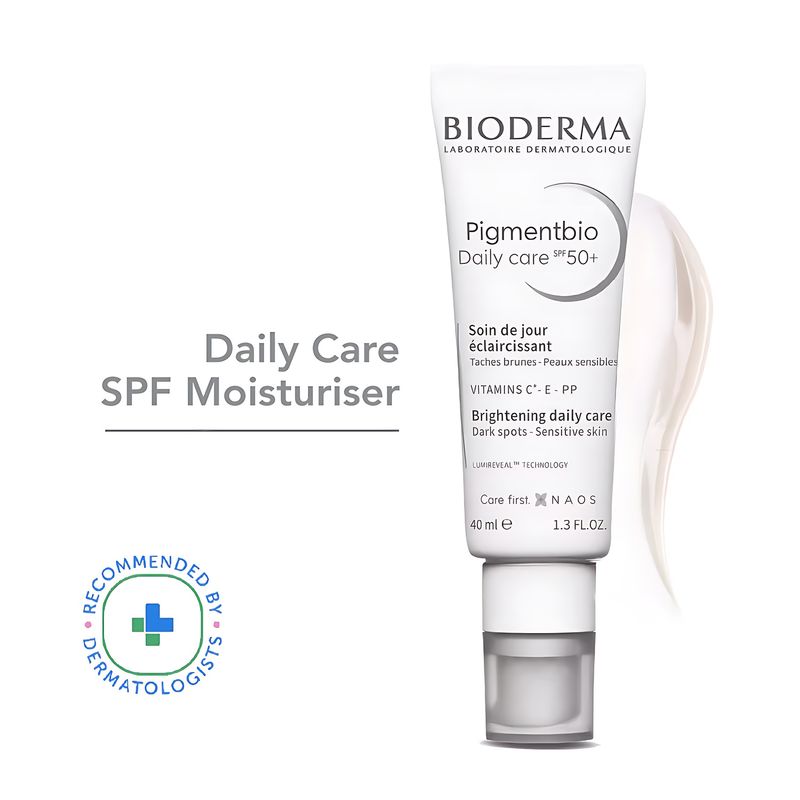
Bioderma SPF 50+ Brightening Sunscreen - Pigmentbio Daily Care

Bioderma SPF 50+ Brightening Sunscreen - Pigmentbio Daily Care
Bioderma
bioderma-spf-50-brightening-sunscreen-pigmentbio-daily-care
Moisturize
10085036392741
Morning or Evening?
How often will you use this product?
Notes


Highlights
WHAT IS IT?
Brightening sunscreen with SPF 50+ featuring Lumireveal Technology, multiple vitamins and filters for skin protection and brightening
FEATURES
Helps reduce dark spots, prevents new dark spots, very high sun protection UVA/UVB SPF 50+, brightens complexion, evens skin tone, prevents premature ageing, provides long-lasting hydration, pearly texture with instant glow, non-comedogenic, excellent make-up base, tested under dermatological control
BEST FOR
normal
CHECKS
Does not contain parabens, sulfates, alcohol, silicones
Who Is It For?
Women Aged 22 To 40 With Normal Combination Or Oily SkinWhat Does It Help With?
Dark Spots Pigmentation Brightening Hydration Protection From Sun Damage Premature AgeingBudget
Premium ($76-$150)How To Use
Which routine should it be used in?
Instructions:
Key Information


What Bioderma Says
Product Description:
Instantly illuminates and protects, unifies and brightens lastingly. Pigmentbio Daily Care SPF50+ features Lumireveal Technology, inspired by the dermatologists’ reference treatments (such as Kligman’s Trio), which reveals the brightness of the original complexion. It helps biologically reduce the production of melanin while boosting cell renewal for a corrective and preventive brightening effect. Pigmentbio Daily Care SPF50+ is enriched with very strong filters which protect against wide spectrum UVA and UVB rays to limit visible signs of premature ageing. It also features a cocktail of vitamins that boost the brightening action and protect the skin barrier - antioxidant vitamins C and E that act in synergy to boost the brightening action; they protect the skin from visible signs of premature ageing, and vitamin PP provides long-lasting hydration and improves skin barrier resistance.
About the Brand:
Ingredients Overview
Ingredients List
Aqua-Water-Eau,Dicaprylyl-Carbonate,Octocrylene,Methylene-Bis-Benzotriazolyl-Tetramethylbutylphenol-[Nano],Glycerin,Butyl-Methoxydibenzoylmethane,Dipropylene-Glycol,Bis-Ethylhexyloxyphenol-Methoxyphenyl-Triazine,Dimethicone,Ascorbyl-Glucoside,Butyrospermum-Parkii-(Shea)-Oil,Niacinamide,Silica,Polymethylsilsesquioxane,Jojoba-Esters,Hdi-Trimethylol-Hexyllactone-Crosspolymer,Decyl-Glucoside,C20-22-Alkyl-Phosphate,C20-22-Alcohols,Xanthan-Gum,Helianthus-Annuus-(Sunflower)-Seed-Wax,Dimethicone-Vinyl-Dimethicone-Crosspolymer,Pentylene-Glycol,Tocopheryl-Acetate,Sodium-Hydroxide,Hydrogenated-Castor-Oil,Salicylic-Acid,Sodium-Citrate,Lysine,Azelaic-Acid,Mannitol,Polyglycerin-3,Xylitol,Andrographis-Paniculata-Leaf-Extract,Rhamnose,Propylene-Glycol,Acacia-Decurrens-Flower-Wax,Saccharide-Isomerate,Glycyrrhiza-Glabra-(Licorice)-Root-Extract,Tocopherol,Fructooligosaccharides,Caprylic-Capric-Triglyceride,Laminaria-Ochroleuca-Extract,Fragrance-Parfum
Key Ingredients
Niacinamide,Ascorbyl Glucoside,Azelaic Acid,Tocopheryl Acetate,Salicylic Acid
Ingredients Details
Dimethicone
Common Name(s): Pdms,polydimethylsiloxane,silicone fluid
CAS Number: 9006-65-9
DESCRIPTION
What It Does: Provides silicone-characteristic silky feel and skin protection with adjustable viscosity.
Why It's Used: The benchmark cosmetic silicone – sets the gold standard for silky application feel, spreadability, and skin protection in virtually all skin care categories.
How It Works: Polydimethylsiloxane chain flexibility provides extremely low surface tension and high spreadability. inert si-o backbone provides chemical stability and excellent skin tolerance. occlusive film formation reduces tewl. higher viscosity grades provide more intense conditioning.
Typically Found In: Moisturizers,foundations,primers,sunscreens – nearly universal
TECHNICAL DETAILS
Primary Category: Functional ingredient – polydimethylsiloxane
Secondary Functions: Barrier sealing,softening
Application Areas:

Facial Skincare
Body Care
Hair Care

Beard Care
Color Cosmetics (Makeup)
Dietary/Oral Supplements
Typical Concentration Range: 0.1%–30%
SOURCING & ETHICS
Vegan Status: Yes – synthetic
Halal Status: Yes
Source Notes: Plant-derived, synthetic or animal-derived. verify source.
SKIN COMPATIBILITY
Irritancy Rating: 1/5 – very low
Comedogenicity Rating: 1/5 – low; formulation-dependent
Sensitivity Concerns: Non-irritating.
Safe for Sensitive Skin: Yes
SAFETY & COMPATIBILITY
Safety Profile: Excellent safety profile. ewg score: 1.
Works Well With: Humectants,ceramides,actives as carrier
Avoid Combining With: No significant incompatibilities
SCIENTIFIC NOTE
Dimethicone's exceptional silky feel arises from its very low intermolecular attractive forces (weak van der waals forces due to non-polar methyl groups) that allow silicone chains to slide freely over skin. the coefficient of kinetic friction for pdms against skin (~0.04) is among the lowest of any cosmetic material – explaining why even small amounts transform product feel.
Last Verified: Cosing database,cir safety assessment
Primary Sources: 2026-03-12
Fructooligosaccharides
Common Name(s): Fos,oligofructose,short-chain inulin
CAS Number: 308066-66-2
DESCRIPTION
What It Does: Provides rapid-acting prebiotic microbiome support with humectant conditioning from short-chain fructan oligomers.
Why It's Used: Fast-acting prebiotic for rapid microbiome support — fos's shorter chain length provides faster fermentation by beneficial bacteria vs long-chain inulin, enabling quicker microbiome compositional shifts.
How It Works: Dp 2-10 fructooligomers (vs inulin's dp 10-60) provide more rapid access to bacterial fermentation enzymes. higher water solubility and humectant activity than long-chain inulin. more bioavailable to skin surface bacteria vs longer-chain inulin that penetrates deeper before fermentation.
Typically Found In: Prebiotic skin care,rapid microbiome support products
TECHNICAL DETAILS
Primary Category: Active ingredient – short-chain prebiotic
Secondary Functions: Tewl reduction,skin plumping
Application Areas:
Facial Skincare
Body Care
Hair Care
Beard Care
Color Cosmetics (Makeup)
Dietary/Oral Supplements
Typical Concentration Range: 0.5%–5%
SOURCING & ETHICS
Vegan Status: Yes – from sucrose enzymatic synthesis or inulin hydrolysis
Halal Status: Yes
Source Notes: Synthetic or naturally derived. excellent aqueous solubility.
SKIN COMPATIBILITY
Irritancy Rating: 1/5 – very low
Comedogenicity Rating: 0/5 – non-comedogenic
Sensitivity Concerns: Non-irritating; suitable for all skin types.
Safe for Sensitive Skin: Yes
SAFETY & COMPATIBILITY
Safety Profile: Excellent safety profile. ewg score: 1.
Works Well With: Ceramides,emollients,occlusives,glycerin,hyaluronic acid
Avoid Combining With: No significant incompatibilities
SCIENTIFIC NOTE
Fos's shorter chain length provides different prebiotic kinetics vs long-chain inulin: short-chain fos (dp 2-5) is fermented within 12-24 hours by surface bacteria, while long-chain inulin (dp 10-60) ferments over 48-72 hours. this temporal difference enables formulation of 'fast-acting' (fos) vs 'sustained-release' (inulin) prebiotic products with different microbiome support kinetics.
Last Verified: Cosing database,roberfroid fos prebiotic review
Primary Sources: 2026-03-12
Glycerin
Common Name(s): Glycerol,glycerine,1,2,3-propanetriol
CAS Number: 56-81-5
DESCRIPTION
What It Does: Glycerin pulls water from the environment and deeper skin layers into the outer skin layer (epidermis), boosting moisture levels and keeping skin soft, smooth, and plump.
Why It's Used: It is used in virtually every moisturizer, serum, and cleanser because it is highly effective at hydrating skin, is well-tolerated by all skin types, and enhances the texture and spreadability of formulations.
How It Works: As a humectant, glycerin forms hydrogen bonds with water molecules, trapping them in the skin. it also reinforces the skin barrier by integrating into lipid structures between skin cells.
Typically Found In: Moisturizers,serums,cleansers,toners,sheet masks,sunscreens,body lotions,shampoos,conditioners
TECHNICAL DETAILS
Primary Category: Humectant
Secondary Functions: Skin barrier support,emollient,solvent
Application Areas:
Facial Skincare
Body Care
Hair Care
Beard Care
Color Cosmetics (Makeup)
Dietary/Oral Supplements
Typical Concentration Range: 1%–30% (typical: 3–10%)
SOURCING & ETHICS
Vegan Status: Yes – plant-derived (coconut, soy, palm) or synthetic
Halal Status: Yes – when plant-derived or synthetic; verify source with supplier
Source Notes: Derived from plant oils via hydrolysis or saponification; synthetic versions also available. palm-derived glycerin carries sustainability concerns.
SKIN COMPATIBILITY
Irritancy Rating: 1/5 – very low; non-irritating at all standard concentrations
Comedogenicity Rating: 0/5 – non-comedogenic
Sensitivity Concerns: Extremely rare allergic reactions; generally safe for all skin types including sensitive and baby skin
Safe for Sensitive Skin: Yes
SAFETY & COMPATIBILITY
Safety Profile: Widely recognized as safe. ewg hazard score: 1. no significant concerns for irritation, sensitization, or toxicity at typical concentrations (up to 50%).
Works Well With: Hyaluronic acid,ceramides,niacinamide,panthenol,urea,peptides,retinol,ahas/bhas
Avoid Combining With: No known incompatibilities at standard concentrations
SCIENTIFIC NOTE
Glycerin is an endogenous skin component found naturally in the stratum corneum. aquaporin-3 channels in keratinocytes facilitate glycerin transport, making it integral to natural skin hydration pathways.
Last Verified: Cosing database,cir safety assessment,ewg skin deep,inci decoder
Primary Sources: 2026-03-12
Lysine
Common Name(s): 2,6-diaminohexanoic acid,l-lysine hcl
CAS Number: 56-87-1
DESCRIPTION
What It Does: Provides collagen crosslink precursor activity and nmf conditioning from the essential diaminoamino acid.
Why It's Used: Collagen crosslink amino acid — lysine's hydroxylation to hydroxylysine and subsequent cross-link formation via lysyl oxidase provides the structural crosslinks that give collagen mechanical strength.
How It Works: Converted to hydroxylysine by lysyl hydroxylase. hydroxylysine provides collagen crosslink sites for lysyl oxidase-catalysed aldehyde cross-links. nmf amino acid component. basic amino acid (ε-amino group pka 10.5) provides antimicrobial cationic character. antiviral via competition with arginine (essential for herpes virus replication).
Typically Found In: Collagen-support products,antiviral skin care,nmf products
TECHNICAL DETAILS
Primary Category: Active ingredient – essential amino acid
Secondary Functions: Skin conditioning
Application Areas:
Facial Skincare
Body Care
Hair Care
Beard Care
Color Cosmetics (Makeup)
Dietary/Oral Supplements
Typical Concentration Range: 0.5%–5%
SOURCING & ETHICS
Vegan Status: Yes – fermentation
Halal Status: Yes
Source Notes: Commercially produced for cosmetic use. verify vegan/halal status with supplier.
SKIN COMPATIBILITY
Irritancy Rating: 1/5 – very low
Comedogenicity Rating: 0/5 – non-comedogenic
Sensitivity Concerns: Well-tolerated by most skin types.
Safe for Sensitive Skin: Yes
SAFETY & COMPATIBILITY
Safety Profile: Good safety profile at recommended concentrations. ewg score: 1–2.
Works Well With: Standard skincare actives
Avoid Combining With: No known significant incompatibilities
SCIENTIFIC NOTE
Lysine's antiviral activity for herpes simplex virus is pharmacologically validated: hsv replicates using arginine as a structural protein component, while lysine competes with arginine for cellular uptake via the same transporter. high lysine:arginine ratio reduces viral protein synthesis — the basis for the clinical practice of high-lysine dietary supplementation and topical application for cold sore prevention.
Last Verified: Cosing database,griffith et al. lysine herpes study,cir safety assessment
Primary Sources: 2026-03-12
