

Glow Recipe
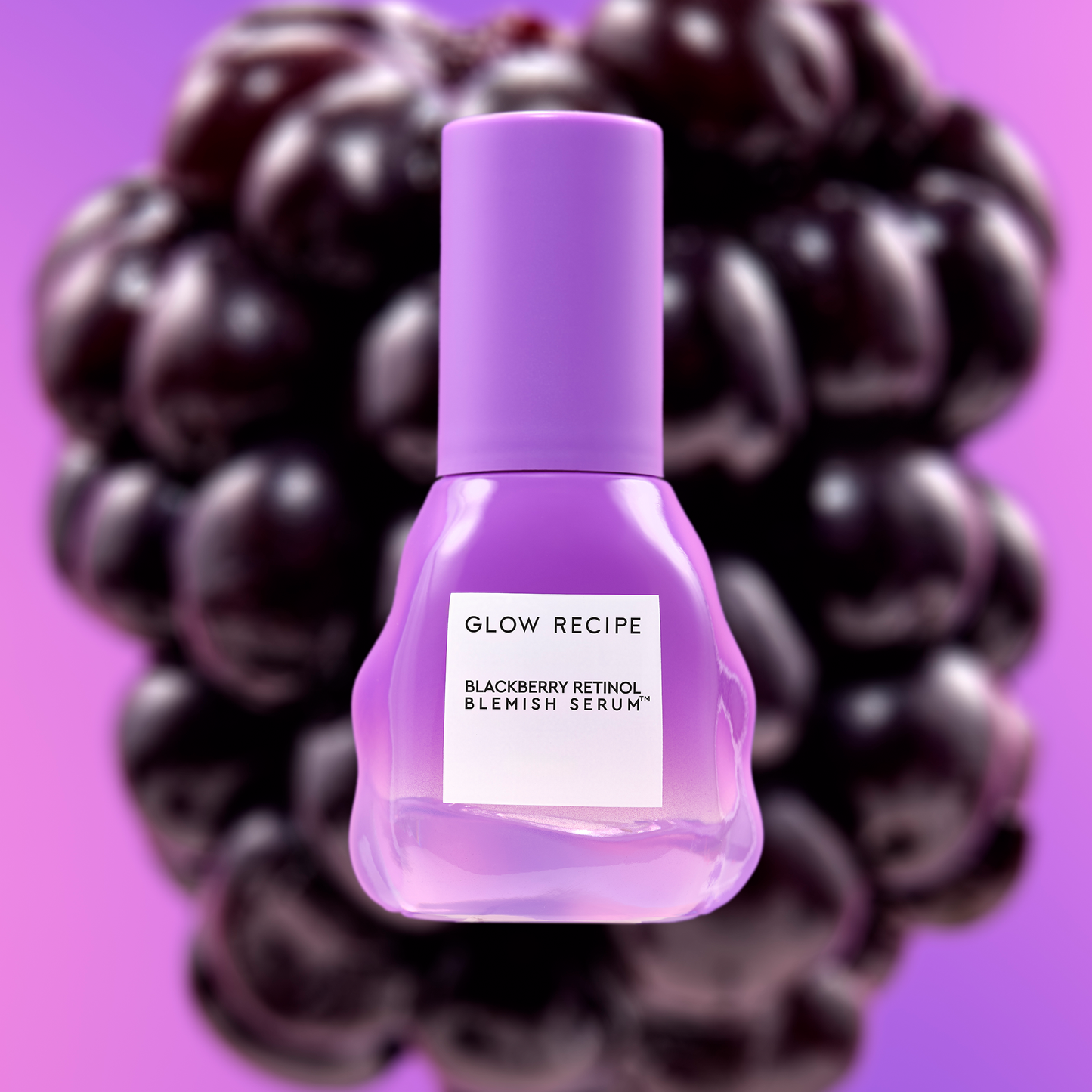
Blackberry Retinol Blemish Serum

Blackberry Retinol Blemish Serum
Glow Recipe
blackberry-retinol-blemish-serum
Serum
9784795824421
Morning or Evening?
How often will you use this product?
Notes


Highlights
WHAT IS IT?
Triple-retinoid blemish serum with 0.16% retinoid blend
FEATURES
Clarifies blemishes, unclogs pores, diminishes discoloration and fine lines, gentle formula
BEST FOR
sensitive
CHECKS
Free of parabens, mineral oil, sulfates, silicones, phthalates, drying alcohols and synthetic dyes
Who Is It For?
Ages 20+ All GendersWhat Does It Help With?
Blemishes Pores Discoloration Fine Lines WrinklesBudget
Mid-range ($30-$75)How To Use
Which routine should it be used in?
Instructions:
Key Information


What Glow Recipe Says
Product Description:
This clinically effective, triple-retinoid is formulated to help visibly clarify blemishes, unclog pores, and diminish the appearance of discoloration and fine lines & wrinkles. This potent yet gentle 0.16% triple-retinoid blend of Retinol, Retinal and Retinyl Ester maximizes the clarifying and resurfacing benefits of retinoids, with an infusion of ultra-hydrating extracts to soothe and nourish blemish-prone, sensitive skin.
About the Brand:
Ingredients Overview
Ingredients List
Water/Aqua/Eau, Glycerin, Squalane, Neopentyl Glycol Diheptanoate, Ectoin, Limnanthes Alba Seed Oil, Rubus Fruticosus Fruit Extract, Bisabolol, Retinyl Linoleate, Epilobium Angustifolium Flower/Leaf/Stem Extract, Tocopheryl Acetate, Aloe Barbadensis Leaf Juice, Retinal, Hibiscus Sabdariffa Fruit Extract, Retinol, Tocopherol, Zingiber Officinale Root Extract, Sorbitan Isostearate, Erythritol, Citric Acid, Hydroxyethyl Acrylate/Sodium Acryloyldimethyl Taurate Copolymer, Ethylhexylglycerin, Sodium Phytate, Ammonium Polyacryloyldimethyl Taurate, Glycine Soja Oil, Chlorphenesin, Phenoxyethanol, Fragrance/Parfum* *Natural Fragrance
Key Ingredients
Retinol, Retinal, Retinyl-Ester, Blackberry-extract
Ingredients Details
Bisabolol
Common Name(s): Alpha-bisabolol,levomenol,(-)-alpha-bisabolol
CAS Number: 515-69-5
DESCRIPTION
What It Does: Reduces skin inflammation, soothes irritation, promotes wound healing, and enhances penetration of co-formulated actives.
Why It's Used: Premium natural soothing active with combined anti-inflammatory, wound healing, and penetration-enhancing activity – clinically validated across sensitive, reactive, and irritated skin types.
How It Works: Inhibits nf-kb pathway reducing pro-inflammatory cytokines il-1β, il-6, tnf-α. enhances stratum corneum lipid fluidity increasing penetration of co-delivered actives. antimicrobial against s. aureus and c. albicans. promotes keratinocyte migration for wound healing.
Typically Found In: Sensitive skin products,post-procedure formulations,anti-irritant formulas,wound healing
TECHNICAL DETAILS
Primary Category: Active ingredient – soothing / anti-inflammatory
Secondary Functions: Anti-inflammatory,penetration enhancement,antimicrobial
Application Areas:

Facial Skincare
Body Care

Hair Care
Beard Care
Color Cosmetics (Makeup)
Dietary/Oral Supplements
Typical Concentration Range: 0.1%–1%
SOURCING & ETHICS
Vegan Status: Yes – from candeia tree (vanillosmopsis erythropappa) or synthetic
Halal Status: Yes
Source Notes: Natural (-)-alpha-bisabolol from brazilian candeia tree is more sustainable and potent than chamomile-derived bisabolol. synthetic (±)-bisabolol is racemic with slightly lower anti-inflammatory potency.
SKIN COMPATIBILITY
Irritancy Rating: 1/5 – very low
Comedogenicity Rating: 0/5 – non-comedogenic
Sensitivity Concerns: Non-irritating; ideal for reactive and sensitive skin.
Safe for Sensitive Skin: Yes – particularly recommended for sensitive skin
SAFETY & COMPATIBILITY
Safety Profile: Excellent safety profile. ewg score: 1.
Works Well With: Ceramides,panthenol,allantoin,hyaluronic acid,centella asiatica
Avoid Combining With: No significant incompatibilities
SCIENTIFIC NOTE
Bisabolol's dual function as both an anti-inflammatory and a penetration enhancer is synergistic – by reducing the inflammatory response that increases barrier tightness while simultaneously fluidizing stratum corneum lipids, it provides enhanced delivery of co-formulated actives in the very conditions where delivery is most needed.
Last Verified: Cosing database,piazza et al. bisabolol anti-inflammatory study,cir safety assessment
Primary Sources: 2026-03-12
Ectoin
Common Name(s): Ectoin,extremophile stress protector,anti-aging humectant
CAS Number: N/a
DESCRIPTION
What It Does: Hydrates by forming a water-shell around skin biomolecules, stabilises cellular membranes against heat/uv stress, and reduces inflammatory cytokine release in stressed skin.
Why It's Used: Provides dual humectancy plus cellular protection — unique among humectants for its documented ability to stabilise skin proteins and membranes against uv and environmental stress, not just attract water.
How It Works: Ectoin's tetrahydropyrimidine ring forms an ordered hydration shell around proteins, lipid bilayers, and dna through kosmotropic water structuring. this preferential hydration excludes denaturants and uv-stress mediators from biomolecule surfaces while simultaneously providing humectant moisture binding.
Typically Found In: Sensitive skin,uv protection actives,anti-inflammatory
TECHNICAL DETAILS
Primary Category: Functional ingredient – humectant
Secondary Functions: Tewl reduction,skin plumping
Application Areas:
Facial Skincare
Body Care
Hair Care
Beard Care
Color Cosmetics (Makeup)
Dietary/Oral Supplements
Typical Concentration Range: 0.1%–2%
SOURCING & ETHICS
Vegan Status: Yes
Halal Status: Yes
Source Notes: Synthetic or naturally derived. excellent aqueous solubility.
SKIN COMPATIBILITY
Irritancy Rating: 1/5 – very low
Comedogenicity Rating: 0/5 – non-comedogenic
Sensitivity Concerns: Non-irritating; suitable for all skin types.
Safe for Sensitive Skin: Yes
SAFETY & COMPATIBILITY
Safety Profile: Excellent safety profile. ewg score: 1.
Works Well With: Ceramides,emollients,occlusives,glycerin,hyaluronic acid
Avoid Combining With: No significant incompatibilities
SCIENTIFIC NOTE
Extremophile bacteria accumulate ectoin at up to 15% intracellular concentration to survive 100°c temperatures and extreme salinity — the same biomolecule protection mechanism applies to human skin cells at cosmetic concentrations.
Last Verified: Cosing database,ectoin extremophile anti-stress clinical review
Primary Sources: 2026-03-12
Epilobium Angustifolium Flower/leaf/stem Extract
Common Name(s): Epilobium angustifolium flower/leaf/stem extract
DESCRIPTION
What It Does: Provides antioxidant protection, soothing anti-inflammatory effects, and skin-conditioning benefits through plant-derived polyphenols and phytochemicals.
Why It's Used: Plant extracts concentrate bioactive phytochemicals evolved for environmental protection — uv, microbial, and oxidative stressors — that translate to skin benefits.
How It Works: Polyphenols (flavonoids, phenolic acids) inhibit nf-κb-mediated inflammatory signaling, scavenge reactive oxygen species through electron donation, and chelate pro-oxidant metal ions to reduce oxidative skin damage.
Typically Found In: Serums,toners,moisturizers,masks,essences
TECHNICAL DETAILS
Primary Category: Botanical extracts
Secondary Functions: Antioxidant,anti-inflammatory
Application Areas:
Facial Skincare
Body Care
Hair Care
Beard Care
Color Cosmetics (Makeup)
Dietary/Oral Supplements
Typical Concentration Range: 0.1–10%
SOURCING & ETHICS
Vegan Status: Yes
Halal Status: Yes
Source Notes: Plant-derived extract; no animal components.
SKIN COMPATIBILITY
Irritancy Rating: 1
Comedogenicity Rating: 0
Sensitivity Concerns: Low sensitization potential at recommended use concentrations.
Safe for Sensitive Skin: Yes
SAFETY & COMPATIBILITY
Safety Profile: Well-characterized cosmetic ingredient with established safety profile. generally non-irritating at typical use concentrations. suitable for leave-on and rinse-off cosmetics.
Works Well With: Niacinamide,hyaluronic acid,vitamin c,ceramides
Avoid Combining With: Strong oxidizing agents
SCIENTIFIC NOTE
Plant secondary metabolites (flavonoids, terpenes, phenolic acids) are biosynthesized as defense compounds against uv, herbivores, and pathogens. their anti-inflammatory activity typically derives from competitive inhibition of cox-2 and 5-lox enzymes (ic50 1–50 µm), while antioxidant activity involves single electron transfer (set) and hydrogen atom transfer (hat) mechanisms with structure-dependent rate constants.
Last Verified: Cosing eu database; pcpc cosmetic ingredient safety reviews; phytochemical and ethnobotanical literature
Primary Sources: 2025-01-15
Glycerin
Common Name(s): Glycerol,glycerine,1,2,3-propanetriol
CAS Number: 56-81-5
DESCRIPTION
What It Does: Glycerin pulls water from the environment and deeper skin layers into the outer skin layer (epidermis), boosting moisture levels and keeping skin soft, smooth, and plump.
Why It's Used: It is used in virtually every moisturizer, serum, and cleanser because it is highly effective at hydrating skin, is well-tolerated by all skin types, and enhances the texture and spreadability of formulations.
How It Works: As a humectant, glycerin forms hydrogen bonds with water molecules, trapping them in the skin. it also reinforces the skin barrier by integrating into lipid structures between skin cells.
Typically Found In: Moisturizers,serums,cleansers,toners,sheet masks,sunscreens,body lotions,shampoos,conditioners
TECHNICAL DETAILS
Primary Category: Humectant
Secondary Functions: Skin barrier support,emollient,solvent
Application Areas:
Facial Skincare
Body Care
Hair Care
Beard Care
Color Cosmetics (Makeup)
Dietary/Oral Supplements
Typical Concentration Range: 1%–30% (typical: 3–10%)
SOURCING & ETHICS
Vegan Status: Yes – plant-derived (coconut, soy, palm) or synthetic
Halal Status: Yes – when plant-derived or synthetic; verify source with supplier
Source Notes: Derived from plant oils via hydrolysis or saponification; synthetic versions also available. palm-derived glycerin carries sustainability concerns.
SKIN COMPATIBILITY
Irritancy Rating: 1/5 – very low; non-irritating at all standard concentrations
Comedogenicity Rating: 0/5 – non-comedogenic
Sensitivity Concerns: Extremely rare allergic reactions; generally safe for all skin types including sensitive and baby skin
Safe for Sensitive Skin: Yes
SAFETY & COMPATIBILITY
Safety Profile: Widely recognized as safe. ewg hazard score: 1. no significant concerns for irritation, sensitization, or toxicity at typical concentrations (up to 50%).
Works Well With: Hyaluronic acid,ceramides,niacinamide,panthenol,urea,peptides,retinol,ahas/bhas
Avoid Combining With: No known incompatibilities at standard concentrations
SCIENTIFIC NOTE
Glycerin is an endogenous skin component found naturally in the stratum corneum. aquaporin-3 channels in keratinocytes facilitate glycerin transport, making it integral to natural skin hydration pathways.
Last Verified: Cosing database,cir safety assessment,ewg skin deep,inci decoder
Primary Sources: 2026-03-12
