
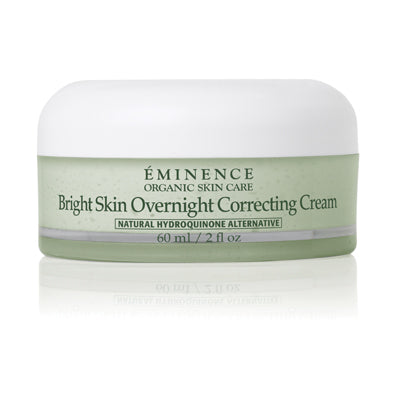

Eminence Organic Skin Care
Bright Skin Overnight Correcting Cream

Bright Skin Overnight Correcting Cream
Eminence Organic Skin Care
bright-skin-overnight-correcting-cream
Moisturize
9628194210085
Morning or Evening?
How often will you use this product?
Notes


Highlights
WHAT IS IT?
Ultra-rich moisturizer
FEATURES
Brightens skin, Addresses hyperpigmentation, Reduces appearance of age and dark spots
BEST FOR
All skin types
CHECKS
Does not contain parabens, phthalates, sodium lauryl sulfate, propylene glycol
Who Is It For?
Adults Women And MenWhat Does It Help With?
Hyperpigmentation Age Spots Dark Spots Uneven Skin ToneBudget
PremiumHow To Use
Which routine should it be used in?
Instructions:
Key Information


What Eminence Organic Skin Care Says
Product Description:
Brighten skin with this ultra-rich moisturizer formulated to address the look of hyperpigmentation while you sleep. It delivers potent actives that visibly reduce the look of age and dark spots for a luminous complexion. In combination with a Natural Hydroquinone Alternative, these actives create our most powerful skin brightening botanical blend to date.
About the Brand:
Ingredients Overview
Ingredients List
Aloe Juice, Licorice Root Extract, Lemon Peel Extract, Lemongrass Extract, Willow Bark Extract, Bearberry Leaf Extract, Peppermint Leaf Extract, Rosemary Leaf Extract, Sage Extract and Vegetable Glycerin], Castor Seed Oil, Carnauba Wax, Cetearyl Alcohol, Sodium Cetearyl Sulfate, Shea Butter, Jojoba Seed Oil, Punarnava Root Extract, Mallow Extract, Peppermint Leaf Extract, Primula Veris Extract, Alchemilla Vulgaris Extract, Veronica Officinalis Extract, Melissa Officinalis Leaf Extract, Achillea Millefolium Extract, Vegetable Glycerin, Tara Tree Gum, Sodium Benzoate, Potassium Sorbate, Cetearyl Alcohol, Stearic Acid, Stone Crop, Turmeric Root Extract, Licorice Root Extract, Benzyl Alcohol, Dehydroacetic Acid, Vitamin E, African Potato Extract, Corn-Derived Methyl Glucose Sesquistearate, Xanthan Gum, Vegetable Squalane, Coenzyme Q10, Lime Extract, Salicylic Acid, Lactic Acid, Lemon Oil, Chlorophyll, Vitamin C Ester, Soy Lecithin, Biocomplex2™ [Acai, Lemon, Barbados Cherry, Indian Gooseberry, Baobab, Camu Camu, Carrot, Coconut Water, Goji Berry, Tapioca Starch (from Cassava Root), Alpha Lipoic Acid and Coenzyme Q10
Key Ingredients
Natural Hydroquinone Alternative, Swiss Alpine Plant Extracts, Punarnava Root Extract, Stone Crop, Licorice Root Extract, Bearberry Extract, Shea Butter
Ingredients Details
Bearberry Extract
Common Name(s): Bearberry extract,botanical extract,phytochemical active
CAS Number: N/a
DESCRIPTION
What It Does: Provides antioxidant protection from reactive oxygen species, reduces inflammatory cytokine production in skin, and conditions skin surface through the plant's secondary metabolite complex.
Why It's Used: Chosen for its natural origin narrative, traditional use heritage, and multi-functional phytochemical profile that supports several concurrent skin care claims from one ingredient.
How It Works: Polyphenols, terpenoids, and alkaloids in the extract scavenge ros via hydrogen atom transfer, inhibit nf-kb or cox-2 inflammatory pathways, and interact with skin surface proteins for conditioning.
Typically Found In: Botanical skin care,natural products
TECHNICAL DETAILS
Primary Category: Active ingredient – antioxidant
Secondary Functions: Free radical scavenging,anti-aging
Application Areas:

Facial Skincare
Body Care

Hair Care
Beard Care
Color Cosmetics (Makeup)
Dietary/Oral Supplements
Typical Concentration Range: 0.1%–10%
SOURCING & ETHICS
Vegan Status: Yes
Halal Status: Yes
Source Notes: Plant-derived extract or synthetic.
SKIN COMPATIBILITY
Irritancy Rating: 1/5 – very low
Comedogenicity Rating: 0/5 – non-comedogenic
Sensitivity Concerns: Non-irritating; well-tolerated.
Safe for Sensitive Skin: Yes
SAFETY & COMPATIBILITY
Safety Profile: Excellent safety profile. ewg score: 1.
Works Well With: Vitamin c,vitamin e,ferulic acid,spf,other antioxidants
Avoid Combining With: No significant incompatibilities
SCIENTIFIC NOTE
Plant secondary metabolites evolved as uv photoprotectants and antimicrobial agents — mechanisms that directly translate to cosmetic antioxidant and anti-inflammatory activity in human skin.
Last Verified: 2026-03-12
Primary Sources: Cosing database,bearberry extract botanical review
Shea Butter
Common Name(s): Shea butter,karite butter
CAS Number: 91080-23-8
DESCRIPTION
What It Does: Provides deep nourishing emolliency with anti-inflammatory cinnamic acid esters and a uniquely rich unsaponifiable fraction.
Why It's Used: The most nutritious plant butter – unique cinnamic acid esters, lupeol, and rich unsaponifiable fraction provide anti-inflammatory and wound healing benefits beyond standard fatty acid emolliency.
How It Works: Cinnamic acid esters absorb uv radiation providing mild natural uv filtering (spf 3-4). lupeol inhibits nf-kb for anti-inflammatory activity. high stearic acid provides occlusive barrier function. rich unsaponifiable fraction (4-9%) provides phytosterols, tocopherols, and triterpenes for bioactive skin benefits.
Typically Found In: Body butters,rich moisturizers,baby products,hair conditioners,lip balms
TECHNICAL DETAILS
Primary Category: Functional ingredient – emollient
Secondary Functions: Cinnamic acid uv support,lupeol anti-inflammatory,rich emolliency
Application Areas:
Facial Skincare
Body Care
Hair Care
Beard Care
Color Cosmetics (Makeup)
Dietary/Oral Supplements
Typical Concentration Range: 1%–100%
SOURCING & ETHICS
Vegan Status: Conditional - supplier confirmation required
Halal Status: Unverified - supplier confirmation required
Source Notes: Unrefined (raw) shea retains more unsaponifiable fraction and stronger natural scent/color. refined shea is odorless, white, and cleaner for formulation. certified fair trade supports west african women's cooperatives. [audit 2026-07-29 rev2: the record's own source_notes does not assert a non-animal origin, or instructs the reader to verify with the supplier; "yes" asserts knowledge the record does not hold. determination requires shariah-panel sign-off.]
SKIN COMPATIBILITY
Irritancy Rating: 1/5 – very low
Comedogenicity Rating: 0/5 – non-comedogenic (refined); 2/5 – low (raw/unrefined)
Sensitivity Concerns: Non-irritating.
Safe for Sensitive Skin: Yes
SAFETY & COMPATIBILITY
Safety Profile: Excellent safety profile. ewg score: 1.
Works Well With: Humectants,ceramides,actives as carrier
Avoid Combining With: No significant incompatibilities
SCIENTIFIC NOTE
Shea butter's unsaponifiable fraction (4-9%, vs coconut oil's 0.5% and olive oil's 1-2%) is exceptionally rich in triterpenes, phytosterols, and tocopherols. this fraction is responsible for shea's anti-inflammatory and wound healing properties that simple fatty acid analysis fails to reveal.
Last Verified: 2026-03-12
Primary Sources: Cosing database,lin et al. shea butter cinnamic acid study,cir safety assessment