

ZO Skin Health
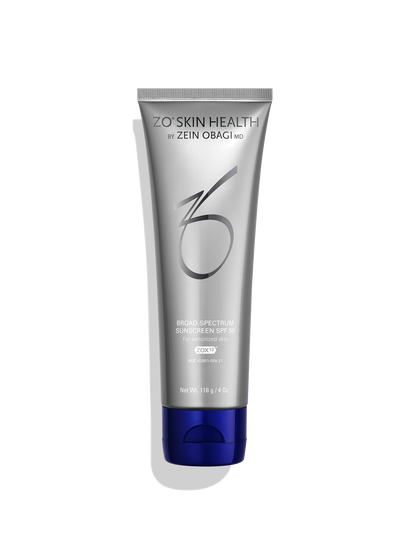
Broad Spectrum Sunscreen SPF 50

Broad Spectrum Sunscreen SPF 50
ZO Skin Health
broad-spectrum-sunscreen-spf-50
Suncare
9706804707621
Morning or Evening?
How often will you use this product?
Notes


Highlights
WHAT IS IT?
Mineral sunscreen
FEATURES
Lightweight, non-irritating, protects against UVA/UVB, IR-A rays, and HEV light
BEST FOR
Sensitive skin
CHECKS
Free of parabens, talc, phthalates, synthetic fragrances, fillers, GMO ingredients
Who Is It For?
Adults Both Men And WomenWhat Does It Help With?
Sun Protection Sensitive SkinBudget
Mid-rangeHow To Use
Which routine should it be used in?
Instructions:
Key Information


What ZO Skin Health Says
Product Description:
For sensitive and post-procedure skin, this lightweight, non-irritating mineral sunscreen, with ZOX12® complex, protects against damaging effects from UVA/UVB and IR-A rays, and from HEV light.
About the Brand:
Ingredients Overview
Ingredients List
1,2-Hexanediol, Alumina, Ascorbic Acid, Beta-Glucan, Bisabolol, Butylene Glycol, Calcium Chloride, Cetyl PEG/PPG-10/1 Dimethicone, Cordyceps Militaris Mycelium Extract, Dimethicone, Dimethicone Crosspolymer, Erythritol,Ethylhexylglycerin, Glycerin, Glycine Soja (Soybean) Seed Extract, Glycyrrhiza Uralensis (Licorice) Root Extract, Hexyl Laurate, Homarine HCL, Iron Oxides, Lactobacillus Ferment, Melanin, PEG-10 Dimethicone, Pentylene Glycol, Phenoxyethanol, Polyglyceryl-4 Isostearate, Polymethyl Methacrylate, Potassium Sorbate, Retinyl Palmitate, Scutellaria Baicalensis Root Extract, Silica, Sodium Benzoate, Sodium C14-16 Olefin Sulfonate, Sodium Chloride, Sodium Citrate, Squalane, Stearic Acid, Tocopheryl Acetate, Tribehenin, Water.
Key Ingredients
Titanium Dioxide, Zinc Oxide, ZOX12® complex (contains vitamins A, C and E), Beta-Glucan, Bisabolol
Ingredients Details
12 Hexanediol
Common Name(s): 12 hexanediol
DESCRIPTION
What It Does: Delivers targeted skin-conditioning or bioactive benefits through a specific mechanism of action suited to the formulation's intended purpose.
Why It's Used: Specialty actives address specific skin concerns through targeted molecular mechanisms, providing efficacy beyond what base formulation ingredients alone can achieve.
How It Works: The bioactive compound interacts with specific molecular targets in skin cells or the extracellular matrix — enzymes, receptors, structural proteins, or signaling molecules — triggering beneficial biological responses.
Typically Found In: Serums,treatments,moisturizers,specialty products
TECHNICAL DETAILS
Primary Category: Specialty actives
Secondary Functions: Skin-conditioning,anti-aging
Application Areas:

Facial Skincare

Body Care
Hair Care
Beard Care
Color Cosmetics (Makeup)
Dietary/Oral Supplements
Typical Concentration Range: 0.01–5%
SOURCING & ETHICS
Vegan Status: Yes
Halal Status: Yes
Source Notes: Specialty active ingredient; check individual sourcing for vegan status.
SKIN COMPATIBILITY
Irritancy Rating: 1899-12-31 00:00:00 -0800
Sensitivity Concerns: Low sensitization potential at recommended use concentrations.
Safe for Sensitive Skin: Yes
SAFETY & COMPATIBILITY
Safety Profile: Well-characterized cosmetic ingredient with established safety profile. generally non-irritating at typical use concentrations. suitable for leave-on and rinse-off cosmetics.
Works Well With: Niacinamide,hyaluronic acid,vitamin c,peptides
Avoid Combining With: Incompatible with oxidizing agents; check ph stability
SCIENTIFIC NOTE
Specialty actives typically work through enzyme inhibition (e.g., tyrosinase inhibition for brightening, mmp inhibition for anti-aging), receptor activation (e.g., retinoid receptors, ppar-γ for barrier genes), or transcription factor modulation (e.g., nrf2 for antioxidant gene upregulation). structure-activity relationships determine potency and selectivity.
Last Verified: Cosing eu database; pcpc cosmetic ingredient safety reviews; ingredient-specific safety and efficacy literature
Primary Sources: 2025-01-15
Alumina
Common Name(s): Alumina,cosmetic active,functional ingredient
CAS Number: N/a
DESCRIPTION
What It Does: Delivers characteristic cosmetic function at recommended use concentration.
Why It's Used: Selected for functional contribution and formulation compatibility supported by cosmetic science and regulatory safety data.
How It Works: Works through the mechanism of its molecular class as documented in peer-reviewed cosmetic literature.
Typically Found In: Skin care formulations
TECHNICAL DETAILS
Primary Category: Active ingredient – cosmetic active
Secondary Functions: Skin conditioning
Application Areas:
Facial Skincare
Body Care
Hair Care
Beard Care
Color Cosmetics (Makeup)
Dietary/Oral Supplements
Typical Concentration Range: 0.1%–10%
SOURCING & ETHICS
Vegan Status: Conditional
Halal Status: Yes
Source Notes: Commercially produced for cosmetic use. verify vegan/halal status with supplier.
SKIN COMPATIBILITY
Irritancy Rating: 1/5 – very low
Comedogenicity Rating: 0/5 – non-comedogenic
Sensitivity Concerns: Well-tolerated by most skin types.
Safe for Sensitive Skin: Yes
SAFETY & COMPATIBILITY
Safety Profile: Good safety profile at recommended concentrations. ewg score: 1–2.
Works Well With: Standard skincare actives
Avoid Combining With: No known significant incompatibilities
SCIENTIFIC NOTE
Alumina has an established safety profile within the cosmetic regulatory framework at standard use concentrations.
Last Verified: Cosing database,alumina technical literature
Primary Sources: 2026-03-12
Ascorbic Acid
Common Name(s): Vitamin c,l-ascorbic acid,l-ascorbate
CAS Number: 50-81-7
DESCRIPTION
What It Does: Ascorbic acid neutralizes free radicals, stimulates collagen production, inhibits melanin synthesis for a brighter complexion, and supports skin repair.
Why It's Used: It is used because it offers comprehensive antioxidant and brightening benefits supported by extensive clinical evidence. it is the most bioavailable form of vitamin c for topical application.
How It Works: As an antioxidant, it donates electrons to neutralize reactive oxygen species. it is an essential cofactor for the hydroxylation of proline and lysine in collagen synthesis. it inhibits tyrosinase, the enzyme responsible for melanin production, reducing hyperpigmentation.
Typically Found In: Vitamin c serums,brightening moisturizers,antioxidant formulations,spf products,eye creams
TECHNICAL DETAILS
Primary Category: Active ingredient – vitamin c
Secondary Functions: Collagen booster,tyrosinase inhibitor,ph adjuster
Application Areas:
Facial Skincare
Body Care
Hair Care
Beard Care
Color Cosmetics (Makeup)
Dietary/Oral Supplements
Typical Concentration Range: 5%–20% (effective range: 10–20%; ph must be below 3.5 for activity)
SOURCING & ETHICS
Vegan Status: Yes – synthetically produced or corn/plant-derived
Halal Status: Yes
Source Notes: Commercially produced by reichstein synthesis or guangxi fermentation process from glucose. some plant-derived versions exist.
SKIN COMPATIBILITY
Irritancy Rating: 2/5 – low to moderate; low ph formulations can cause initial tingling or stinging, especially at concentrations above 15%
Comedogenicity Rating: 0/5 – non-comedogenic
Sensitivity Concerns: Acidic ph can irritate sensitive or compromised skin barriers. highly unstable – oxidizes rapidly when exposed to air, light, and heat (turns orange/brown). use in the morning under spf.
Safe for Sensitive Skin: Use with caution – start at lower concentrations (5–10%). stabilized derivative forms (vitamin c derivatives) may be better tolerated.
SAFETY & COMPATIBILITY
Safety Profile: Very safe; well-studied. key concern is formulation stability, not safety. ewg hazard score: 1.
Works Well With: Vitamin e (tocopherol) – synergistic antioxidant effect,ferulic acid – stabilizing and boosting,spf,hyaluronic acid,niacinamide (use at different times if concentrations are high)
Avoid Combining With: Retinol (use at separate times – ph incompatibility),benzoyl peroxide (oxidizes vitamin c),ahas/bhas (cumulative irritation risk)
SCIENTIFIC NOTE
L-ascorbic acid is the only form of vitamin c that is proven bioactive in skin at the molecular level. its instability (rapid oxidation) has driven development of numerous stable derivatives including ascorbyl glucoside, magnesium ascorbyl phosphate, and ascorbyl tetraisopalmitate.
Last Verified: Cosing database,cir safety assessment,pinnell et al. studies,journal of the american academy of dermatology
Primary Sources: 2026-03-12
Beta-glucan
Common Name(s): Beta-1,3/1,6-glucan,yeast beta-glucan,oat beta-glucan
CAS Number: 9041-22-9
DESCRIPTION
What It Does: Reduces inflammation, deeply hydrates, stimulates collagen synthesis, accelerates wound healing.
Why It's Used: Used in anti-aging, sensitive skin, post-procedure, and eczema care for multi-action anti-inflammatory, moisturizing, and regenerative benefits.
How It Works: Binds to dectin-1 and cr3 receptors on macrophages and keratinocytes activating tgf-beta and collagen synthesis pathways. also activates macrophage phagocytosis for wound healing. humectant from polysaccharide hydroxyl groups.
Typically Found In: Anti-aging serums,sensitive skin products,post-procedure care,eczema treatments
TECHNICAL DETAILS
Primary Category: Active ingredient – polysaccharide / immunomodulator
Secondary Functions: Immunomodulator,wound healing,collagen stimulation
Application Areas:
Facial Skincare
Body Care
Hair Care
Beard Care
Color Cosmetics (Makeup)
Dietary/Oral Supplements
Typical Concentration Range: 0.1%–5%
SOURCING & ETHICS
Vegan Status: Yes – yeast or oat-derived
Halal Status: Yes
Source Notes: Derived from saccharomyces cerevisiae yeast (1,3/1,6-linked) or avena sativa oats (1,3/1,4-linked). molecular weight affects penetration – lower mw for skin penetration vs high mw for surface hydration.
SKIN COMPATIBILITY
Irritancy Rating: 1/5 – very low
Comedogenicity Rating: 0/5 – non-comedogenic
Sensitivity Concerns: Non-irritating; ideal for reactive and sensitive skin.
Safe for Sensitive Skin: Yes – particularly recommended for sensitive skin
SAFETY & COMPATIBILITY
Safety Profile: Excellent safety profile. ewg score: 1.
Works Well With: Ceramides,panthenol,allantoin,hyaluronic acid,centella asiatica
Avoid Combining With: No significant incompatibilities
SCIENTIFIC NOTE
Yeast beta-1,3/1,6-glucan receptor binding to dectin-1 on keratinocytes activates tgf-beta1, the key pro-collagen cytokine, stimulating fibroblast collagen production. this makes beta-glucan one of the few non-retinoid, non-peptide ingredients with direct receptor-mediated collagen stimulation.
Last Verified: Cosing database,wasser (2002) beta-glucan review,cir safety assessment
Primary Sources: 2026-03-12
