

Natura Bissé
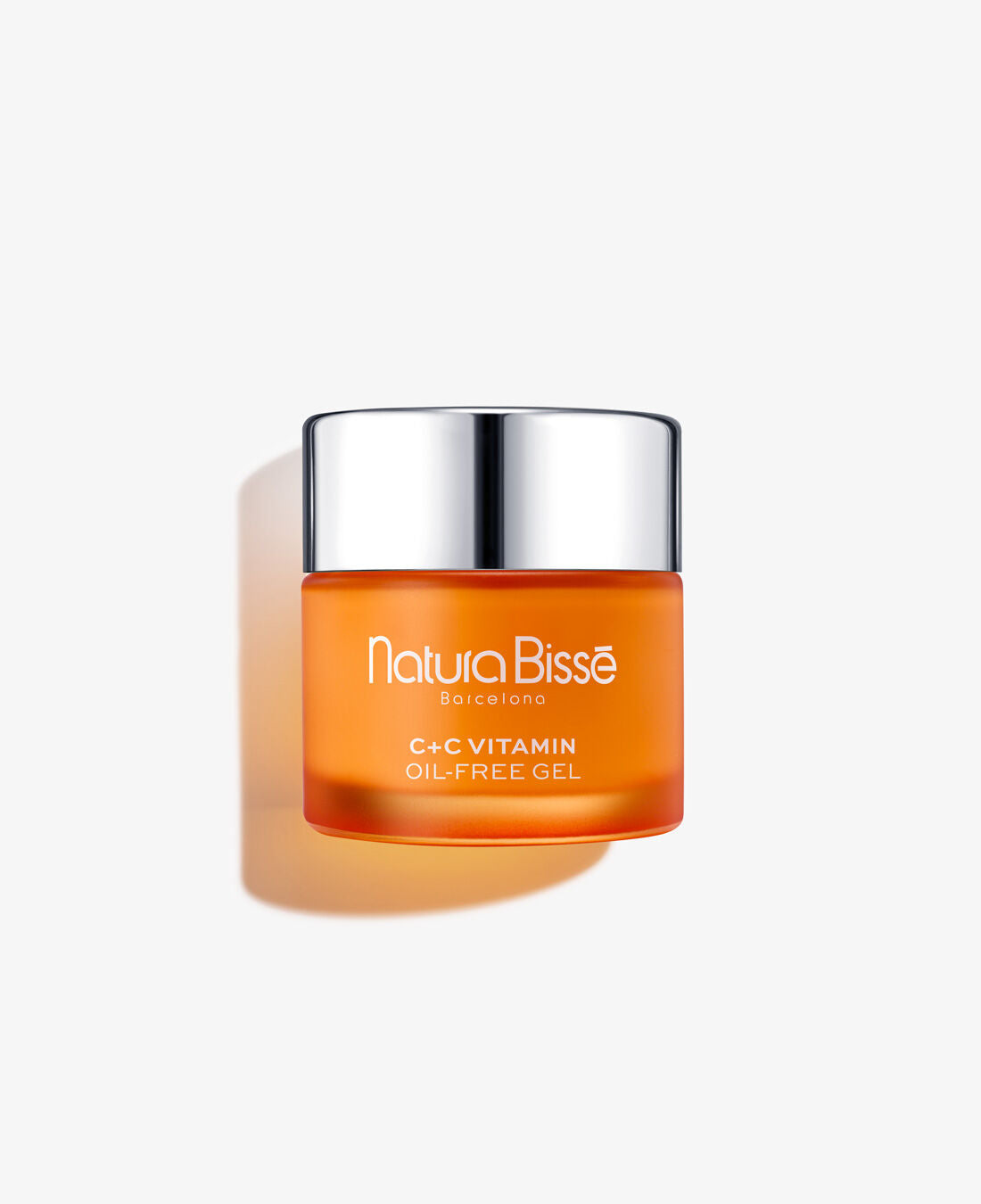
C+C VITAMIN OIL-FREE GEL

C+C VITAMIN OIL-FREE GEL
Natura Bissé
c-c-vitamin-oil-free-gel
Moisturize
9643573805349
Morning or Evening?
How often will you use this product?
Notes


Highlights
WHAT IS IT?
Oil-free moisturizing gel with vitamin C and antioxidants
FEATURES
Lightweight, matte-finish, firming, hydrating, rejuvenating, brightening
BEST FOR
All skin types (mentioned as "lightweight firming moisturizer for all skin types")
CHECKS
Gluten-free, Alcohol-free, Oil-free
Who Is It For?
Not Specifically Mentioned Default To Above 18 And Both Men And WomenWhat Does It Help With?
Signs Of Aging Hydration Skin Tone Evening FirmnessBudget
PremiumHow To Use
Which routine should it be used in?
Instructions:
Key Information


What Natura Bissé Says
Product Description:
This oil-free moisturizing gel combines vitamin C with other potent antioxidants to provide daily hydration, minimize signs of aging, and improve the skin's overall appearance. It's the perfect antioxidant ally with a light, watery texture.
About the Brand:
Ingredients Overview
Ingredients List
Water (Aqua), Glycerin, Propanediol, Hydroxyethyl Acrylate/Sodium Acryloyldimethyl Taurate Copolymer, 3-O-Ethyl Ascorbic Acid, Silica, Curcuma Longa (Turmeric) Root Extract, Hydrolyzed Collagen, 7-Dehydrocholesterol, Ascorbic Acid, Sodium PCA, Erythritol, Chondrus Crispus Powder, Pinus Pinaster Bark/Bud Extract, Diglycerin, Dimethicone, Polyacrylate Crosspolymer-6, Citric Acid, Sodium Citrate, Disodium EDTA, Dimethiconol, Benzotriazolyl Dodecyl p-Cresol, Ethylhexylglycerin, Octadecyl Di-t-Butyl-4-hydroxyhydrocinnamate, Polysorbate 60, Sorbitan Isostearate, Xanthan Gum, Sodium Hydroxide, Cyclodextrin, Phenoxyethanol, Benzoic Acid, Sorbic Acid, Fragrance (Parfum), Limonene, Linalool, Amyl Cinnamal, Yellow 5 (CI 19140), Red 4 (CI 14700)
Key Ingredients
Vitamin C, Hydrolyzed collagen, Turmeric extract, Pine extract
Ingredients Details
3-o Ethyl Ascorbic Acid
Common Name(s): Ethyl ascorbic acid,3-o-ea,vitamin c ether
DESCRIPTION
What It Does: Provides stable vitamin c activity combining formulation stability with good skin delivery.
Why It's Used: Best balance of stability and bioavailability among vitamin c derivatives — 3-o-ea provides stability superior to ascorbic acid with better bioavailability than large ester forms like ascorbyl tetraisopalmitate.
How It Works: C3 ether position protection prevents oxidation at the most vulnerable c2-c3 enediol. more lipophilic than ascorbic acid for improved skin penetration. ether bond resistant to hydrolysis in formulation but cleaved by skin esterases for active ascorbic acid release in viable epidermis.
Typically Found In: Stable brightening serums,anti-aging vitamin c products
TECHNICAL DETAILS
Primary Category: Active ingredient – ethyl ascorbic acid
Secondary Functions: Tyrosinase inhibitor,collagen cofactor
Application Areas:

Facial Skincare

Body Care
Hair Care
Beard Care
Color Cosmetics (Makeup)
Dietary/Oral Supplements
Typical Concentration Range: 1%–3%
SOURCING & ETHICS
Vegan Status: Yes – synthetic
Halal Status: Yes
Source Notes: Synthetically produced vitamin c derivative.
SKIN COMPATIBILITY
Irritancy Rating: 1/5 – very low
Comedogenicity Rating: 0/5 – non-comedogenic
Sensitivity Concerns: Non-irritating; suitable for all skin types.
Safe for Sensitive Skin: Yes
SAFETY & COMPATIBILITY
Safety Profile: Excellent safety profile. ewg score: 1.
Works Well With: Tocopherol,ferulic acid,niacinamide,spf
Avoid Combining With: No significant incompatibilities
SCIENTIFIC NOTE
3-o-ethyl ascorbic acid's ether bond at c3 provides fundamentally different stability vs ester-bonded vitamin c derivatives (ascorbyl palmitate, ascorbyl tetraisopalmitate). ether bonds are far more resistant to chemical hydrolysis than ester bonds — 3-o-ea is more hydrolysis-stable than c6 ester derivatives while still providing bioactive release via ether cleavage in skin.
Last Verified: 2026-03-12
Primary Sources: Cosing database,cir safety assessment
7-dehydrocholesterol
Common Name(s): Provitamin d3,delta-7-cholesterol
CAS Number: 434-16-2
DESCRIPTION
What It Does: Serves as the skin's natural starting material for vitamin d3 production upon uvb exposure.
Why It's Used: Formulations supporting the skin's endogenous vitamin d synthesis pathway, particularly relevant when spf blocks uvb.
How It Works: Absorbs uvb (290–315 nm) and undergoes photolysis at the b-ring to form previtamin d3, which thermally isomerizes to cholecalciferol at body temperature.
Typically Found In: Specialty skin health formulations
TECHNICAL DETAILS
Primary Category: Active ingredient – provitamin d3
Secondary Functions: Provitamin d3,endogenous synthesis support
Application Areas:
Facial Skincare
Body Care
Hair Care
Beard Care
Color Cosmetics (Makeup)
Dietary/Oral Supplements
Typical Concentration Range: Research/specialty concentrations
SOURCING & ETHICS
Vegan Status: Conditional - feedstock declaration required
Halal Status: Unverified - feedstock declaration required (plant, animal and petrochemical routes all exist)
Source Notes: Lanolin-derived or lichen-derived (vegan). verify source. [audit 2026-07-29 rev2: origin-dependent: the same inci exists in plant, animal and petrochemical versions and the name does not discriminate. determination requires shariah-panel sign-off.]
SKIN COMPATIBILITY
Irritancy Rating: 1/5 – very low
Comedogenicity Rating: 0/5 – non-comedogenic
Sensitivity Concerns: Non-irritating at cosmetic concentrations.
Safe for Sensitive Skin: Yes at cosmetic concentrations
SAFETY & COMPATIBILITY
Safety Profile: Safe at cosmetic concentrations. ewg score: 1.
Works Well With: Ceramides,retinoids,anti-inflammatory actives
Avoid Combining With: No significant incompatibilities
SCIENTIFIC NOTE
Approximately 90% of body vitamin d3 comes from uvb-induced photosynthesis of 7-dehydrocholesterol in skin. high-spf sunscreen reduces this synthesis by 95–99%.
Last Verified: 2026-03-12
Primary Sources: Cosing database,holick vitamin d cutaneous synthesis review
Ascorbic Acid
Common Name(s): Vitamin c,l-ascorbic acid,l-ascorbate
CAS Number: 50-81-7
DESCRIPTION
What It Does: Ascorbic acid neutralizes free radicals, stimulates collagen production, inhibits melanin synthesis for a brighter complexion, and supports skin repair.
Why It's Used: It is used because it offers comprehensive antioxidant and brightening benefits supported by extensive clinical evidence. it is the most bioavailable form of vitamin c for topical application.
How It Works: As an antioxidant, it donates electrons to neutralize reactive oxygen species. it is an essential cofactor for the hydroxylation of proline and lysine in collagen synthesis. it inhibits tyrosinase, the enzyme responsible for melanin production, reducing hyperpigmentation.
Typically Found In: Vitamin c serums,brightening moisturizers,antioxidant formulations,spf products,eye creams
TECHNICAL DETAILS
Primary Category: Active ingredient – vitamin c
Secondary Functions: Collagen booster,tyrosinase inhibitor,ph adjuster
Application Areas:
Facial Skincare
Body Care
Hair Care
Beard Care
Color Cosmetics (Makeup)
Dietary/Oral Supplements
Typical Concentration Range: 5%–20% (effective range: 10–20%; ph must be below 3.5 for activity)
SOURCING & ETHICS
Vegan Status: Yes – synthetically produced or corn/plant-derived
Halal Status: Yes
Source Notes: Commercially produced by reichstein synthesis or guangxi fermentation process from glucose. some plant-derived versions exist.
SKIN COMPATIBILITY
Irritancy Rating: 2/5 – low to moderate; low ph formulations can cause initial tingling or stinging, especially at concentrations above 15%
Comedogenicity Rating: 0/5 – non-comedogenic
Sensitivity Concerns: Acidic ph can irritate sensitive or compromised skin barriers. highly unstable – oxidizes rapidly when exposed to air, light, and heat (turns orange/brown). use in the morning under spf.
Safe for Sensitive Skin: Use with caution – start at lower concentrations (5–10%). stabilized derivative forms (vitamin c derivatives) may be better tolerated.
SAFETY & COMPATIBILITY
Safety Profile: Very safe; well-studied. key concern is formulation stability, not safety. ewg hazard score: 1.
Works Well With: Vitamin e (tocopherol) – synergistic antioxidant effect,ferulic acid – stabilizing and boosting,spf,hyaluronic acid,niacinamide (use at different times if concentrations are high)
Avoid Combining With: Retinol (use at separate times – ph incompatibility),benzoyl peroxide (oxidizes vitamin c),ahas/bhas (cumulative irritation risk)
SCIENTIFIC NOTE
L-ascorbic acid is the only form of vitamin c that is proven bioactive in skin at the molecular level. its instability (rapid oxidation) has driven development of numerous stable derivatives including ascorbyl glucoside, magnesium ascorbyl phosphate, and ascorbyl tetraisopalmitate.
Last Verified: ##########
Primary Sources: Cosing database,cir safety assessment,pinnell et al. studies,journal of the american academy of dermatology
Curcuma Longa Turmeric Root Extract
Common Name(s): Curcuma longa turmeric root extract extract
DESCRIPTION
What It Does: Provides antioxidant protection, soothing anti-inflammatory effects, and skin-conditioning benefits through plant-derived polyphenols and phytochemicals.
Why It's Used: Plant extracts concentrate bioactive phytochemicals evolved for environmental protection — uv, microbial, and oxidative stressors — that translate to skin benefits.
How It Works: Polyphenols (flavonoids, phenolic acids) inhibit nf-κb-mediated inflammatory signaling, scavenge reactive oxygen species through electron donation, and chelate pro-oxidant metal ions to reduce oxidative skin damage.
Typically Found In: Serums,toners,moisturizers,masks,essences
TECHNICAL DETAILS
Primary Category: Botanical extracts
Secondary Functions: Antioxidant,anti-inflammatory
Application Areas:
Facial Skincare
Body Care
Hair Care
Beard Care
Color Cosmetics (Makeup)
Dietary/Oral Supplements
Typical Concentration Range: 0.1–10%
SOURCING & ETHICS
Vegan Status: Yes
Halal Status: Yes
Source Notes: Plant-derived extract; no animal components.
SKIN COMPATIBILITY
Irritancy Rating: 1899-12-31 00:00:00 -0800
Sensitivity Concerns: Low sensitization potential at recommended use concentrations.
Safe for Sensitive Skin: Yes
SAFETY & COMPATIBILITY
Safety Profile: Well-characterized cosmetic ingredient with established safety profile. generally non-irritating at typical use concentrations. suitable for leave-on and rinse-off cosmetics.
Works Well With: Niacinamide,hyaluronic acid,vitamin c,ceramides
Avoid Combining With: Strong oxidizing agents
SCIENTIFIC NOTE
Plant secondary metabolites (flavonoids, terpenes, phenolic acids) are biosynthesized as defense compounds against uv, herbivores, and pathogens. their anti-inflammatory activity typically derives from competitive inhibition of cox-2 and 5-lox enzymes (ic50 1–50 µm), while antioxidant activity involves single electron transfer (set) and hydrogen atom transfer (hat) mechanisms with structure-dependent rate constants.
Last Verified: 2025-01-15
Primary Sources: Cosing eu database; pcpc cosmetic ingredient safety reviews; phytochemical and ethnobotanical literature