
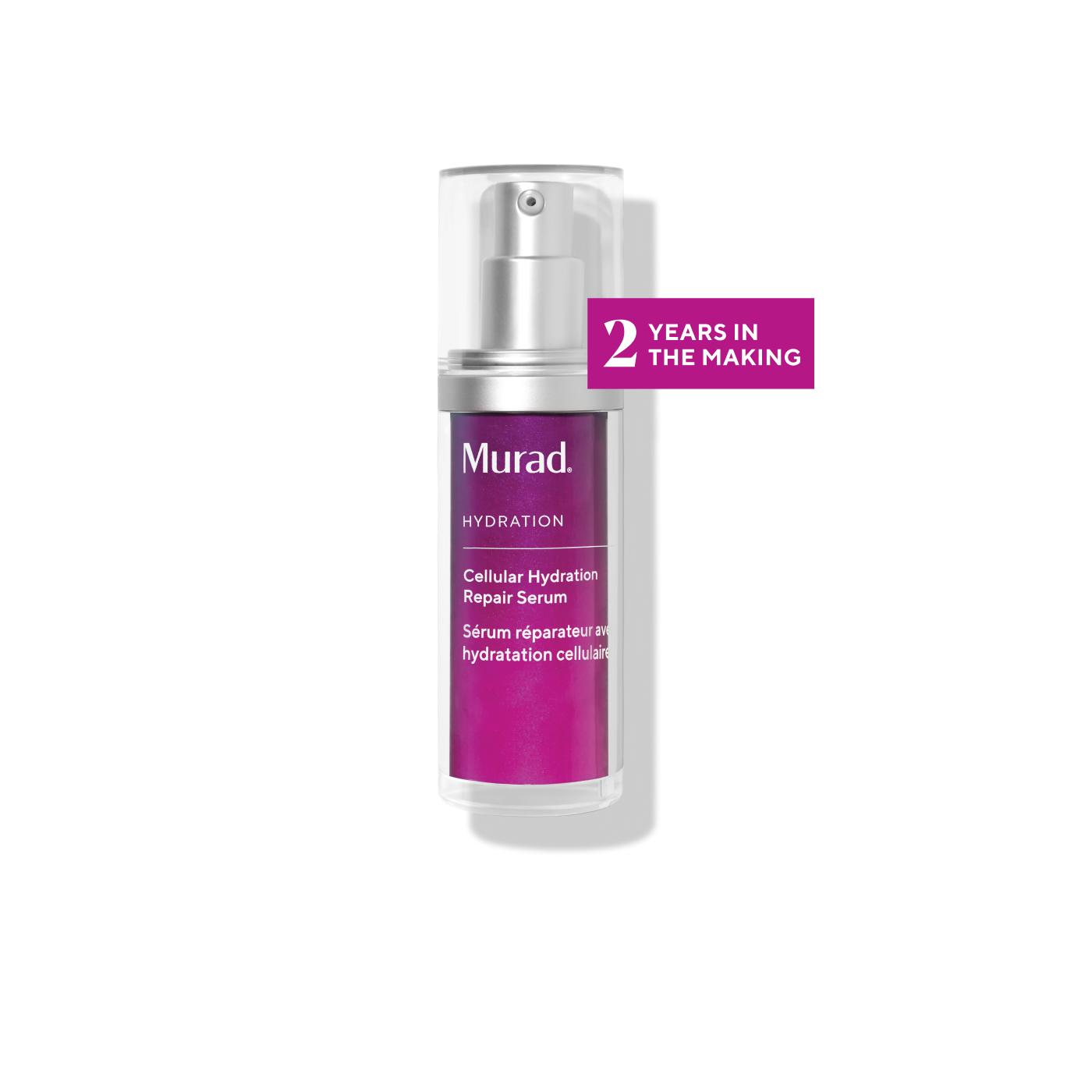

Murad
Cellular Hydration Barrier Repair Serum

Cellular Hydration Barrier Repair Serum
Murad
cellular-hydration-barrier-repair-serum
Serum
9784841535781
Morning or Evening?
How often will you use this product?
Notes


Highlights
WHAT IS IT?
Hydrating barrier repair serum
FEATURES
Repairs skin barrier in 30 minutes, contains Hexapeptide-9, bilberry seed oil, and hyaluronic acid
BEST FOR
sensitive
CHECKS
Parabens-free, phthalates-free, sulfates-free
Who Is It For?
All Ages And GendersWhat Does It Help With?
Skin Barrier Repair Hydration Water Loss PreventionBudget
Mid-range ($30-$75)How To Use
Which routine should it be used in?
Instructions:
Key Information


What Murad Says
Product Description:
Concentrated serum with Hexapeptide-9 that repairs skin barrier in just 30 minutes at the cellular level
About the Brand:
Ingredients Overview
Ingredients List
Water/Aqua/Eau, Glycerin, Pentylene Glycol, Vaccinium Myrtillus Seed Oil, C14-22 Alcohols, Persea Gratissima (Avocado) Oil, Lactobacillus Ferment, Salix Alba (Willow) Extract, Zanthoxylum Bungeanum Fruit Extract, Sodium Hyaluronate Crosspolymer, Hexapeptide-9, Urea, Yeast Amino Acids, Trehalose, Inositol, Taurine, Betaine, Hydroxyacetophenone, Tocopherol, Oleyl Alcohol, Ethylhexylglycerin, Pullulan, C12-20 Alkyl Glucoside, Sclerotium Gum, Lysolecithin, Xanthan Gum, Silica, Glucose, Leuconostoc/Radish Root Ferment Filtrate, Tetrasodium Glutamate Diacetate, Sodium Hydroxide, Chlorphenesin, Limonene, Linalool, Fragrance (Parfum)
Key Ingredients
Hexapeptide-9, bilberry seed oil, hyaluronic acid
Ingredients Details
C14-22 Alcohols
Common Name(s): Fatty alcohol,co-emulsifier thickener,emollient emulsion stabiliser
CAS Number: N/a
DESCRIPTION
What It Does: Thickens o/w emulsions by forming a lamellar crystal gel network with nonionic emulsifiers, provides co-emulsifier activity at the oil-water interface, and conditions skin from the c16-c18 chain's sc lipid compatibility.
Why It's Used: Fatty alcohols are irreplaceable in conventional o/w cream formulation — the lamellar gel network they form with peg emulsifiers provides the thick, stable cream texture that consumers expect, while delivering emolliency unavailable from wax-only structuring.
How It Works: Cetyl/stearyl alcohol packs into α-gel or β-gel crystal phases with peg surfactants (ceteareth-20, polysorbates) at 60–80°c, forming an ordered lamellar bilayer network on cooling. this network provides zero-shear viscosity (cream texture) and mechanical emulsion stability simultaneously — the fundamental mechanism of classical o/w cream formulation.
Typically Found In: Creams,lotions,o/w emulsions
TECHNICAL DETAILS
Primary Category: Functional ingredient – emollient
Secondary Functions: Barrier sealing,softening
Application Areas:

Facial Skincare
Body Care
Hair Care

Beard Care
Color Cosmetics (Makeup)
Dietary/Oral Supplements
Typical Concentration Range: 1%–15%
SOURCING & ETHICS
Vegan Status: Conditional - supplier confirmation required
Halal Status: Unverified - supplier confirmation required
Source Notes: Plant-derived, synthetic or animal-derived. verify source. [audit 2026-07-29 rev2: the record's own source_notes does not assert a non-animal origin, or instructs the reader to verify with the supplier; "yes" asserts knowledge the record does not hold. determination requires shariah-panel sign-off.]
SKIN COMPATIBILITY
Irritancy Rating: 1/5 – very low
Comedogenicity Rating: 1/5 – low; formulation-dependent
Sensitivity Concerns: Non-irritating.
Safe for Sensitive Skin: Yes
SAFETY & COMPATIBILITY
Safety Profile: Excellent safety profile. ewg score: 1.
Works Well With: Humectants,ceramides,actives as carrier
Avoid Combining With: No significant incompatibilities
SCIENTIFIC NOTE
The fatty alcohol + peg emulsifier ratio is critical: 1:3 (fatty alcohol:peg emulsifier by weight) typically provides optimal lamellar gel network formation and cream texture. deviating from this ratio shifts the phase structure from lamellar gel to micellar, reducing viscosity.
Last Verified: 2026-03-12
Primary Sources: Cosing database,fatty alcohol lamellar gel cream texture review
Glycerin
Common Name(s): Glycerol,glycerine,1,2,3-propanetriol
CAS Number: 56-81-5
DESCRIPTION
What It Does: Glycerin pulls water from the environment and deeper skin layers into the outer skin layer (epidermis), boosting moisture levels and keeping skin soft, smooth, and plump.
Why It's Used: It is used in virtually every moisturizer, serum, and cleanser because it is highly effective at hydrating skin, is well-tolerated by all skin types, and enhances the texture and spreadability of formulations.
How It Works: As a humectant, glycerin forms hydrogen bonds with water molecules, trapping them in the skin. it also reinforces the skin barrier by integrating into lipid structures between skin cells.
Typically Found In: Moisturizers,serums,cleansers,toners,sheet masks,sunscreens,body lotions,shampoos,conditioners
TECHNICAL DETAILS
Primary Category: Humectant
Secondary Functions: Skin barrier support,emollient,solvent
Application Areas:
Facial Skincare
Body Care
Hair Care
Beard Care
Color Cosmetics (Makeup)
Dietary/Oral Supplements
Typical Concentration Range: 1%–30% (typical: 3–10%)
SOURCING & ETHICS
Vegan Status: Conditional - feedstock declaration required
Halal Status: Unverified - feedstock declaration required (plant, animal and petrochemical routes all exist)
Source Notes: Derived from plant oils via hydrolysis or saponification; synthetic versions also available. palm-derived glycerin carries sustainability concerns. [audit 2026-07-29 rev2: origin-dependent: the same inci exists in plant, animal and petrochemical versions and the name does not discriminate. determination requires shariah-panel sign-off.]
SKIN COMPATIBILITY
Irritancy Rating: 1/5 – very low; non-irritating at all standard concentrations
Comedogenicity Rating: 0/5 – non-comedogenic
Sensitivity Concerns: Extremely rare allergic reactions; generally safe for all skin types including sensitive and baby skin
Safe for Sensitive Skin: Yes
SAFETY & COMPATIBILITY
Safety Profile: Widely recognized as safe. ewg hazard score: 1. no significant concerns for irritation, sensitization, or toxicity at typical concentrations (up to 50%).
Works Well With: Hyaluronic acid,ceramides,niacinamide,panthenol,urea,peptides,retinol,ahas/bhas
Avoid Combining With: No known incompatibilities at standard concentrations
SCIENTIFIC NOTE
Glycerin is an endogenous skin component found naturally in the stratum corneum. aquaporin-3 channels in keratinocytes facilitate glycerin transport, making it integral to natural skin hydration pathways.
Last Verified: 2026-03-12
Primary Sources: Cosing database,cir safety assessment,ewg skin deep,inci decoder
Hexapeptide-9
Common Name(s): Collastin,elastin-targeting peptide
CAS Number: N/a
DESCRIPTION
What It Does: Provides tropoelastin-derived sequence for elastin synthesis and elastic fibre organisation.
Why It's Used: Elastin-specific anti-aging — most anti-aging peptides target collagen; hexapeptide-9's elastin specificity addresses the elastic fibre loss responsible for sagging that collagen peptides alone cannot correct.
How It Works: Tropoelastin-derived hexapeptide activates elastin synthesis in dermal fibroblasts. promotes normal elastic fibre organisation (crosslinked desmosine network). targets the elastic fibre loss underlying skin sagging unavailable from collagen-only peptide approaches.
Typically Found In: Anti-sagging serums,skin elasticity products
TECHNICAL DETAILS
Primary Category: Active ingredient – signal peptide
Secondary Functions: Collagen stimulation,skin firming,anti-aging
Application Areas:
Facial Skincare
Body Care
Hair Care
Beard Care
Color Cosmetics (Makeup)
Dietary/Oral Supplements
Typical Concentration Range: 0.0001%–0.05%
SOURCING & ETHICS
Vegan Status: Yes – synthetic
Halal Status: Yes
Source Notes: Synthetically produced by solid-phase peptide synthesis (spps). may be palmitoylated for stability.
SKIN COMPATIBILITY
Irritancy Rating: 1/5 – very low
Comedogenicity Rating: 0/5 – non-comedogenic
Sensitivity Concerns: Non-irritating; suitable for all skin types.
Safe for Sensitive Skin: Yes
SAFETY & COMPATIBILITY
Safety Profile: Exceptional safety profile. ewg score: 1.
Works Well With: Hyaluronic acid,ceramides,retinol,vitamin c,niacinamide
Avoid Combining With: Avoid mixing with high-concentration ahas at same ph (may hydrolyze peptide bonds)
SCIENTIFIC NOTE
Skin sagging arises primarily from elastic fibre loss (not collagen loss) — collagen primarily provides tensile strength while elastin provides elastic recoil. addressing sagging requires elastin restoration; conventional collagen-stimulating peptides cannot address the elastic fibre mechanism underlying ptosis.
Last Verified: 2026-03-12
Primary Sources: Cosing database,elastin peptide technical data
Lactobacillus Ferment
Common Name(s): Lactic acid bacteria ferment,probiotic lysate,lab ferment
CAS Number: N/a
DESCRIPTION
What It Does: Provides postbiotic benefits including barrier support, anti-inflammatory, and microbiome-balancing activity from lactic acid bacteria ferment.
Why It's Used: Postbiotic ingredient for microbiome-supportive skincare addressing the growing evidence for skin microbiome dysbiosis in inflammatory skin conditions.
How It Works: Lactobacillus-derived exopolysaccharides and peptides activate toll-like receptors tlr2/tlr6 on keratinocytes upregulating antimicrobial peptide production. lipoteichoic acid (lta) component modulates immune response reducing pro-inflammatory cytokine production. lactic acid component maintains skin acidic ph.
Typically Found In: Probiotic skincare,microbiome-supportive products,sensitive skin formulas
TECHNICAL DETAILS
Primary Category: Active ingredient – skin microbiome support
Secondary Functions: Tlr2/tlr6 activation,amp upregulation,microbiome support
Application Areas:
Facial Skincare
Body Care
Hair Care
Beard Care
Color Cosmetics (Makeup)
Dietary/Oral Supplements
Typical Concentration Range: 0.1%–5%
SOURCING & ETHICS
Vegan Status: Yes – bacterial fermentation
Halal Status: Yes
Source Notes: Fermentation-derived or plant-extracted.
SKIN COMPATIBILITY
Irritancy Rating: 1/5 – very low
Comedogenicity Rating: 0/5 – non-comedogenic
Sensitivity Concerns: Non-irritating; beneficial for sensitive skin.
Safe for Sensitive Skin: Yes
SAFETY & COMPATIBILITY
Safety Profile: Excellent safety profile. ewg score: 1.
Works Well With: Ceramides,niacinamide,soothing actives
Avoid Combining With: No significant incompatibilities
SCIENTIFIC NOTE
Topical application of heat-killed (pasteurized) lactobacillus demonstrates comparable or superior efficacy to live bacteria for skin benefits in controlled studies – the active components (exopolysaccharides, lta, cell wall components) are heat-stable, and live bacteria in cosmetics face regulatory and stability challenges.
Last Verified: 2026-03-12
Primary Sources: Cosing database,seite & misery microbiome skin review