

Cetaphil
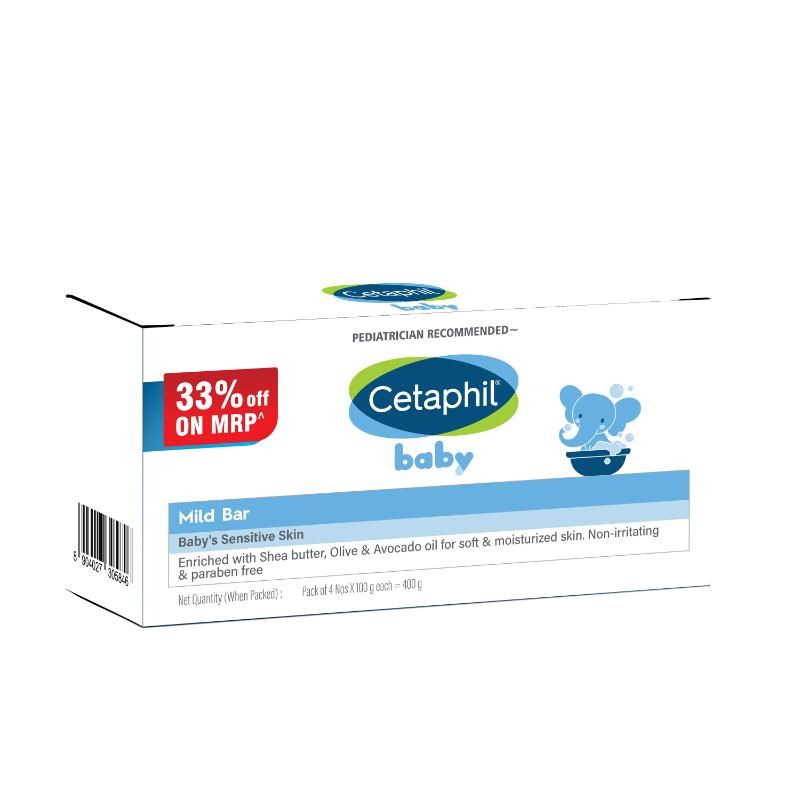
Cetaphil Baby Mild Bar

Cetaphil Baby Mild Bar
Cetaphil
cetaphil-baby-mild-bar
Cleanse
10084871930149
Morning or Evening?
How often will you use this product?
Notes


Highlights
WHAT IS IT?
Mild cleansing bar with nourishing ingredients
FEATURES
Pediatrician recommended, Contains shea butter, glycerin, vitamin E, Gentle on baby's skin, Moisturizes and softens skin
BEST FOR
sensitive
CHECKS
Does not dry or irritate skin
Who Is It For?
Babies All GendersWhat Does It Help With?
Keeps Baby's Skin Soft And Moisturized Suitable For Delicate SkinBudget
Mid-range ($30-$75)How To Use
Which routine should it be used in?
Instructions:
Key Information


What Cetaphil Says
Product Description:
Cetaphil Baby Mild Cleansing Bar is Pediatrician Recommended for Baby’s Delicate Skin. This gentle cleansing bar contains nourishing ingredients, including shea butter, glycerin, and vitamin E. These carefully selected ingredients cleanse and moisturize babies’ skin, ensuring it remains soft and hydrated. The mild formula ensures that your baby's skin is gently cleansed without drying or irritation, making it ideal for daily use on both face and body.
About the Brand:
Ingredients Overview
Ingredients List
Sodium Potassium Lauryl Sulfosuccinate, Sodium Lauryl Sulfate, Zea Mays Starch, Sodium C14-16 Olefin Sulfonate, Aqua, Cocoamidopropyl Betaine, Glycerol Monostearate, Cetostearyl Alcohol, Paraffin Wax, Potassium Chloride, Decyl Glucoside, Phosphoric Acid, Parfum, CI 77891, Magnesium Chloride, Butyrospermum Parkii Butter, Persea Gratissima Oil, Olea Europaea Fruit Oil, Tetrasodium EDTA, Coumarin, Linalool, PEG-14 M, Cinnamyl Alcohol, Citronellol, Geraniol, Hexyl Cinnamal, Disodium Distyrylbiphenyl Disulfonate, Amyl Cinnamal
Key Ingredients
Shea Butter, Glycerin, Vitamin E
Ingredients Details
Amyl Cinnamal
Common Name(s): Alpha-amyl cinnamic aldehyde,jasmine aldehyde
CAS Number: 122-40-7
DESCRIPTION
What It Does: Provides rich classic jasmine-type floral fragrance note.
Why It's Used: Classic jasmine fragrance aldehyde for premium perfumery providing the richer, deeper jasmine note used in high-quality fragrance compositions.
How It Works: C5-substituted cinnamic aldehyde provides broader, richer floral note vs hexyl cinnamal. good skin substantivity. widely used in combination with hexyl cinnamal for complex jasmine character.
Typically Found In: Premium fragrances,luxury cosmetics
TECHNICAL DETAILS
Primary Category: Fragrance component – aldehyde
Secondary Functions: Skin conditioning
Application Areas:

Facial Skincare

Body Care
Hair Care
Beard Care
Color Cosmetics (Makeup)
Dietary/Oral Supplements
Typical Concentration Range: 0.001%–0.5%
SOURCING & ETHICS
Vegan Status: Yes – synthetic
Halal Status: Yes
Source Notes: Commercially produced for cosmetic use. verify vegan/halal status with supplier.
SKIN COMPATIBILITY
Irritancy Rating: 1/5 – very low
Comedogenicity Rating: 0/5 – non-comedogenic
Sensitivity Concerns: Well-tolerated by most skin types.
Safe for Sensitive Skin: Yes
SAFETY & COMPATIBILITY
Safety Profile: Eu cosmetics regulation: declared fragrance allergen. ifra guidelines apply.
Works Well With: Standard skincare actives
Avoid Combining With: No known significant incompatibilities
SCIENTIFIC NOTE
Amyl cinnamal and hexyl cinnamal differ only in the alpha-substituent chain length (c5 amyl vs c6 hexyl). this single carbon difference shifts the scent character from amyl cinnamal's broader, richer jasmine to hexyl cinnamal's crisper, airier jasmine – demonstrating the extraordinary sensitivity of olfactory receptors to minor molecular changes in linear chain length.
Last Verified: Cosing database,ifra standards
Primary Sources: 2026-03-12
Butyrospermum Parkii Butter
Common Name(s): Butyrospermum parkii butter,botanical carrier oil,emollient fatty acid delivery
CAS Number: N/a
DESCRIPTION
What It Does: Softens and conditions skin by integrating into sc lipid bilayers, delivers essential fatty acids (oleic, linoleic, linolenic) for barrier lipid synthesis, and provides rich, non-stripping moisturisation.
Why It's Used: Natural carrier oils provide the closest compositional match to endogenous sc lipids, delivering emolliency through genuine barrier integration rather than simple surface occlusion.
How It Works: Fatty acid triglycerides partition into sc lipid bilayers — oleic acid (c18:1) provides fluid, emollient integration; linoleic acid (c18:2) acts as essential ceramide precursor; saturated fatty acids provide more occlusive barrier reinforcement.
Typically Found In: Moisturisers,facial oils,natural skin care
TECHNICAL DETAILS
Primary Category: Functional ingredient – emollient
Secondary Functions: Barrier sealing,softening
Application Areas:
Facial Skincare
Body Care
Hair Care
Beard Care
Color Cosmetics (Makeup)
Dietary/Oral Supplements
Typical Concentration Range: 1%–100%
SOURCING & ETHICS
Vegan Status: Conditional
Halal Status: Yes
Source Notes: Plant-derived, synthetic or animal-derived. verify source.
SKIN COMPATIBILITY
Irritancy Rating: 1/5 – very low
Comedogenicity Rating: 1/5 – low; formulation-dependent
Sensitivity Concerns: Non-irritating.
Safe for Sensitive Skin: Yes
SAFETY & COMPATIBILITY
Safety Profile: Excellent safety profile. ewg score: 1.
Works Well With: Humectants,ceramides,actives as carrier
Avoid Combining With: No significant incompatibilities
SCIENTIFIC NOTE
Essential fatty acids — linoleic (c18:2, n-6) and α-linolenic (c18:3, n-3) acids — cannot be synthesised by the body; topical delivery through carrier oils provides direct substrate for ceramide and eicosanoid biosynthesis in the epidermis.
Last Verified: Cosing database,butyrospermum parkii butter carrier oil botanical review
Primary Sources: 2026-03-12
Ci 77891
Common Name(s): Ci 77891,approved cosmetic colorant,colour cosmetics pigment
CAS Number: N/a
DESCRIPTION
What It Does: Provides colour in cosmetic formulations within the permitted application areas and concentrations specified by fda 21 cfr 73/74 and eu cosmetics regulation annex iv.
Why It's Used: Regulatory compliance requires verifying both the permitted use category (fd&c, d&c, ext. d&c) and the specific application area approval for each colorant in each target market.
How It Works: Colour arises from selective wavelength absorption by the chromophore structure — electronic transitions (d-orbital for transition metal pigments; π→π* for organic chromophores) absorb specific visible wavelengths providing the perceived complementary colour.
Typically Found In: Colour cosmetics
TECHNICAL DETAILS
Primary Category: Active ingredient – mineral / metal active
Secondary Functions: Antimicrobial,sebum regulation,antioxidant enzyme cofactor
Application Areas:
Facial Skincare
Body Care
Hair Care
Beard Care
Color Cosmetics (Makeup)
Dietary/Oral Supplements
Typical Concentration Range: Per product type — check fda/eu permitted list
SOURCING & ETHICS
Vegan Status: Conditional
Halal Status: Conditional
Source Notes: Mineral/inorganic compound. cosmetic or pharmaceutical grade.
SKIN COMPATIBILITY
Irritancy Rating: 1/5 – very low
Comedogenicity Rating: 0/5 – non-comedogenic
Sensitivity Concerns: Non-irritating at recommended concentrations.
Safe for Sensitive Skin: Yes at recommended concentrations
SAFETY & COMPATIBILITY
Safety Profile: Excellent safety profile at cosmetic concentrations. ewg score: 1–2.
Works Well With: Niacinamide,salicylic acid,other actives
Avoid Combining With: No significant incompatibilities at standard concentrations
SCIENTIFIC NOTE
All cosmetic colorants in the us require fda batch certification confirming identity and purity per lot — uncertified batches cannot legally appear in finished us cosmetics. eu annex iv lists permitted colorants with specific maximum concentrations and use restrictions by product category.
Last Verified: Fda 21 cfr 73/74,eu cosmetics regulation annex iv,colorant regulatory review
Primary Sources: 2026-03-12
Cinnamyl Alcohol
Common Name(s): Fragrance ingredient,eu allergen or aromatic component,olfactory/flavour
CAS Number: N/a
DESCRIPTION
What It Does: Provides specific aromatic character and olfactory experience contributing to product sensory experience and consumer appeal.
Why It's Used: Fragrance components are the primary cause of cosmetic contact sensitisation — eu requires individual label declaration of 26 identified fragrance allergens above threshold concentrations.
How It Works: Terpenoid and phenylpropanoid aromatic chemicals interact with olfactory receptor neurons (orns) in the nasal epithelium — small volatile molecules (logp 2–5, mw 100–300) bind g-protein coupled olfactory receptors triggering neurological scent perception. sensitisation risk from electrophilic reactivity of certain functional groups (aldehydes, α,β-unsaturated carbonyls) with skin proteins.
Typically Found In: All fragrance products
TECHNICAL DETAILS
Primary Category: Active ingredient – cosmetic active
Secondary Functions: Skin conditioning
Application Areas:
Facial Skincare
Body Care
Hair Care
Beard Care
Color Cosmetics (Makeup)
Dietary/Oral Supplements
Typical Concentration Range: Declare on label above threshold (eu)
SOURCING & ETHICS
Vegan Status: Conditional
Halal Status: Yes
Source Notes: Commercially produced for cosmetic use. verify vegan/halal status with supplier.
SKIN COMPATIBILITY
Irritancy Rating: 1/5 – very low
Comedogenicity Rating: 0/5 – non-comedogenic
Sensitivity Concerns: Well-tolerated by most skin types.
Safe for Sensitive Skin: Yes
SAFETY & COMPATIBILITY
Safety Profile: Good safety profile at recommended concentrations. ewg score: 1–2.
Works Well With: Standard skincare actives
Avoid Combining With: No known significant incompatibilities
SCIENTIFIC NOTE
Eu 1223/2009 annex iii allergen threshold: >0.001% in rinse-off, >0.0001% in leave-on — any listed allergen exceeding these levels requires individual inci label declaration separate from the generic fragrance/parfum declaration.
Last Verified: Eu regulation 1223/2009 annex iii,fragrance allergen declaration requirements
Primary Sources: 2026-03-12
