

Cetaphil
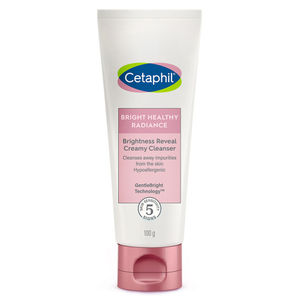
Cetaphil Bright Healthy Radiance Cleanser (100 ml)

Cetaphil Bright Healthy Radiance Cleanser (100 ml)
Cetaphil
cetaphil-bright-healthy-radiance-cleanser-100-ml
Cleanse
10084879827237
Morning or Evening?
How often will you use this product?
Notes


Highlights
WHAT IS IT?
Face wash, 100 ml
FEATURES
Nondrying, Brightness Reveal, Creamy Cleanser, leaves face hydrated, smooth and noticeably radiant
BEST FOR
sensitive
CHECKS
Does not contain fragrance or harsh chemicals (implied by sensitive skin friendly and tag association)
Who Is It For?
All Genders No Specific Age Range ProvidedWhat Does It Help With?
Radiant And Luminous Skin Hydration SmoothnessBudget
Mid-range ($30-$75) (converted ₹703 Approx $8.5 But Budget Classification Based On Local Currency Typical Ranges)How To Use
Which routine should it be used in?
Instructions:
Key Information


What Cetaphil Says
Product Description:
Nondrying Brightness Reveal Creamy Cleanser that leaves the face feeling hydrated smooth and noticeably radiant
About the Brand:
Ingredients Overview
Ingredients List
GLYCERIN, AQUA, STEARIC ACID, MYRISTIC ACID, POTASSIUM HYDROXIDE, LAURIC ACID, PALMITIC ACID, COCAMIDOPROPYL BETAINE, HYDROGENATED POLYISOBUTENE, GLYCERYL STEARATE, ANHYDROXYLITOL, ARACHIDIC ACID, BUTYLENE GLYCOL, CAPRIC ACID, CAPRYLYL GLYCOL, ETHYLHEXYLGLYCERIN, HYDROGENATED POLYDECENE, NIACINAMIDE, OLEIC ACID,PANCRATIUM MARITIMUM EXTRACT, POLYQUATERNIUM-7, POTASSIUM BENZOATE, SODIUM BENZOATE, SORBITOL, TRISODIUM ETHYLENEDIAMINE DISUCCINATE, XYLITOL, XYLITYLGLUCOSIDE
Key Ingredients
Ingredients Details
Anhydroxylitol
Common Name(s): Anhydroxylitol,cosmetic active,functional ingredient
CAS Number: N/a
DESCRIPTION
What It Does: Delivers characteristic cosmetic function at recommended use concentration.
Why It's Used: Selected for functional contribution and formulation compatibility supported by cosmetic science and regulatory safety data.
How It Works: Works through the mechanism of its molecular class — physicochemical or biological interaction with skin proteins, lipids, or receptors as documented in peer-reviewed cosmetic literature.
Typically Found In: Skin care formulations
TECHNICAL DETAILS
Primary Category: Active ingredient – cosmetic active
Secondary Functions: Skin conditioning
Application Areas:

Facial Skincare

Body Care
Hair Care
Beard Care
Color Cosmetics (Makeup)
Dietary/Oral Supplements
Typical Concentration Range: 0.1%–10%
SOURCING & ETHICS
Vegan Status: Conditional - supplier confirmation required
Halal Status: Unverified - supplier confirmation required
Source Notes: Commercially produced for cosmetic use. verify vegan/halal status with supplier. [audit 2026-07-29 rev2: the record's own source_notes does not assert a non-animal origin, or instructs the reader to verify with the supplier; "yes" asserts knowledge the record does not hold. determination requires shariah-panel sign-off.]
SKIN COMPATIBILITY
Irritancy Rating: 1/5 – very low
Comedogenicity Rating: 0/5 – non-comedogenic
Sensitivity Concerns: Well-tolerated by most skin types.
Safe for Sensitive Skin: Yes
SAFETY & COMPATIBILITY
Safety Profile: Good safety profile at recommended concentrations. ewg score: 1–2.
Works Well With: Standard skincare actives
Avoid Combining With: No known significant incompatibilities
SCIENTIFIC NOTE
Anhydroxylitol has an established safety and efficacy profile within the cosmetic regulatory framework at standard use concentrations.
Last Verified: 2026-03-12
Primary Sources: Cosing database,anhydroxylitol technical literature
Arachidic Acid
Common Name(s): Arachidic acid,cosmetic active,functional ingredient
CAS Number: N/a
DESCRIPTION
What It Does: Delivers characteristic cosmetic function at recommended use concentration.
Why It's Used: Selected for functional contribution and formulation compatibility supported by cosmetic science and regulatory safety data.
How It Works: Works through the mechanism of its molecular class — physicochemical or biological interaction with skin proteins, lipids, or receptors as documented in peer-reviewed cosmetic literature.
Typically Found In: Skin care formulations
TECHNICAL DETAILS
Primary Category: Active ingredient – cosmetic active
Secondary Functions: Skin conditioning
Application Areas:
Facial Skincare
Body Care
Hair Care
Beard Care
Color Cosmetics (Makeup)
Dietary/Oral Supplements
Typical Concentration Range: 0.1%–10%
SOURCING & ETHICS
Vegan Status: Conditional - feedstock declaration required
Halal Status: Unverified - feedstock declaration required (plant, animal and petrochemical routes all exist)
Source Notes: Commercially produced for cosmetic use. verify vegan/halal status with supplier. [audit 2026-07-29 rev2: origin-dependent: the same inci exists in plant, animal and petrochemical versions and the name does not discriminate. determination requires shariah-panel sign-off.]
SKIN COMPATIBILITY
Irritancy Rating: 1/5 – very low
Comedogenicity Rating: 0/5 – non-comedogenic
Sensitivity Concerns: Well-tolerated by most skin types.
Safe for Sensitive Skin: Yes
SAFETY & COMPATIBILITY
Safety Profile: Good safety profile at recommended concentrations. ewg score: 1–2.
Works Well With: Standard skincare actives
Avoid Combining With: No known significant incompatibilities
SCIENTIFIC NOTE
Arachidic acid has an established safety and efficacy profile within the cosmetic regulatory framework at standard use concentrations.
Last Verified: 2026-03-12
Primary Sources: Cosing database,arachidic acid technical literature
Butylene Glycol
Common Name(s): 1,3-butanediol,bg,1,3-butylene glycol
CAS Number: 107-88-0
DESCRIPTION
What It Does: Provides humectant hydration and active ingredient solubilization with excellent skin feel.
Why It's Used: Preferred glycol humectant in premium and k-beauty formulations for superior skin feel vs propylene glycol with equivalent functionality.
How It Works: Two hydroxyl groups at 1,3-positions provide water binding and solvent activity. better tolerated than propylene glycol with minimal sensitization risk. 4-carbon backbone provides slightly greater hydrophobic character enabling dissolution of less polar actives vs pg.
Typically Found In: Toners,essences,serums,k-beauty formulas
TECHNICAL DETAILS
Primary Category: Functional ingredient – glycol humectant
Secondary Functions: Tewl reduction,skin plumping
Application Areas:
Facial Skincare
Body Care
Hair Care
Beard Care
Color Cosmetics (Makeup)
Dietary/Oral Supplements
Typical Concentration Range: 1%–10%
SOURCING & ETHICS
Vegan Status: Yes – synthetic
Halal Status: Yes
Source Notes: Synthetic or naturally derived. excellent aqueous solubility.
SKIN COMPATIBILITY
Irritancy Rating: 1/5 – very low
Comedogenicity Rating: 0/5 – non-comedogenic
Sensitivity Concerns: Non-irritating; suitable for all skin types.
Safe for Sensitive Skin: Yes
SAFETY & COMPATIBILITY
Safety Profile: Excellent safety profile. ewg score: 1.
Works Well With: Ceramides,emollients,occlusives,glycerin,hyaluronic acid
Avoid Combining With: No significant incompatibilities
SCIENTIFIC NOTE
K-beauty's preference for butylene glycol over propylene glycol is driven by two factors: bg's superior skin feel (less tacky than pg's higher viscosity) and its lower sensitization potential (1,3-bg has better spatial distribution of hydroxyl groups that reduces protein interaction vs pg's 1,2-position oh groups).
Last Verified: 2026-03-12
Primary Sources: Cosing database,cir safety assessment
Capric Acid
Common Name(s): Capric acid c10,medium-chain fatty acid,antimicrobial emollient
CAS Number: N/a
DESCRIPTION
What It Does: Provides c10 capric acid mild antifungal emolliency.
Why It's Used: Medium-chain antifungal fatty acid — capric acid's c10 chain is long enough to partition into fungal membranes providing antifungal disruption while being short enough to be well-tolerated on human sc lipid bilayers from the natural coconut heritage.
How It Works: C10:0 saturated fatty acid. coconut oil: 6-8% capric. antifungal: c10 membrane disruption malassezia + candida. emollient: medium-chain. cosmos from coconut. glyceryl caprate: same antimicrobial.
Typically Found In: Antifungal emollients,scalp care
TECHNICAL DETAILS
Primary Category: Functional ingredient – emollient
Secondary Functions: Barrier sealing,softening
Application Areas:
Facial Skincare
Body Care
Hair Care
Beard Care
Color Cosmetics (Makeup)
Dietary/Oral Supplements
Typical Concentration Range: 0.1%–5%
SOURCING & ETHICS
Vegan Status: Conditional - feedstock declaration required
Halal Status: Unverified - feedstock declaration required (plant, animal and petrochemical routes all exist)
Source Notes: Plant-derived, synthetic or animal-derived. verify source. [audit 2026-07-29 rev2: origin-dependent: the same inci exists in plant, animal and petrochemical versions and the name does not discriminate. determination requires shariah-panel sign-off.]
SKIN COMPATIBILITY
Irritancy Rating: 1/5 – very low
Comedogenicity Rating: 1/5 – low; formulation-dependent
Sensitivity Concerns: Non-irritating.
Safe for Sensitive Skin: Yes
SAFETY & COMPATIBILITY
Safety Profile: Excellent safety profile. ewg score: 1.
Works Well With: Humectants,ceramides,actives as carrier
Avoid Combining With: No significant incompatibilities
SCIENTIFIC NOTE
Capric acid antifungal chain-length specificity: fatty acid antifungal activity peaks at c8-c12. below c8: too water-soluble, poor membrane partitioning. above c14: too lipophilic, too slow membrane penetration kinetics. c10 capric occupies the optimum range — sufficient logp for membrane partitioning but sufficient water activity for diffusion through the aqueous environment to reach fungal membranes. this chain-length optimum explains why medium-chain fatty acids are the most active antifungal fatty acid range.
Last Verified: 2026-03-12
Primary Sources: Cosing database,capric acid c10 antifungal medium-chain review