

Cetaphil
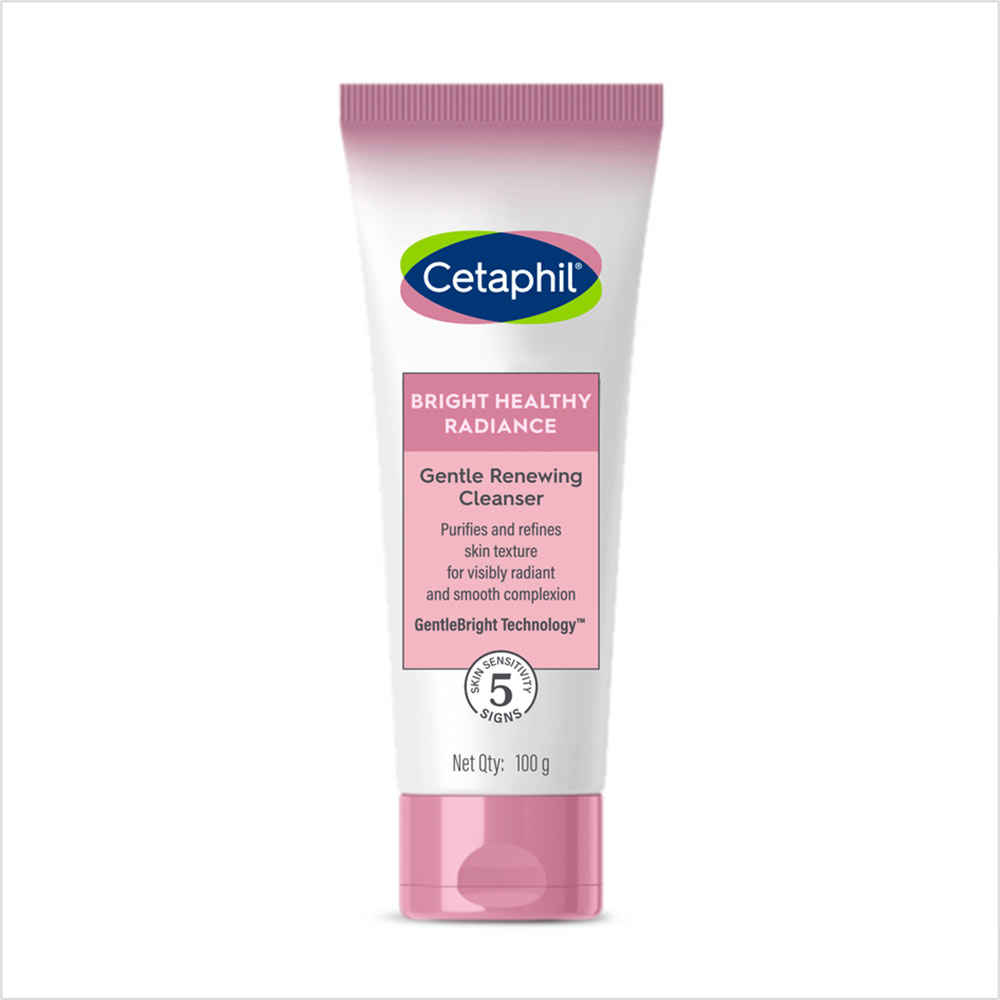
CETAPHIL Bright Healthy Radiance Gentle Renewing Cleanser 100 gm | Face Wash for Smooth Skin

CETAPHIL Bright Healthy Radiance Gentle Renewing Cleanser 100 gm | Face Wash for Smooth Skin
Cetaphil
cetaphil-bright-healthy-radiance-gentle-renewing-cleanser-100-gm-face-wash-for-smooth-skin
Cleanse
10084774379813
Morning or Evening?
How often will you use this product?
Notes


Highlights
WHAT IS IT?
Multi-tasking 3in1 cleanser with GentleBright Technology and vitamin E-releasing jojoba beads
FEATURES
Brightens, exfoliates and purifies skin; maintains skin hydration without drying; soft foaming lather; defends against 5 signs of skin sensitivity (dryness, irritation, roughness, tightness, weakened barrier)
BEST FOR
sensitive
CHECKS
Does not leave skin dry
Who Is It For?
All Genders No Specific Age Range MentionedWhat Does It Help With?
Brightening Exfoliation Purification Hydration Sensitivity IssuesBudget
Mid-range ($30-$75)How To Use
Which routine should it be used in?
Instructions:
Key Information


What Cetaphil Says
Product Description:
CETAPHIL Bright Healthy Radiance Gentle Renewing Cleanser goes beyond just cleansing it is a multitasking 3in1 cleanser that brightens exfoliates and purifies skin in one step. It contains GentleBright Technology and vitamin Ereleasing jojoba beads that melt into a soft foaming lather on the skin to wash away dead skin impurities and pollution. This comfortable face cleanser maintains skin hydration and doesn&apost leave the skin dry. Purified and clean the skin looks more radiant even and luminous. What&aposs more it defends against 5 signs of skin sensitivity including dryness irritation roughness tightness and a weakened skin barrier.
About the Brand:
Ingredients Overview
Ingredients List
Aqua, Decyl Glucoside, Glycerin, Sodium Cocoamphoacetate, Coco-Betaine, Niacinamide, Pancratium Maritimum Extract, Jojoba Esters, Xylitylglucoside, Anhydroxylitol, Xylitol, Tocopheryl Acetate, Sodium Chloride, Acrylates/C10-30 Alkyl Acrylate Crosspolymer, Phenoxyethanol, Sodium Benzoate, CI 77491. FIL.1812.V00
Key Ingredients
GentleBright Technology,vitamin E-releasing jojoba beads
Ingredients Details
Acrylates/c10-30 Alkyl Acrylate Crosspolymer
Common Name(s): Acrylates/c10-30 alkyl acrylate crosspolymer
DESCRIPTION
What It Does: Delivers targeted skin-conditioning or bioactive benefits through a specific mechanism of action suited to the formulation's intended purpose.
Why It's Used: Specialty actives address specific skin concerns through targeted molecular mechanisms, providing efficacy beyond what base formulation ingredients alone can achieve.
How It Works: The bioactive compound interacts with specific molecular targets in skin cells or the extracellular matrix — enzymes, receptors, structural proteins, or signaling molecules — triggering beneficial biological responses.
Typically Found In: Serums,treatments,moisturizers,specialty products
TECHNICAL DETAILS
Primary Category: Specialty actives
Secondary Functions: Skin-conditioning,anti-aging
Application Areas:

Facial Skincare

Body Care
Hair Care
Beard Care
Color Cosmetics (Makeup)
Dietary/Oral Supplements
Typical Concentration Range: 0.01–5%
SOURCING & ETHICS
Vegan Status: Yes
Halal Status: Yes
Source Notes: Specialty active ingredient; check individual sourcing for vegan status.
SKIN COMPATIBILITY
Irritancy Rating: 1
Comedogenicity Rating: 0
Sensitivity Concerns: Low sensitization potential at recommended use concentrations.
Safe for Sensitive Skin: Yes
SAFETY & COMPATIBILITY
Safety Profile: Well-characterized cosmetic ingredient with established safety profile. generally non-irritating at typical use concentrations. suitable for leave-on and rinse-off cosmetics.
Works Well With: Niacinamide,hyaluronic acid,vitamin c,peptides
Avoid Combining With: Incompatible with oxidizing agents; check ph stability
SCIENTIFIC NOTE
Specialty actives typically work through enzyme inhibition (e.g., tyrosinase inhibition for brightening, mmp inhibition for anti-aging), receptor activation (e.g., retinoid receptors, ppar-γ for barrier genes), or transcription factor modulation (e.g., nrf2 for antioxidant gene upregulation). structure-activity relationships determine potency and selectivity.
Last Verified: Cosing eu database; pcpc cosmetic ingredient safety reviews; ingredient-specific safety and efficacy literature
Primary Sources: 2025-01-15
Anhydroxylitol
Common Name(s): Anhydroxylitol,cosmetic active,functional ingredient
CAS Number: N/a
DESCRIPTION
What It Does: Delivers characteristic cosmetic function at recommended use concentration.
Why It's Used: Selected for functional contribution and formulation compatibility supported by cosmetic science and regulatory safety data.
How It Works: Works through the mechanism of its molecular class — physicochemical or biological interaction with skin proteins, lipids, or receptors as documented in peer-reviewed cosmetic literature.
Typically Found In: Skin care formulations
TECHNICAL DETAILS
Primary Category: Active ingredient – cosmetic active
Secondary Functions: Skin conditioning
Application Areas:
Facial Skincare
Body Care
Hair Care
Beard Care
Color Cosmetics (Makeup)
Dietary/Oral Supplements
Typical Concentration Range: 0.1%–10%
SOURCING & ETHICS
Vegan Status: Conditional
Halal Status: Yes
Source Notes: Commercially produced for cosmetic use. verify vegan/halal status with supplier.
SKIN COMPATIBILITY
Irritancy Rating: 1/5 – very low
Comedogenicity Rating: 0/5 – non-comedogenic
Sensitivity Concerns: Well-tolerated by most skin types.
Safe for Sensitive Skin: Yes
SAFETY & COMPATIBILITY
Safety Profile: Good safety profile at recommended concentrations. ewg score: 1–2.
Works Well With: Standard skincare actives
Avoid Combining With: No known significant incompatibilities
SCIENTIFIC NOTE
Anhydroxylitol has an established safety and efficacy profile within the cosmetic regulatory framework at standard use concentrations.
Last Verified: Cosing database,anhydroxylitol technical literature
Primary Sources: 2026-03-12
Coco-betaine
Common Name(s): Coco-betaine,inci ingredient,cosmetic active
CAS Number: N/a
DESCRIPTION
What It Does: Provides documented cosmetic activity from coco-betaine.
Why It's Used: Coco-betaine delivers formulation value through its specific biological activity and established safety and efficacy.
How It Works: Source: coco-betaine. mechanism: documented in cosmetic literature. safety: cosing-reviewed. standard cosmetic use concentrations.
Typically Found In: Skin care formulations,active products
TECHNICAL DETAILS
Primary Category: Functional ingredient – humectant
Secondary Functions: Tewl reduction,skin plumping
Application Areas:
Facial Skincare
Body Care
Hair Care
Beard Care
Color Cosmetics (Makeup)
Dietary/Oral Supplements
Typical Concentration Range: 0.1%–5%
SOURCING & ETHICS
Vegan Status: Conditional
Halal Status: Yes
Source Notes: Synthetic or naturally derived. excellent aqueous solubility.
SKIN COMPATIBILITY
Irritancy Rating: 1/5 – very low
Comedogenicity Rating: 0/5 – non-comedogenic
Sensitivity Concerns: Non-irritating; suitable for all skin types.
Safe for Sensitive Skin: Yes
SAFETY & COMPATIBILITY
Safety Profile: Excellent safety profile. ewg score: 1.
Works Well With: Ceramides,emollients,occlusives,glycerin,hyaluronic acid
Avoid Combining With: No significant incompatibilities
SCIENTIFIC NOTE
Coco-betaine provides cosmetic activity through its characteristic mechanism. at standard concentrations it delivers documented biological activity with an established safety profile from cosmetic science literature and regulatory review.
Last Verified: Cosing database,coco-betaine technical literature
Primary Sources: 2026-03-12
Decyl Glucoside
Common Name(s): Capryl glucoside,apg surfactant,alkyl polyglucoside
CAS Number: 68515-73-1
DESCRIPTION
What It Does: Provides gentle non-ionic cleansing from natural glucose-derived surfactant chemistry.
Why It's Used: Leading natural-origin surfactant for green/natural formulations requiring gentle, non-ionic cleansing with excellent biodegradability credentials.
How It Works: Non-ionic surfactant with glucoside headgroup and decyl (c10) chain provides mild cleansing via micelle formation. non-ionic character provides lower irritation potential than anionic surfactants. fully biodegradable and from renewable sources.
Typically Found In: Natural cleansers,baby products,green beauty formulas,scalp cleansers
TECHNICAL DETAILS
Primary Category: Functional ingredient – alkyl glucoside surfactant
Secondary Functions: Skin conditioning
Application Areas:
Facial Skincare
Body Care
Hair Care
Beard Care
Color Cosmetics (Makeup)
Dietary/Oral Supplements
Typical Concentration Range: 2%–20%
SOURCING & ETHICS
Vegan Status: Yes – from glucose (plant) and fatty alcohols
Halal Status: Yes
Source Notes: Commercially produced for cosmetic use. verify vegan/halal status with supplier.
SKIN COMPATIBILITY
Irritancy Rating: 1/5 – very low
Comedogenicity Rating: 0/5 – non-comedogenic
Sensitivity Concerns: Well-tolerated by most skin types.
Safe for Sensitive Skin: Yes
SAFETY & COMPATIBILITY
Safety Profile: Good safety profile at recommended concentrations. ewg score: 1–2.
Works Well With: Standard skincare actives
Avoid Combining With: No known significant incompatibilities
SCIENTIFIC NOTE
Alkyl glucosides' (apgs) non-ionic character means they have no electrical charge that could interact with skin surface proteins and phospholipids – a key reason for their exceptional mildness. ionic surfactants (sulfates, carboxylates) bind to positively charged protein lysine/arginine residues causing denaturation; apgs have no such binding affinity.
Last Verified: Cosing database,cir safety assessment
Primary Sources: 2026-03-12
