

CGG Cosmetics
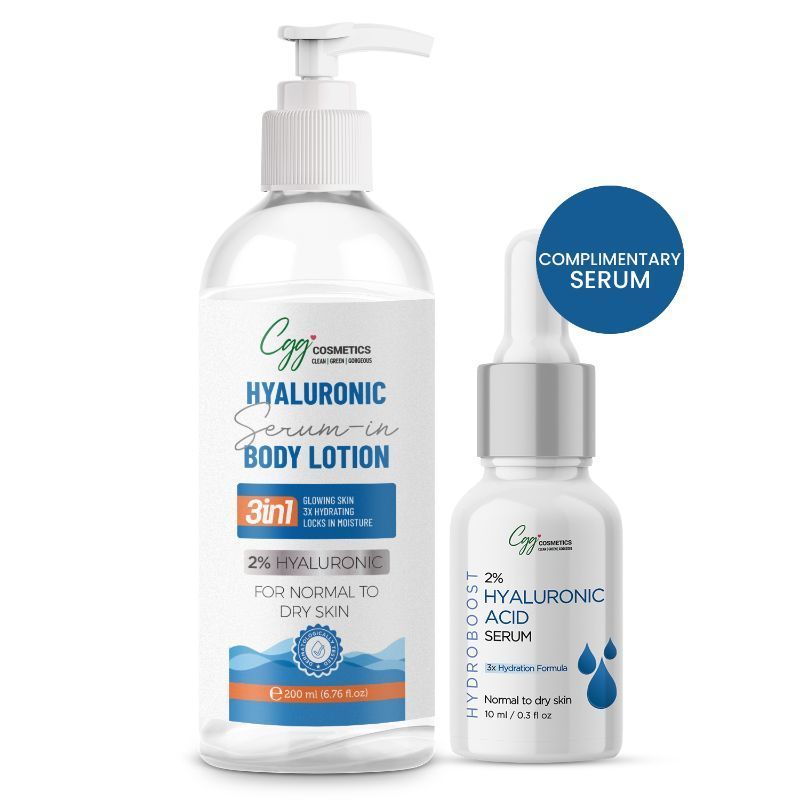
CGG Cosmetics Hyaluronic Acid Serum In Body Lotion + Free Sample Of 2% Hyaluronic Acid Serum

CGG Cosmetics Hyaluronic Acid Serum In Body Lotion + Free Sample Of 2% Hyaluronic Acid Serum
CGG Cosmetics
cgg-cosmetics-hyaluronic-acid-serum-in-body-lotion-free-sample-of-2-hyaluronic-acid-serum
Moisturize
10084874649893
Morning or Evening?
How often will you use this product?
Notes


Highlights
WHAT IS IT?
Hyaluronic acid serum in body lotion combo including one 100gm lotion and 10ml serum
FEATURES
Hydrates, calms, protects, moisturizes, improves skin elasticity, suitable for all skin types, oil-free serum, dermatologist recommended ingredient, provides youthful elasticity, calms sensitive skin, healthy glow, cruelty-free, paraben-free, sulfate-free
BEST FOR
sensitive
CHECKS
Paraben, Sulfate
Who Is It For?
What Does It Help With?
Hydration Elasticity Improvement Calming Sensitive Skin Moisturizing Skin Plumping Smoothness Healthy Balanced GlowBudget
Affordable (under $30)How To Use
Which routine should it be used in?
Instructions:
Key Information


What CGG Cosmetics Says
Product Description:
CGG Cosmetics Hyaluronic Acid Serum-In Body Lotion and Free Sample Of 2% Hyaluronic Acid Serum Combo hydrates, calms, protects and moisturizes skin with a smooth, vibrant finish that is suitable for all skin types. This combo contains: CGG Cosmetics Hyaluronic Acid Serum-In Body Lotion (100gm): CGG Hyaluronic Body Lotion cares for both hydration and improved skin elasticity with natural ingredients. The presence of hyaluronic acid in body lotion can replenish hydration and provide youthful elasticity to tired and loose skin. Tea tree leaf extract can gently take care of sensitive skin; it can calm, protect, and moisturise skin and provide a healthy glow. CGG Cosmetics 2% Hyaluronic Acid Serum (10ml) (Free Sample): CGG Cosmetics Hyaluronic Acid Serum contains 2% hyaluronic acid, which is an oil-free ingredient that adds moisture to the skin as well as makes it plump and smooth. Hyaluronic acid effectively binds water in cells and is responsible for the elasticity and firmness of the skin, transforming the skin and giving it a healthy and balanced glow. About the Brand: CGG stands for clean, green and gorgeous. This brand is cruelty-free, paraben-free, sulfate-free, dermatologically tested, and environmentally friendly. The line includes a variety of face washes, scrubs, serums, sunscreen sprays, and moisturisers made for various skin types and skin issues.
About the Brand:
Ingredients Overview
Ingredients List
glycerin, isopropyl-myristate, light-liquid-paraffin, propylene-glycol, polydimethylsiloxane/dimethicone, hyaluronic-acid, stearic-acid, white-soft-paraffin, aquaxyl-xylitylglucoside, anhydroxylitol, xylitol, acrypol-940, phenoxyethanol, cetyl-alcohol, ceteareth-20, disodium-edta, fragrance, demineral-water, siligel
Key Ingredients
hyaluronic-acid, tea-tree-leaf-extract, glycerin, propylene-glycol
Ingredients Details
Anhydroxylitol
Common Name(s): Anhydroxylitol,cosmetic active,functional ingredient
CAS Number: N/a
DESCRIPTION
What It Does: Delivers characteristic cosmetic function at recommended use concentration.
Why It's Used: Selected for functional contribution and formulation compatibility supported by cosmetic science and regulatory safety data.
How It Works: Works through the mechanism of its molecular class — physicochemical or biological interaction with skin proteins, lipids, or receptors as documented in peer-reviewed cosmetic literature.
Typically Found In: Skin care formulations
TECHNICAL DETAILS
Primary Category: Active ingredient – cosmetic active
Secondary Functions: Skin conditioning
Application Areas:

Facial Skincare

Body Care
Hair Care
Beard Care
Color Cosmetics (Makeup)
Dietary/Oral Supplements
Typical Concentration Range: 0.1%–10%
SOURCING & ETHICS
Vegan Status: Conditional
Halal Status: Yes
Source Notes: Commercially produced for cosmetic use. verify vegan/halal status with supplier.
SKIN COMPATIBILITY
Irritancy Rating: 1/5 – very low
Comedogenicity Rating: 0/5 – non-comedogenic
Sensitivity Concerns: Well-tolerated by most skin types.
Safe for Sensitive Skin: Yes
SAFETY & COMPATIBILITY
Safety Profile: Good safety profile at recommended concentrations. ewg score: 1–2.
Works Well With: Standard skincare actives
Avoid Combining With: No known significant incompatibilities
SCIENTIFIC NOTE
Anhydroxylitol has an established safety and efficacy profile within the cosmetic regulatory framework at standard use concentrations.
Last Verified: Cosing database,anhydroxylitol technical literature
Primary Sources: 2026-03-12
Ceteareth-20
Common Name(s): Polyethylene glycol cetearyl ether,peg-20 cetearyl ether
CAS Number: 68439-49-6
DESCRIPTION
What It Does: Provides high-hlb o/w emulsification for stable cream formation from ethoxylated cetearyl alcohol.
Why It's Used: Classic self-emulsifying wax component for standard pharmaceutical and cosmetic cream formulation.
How It Works: 20 eo units on cetearyl alcohol chain provide hlb ~15-17 for strong o/w emulsification. often pre-blended with cetearyl alcohol as 'emulsifying wax' for simplified cream making. combined low-hlb cetearyl alcohol + high-hlb ceteareth-20 forms a balanced self-emulsifying system.
Typically Found In: Classic pharmaceutical and cosmetic creams
TECHNICAL DETAILS
Primary Category: Functional ingredient – ethoxylated fatty alcohol emulsifier
Secondary Functions: Skin conditioning
Application Areas:
Facial Skincare
Body Care
Hair Care
Beard Care
Color Cosmetics (Makeup)
Dietary/Oral Supplements
Typical Concentration Range: 1%–8%
SOURCING & ETHICS
Vegan Status: Conditional – peg petroleum; cetearyl vegetable
Halal Status: Yes
Source Notes: Commercially produced for cosmetic use. verify vegan/halal status with supplier.
SKIN COMPATIBILITY
Irritancy Rating: 1/5 – very low
Comedogenicity Rating: 0/5 – non-comedogenic
Sensitivity Concerns: Well-tolerated by most skin types.
Safe for Sensitive Skin: Yes
SAFETY & COMPATIBILITY
Safety Profile: Good safety profile at recommended concentrations. ewg score: 1–2.
Works Well With: Standard skincare actives
Avoid Combining With: No known significant incompatibilities
SCIENTIFIC NOTE
Ceteareth-20's combination with cetearyl alcohol in the classic 'emulsifying wax nf' creates what is called a 'mixed emulsifier system' where the fatty alcohol forms lamellar crystal phases that physically trap and stabilize oil droplets. this physical (lamellar crystal) + chemical (hlb balance) dual stabilization provides superior stability compared to either component alone.
Last Verified: Cosing database,cir safety assessment
Primary Sources: 2026-03-12
Fragrance
Common Name(s): Fragrance ingredient,eu allergen or aromatic component,olfactory/flavour
CAS Number: N/a
DESCRIPTION
What It Does: Provides the complete fragrance profile contributing to product sensory experience and consumer appeal.
Why It's Used: Fragrance is a major consumer purchase driver — up to 70% of consumers make purchasing decisions partially based on product scent.
How It Works: Fragrance blends interact with olfactory receptors providing the sensory profile — complex mixtures activate multiple receptor types for rich, multidimensional scent experiences.
Typically Found In: All fragrance products
TECHNICAL DETAILS
Primary Category: Active ingredient – cosmetic active
Secondary Functions: Skin conditioning
Application Areas:
Facial Skincare
Body Care
Hair Care
Beard Care
Color Cosmetics (Makeup)
Dietary/Oral Supplements
Typical Concentration Range: Standard use levels
SOURCING & ETHICS
Vegan Status: Conditional
Halal Status: Yes
Source Notes: Commercially produced for cosmetic use. verify vegan/halal status with supplier.
SKIN COMPATIBILITY
Irritancy Rating: 1/5 – very low
Comedogenicity Rating: 0/5 – non-comedogenic
Sensitivity Concerns: Well-tolerated by most skin types.
Safe for Sensitive Skin: Yes
SAFETY & COMPATIBILITY
Safety Profile: Good safety profile at recommended concentrations. ewg score: 1–2.
Works Well With: Standard skincare actives
Avoid Combining With: No known significant incompatibilities
SCIENTIFIC NOTE
Ifra guidelines set usage limits for fragrance ingredients based on skin sensitisation and phototoxicity assessment for each application category.
Last Verified: Eu regulation 1223/2009 annex iii,ifra standards,fragrance allergen declaration requirements
Primary Sources: 2026-03-12
Glycerin
Common Name(s): Glycerol,glycerine,1,2,3-propanetriol
CAS Number: 56-81-5
DESCRIPTION
What It Does: Glycerin pulls water from the environment and deeper skin layers into the outer skin layer (epidermis), boosting moisture levels and keeping skin soft, smooth, and plump.
Why It's Used: It is used in virtually every moisturizer, serum, and cleanser because it is highly effective at hydrating skin, is well-tolerated by all skin types, and enhances the texture and spreadability of formulations.
How It Works: As a humectant, glycerin forms hydrogen bonds with water molecules, trapping them in the skin. it also reinforces the skin barrier by integrating into lipid structures between skin cells.
Typically Found In: Moisturizers,serums,cleansers,toners,sheet masks,sunscreens,body lotions,shampoos,conditioners
TECHNICAL DETAILS
Primary Category: Humectant
Secondary Functions: Skin barrier support,emollient,solvent
Application Areas:
Facial Skincare
Body Care
Hair Care
Beard Care
Color Cosmetics (Makeup)
Dietary/Oral Supplements
Typical Concentration Range: 1%–30% (typical: 3–10%)
SOURCING & ETHICS
Vegan Status: Yes – plant-derived (coconut, soy, palm) or synthetic
Halal Status: Yes – when plant-derived or synthetic; verify source with supplier
Source Notes: Derived from plant oils via hydrolysis or saponification; synthetic versions also available. palm-derived glycerin carries sustainability concerns.
SKIN COMPATIBILITY
Irritancy Rating: 1/5 – very low; non-irritating at all standard concentrations
Comedogenicity Rating: 0/5 – non-comedogenic
Sensitivity Concerns: Extremely rare allergic reactions; generally safe for all skin types including sensitive and baby skin
Safe for Sensitive Skin: Yes
SAFETY & COMPATIBILITY
Safety Profile: Widely recognized as safe. ewg hazard score: 1. no significant concerns for irritation, sensitization, or toxicity at typical concentrations (up to 50%).
Works Well With: Hyaluronic acid,ceramides,niacinamide,panthenol,urea,peptides,retinol,ahas/bhas
Avoid Combining With: No known incompatibilities at standard concentrations
SCIENTIFIC NOTE
Glycerin is an endogenous skin component found naturally in the stratum corneum. aquaporin-3 channels in keratinocytes facilitate glycerin transport, making it integral to natural skin hydration pathways.
Last Verified: Cosing database,cir safety assessment,ewg skin deep,inci decoder
Primary Sources: 2026-03-12
