

Shiseido
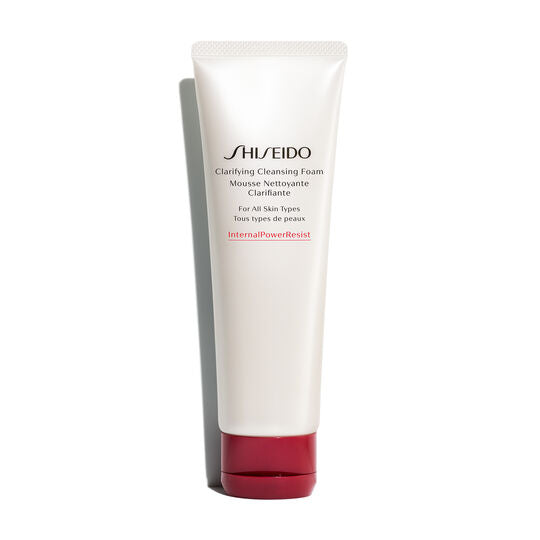
Clarifying Cleansing Foam (for all skin types)

Clarifying Cleansing Foam (for all skin types)
Shiseido
clarifying-cleansing-foam-for-all-skin-types
Cleanse
9605081792805
Morning or Evening?
How often will you use this product?
Notes


Highlights
WHAT IS IT?
Foaming facial cleanser
FEATURES
Cleanses, balances, and removes dirt & pollutants without stripping skin’s vital moisture.
BEST FOR
All skin types
CHECKS
Does not contain any harsh alcohols, parabens, silicones
Who Is It For?
Not Specified Likely For Adults Of All GendersWhat Does It Help With?
Cleansing Removing Makeup And Impurities Promoting RadianceBudget
Mid-rangeHow To Use
Which routine should it be used in?
Instructions:
Key Information

What Shiseido Says
Product Description:
A creamy, foaming facial cleanser for all skin types that whisks away makeup, impurities and pollutants to reveal smooth, hydrated skin.
About the Brand:
Ingredients Overview
Ingredients List
Water, Stearic Acid, PEG-8, Myristic Acid, Glycerin, Potassium Hydroxide, Dipropylene Glycol, Lauric Acid, Glyceryl Stearate SE, Sorbitol, Cocamidopropyl Betaine, PEG-60 Glyceryl Isostearate, Sodium Methyl Cocoyl Taurate, Phytosteryl Macadamiate, Fragrance, Polyquaternium-39, Disodium EDTA, Oryza Sativa (Rice) Germ Oil, Linalool, Geraniol, Citronellol, Kaolin, Sodium Benzoate, Butylene Glycol, Acrylates Copolymer, Betaine, Silk Powder(Serica/Poudre De Soie), Tocopherol, Sodium Acetylated Hyaluronate, Artemisia Princeps Leaf Extract, Sodium Lauryl Sulfate
Key Ingredients
Lauric Acid, Tocopherol, Glycerin, Phytosteryl Macadamiate
Ingredients Details
Lauric Acid
Common Name(s): Dodecanoic acid,coconut fatty acid,laurostearic acid
CAS Number: 0143-07-07
DESCRIPTION
What It Does: Provides antimicrobial c12 fatty acid activity against p. acnes and skin pathogens alongside emollient conditioning.
Why It's Used: Antimicrobial emollient with documented anti-acne activity through p. acnes membrane disruption – the primary antimicrobial fatty acid in human breast milk and coconut oil.
How It Works: C12 chain length is optimal for antimicrobial fatty acid activity: long enough for membrane insertion but short enough for effective disruption. disrupts p. acnes lipid membrane. converts to monolaurin (antimicrobial monoglyceride) via skin esterases. low melting point (44°c) provides liquid-phase emolliency above skin temperature.
Typically Found In: Anti-acne products,antimicrobial skin care,coconut-based products
TECHNICAL DETAILS
Primary Category: Functional ingredient – c12 medium chain fatty acid
Secondary Functions: Barrier sealing,softening
Application Areas:

Facial Skincare
Body Care
Hair Care

Beard Care
Color Cosmetics (Makeup)
Dietary/Oral Supplements
Typical Concentration Range: 0.5%–10%
SOURCING & ETHICS
Vegan Status: Conditional - feedstock declaration required
Halal Status: Unverified - feedstock declaration required (plant, animal and petrochemical routes all exist)
Source Notes: Plant-derived, synthetic or animal-derived. verify source. [audit 2026-07-29 rev2: origin-dependent: the same inci exists in plant, animal and petrochemical versions and the name does not discriminate. determination requires shariah-panel sign-off.]
SKIN COMPATIBILITY
Irritancy Rating: 1/5 – very low
Comedogenicity Rating: 4/5 – moderate to high comedogenic potential
Sensitivity Concerns: Non-irritating.
Safe for Sensitive Skin: Yes
SAFETY & COMPATIBILITY
Safety Profile: Excellent safety profile. ewg score: 1.
Works Well With: Humectants,ceramides,actives as carrier
Avoid Combining With: No significant incompatibilities
SCIENTIFIC NOTE
Lauric acid's antimicrobial activity against p. acnes (ic50 ~1μg/ml) exceeds benzoyl peroxide's ic50 (~50μg/ml) by approximately 50-fold in in vitro studies, making it one of the most potent naturally occurring anti-p. acnes compounds. its high comedogenicity rating (4/5) presents the paradox of a powerful anti-acne active in a comedogenic vehicle – limiting its practical anti-acne formulation use.
Last Verified: 2026-03-12
Primary Sources: Cosing database,nakatsuji et al. lauric acid anti-acne study,cir safety assessment
Water
Common Name(s): Water,purified water,deionised water,inci water
CAS Number: 7732-18-5
DESCRIPTION
What It Does: Provides the universal solvent and vehicle for water-soluble actives and the continuous phase of all o/w emulsions.
Why It's Used: The most essential cosmetic ingredient — aqua (water) is listed first on virtually all water-containing cosmetic inci labels as the highest-concentration ingredient, serving as the foundation of the global cosmetics industry.
How It Works: Acts as solvent for all water-soluble ingredients (glycols, amino acids, water-soluble actives). forms the continuous external phase of o/w emulsions (lotions, creams, serums). provides aqueous environment for enzymatic and chemical reactions between actives. ph adjustment medium.
Typically Found In: Virtually all cosmetic products — the most universal cosmetic ingredient globally
TECHNICAL DETAILS
Primary Category: Functional ingredient – water
Secondary Functions: Skin conditioning
Application Areas:
Facial Skincare
Body Care
Hair Care
Beard Care
Color Cosmetics (Makeup)
Dietary/Oral Supplements
Typical Concentration Range: Varies widely — up to 95% in some toners and serums
SOURCING & ETHICS
Vegan Status: Yes – water (deionised/purified)
Halal Status: Yes
Source Notes: Cosmetic-grade water is purified (deionised, distilled, or ro filtered) to prevent mineral content interference with formulation stability. european pharmacopoeial water (aqua purificata ph. eur.) is the quality standard for pharmaceutical and high-end cosmetic formulations.
SKIN COMPATIBILITY
Irritancy Rating: 1/5 – non-irritant
Comedogenicity Rating: 0/5 – non-comedogenic
Sensitivity Concerns: Well-tolerated by most skin types.
Safe for Sensitive Skin: Yes
SAFETY & COMPATIBILITY
Safety Profile: Good safety profile at recommended concentrations. ewg score: 1–2.
Works Well With: Standard skincare actives
Avoid Combining With: No known significant incompatibilities
SCIENTIFIC NOTE
Water's position as the first inci ingredient on most cosmetic labels reflects the regulatory requirement to list ingredients in descending concentration order — meaning water is the most abundant ingredient in the majority of cosmetic products. the fundamental role of water as the universal cosmetic solvent and vehicle makes it simultaneously the most important cosmetic ingredient and the one that requires the most sophisticated formulation chemistry to control — every emulsifier, thickener, preservative, and ph adjuster exists primarily to manage water's interaction with other ingredients in formulation.
Last Verified: 2026-03-12
Primary Sources: Cosing database,eu cosmetics regulation 1223/2009 inci requirements,ph. eur. aqua purificata monograph