
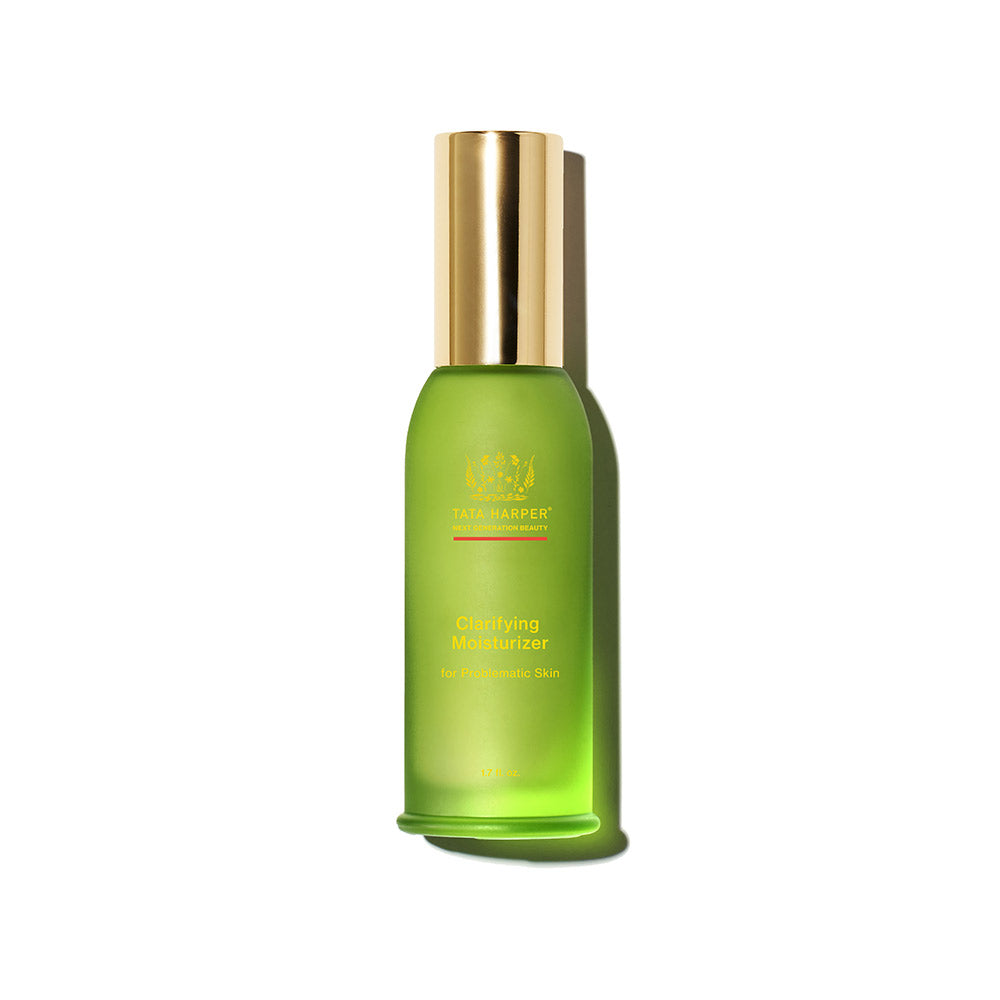

Tata Harper Skincare
Clarifying Moisturizer

Clarifying Moisturizer
Tata Harper Skincare
clarifying-moisturizer
Moisturize
9784763973925
Morning or Evening?
How often will you use this product?
Notes


Highlights
WHAT IS IT?
Lightweight clarifying moisturizer
FEATURES
Lightweight formula, Blemish-Busting Technology, Provides matte finish, Contains bioactive botanicals
BEST FOR
oily
CHECKS
Free from harsh chemicals, synthetic chemicals, toxin, GMOs, fillers, artificial colors, artificial fragrances
Who Is It For?
Adults With Blemish-prone SkinWhat Does It Help With?
Blemish Control Skin Soothing Oil ControlBudget
Premium ($76-$150)How To Use
Which routine should it be used in?
Instructions:
Key Information


What Tata Harper Skincare Says
Product Description:
This moisturizer is designed to leave blemish-prone skin feeling soothed and never stripped. Our lightweight formula counterbalances Blemish-Busting Technology with soothing and nourishing bioactive botanicals to leave you with a comfortably matte, healthy-looking complexion.
About the Brand:
Ingredients Overview
Ingredients List
Hordeum Vulgare Leaf Juice*, Mel/Honey/Miel*, Simmondsia Chinensis (Jojoba) Seed Oil*, Citrullus Lanatus Seed Oil, Glycerin, Glyceryl Stearate Citrate, Aqua/Water/Eau, Propanediol, C13-14 Alkane, Avena Sativa (Oat) Kernel Oil, Nigella Sativa Seed Oil, Pyrus Malus (Apple) Seed Oil, Santalum Spicatum Seed Oil, Squalane, Backhousia Citriodora Leaf Extract*, Saccharide Isomerate, Tasmannia Lanceolata Fruit/Leaf Extract, Chlorella Vulgaris Extract, Magnolia Officinalis Bark Extract, Salix Alba (Willow) Bark Extract, Sodium Hyaluronate, Olea Europaea (Olive) Oil*, Arnica Montana (Arnica) Extract*, Borago Officinalis (Borage) Leaf Extract*, Calendula Officinalis (Calendula) Flower Extract*, Medicago Sativa (Alfalfa) Extract*, Spiraea Ulmaria (Meadowsweet) Extract*, Sambucus Nigra Fruit Extract, Saccharomyces Ferment, Polyglyceryl-3 Stearate, Caprylyl Glycol, Hydrogenated Lecithin, Lysolecithin, Sclerotium Gum, Glyceryl Caprylate, Xanthan Gum, Lauroyl Lysine, Tocopherol, Sodium Phytate, Pullulan, Phenethyl Alcohol, **Citrus Paradisi (Grapefruit) Oil, **Ocimum Basilicum (Basil) Oil, **Citrus Aurantium (Neroli) Oil, Citric Acid, Sodium Citrate, **Lavandula Angustifolia (Lavender) Oil, Alcohol, **Cymbopogon Flexuosus (Lemongrass) Oil, Lactic Acid, **Ferula Galbaniflua (Galbanum) Gum Extract, Limonene, Linalool, Citral, Geraniol, Farnesol, Citronellol
Key Ingredients
Zinc Pca, Lactobacillus/Arundinaria Gigantea Ferment Filtrate, Hippophae Rhamnoides (Sea Buckthorn) Oil, Dictyopteris Membranacea (Sea Fern) Extract, Tasmannia Lanceolata Fruit/Leaf Extract, Borago Officinalis (Borage) Leaf Extract, Calendula Officinalis (Calendula) Flower Extract, Olea Europaea (Olive) Oil, Glycerin, Squalane, Hyaluronic Acid, Sodium Hyaluronate, Aloe Barbadensis Leaf Juice, Lactobacillus Ferment, Oenothera Biennis (Evening Primrose) Oil, Salix Alba (Willow) Bark Extract
Ingredients Details
Avena Sativa (oat) Kernel Oil
Common Name(s): Avena sativa (oat) kernel oil,botanical carrier oil,emollient fatty acid delivery
CAS Number: N/a
DESCRIPTION
What It Does: Softens and conditions skin by integrating into sc lipid bilayers, delivers essential fatty acids (oleic, linoleic, linolenic) for barrier lipid synthesis, and provides rich, non-stripping moisturisation.
Why It's Used: Natural carrier oils provide the closest compositional match to endogenous sc lipids, delivering emolliency through genuine barrier integration rather than simple surface occlusion.
How It Works: Fatty acid triglycerides partition into sc lipid bilayers — oleic acid (c18:1) provides fluid, emollient integration; linoleic acid (c18:2) acts as essential ceramide precursor; saturated fatty acids provide more occlusive barrier reinforcement.
Typically Found In: Moisturisers,facial oils,natural skin care
TECHNICAL DETAILS
Primary Category: Functional ingredient – emollient
Secondary Functions: Barrier sealing,softening
Application Areas:

Facial Skincare
Body Care
Hair Care

Beard Care
Color Cosmetics (Makeup)
Dietary/Oral Supplements
Typical Concentration Range: 1%–100%
SOURCING & ETHICS
Vegan Status: Conditional
Halal Status: Yes
Source Notes: Plant-derived, synthetic or animal-derived. verify source.
SKIN COMPATIBILITY
Irritancy Rating: 1/5 – very low
Comedogenicity Rating: 1/5 – low; formulation-dependent
Sensitivity Concerns: Non-irritating.
Safe for Sensitive Skin: Yes
SAFETY & COMPATIBILITY
Safety Profile: Excellent safety profile. ewg score: 1.
Works Well With: Humectants,ceramides,actives as carrier
Avoid Combining With: No significant incompatibilities
SCIENTIFIC NOTE
Essential fatty acids — linoleic (c18:2, n-6) and α-linolenic (c18:3, n-3) acids — cannot be synthesised by the body; topical delivery through carrier oils provides direct substrate for ceramide and eicosanoid biosynthesis in the epidermis.
Last Verified: Cosing database,avena sativa (oat) kernel oil carrier oil botanical review
Primary Sources: 2026-03-12
C13-14 Alkane
Common Name(s): C13-14 alkane
DESCRIPTION
What It Does: Delivers targeted skin-conditioning or bioactive benefits through a specific mechanism of action suited to the formulation's intended purpose.
Why It's Used: Specialty actives address specific skin concerns through targeted molecular mechanisms, providing efficacy beyond what base formulation ingredients alone can achieve.
How It Works: The bioactive compound interacts with specific molecular targets in skin cells or the extracellular matrix — enzymes, receptors, structural proteins, or signaling molecules — triggering beneficial biological responses.
Typically Found In: Serums,treatments,moisturizers,specialty products
TECHNICAL DETAILS
Primary Category: Specialty actives
Secondary Functions: Skin-conditioning,anti-aging
Application Areas:
Facial Skincare
Body Care
Hair Care
Beard Care
Color Cosmetics (Makeup)
Dietary/Oral Supplements
Typical Concentration Range: 0.01–5%
SOURCING & ETHICS
Vegan Status: Yes
Halal Status: Yes
Source Notes: Specialty active ingredient; check individual sourcing for vegan status.
SKIN COMPATIBILITY
Irritancy Rating: 1
Comedogenicity Rating: 0
Sensitivity Concerns: Low sensitization potential at recommended use concentrations.
Safe for Sensitive Skin: Yes
SAFETY & COMPATIBILITY
Safety Profile: Well-characterized cosmetic ingredient with established safety profile. generally non-irritating at typical use concentrations. suitable for leave-on and rinse-off cosmetics.
Works Well With: Niacinamide,hyaluronic acid,vitamin c,peptides
Avoid Combining With: Incompatible with oxidizing agents; check ph stability
SCIENTIFIC NOTE
Specialty actives typically work through enzyme inhibition (e.g., tyrosinase inhibition for brightening, mmp inhibition for anti-aging), receptor activation (e.g., retinoid receptors, ppar-γ for barrier genes), or transcription factor modulation (e.g., nrf2 for antioxidant gene upregulation). structure-activity relationships determine potency and selectivity.
Last Verified: Cosing eu database; pcpc cosmetic ingredient safety reviews; ingredient-specific safety and efficacy literature
Primary Sources: 2025-01-15
Citrullus Lanatus Seed Oil
Common Name(s): Citrullus lanatus seed oil
DESCRIPTION
What It Does: Nourishes and softens skin through its balanced fatty acid profile, while antioxidant compounds protect against oxidative skin damage.
Why It's Used: Plant oils provide physiologically compatible lipid structures that integrate into the skin barrier and deliver fat-soluble antioxidants directly to skin cells.
How It Works: Fatty acids integrate into stratum corneum lipid lamellae, reinforcing the lipid barrier. antioxidants (tocopherols, carotenoids, polyphenols) neutralize ros through electron donation or singlet oxygen quenching.
Typically Found In: Face oils,serums,moisturizers,hair treatments,body oils
TECHNICAL DETAILS
Primary Category: Plant oils
Secondary Functions: Emollient,antioxidant
Application Areas:
Facial Skincare
Body Care
Hair Care
Beard Care
Color Cosmetics (Makeup)
Dietary/Oral Supplements
Typical Concentration Range: 0.5–30%
SOURCING & ETHICS
Vegan Status: Yes
Halal Status: Yes
Source Notes: Cold-pressed or solvent-extracted plant oil; no animal components.
SKIN COMPATIBILITY
Irritancy Rating: 1
Comedogenicity Rating: 2
Sensitivity Concerns: Low sensitization potential at recommended use concentrations.
Safe for Sensitive Skin: Yes
SAFETY & COMPATIBILITY
Safety Profile: Well-characterized cosmetic ingredient with established safety profile. generally non-irritating at typical use concentrations. suitable for leave-on and rinse-off cosmetics.
Works Well With: Vitamin e,ceramides,other plant oils,squalane
Avoid Combining With: Strong oxidizers (accelerate rancidity)
SCIENTIFIC NOTE
Vegetable oils are triglyceride matrices where the fatty acid composition determines skin compatibility, barrier function, and comedogenicity. oleic acid-rich oils (>60%) soften barrier lipids and enhance penetration; linoleic acid-rich oils reinforce ceramide-poor stratum corneum; saturated fatty acid-rich oils provide occlusion without skin penetration.
Last Verified: Cosing eu database; pcpc cosmetic ingredient safety reviews; aocs plant oil composition databases; fatty acid pharmacology reviews
Primary Sources: 2025-01-15
Glycerin
Common Name(s): Glycerol,glycerine,1,2,3-propanetriol
CAS Number: 56-81-5
DESCRIPTION
What It Does: Glycerin pulls water from the environment and deeper skin layers into the outer skin layer (epidermis), boosting moisture levels and keeping skin soft, smooth, and plump.
Why It's Used: It is used in virtually every moisturizer, serum, and cleanser because it is highly effective at hydrating skin, is well-tolerated by all skin types, and enhances the texture and spreadability of formulations.
How It Works: As a humectant, glycerin forms hydrogen bonds with water molecules, trapping them in the skin. it also reinforces the skin barrier by integrating into lipid structures between skin cells.
Typically Found In: Moisturizers,serums,cleansers,toners,sheet masks,sunscreens,body lotions,shampoos,conditioners
TECHNICAL DETAILS
Primary Category: Humectant
Secondary Functions: Skin barrier support,emollient,solvent
Application Areas:
Facial Skincare
Body Care
Hair Care
Beard Care
Color Cosmetics (Makeup)
Dietary/Oral Supplements
Typical Concentration Range: 1%–30% (typical: 3–10%)
SOURCING & ETHICS
Vegan Status: Yes – plant-derived (coconut, soy, palm) or synthetic
Halal Status: Yes – when plant-derived or synthetic; verify source with supplier
Source Notes: Derived from plant oils via hydrolysis or saponification; synthetic versions also available. palm-derived glycerin carries sustainability concerns.
SKIN COMPATIBILITY
Irritancy Rating: 1/5 – very low; non-irritating at all standard concentrations
Comedogenicity Rating: 0/5 – non-comedogenic
Sensitivity Concerns: Extremely rare allergic reactions; generally safe for all skin types including sensitive and baby skin
Safe for Sensitive Skin: Yes
SAFETY & COMPATIBILITY
Safety Profile: Widely recognized as safe. ewg hazard score: 1. no significant concerns for irritation, sensitization, or toxicity at typical concentrations (up to 50%).
Works Well With: Hyaluronic acid,ceramides,niacinamide,panthenol,urea,peptides,retinol,ahas/bhas
Avoid Combining With: No known incompatibilities at standard concentrations
SCIENTIFIC NOTE
Glycerin is an endogenous skin component found naturally in the stratum corneum. aquaporin-3 channels in keratinocytes facilitate glycerin transport, making it integral to natural skin hydration pathways.
Last Verified: Cosing database,cir safety assessment,ewg skin deep,inci decoder
Primary Sources: 2026-03-12
