

Clinique
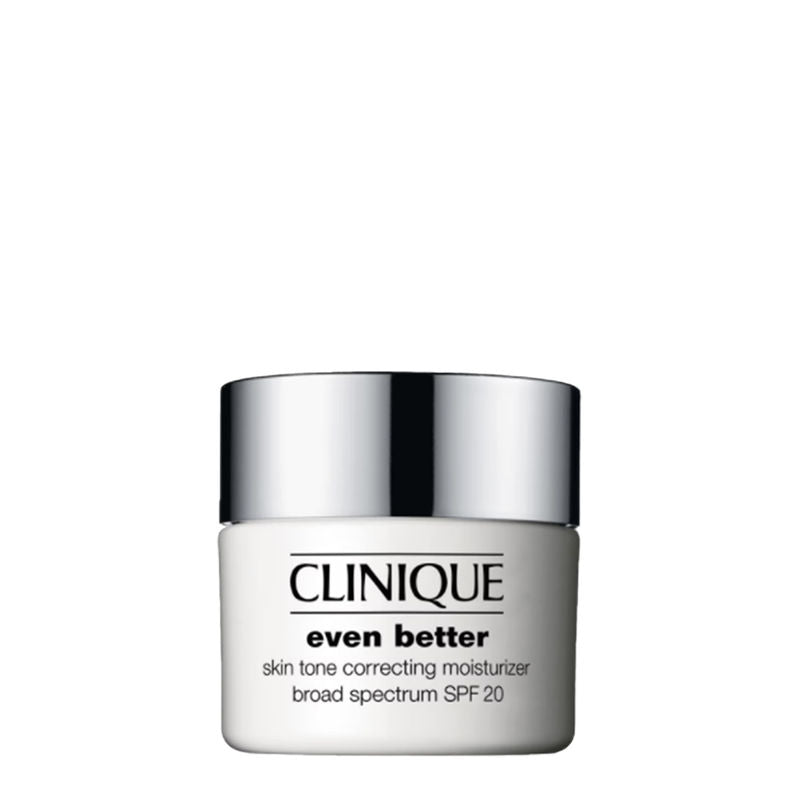
Clinique Even Better Brightening Moisturizer SPF20

Clinique Even Better Brightening Moisturizer SPF20
Clinique
clinique-even-better-brightening-moisturizer-spf20
Moisturize
10084767170853
Morning or Evening?
How often will you use this product?
Notes


Highlights
WHAT IS IT?
Brightening Moisturizer with SPF20
FEATURES
Soothing oil-free cream, reduces dark spots, SPF20 helps prevent new damage, instantly brightens, supports more even skin tone
BEST FOR
dry
CHECKS
oil-free
Who Is It For?
All Genders No Specific Age Range StatedWhat Does It Help With?
Dark Spots Uneven Skin Tone Skin BrighteningBudget
Premium ($76-$150)How To Use
Which routine should it be used in?
Instructions:
Key Information


What Clinique Says
Product Description:
Daily moisturizer that helps uncover a more even-looking skin tone. Soothing oil-free cream has specialized ingredients that help reduce the look of dark spots, while SPF helps prevent new damage. Instantly brightens. Wear daily to see a more even-looking skin tone.
About the Brand:
Ingredients Overview
Ingredients List
Water\Aqua\Eau, Butyloctyl Salicylate, Ethylhexyl Salicylate, Butyl Methoxydibenzoylmethane, Octocrylene, Nylon-12, Octyldodecyl Neopentanoate, Behenyl Alcohol, Ascorbyl Glucoside, Cetyl Esters, Myristyl Myristate, Butylene Glycol, Polyethylene, Ammonium Acryloyldimethyltaurate/VP Copolymer, Saccharomyces Cerevisiae Extract, Yeast Extract\Faex\Extrait De Levure, Betula Alba (Birch) Bark Extract, Cucumis Sativus (Cucumber) Fruit Extract, Scutellaria Baicalensis Root Extract, Pyrus Malus (Apple) Fruit Extract, Trametes Versicolor Extract, Triticum Vulgare (Wheat Bran) Extract, Saccharomyces Lysate Extract, Punica Granatum (Pomegranate) Fruit Juice, Olea Europaea (Olive) Fruit Extract, Curcuma Longa (Turmeric) Root Extract, Oryza Sativa (Rice) Bran Extract, Citrus Grandis (Grapefruit) Peel Extract, PEG-6, Cholesterol, Dimethicone, Glyceryl Stearate, PEG-100 Stearate, Glycerin, Di-PPG-2 Myreth-10 Adipate, Caffeine, Steareth-21, Sodium Rna, Cellulose, Acetyl Glucosamine, Tromethamine, Sucrose, Myristyl Laurate, Di-C12-18 Alkyl Dimonium Chloride, Salicylic Acid, Sodium Hyaluronate, Tocopheryl Acetate, Trisiloxane, Linoleic Acid, Caprylyl Glycol, Myristyl Alcohol, Sodium Sulfite, Sodium Metabisulfite, Magnesium Ascorbyl Phosphate, Betaine, Trehalose, Hexylene Glycol, Dipotassium Glycyrrhizate, Lauryl PEG-9 Polydimethylsiloxyethyl Dimethicone, Disodium EDTA, Phenoxyethanol
Key Ingredients
Hyaluronic Acid
Ingredients Details
Acetyl Glucosamine
Common Name(s): Acetyl glucosamine,cosmetic active,functional ingredient
CAS Number: N/a
DESCRIPTION
What It Does: Delivers characteristic cosmetic function — skin conditioning, protection, preservation, or active biological benefit — at recommended use concentration.
Why It's Used: Selected for its functional contribution and formulation compatibility — supported by cosmetic science literature and regulatory safety assessment.
How It Works: Works through the mechanism of its molecular class — physicochemical interaction with the formulation or biological interaction with skin proteins, lipids, or receptors as documented in peer-reviewed literature.
Typically Found In: Skin care formulations
TECHNICAL DETAILS
Primary Category: Active ingredient – cosmetic active
Secondary Functions: Skin conditioning
Application Areas:

Facial Skincare

Body Care
Hair Care
Beard Care
Color Cosmetics (Makeup)
Dietary/Oral Supplements
Typical Concentration Range: 0.1%–10%
SOURCING & ETHICS
Vegan Status: Conditional
Halal Status: Yes
Source Notes: Commercially produced for cosmetic use. verify vegan/halal status with supplier.
SKIN COMPATIBILITY
Irritancy Rating: 1/5 – very low
Comedogenicity Rating: 0/5 – non-comedogenic
Sensitivity Concerns: Well-tolerated by most skin types.
Safe for Sensitive Skin: Yes
SAFETY & COMPATIBILITY
Safety Profile: Good safety profile at recommended concentrations. ewg score: 1–2.
Works Well With: Standard skincare actives
Avoid Combining With: No known significant incompatibilities
SCIENTIFIC NOTE
Acetyl glucosamine delivers documented functional benefit with an established safety profile within the cosmetic regulatory framework (cosing eu, cir usa).
Last Verified: Cosing database,acetyl glucosamine technical literature
Primary Sources: 2026-03-12
Ammonium Acryloyldimethyltaurate/vp Copolymer
Common Name(s): Ammonium acryloyldimethyltaurate/vp copolymer
DESCRIPTION
What It Does: Delivers targeted skin-conditioning or bioactive benefits through a specific mechanism of action suited to the formulation's intended purpose.
Why It's Used: Specialty actives address specific skin concerns through targeted molecular mechanisms, providing efficacy beyond what base formulation ingredients alone can achieve.
How It Works: The bioactive compound interacts with specific molecular targets in skin cells or the extracellular matrix — enzymes, receptors, structural proteins, or signaling molecules — triggering beneficial biological responses.
Typically Found In: Serums,treatments,moisturizers,specialty products
TECHNICAL DETAILS
Primary Category: Specialty actives
Secondary Functions: Skin-conditioning,anti-aging
Application Areas:
Facial Skincare
Body Care
Hair Care
Beard Care
Color Cosmetics (Makeup)
Dietary/Oral Supplements
Typical Concentration Range: 0.01–5%
SOURCING & ETHICS
Vegan Status: Yes
Halal Status: Yes
Source Notes: Specialty active ingredient; check individual sourcing for vegan status.
SKIN COMPATIBILITY
Irritancy Rating: 1
Comedogenicity Rating: 0
Sensitivity Concerns: Low sensitization potential at recommended use concentrations.
Safe for Sensitive Skin: Yes
SAFETY & COMPATIBILITY
Safety Profile: Well-characterized cosmetic ingredient with established safety profile. generally non-irritating at typical use concentrations. suitable for leave-on and rinse-off cosmetics.
Works Well With: Niacinamide,hyaluronic acid,vitamin c,peptides
Avoid Combining With: Incompatible with oxidizing agents; check ph stability
SCIENTIFIC NOTE
Specialty actives typically work through enzyme inhibition (e.g., tyrosinase inhibition for brightening, mmp inhibition for anti-aging), receptor activation (e.g., retinoid receptors, ppar-γ for barrier genes), or transcription factor modulation (e.g., nrf2 for antioxidant gene upregulation). structure-activity relationships determine potency and selectivity.
Last Verified: Cosing eu database; pcpc cosmetic ingredient safety reviews; ingredient-specific safety and efficacy literature
Primary Sources: 2025-01-15
Ascorbyl Glucoside
Common Name(s): Aa2g,2-o-alpha-d-glucopyranosyl-l-ascorbic acid
CAS Number: 129499-78-1
DESCRIPTION
What It Does: Provides stable gradual-release vitamin c activity for brightening and antioxidant protection.
Why It's Used: Most formulation-stable vitamin c derivative — ascorbyl glucoside remains stable in aqueous formulations where pure ascorbic acid oxidises within days, providing sustained vitamin c delivery over weeks of shelf life.
How It Works: Alpha-glucoside bond resists oxidation until cleaved by skin alpha-glucosidase enzymes. releases free l-ascorbic acid in viable epidermis. released ascorbic acid inhibits tyrosinase, stimulates collagen synthesis, and provides antioxidant activity. glucose group provides enhanced water solubility vs ascorbic acid.
Typically Found In: Stable vitamin c serums,brightening products,anti-aging
TECHNICAL DETAILS
Primary Category: Active ingredient – stable vitamin c glucoside
Secondary Functions: Tyrosinase inhibitor,collagen cofactor
Application Areas:
Facial Skincare
Body Care
Hair Care
Beard Care
Color Cosmetics (Makeup)
Dietary/Oral Supplements
Typical Concentration Range: 1%–5%
SOURCING & ETHICS
Vegan Status: Yes – enzymatic synthesis from ascorbic acid and glucose
Halal Status: Yes
Source Notes: Synthetically produced vitamin c derivative.
SKIN COMPATIBILITY
Irritancy Rating: 1/5 – very low
Comedogenicity Rating: 0/5 – non-comedogenic
Sensitivity Concerns: Non-irritating; suitable for all skin types.
Safe for Sensitive Skin: Yes
SAFETY & COMPATIBILITY
Safety Profile: Excellent safety profile. ewg score: 1.
Works Well With: Tocopherol,ferulic acid,niacinamide,spf
Avoid Combining With: No significant incompatibilities
SCIENTIFIC NOTE
Ascorbyl glucoside's stability advantage (18+ months in aqueous formulation vs days for ascorbic acid) arises from the glucose group's steric protection of ascorbic acid's c2 enediol that is the primary oxidation site. glucosidase cleavage in skin removes this protection in situ, releasing active ascorbic acid only where enzymatic activity exists — providing both formulation stability and bioactivation where needed.
Last Verified: Cosing database,yamamoto et al. ascorbyl glucoside stability study
Primary Sources: 2026-03-12
Behenyl Alcohol
Common Name(s): Behenyl alcohol,inci ingredient,cosmetic active
CAS Number: N/a
DESCRIPTION
What It Does: Provides documented cosmetic activity from behenyl alcohol.
Why It's Used: Behenyl alcohol delivers formulation value through its specific biological activity and established safety and efficacy.
How It Works: Source: behenyl alcohol. mechanism: documented in cosmetic literature. safety: cosing-reviewed. standard cosmetic use concentrations.
Typically Found In: Skin care formulations,active products
TECHNICAL DETAILS
Primary Category: Active ingredient – antioxidant
Secondary Functions: Free radical scavenging,anti-aging
Application Areas:
Facial Skincare
Body Care
Hair Care
Beard Care
Color Cosmetics (Makeup)
Dietary/Oral Supplements
Typical Concentration Range: 0.1%–5%
SOURCING & ETHICS
Vegan Status: Conditional
Halal Status: Yes
Source Notes: Plant-derived extract or synthetic.
SKIN COMPATIBILITY
Irritancy Rating: 1/5 – very low
Comedogenicity Rating: 0/5 – non-comedogenic
Sensitivity Concerns: Non-irritating; well-tolerated.
Safe for Sensitive Skin: Yes
SAFETY & COMPATIBILITY
Safety Profile: Excellent safety profile. ewg score: 1.
Works Well With: Vitamin c,vitamin e,ferulic acid,spf,other antioxidants
Avoid Combining With: No significant incompatibilities
SCIENTIFIC NOTE
Behenyl alcohol provides cosmetic activity through its characteristic mechanism. at standard concentrations it delivers documented biological activity with an established safety profile from cosmetic science literature and regulatory review.
Last Verified: Cosing database,behenyl alcohol technical literature
Primary Sources: 2026-03-12
