

Mario Badescu
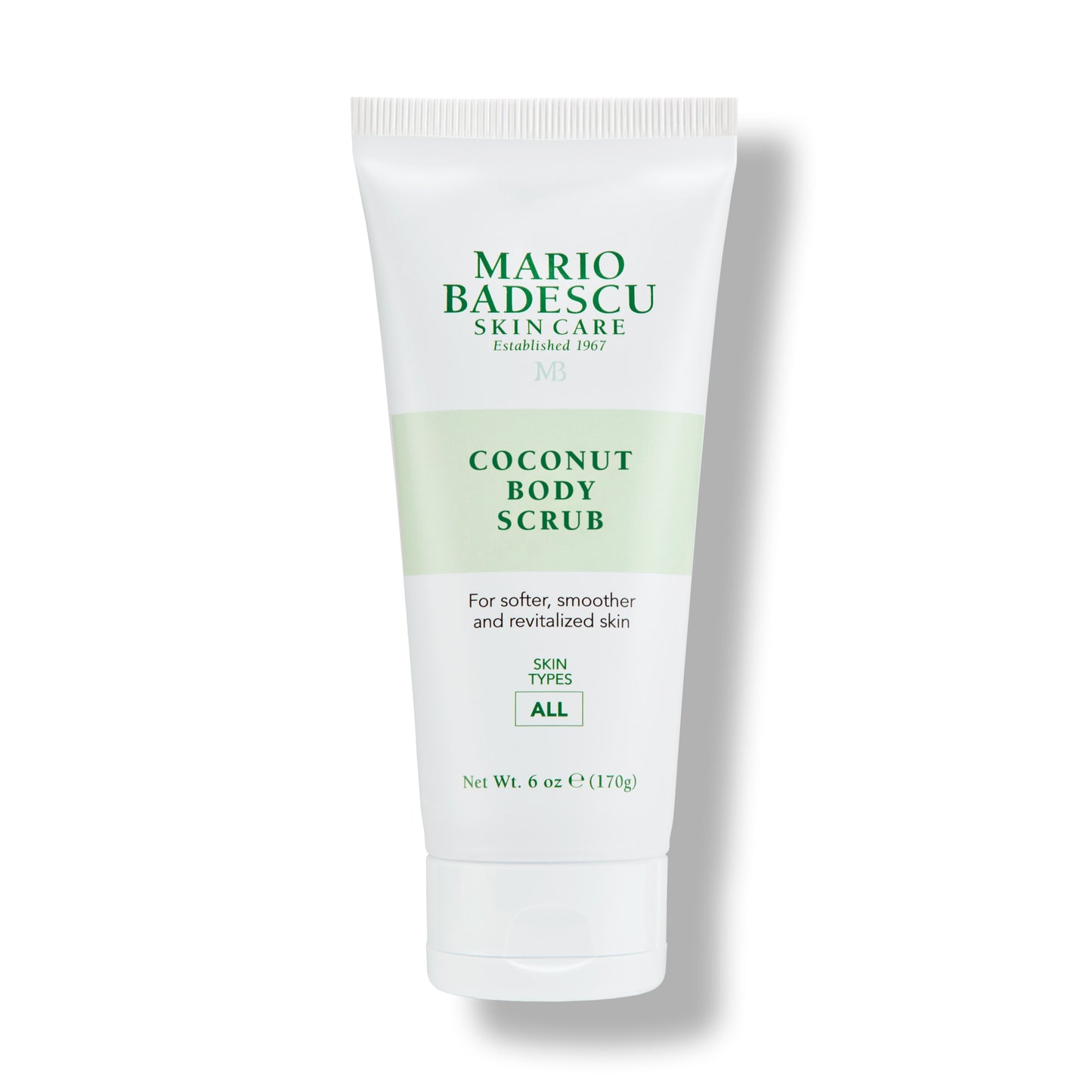
Coconut Body Scrub

Coconut Body Scrub
Mario Badescu
coconut-body-scrub
Body care
9818362872101
Morning or Evening?
How often will you use this product?
Notes


Highlights
WHAT IS IT?
Exfoliating body scrub with gentle beads in six different sizes
FEATURES
Reveals softer, smoother, healthier-looking skin, gentle beads exfoliate, polishes skin, buffs away dead skin cells, rich in antioxidants and active skincare ingredients
BEST FOR
all skin types
CHECKS
Free of paraben, sulfate
Who Is It For?
All Skin TypesWhat Does It Help With?
Exfoliation Moisturization Pore Cleansing Skin SmoothingBudget
Affordable (under $30)How To Use
Which routine should it be used in?
Instructions:
Key Information


What Mario Badescu Says
Product Description:
Buff and exfoliate skin with this exfoliating body scrub containing moisturizing Shea Butter and Niacinamide Salicylate Complex to balance and exfoliate skin.
About the Brand:
Ingredients Overview
Ingredients List
Aqua (Water, Eau), Glycerin, Pumice, Coco-Betaine, Acrylates/Palmeth-25 Acrylate Copolymer, Sodium Lauroyl Glycinate, Microcrystalline Cellulose, Phytelephas Aequatorialis Seed Powder, Parfum (Fragrance), Hydrogenated Jojoba Oil, Silica, Aloe Barbadensis Leaf Juice, Phenoxyethanol, Polysorbate 80, Sodium Hydroxide, Limnanthes Alba (Meadowfoam) Seed Oil, Rosa Canina Seed, Tocopheryl Acetate, Chlorphenesin, Sodium Sulfite, Salicylic Acid, Niacinamide, Limonene, Citronellol, Xylene, Geraniol, Citric Acid, Potassium Sorbate, Sodium Benzoate, Citral, Amylopectin, Dextrin, Polydextrose, Farnesol
Key Ingredients
Shea Butter, Niacinamide Salicylate Complex, Rosehip Oil, Meadowfoam Seed Oil, Mango Seed Butter
Ingredients Details
Coconut Oil
Common Name(s): Coconut oil,botanical oil,phytochemical active
CAS Number: N/a
DESCRIPTION
What It Does: Provides antioxidant protection from reactive oxygen species, reduces inflammatory cytokine production in skin, and conditions skin through the plant's phytochemical complex.
Why It's Used: Natural origin narrative, traditional use heritage, and multi-functional phytochemical profile supporting concurrent skin care claims from one ingredient.
How It Works: Polyphenols, terpenoids, and alkaloids scavenge ros via h• donation, inhibit nf-kb or cox-2 inflammatory pathways, and interact with skin surface proteins for conditioning.
Typically Found In: Botanical skin care,natural products
TECHNICAL DETAILS
Primary Category: Active ingredient – antioxidant
Secondary Functions: Free radical scavenging,anti-aging
Application Areas:

Facial Skincare
Body Care

Hair Care
Beard Care
Color Cosmetics (Makeup)
Dietary/Oral Supplements
Typical Concentration Range: 0.1%–10%
SOURCING & ETHICS
Vegan Status: Conditional - supplier confirmation required
Halal Status: Yes
Source Notes: Plant-derived extract or synthetic. [audit 2026-07-29 rev2: status downgraded on audit. determination requires shariah-panel sign-off.]
SKIN COMPATIBILITY
Irritancy Rating: 1/5 – very low
Comedogenicity Rating: 0/5 – non-comedogenic
Sensitivity Concerns: Non-irritating; well-tolerated.
Safe for Sensitive Skin: Yes
SAFETY & COMPATIBILITY
Safety Profile: Excellent safety profile. ewg score: 1.
Works Well With: Vitamin c,vitamin e,ferulic acid,spf,other antioxidants
Avoid Combining With: No significant incompatibilities
SCIENTIFIC NOTE
Plant secondary metabolites evolved as photoprotectants and antimicrobials — mechanisms directly applicable to cosmetic antioxidant and anti-inflammatory activity in human skin.
Last Verified: 2026-03-12
Primary Sources: Cosing database,coconut oil botanical review
Meadowfoam Seed Oil
Common Name(s): Meadowfoam seed oil
DESCRIPTION
What It Does: Forms a long-lasting protective film providing exceptional moisture retention and hair conditioning with outstanding stability.
Why It's Used: Unique long-chain fatty acid oil providing extended moisture retention and exceptional film-forming properties not available from conventional triglyceride oils.
How It Works: Very long-chain fatty acids (c20:1, c22:1, c22:2) create a uniquely stable, film-forming emollient with minimal oxidation susceptibility. long chains pack more efficiently in hair cuticle scales and skin surface for extended wear and conditioning.
Typically Found In: Long-wearing moisturizers,hair conditioners,glossy finishes,lip products
TECHNICAL DETAILS
Primary Category: Functional ingredient – emollient
Secondary Functions: Film-forming,exceptional stability,hair gloss
Application Areas:
Facial Skincare
Body Care
Hair Care
Beard Care
Color Cosmetics (Makeup)
Dietary/Oral Supplements
Typical Concentration Range: 1%–30%
SOURCING & ETHICS
Vegan Status: Yes – from limnanthes alba seeds
Halal Status: Yes
Source Notes: Cold-pressed from meadowfoam seeds – a sustainable pacific northwest crop. shell life 5+ years without antioxidants.
SKIN COMPATIBILITY
Irritancy Rating: 1/5 – very low
Comedogenicity Rating: 1/5 – very low
Sensitivity Concerns: Non-irritating.
Safe for Sensitive Skin: Yes
SAFETY & COMPATIBILITY
Safety Profile: Excellent safety profile. ewg score: 1.
Works Well With: Humectants,ceramides,actives as carrier
Avoid Combining With: No significant incompatibilities
SCIENTIFIC NOTE
Meadowfoam oil's very long-chain fatty acid composition (>95% c20-c22 fatty acids vs most plant oils' c16-c18 dominance) provides uniquely efficient film formation from tighter packing of the longer carbon chains, explaining its superior moisturization duration and hair conditioning film formation.
Last Verified: 2026-03-12
Primary Sources: Cosing database,cir safety assessment
Niacinamide
Common Name(s): Vitamin b3,nicotinamide,pyridine-3-carboxamide
CAS Number: 98-92-0
DESCRIPTION
What It Does: Niacinamide strengthens the skin barrier, reduces visible pore size, regulates sebum production, fades dark spots, and improves skin texture and tone.
Why It's Used: It is used because it addresses multiple skin concerns at once without irritation, making it suitable for all skin types. it is stable in formulations and pairs well with most other actives.
How It Works: Niacinamide inhibits the transfer of melanosomes (pigment packets) to skin cells, reducing hyperpigmentation. it also stimulates ceramide synthesis to strengthen the skin barrier and reduces inflammation by modulating cytokine activity.
Typically Found In: Serums,moisturizers,toners,cleansers,eye creams,sunscreens,primers
TECHNICAL DETAILS
Primary Category: Active ingredient – vitamin
Secondary Functions: Barrier repair,brightening,anti-inflammatory
Application Areas:
Facial Skincare
Body Care
Hair Care
Beard Care
Color Cosmetics (Makeup)
Dietary/Oral Supplements
Typical Concentration Range: 2%–10% (typical: 5%; higher concentrations may cause flushing in some individuals)
SOURCING & ETHICS
Vegan Status: Yes – synthetically produced
Halal Status: Yes – synthetic origin
Source Notes: Commercially produced via synthesis from nicotinic acid or 3-cyanopyridine. no animal-derived sources used in cosmetic-grade niacinamide.
SKIN COMPATIBILITY
Irritancy Rating: 1/5 – very low; concentrations above 10% may cause temporary flushing in sensitive individuals
Comedogenicity Rating: 0/5 – non-comedogenic
Sensitivity Concerns: At concentrations >10%, some users experience niacin flush (transient redness/tingling). generally very well-tolerated.
Safe for Sensitive Skin: Yes – one of the best-tolerated actives for sensitive skin
SAFETY & COMPATIBILITY
Safety Profile: Extensively studied and considered very safe. ewg hazard score: 1. no significant systemic toxicity concerns at topical concentrations.
Works Well With: Retinol,peptides,ahas/bhas,hyaluronic acid,ceramides,zinc,vitamin c,spf
Avoid Combining With: High concentrations of vitamin c (ascorbic acid) may theoretically convert to niacin – use at different times if using pure l-ascorbic acid above 15%
SCIENTIFIC NOTE
Niacinamide is a precursor to nad+ and nadp+, coenzymes vital to cellular energy metabolism. its benefits for dna repair and mitochondrial function make it a key ingredient in anti-aging strategies.
Last Verified: 2026-03-12
Primary Sources: Cosing database,cir safety assessment,ewg skin deep,pubmed clinical studies
Salicylic Acid
Common Name(s): Bha,2-hydroxybenzoic acid,orthohydroxybenzoic acid,willow bark acid
CAS Number: 69-72-7
DESCRIPTION
What It Does: Salicylic acid exfoliates the skin surface and inside pores, dissolves the 'glue' holding dead skin cells together, reduces sebum production, and combats acne-causing bacteria.
Why It's Used: Its oil solubility makes it uniquely effective at penetrating pores and dissolving sebum plugs – a function that water-soluble ahas cannot perform. it is the preferred exfoliant for oily, acne-prone, and congested skin.
How It Works: Salicylic acid disrupts desmosomal bonds between corneocytes, promoting exfoliation. its oil solubility allows it to penetrate the sebaceous follicle, dissolving sebum and dead cells. it also has anti-inflammatory properties by inhibiting prostaglandin synthesis.
Typically Found In: Cleansers,toners,serums,spot treatments,masks,chemical peels,anti-dandruff shampoos,acne treatments
TECHNICAL DETAILS
Primary Category: Active ingredient – beta hydroxy acid (bha)
Secondary Functions: Anti-acne,anti-dandruff,keratolytic
Application Areas:
Facial Skincare
Body Care
Hair Care
Beard Care
Color Cosmetics (Makeup)
Dietary/Oral Supplements
Typical Concentration Range: 0.5%–2% (otc acne treatment in us); up to 30% in professional chemical peels
SOURCING & ETHICS
Vegan Status: Yes – synthetic or willow bark derived
Halal Status: Yes
Source Notes: Naturally occurring in willow bark (salix alba) and wintergreen oil. commercially produced synthetically via kolbe-schmitt reaction for cosmetic use.
SKIN COMPATIBILITY
Irritancy Rating: 3/5 – moderate; can cause dryness, peeling, and irritation, especially at higher concentrations
Comedogenicity Rating: 0/5 – non-comedogenic; actually anti-comedogenic
Sensitivity Concerns: Can cause irritation, dryness, and sun sensitivity. avoid contact with eyes. not recommended during pregnancy at high concentrations. can be drying – follow with moisturizer.
Safe for Sensitive Skin: Use with caution – start with lower concentrations and frequency; may not be suitable for reactive or rosacea-prone skin
SAFETY & COMPATIBILITY
Safety Profile: Safe at otc concentrations (0.5–2%). regulated as a drug in some countries (us: fda category i acne treatment). avoid in pregnancy at high concentrations.
Works Well With: Niacinamide,zinc,tea tree oil,benzoyl peroxide (at different times),hyaluronic acid (to counteract dryness)
Avoid Combining With: High concentrations of retinol (cumulative irritation),multiple exfoliating acids simultaneously,benzoyl peroxide in same step (can increase irritation)
SCIENTIFIC NOTE
Salicylic acid is a member of the salicylate family and shares structural similarity with aspirin. its anti-inflammatory mechanism mirrors aspirin's cox inhibition pathway, making it uniquely effective for inflammatory acne.
Last Verified: 2026-03-12
Primary Sources: Cosing database,cir safety assessment,us fda acne monograph,journal of the american academy of dermatology