

DHC
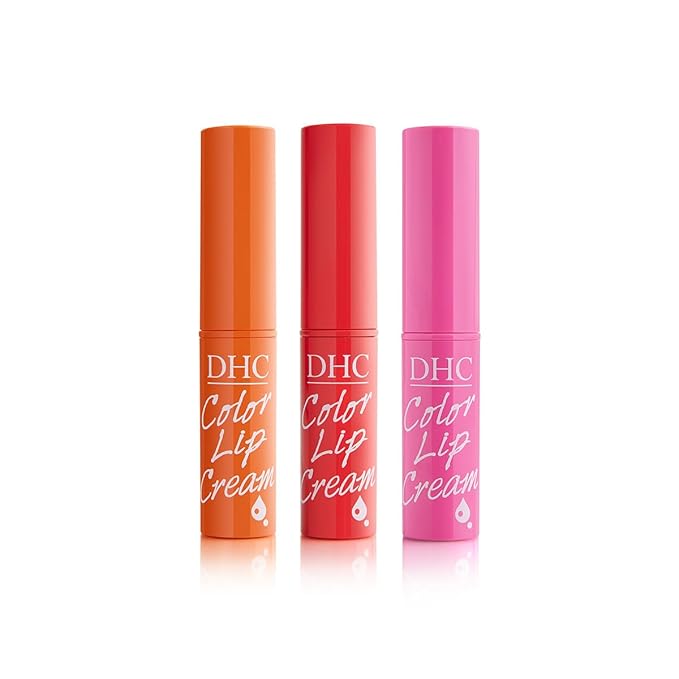
Color Lip Cream

Color Lip Cream
DHC
color-lip-cream
Lip care
9706787602725
Morning or Evening?
How often will you use this product?
Notes


Highlights
WHAT IS IT?
Tinted lip balm with moisturizing and plumping effects
FEATURES
Ultra-hydrating, visibly plumps lips, adds a hint of color, long-lasting moisture
BEST FOR
suitable for all skin types
CHECKS
Free of parabens, colorants, fragrance
Who Is It For?
Suitable For Adults Of All GendersWhat Does It Help With?
Dry Lips Lip Plumping Lip ConditioningBudget
AffordableHow To Use
Which routine should it be used in?
Instructions:
Key Information

What DHC Says
Product Description:
Pucker up with lip-loving moisture plus a hint of tint. This ultra-hydrating lip balm easily glides on to instantly condition, visibly plump lips and add a hint of color. To create a plumping effect, Color Lip Cream harnesses the power of peptides. Palmitoyl tripeptide-1 and palmitoyl tripeptide-38 both work to help lips look smooth and more voluminous. Plus, it's infused with olive oil, castor oil, squalane and nourishing botanical ingredients to help soften lips and provide long-lasting moisture. Like our best-selling Lip Cream, this lightly tinted formulation can be worn alone or over lipstick for a natural-looking, just-kissed pout.
About the Brand:
Ingredients Overview
Ingredients List
ricinus communis (castor) seed oil, euphorbia cerifera (candelilla) wax/candelilla cera/cire de candelilla, simmondsia chinensis (jojoba) seed oil, limnanthes alba (meadowfoam) seed oil, octyldodecanol, cetyl lactate, diisostearyl malate, sucrose hexaisostearate, glycol distearate, orange roughy oil/hoplostethus/huile d'hoplostète orange, paraffin, olea europaea (olive) fruit oil, squalane, tocotrienols, beeswax/cera alba/cire d’abeille, lanolin oil, tocopherol, hydrogenated palm oil, lanolin, triethylhexyl trimellitate, isostearic acid, acetylated lanolin, cetearyl ethylhexanoate, ethylhexyl palmitate, stearic acid, ascorbyl tetraisopalmitate, tribehenin, sorbitan isostearate, isostearoyl hydrolyzed collagen, portulaca pilosa extract, placental protein, sucrose cocoate, palmitoyl tripeptide-1, palmitoyl tripeptide-38, phenoxyethanol, titanium dioxide (CI 77891), yellow 5 lake (CI 19140), red 7 (CI 15850), red 6 (CI 15850), blue 1 lake (CI 42090)
Key Ingredients
Olive oil, castor oil, squalane, palmitoyl tripeptide-1, palmitoyl tripeptide-38
Ingredients Details
Cetyl Lactate
Common Name(s): Cetyl lactate
DESCRIPTION
What It Does: Loosens corneocyte adhesion in the stratum corneum, accelerating cell turnover, refining skin texture, and improving radiance.
Why It's Used: Organic acids at cosmetic ph values provide controlled keratolytic exfoliation that improves skin texture, pore appearance, and radiance without mechanical irritation.
How It Works: At appropriate ph, the acid's undissociated form penetrates the stratum corneum and dissolves the ionic bonds between corneocyte desmosomes (calcium chelation mechanism), facilitating controlled desquamation and cell renewal.
Typically Found In: Toners,exfoliants,serums,peels,cleansers
TECHNICAL DETAILS
Primary Category: Exfoliants
Secondary Functions: Brightening,keratolytic
Application Areas:

Facial Skincare

Body Care
Hair Care
Beard Care
Color Cosmetics (Makeup)
Dietary/Oral Supplements
Typical Concentration Range: 0.5–20%
SOURCING & ETHICS
Vegan Status: Yes
Halal Status: Yes
Source Notes: Synthetic or plant-derived acid; no animal components.
SKIN COMPATIBILITY
Irritancy Rating: 2
Comedogenicity Rating: 0
Sensitivity Concerns: May cause irritation or stinging in sensitive or barrier-compromised skin at high concentrations; patch test recommended.
Safe for Sensitive Skin: Conditional
SAFETY & COMPATIBILITY
Safety Profile: Safe within recommended ph and concentration ranges. sensitization risk increases above 10% aha. patch test recommended for sensitive skin. mildly irritating to some individuals at typical cosmetic use concentrations.
Works Well With: Niacinamide,hyaluronic acid,ceramides,vitamin c
Avoid Combining With: High concentrations on sensitive/broken skin; avoid with physical exfoliants
SCIENTIFIC NOTE
Cosmetic acids function at the pka boundary: only the undissociated acid (rcooh) penetrates the stratum corneum lipid barrier, while the ionized carboxylate (rcoo⁻) does not. the henderson-hasselbalch equation governs the fraction of active species at formulation ph; typically 0.5–3.0% undissociated acid provides efficacy while minimizing irritation.
Last Verified: Cosing eu database; pcpc cosmetic ingredient safety reviews; ingredient-specific safety and efficacy literature
Primary Sources: 2025-01-15
Diisostearyl Malate
Common Name(s): Diisostearyl malate,cosmetic active,functional ingredient
CAS Number: N/a
DESCRIPTION
What It Does: Delivers characteristic cosmetic function at recommended use concentration.
Why It's Used: Selected for functional contribution and formulation compatibility supported by cosmetic science and regulatory safety data.
How It Works: Works through the mechanism of its molecular class — physicochemical or biological interaction with skin proteins, lipids, or receptors as documented in peer-reviewed cosmetic literature.
Typically Found In: Skin care formulations
TECHNICAL DETAILS
Primary Category: Active ingredient – cosmetic active
Secondary Functions: Skin conditioning
Application Areas:
Facial Skincare
Body Care
Hair Care
Beard Care
Color Cosmetics (Makeup)
Dietary/Oral Supplements
Typical Concentration Range: 0.1%–10%
SOURCING & ETHICS
Vegan Status: Conditional
Halal Status: Yes
Source Notes: Commercially produced for cosmetic use. verify vegan/halal status with supplier.
SKIN COMPATIBILITY
Irritancy Rating: 1/5 – very low
Comedogenicity Rating: 0/5 – non-comedogenic
Sensitivity Concerns: Well-tolerated by most skin types.
Safe for Sensitive Skin: Yes
SAFETY & COMPATIBILITY
Safety Profile: Good safety profile at recommended concentrations. ewg score: 1–2.
Works Well With: Standard skincare actives
Avoid Combining With: No known significant incompatibilities
SCIENTIFIC NOTE
Diisostearyl malate has an established safety and efficacy profile within the cosmetic regulatory framework at standard use concentrations.
Last Verified: Cosing database,diisostearyl malate technical literature
Primary Sources: 2026-03-12
Glycol Distearate
Common Name(s): Glycol distearate,cosmetic active,functional ingredient
CAS Number: N/a
DESCRIPTION
What It Does: Delivers characteristic cosmetic function at recommended use concentration.
Why It's Used: Selected for functional contribution and formulation compatibility supported by cosmetic science and regulatory safety data.
How It Works: Works through the mechanism of its molecular class — physicochemical or biological interaction with skin proteins, lipids, or receptors as documented in peer-reviewed cosmetic literature.
Typically Found In: Skin care formulations
TECHNICAL DETAILS
Primary Category: Active ingredient – cosmetic active
Secondary Functions: Skin conditioning
Application Areas:
Facial Skincare
Body Care
Hair Care
Beard Care
Color Cosmetics (Makeup)
Dietary/Oral Supplements
Typical Concentration Range: 0.1%–10%
SOURCING & ETHICS
Vegan Status: Conditional
Halal Status: Yes
Source Notes: Commercially produced for cosmetic use. verify vegan/halal status with supplier.
SKIN COMPATIBILITY
Irritancy Rating: 1/5 – very low
Comedogenicity Rating: 0/5 – non-comedogenic
Sensitivity Concerns: Well-tolerated by most skin types.
Safe for Sensitive Skin: Yes
SAFETY & COMPATIBILITY
Safety Profile: Good safety profile at recommended concentrations. ewg score: 1–2.
Works Well With: Standard skincare actives
Avoid Combining With: No known significant incompatibilities
SCIENTIFIC NOTE
Glycol distearate has an established safety and efficacy profile within the cosmetic regulatory framework at standard use concentrations.
Last Verified: Cosing database,glycol distearate technical literature
Primary Sources: 2026-03-12
Limnanthes Alba (meadowfoam) Seed Oil
Common Name(s): Limnanthes alba (meadowfoam) seed oil,botanical oil,phytochemical active
CAS Number: N/a
DESCRIPTION
What It Does: Provides antioxidant protection from reactive oxygen species, reduces inflammatory cytokine production in skin, and conditions skin through the plant's phytochemical complex.
Why It's Used: Natural origin narrative, traditional use heritage, and multi-functional phytochemical profile supporting concurrent skin care claims from one ingredient.
How It Works: Polyphenols, terpenoids, and alkaloids scavenge ros via h• donation, inhibit nf-kb or cox-2 inflammatory pathways, and interact with skin surface proteins for conditioning.
Typically Found In: Botanical skin care,natural products
TECHNICAL DETAILS
Primary Category: Active ingredient – antioxidant
Secondary Functions: Free radical scavenging,anti-aging
Application Areas:
Facial Skincare
Body Care
Hair Care
Beard Care
Color Cosmetics (Makeup)
Dietary/Oral Supplements
Typical Concentration Range: 0.1%–10%
SOURCING & ETHICS
Vegan Status: Conditional
Halal Status: Yes
Source Notes: Plant-derived extract or synthetic.
SKIN COMPATIBILITY
Irritancy Rating: 1/5 – very low
Comedogenicity Rating: 0/5 – non-comedogenic
Sensitivity Concerns: Non-irritating; well-tolerated.
Safe for Sensitive Skin: Yes
SAFETY & COMPATIBILITY
Safety Profile: Excellent safety profile. ewg score: 1.
Works Well With: Vitamin c,vitamin e,ferulic acid,spf,other antioxidants
Avoid Combining With: No significant incompatibilities
SCIENTIFIC NOTE
Plant secondary metabolites evolved as photoprotectants and antimicrobials — mechanisms directly applicable to cosmetic antioxidant and anti-inflammatory activity in human skin.
Last Verified: Cosing database,limnanthes alba (meadowfoam) seed o botanical review
Primary Sources: 2026-03-12
