
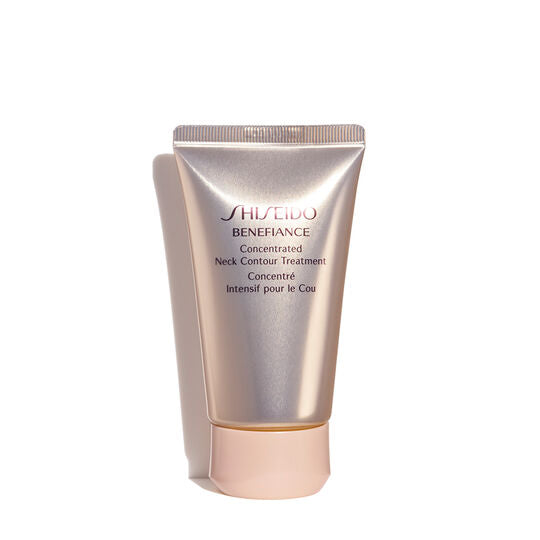

Shiseido
Concentrated Neck Contour Treatment

Concentrated Neck Contour Treatment
Shiseido
concentrated-neck-contour-treatment
Neck Cream
9605084938533
Morning or Evening?
How often will you use this product?
Notes


Highlights
WHAT IS IT?
Neck cream
FEATURES
A concentrated, age-defense retexturizing cream for the neck & decolletage area. It restores firmness & reduces the look of creases for deeply nourished, silky-smooth skin.
BEST FOR
Not specified
CHECKS
Who Is It For?
Adults (default Above 18) Likely Both Women And MenWhat Does It Help With?
Wrinkles Firmness And Texture Of Neck And Décolletage AreaBudget
Mid-rangeHow To Use
Which routine should it be used in?
Instructions:
Key Information

What Shiseido Says
Product Description:
A concentrated, age-defense retexturizing cream specially designed to support the unique needs of the neck and décolletage area. Restores a feeling of firmness and reduces the appearance of wrinkles and creases for a deeply nourished, silky-smooth look.
About the Brand:
Ingredients Overview
Ingredients List
Water(Aqua/Eau), Cyclopentasiloxane, Glycerin, Butylene Glycol, Dimethicone Crosspolymer, Cyclomethicone, Silica, Trimethylsiloxysilicate, Polysorbate 20, Ammonium Acryloyldimethyltaurate/VP Copolymer, Talc, PEG-150, Phenoxyethanol, Alumina, Polyvinyl Alcohol, Titanium Dioxide (Ci 77891), Alcohol, Methylparaben, Fragrance (Parfum), Trisodium EDTA, Sodium Citrate, Sodium Metaphosphate, Potassium Hydroxide, Potassium Ascorbyl Tocopheryl Phosphate, Citric Acid, Arginine Hcl, Butylphenyl Methylpropional, Hexyl Cinnamal, Alpha-Isomethyl Ionone, Linalool, Limonene, Citronellol, Natto Gum, Geraniol, Hamamelis Virginiana (Witch Hazel) Leaf Extract, Benzyl Benzoate, Panax Ginseng Root Extract, Foeniculum Vulgare (Fennel) Fruit Extract, Eugenol, Sodium Acetylated Hyaluronate, Hydroxyproline, Iron Oxides (Ci 77491), Chlorella Vulgaris Extract, Iron Oxides (Ci 77492)
Key Ingredients
Potassium Ascorbyl Tocopheryl Phosphate, Panax Ginseng Root Extract, Glycerin, Hamamelis Virginiana (Witch Hazel) Leaf Extract, Foeniculum Vulgare (Fennel) Fruit Extract
Ingredients Details
Potassium Ascorbyl Tocopheryl Phosphate
Common Name(s): Katp,combined vitamins c+e ester
CAS Number: 108910-78-7
DESCRIPTION
What It Does: Delivers synergistic vitamin c and e antioxidant power from a single stable molecule.
Why It's Used: Where proven c+e synergy is desired without the formulation challenges of combining pure ascorbic acid and tocopherol.
How It Works: Enzymatic hydrolysis releases ascorbate and tocopherol simultaneously. ascorbic acid regenerates oxidized tocopheryl radical creating a sustained antioxidant cycle.
Typically Found In: Premium antioxidant serums,anti-photoaging formulations
TECHNICAL DETAILS
Primary Category: Active ingredient – vitamin c derivative
Secondary Functions: Synergistic antioxidant,photoprotection
Application Areas:

Facial Skincare

Body Care
Hair Care
Beard Care
Color Cosmetics (Makeup)
Dietary/Oral Supplements
Typical Concentration Range: 0.5%–3%
SOURCING & ETHICS
Vegan Status: Conditional – tocopherol source varies
Halal Status: Yes
Source Notes: Synthetically produced vitamin c derivative.
SKIN COMPATIBILITY
Irritancy Rating: 1/5 – very low
Comedogenicity Rating: 0/5 – non-comedogenic
Sensitivity Concerns: Non-irritating; suitable for all skin types.
Safe for Sensitive Skin: Yes
SAFETY & COMPATIBILITY
Safety Profile: Excellent safety profile. ewg score: 1.
Works Well With: Tocopherol,ferulic acid,niacinamide,spf
Avoid Combining With: No significant incompatibilities
SCIENTIFIC NOTE
The combined c+e ester exploits the vitamin c regeneration of oxidized vitamin e cycle while providing superior stability vs combining free vitamins in one formulation.
Last Verified: ##########
Primary Sources: Cosing database,pinnell vitamin c+e synergy review
Water(aqua/eau)
Common Name(s): Water(aqua/eau) extract
DESCRIPTION
What It Does: Provides antioxidant protection, soothing anti-inflammatory effects, and skin-conditioning benefits through plant-derived polyphenols and phytochemicals.
Why It's Used: Plant extracts concentrate bioactive phytochemicals evolved for environmental protection — uv, microbial, and oxidative stressors — that translate to skin benefits.
How It Works: Polyphenols (flavonoids, phenolic acids) inhibit nf-κb-mediated inflammatory signaling, scavenge reactive oxygen species through electron donation, and chelate pro-oxidant metal ions to reduce oxidative skin damage.
Typically Found In: Serums,toners,moisturizers,masks,essences
TECHNICAL DETAILS
Primary Category: Botanical extracts
Secondary Functions: Antioxidant,anti-inflammatory
Application Areas:
Facial Skincare
Body Care
Hair Care
Beard Care
Color Cosmetics (Makeup)
Dietary/Oral Supplements
Typical Concentration Range: 0.1–10%
SOURCING & ETHICS
Vegan Status: Yes
Halal Status: Yes
Source Notes: Plant-derived extract; no animal components.
SKIN COMPATIBILITY
Irritancy Rating: 1899-12-31 00:00:00 -0800
Sensitivity Concerns: Low sensitization potential at recommended use concentrations.
Safe for Sensitive Skin: Yes
SAFETY & COMPATIBILITY
Safety Profile: Well-characterized cosmetic ingredient with established safety profile. generally non-irritating at typical use concentrations. suitable for leave-on and rinse-off cosmetics.
Works Well With: Niacinamide,hyaluronic acid,vitamin c,ceramides
Avoid Combining With: Strong oxidizing agents
SCIENTIFIC NOTE
Plant secondary metabolites (flavonoids, terpenes, phenolic acids) are biosynthesized as defense compounds against uv, herbivores, and pathogens. their anti-inflammatory activity typically derives from competitive inhibition of cox-2 and 5-lox enzymes (ic50 1–50 µm), while antioxidant activity involves single electron transfer (set) and hydrogen atom transfer (hat) mechanisms with structure-dependent rate constants.
Last Verified: 2025-01-15
Primary Sources: Cosing eu database; pcpc cosmetic ingredient safety reviews; phytochemical and ethnobotanical literature