

dermalogica
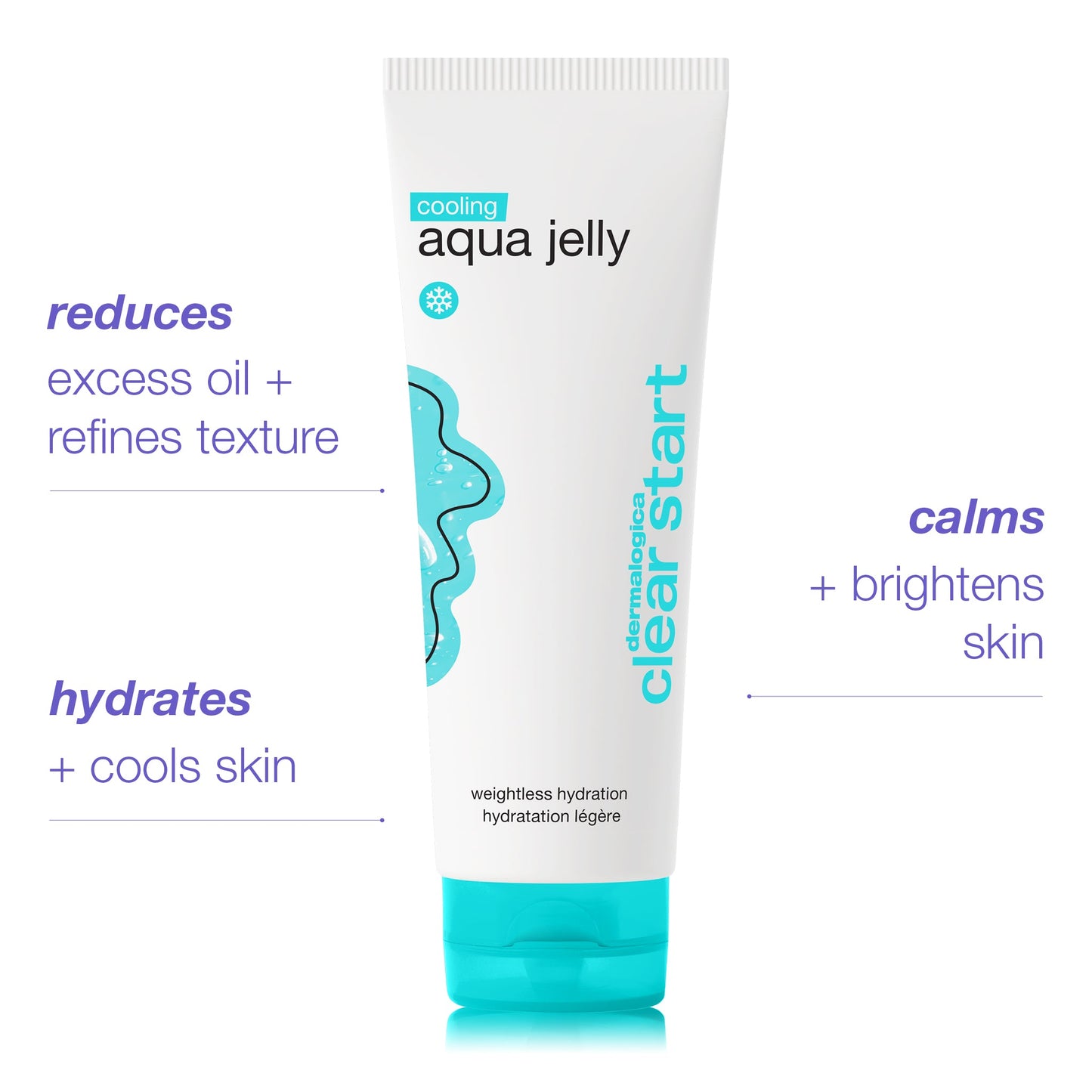
Cooling Aqua Jelly Moisturizer

Cooling Aqua Jelly Moisturizer
dermalogica
cooling-aqua-jelly-moisturizer
Moisturize
9784814502181
Morning or Evening?
How often will you use this product?
Notes


Highlights
WHAT IS IT?
Jelly-based cooling moisturizer
FEATURES
Cooling, lightweight, water-like texture, reduces excess oil, refines skin
BEST FOR
oily
CHECKS
Paraben-free, artificial colors-free, fragrances-free, gluten-free
Who Is It For?
All Skin TypesWhat Does It Help With?
Dryness Dehydration Oiliness Hydration Skin CalmingBudget
Affordable (under $30)How To Use
Which routine should it be used in?
Instructions:
Key Information


What dermalogica Says
Product Description:
A moisturizer for oily skin that gives all the dewy glow, none of the shine. This jelly-based cooling moisturizer's water-like texture leaves skin feeling fresh and lightly hydrated. Weightless formula, which contains a retinol-like bioflavonoid complex, helps reduce excess oil and refine skin.
About the Brand:
Ingredients Overview
Ingredients List
Water/Aqua/Eau, Glycerin, Sodium Hyaluronate, Carbomer, Caprylhydroxamic Acid, Sodium Hydroxide, Sorbitan Oleate Decylglucoside Crosspolymer, Citrus Limon (Lemon) Peel Extract, Citrus Aurantium Dulcis (Orange) Peel Extract, Cinnamomum Zeylanicum Leaf Oil, Vanilla Planifolia Fruit Extract, Eugenia Caryophyllus (Clove) Leaf Oil, Eugenia Caryophyllus (Clove) Flower Extract, Cinnamomum Zeylanicum Bark Oil, Propanediol, Maclura Cochinchinensis Leaf Prenylflavonoids, Vaccinium Angustifolium (Blueberry) Fruit Extract, Haslea Ostrearia Extract, Melia Azadirachta Leaf Extract, Melia Azadirachta Flower Extract, Corallina Officinalis Extract, Coccinia Indica Fruit Extract, Solanum Melongena (Eggplant) Fruit Extract, Aloe Barbadensis Flower Extract, Ocimum Sanctum Leaf Extract, Ocimum Basilicum (Basil) Flower/Leaf Extract, Curcuma Longa (Turmeric) Root Extract, Phenethyl Alcohol, Tanacetum Annuum Flower Oil, Sodium Chloride
Key Ingredients
Hyaluronic Acid, Blue Tansy Flower Oil, Blueberry Extract, retinol-like bioflavonoid complex
Ingredients Details
Caprylhydroxamic Acid
Common Name(s): Caprylhydroxamic acid,cosmetic active,functional ingredient
CAS Number: N/a
DESCRIPTION
What It Does: Delivers characteristic cosmetic function at recommended use concentration.
Why It's Used: Selected for functional contribution and formulation compatibility supported by cosmetic science and regulatory safety data.
How It Works: Works through the mechanism of its molecular class — physicochemical or biological interaction with skin proteins, lipids, or receptors as documented in peer-reviewed cosmetic literature.
Typically Found In: Skin care formulations
TECHNICAL DETAILS
Primary Category: Active ingredient – cosmetic active
Secondary Functions: Skin conditioning
Application Areas:

Facial Skincare

Body Care
Hair Care
Beard Care
Color Cosmetics (Makeup)
Dietary/Oral Supplements
Typical Concentration Range: 0.1%–10%
SOURCING & ETHICS
Vegan Status: Conditional
Halal Status: Yes
Source Notes: Commercially produced for cosmetic use. verify vegan/halal status with supplier.
SKIN COMPATIBILITY
Irritancy Rating: 1/5 – very low
Comedogenicity Rating: 0/5 – non-comedogenic
Sensitivity Concerns: Well-tolerated by most skin types.
Safe for Sensitive Skin: Yes
SAFETY & COMPATIBILITY
Safety Profile: Good safety profile at recommended concentrations. ewg score: 1–2.
Works Well With: Standard skincare actives
Avoid Combining With: No known significant incompatibilities
SCIENTIFIC NOTE
Caprylhydroxamic acid has an established safety and efficacy profile within the cosmetic regulatory framework at standard use concentrations.
Last Verified: Cosing database,caprylhydroxamic acid technical literature
Primary Sources: 2026-03-12
Carbomer
Common Name(s): Carbopol,polyacrylic acid,carboxyvinyl polymer
DESCRIPTION
What It Does: Provides transparent gel textures and thickening at very low concentrations via ph-responsive swelling.
Why It's Used: The most widely used gel thickener – provides crystal-clear, stable gels at concentrations as low as 0.1-0.5% with ph-controlled viscosity.
How It Works: Highly crosslinked polyacrylic acid remains tightly coiled at acidic ph. neutralization with naoh or triethanolamine ionizes carboxylic groups causing electrostatic repulsion that unfolds and swells the polymer coils, dramatically increasing viscosity. concentration-dependent thickening.
Typically Found In: Gels,serums,emulsions,sunscreens
TECHNICAL DETAILS
Primary Category: Functional ingredient – polyacrylic acid thickener
Secondary Functions: Skin conditioning
Application Areas:
Facial Skincare
Body Care
Hair Care
Beard Care
Color Cosmetics (Makeup)
Dietary/Oral Supplements
Typical Concentration Range: 0.1%–2%
SOURCING & ETHICS
Vegan Status: Yes – synthetic
Halal Status: Yes
Source Notes: Commercially produced for cosmetic use. verify vegan/halal status with supplier.
SKIN COMPATIBILITY
Irritancy Rating: 1/5 – very low
Comedogenicity Rating: 0/5 – non-comedogenic
Sensitivity Concerns: Well-tolerated by most skin types.
Safe for Sensitive Skin: Yes
SAFETY & COMPATIBILITY
Safety Profile: Good safety profile at recommended concentrations. ewg score: 1–2.
Works Well With: Standard skincare actives
Avoid Combining With: No known significant incompatibilities
SCIENTIFIC NOTE
Carbomer's ph-responsive swelling mechanism provides an elegant formulation control tool: a neutralized gel can be liquefied by ph reduction (adding acid) and re-thickened by reneutralization. this reversible rheology control allows two-phase products that mix on application without the need for mechanical emulsification.
Last Verified: Cosing database,cir safety assessment
Primary Sources: 2026-03-12
Cinnamomum Zeylanicum Leaf Oil
Common Name(s): Cinnamomum zeylanicum leaf oil,cinnamomum zeylanicum leaf oil,essential oil,concentrated volatile plant extract
CAS Number: N/a
DESCRIPTION
What It Does: Provides aromatic fragrance from volatile terpenoid constituents alongside bioactive skin activity — the same mono and sesquiterpene compounds providing both olfactory benefit and pharmacological activity at cosmetic use concentrations.
Why It's Used: Essential oils provide authentic aromatherapy narrative with genuine bioactive chemistry — concentrated terpenoid profiles delivering documented biological activity alongside fragrance function.
How It Works: Steam distillation concentrates volatile secondary metabolites. antimicrobial activity from terpenoid membrane disruption (phenols: thymol, carvacrol; monoterpene alcohols: terpinen-4-ol, linalool). anti-inflammatory from sesquiterpene nf-kb inhibition. antioxidant from phenylpropanoid radical donation. eu allergen monitoring required for individual components.
Typically Found In: Aromatherapy,natural fragrance,bioactive care
TECHNICAL DETAILS
Primary Category: Active ingredient – antioxidant
Secondary Functions: Free radical scavenging,anti-aging
Application Areas:
Facial Skincare
Body Care
Hair Care
Beard Care
Color Cosmetics (Makeup)
Dietary/Oral Supplements
Typical Concentration Range: 0.01%–2%
SOURCING & ETHICS
Vegan Status: Yes
Halal Status: Yes
Source Notes: Plant-derived extract or synthetic.
SKIN COMPATIBILITY
Irritancy Rating: 1/5 – very low
Comedogenicity Rating: 0/5 – non-comedogenic
Sensitivity Concerns: Non-irritating; well-tolerated.
Safe for Sensitive Skin: Yes
SAFETY & COMPATIBILITY
Safety Profile: Excellent safety profile. ewg score: 1.
Works Well With: Vitamin c,vitamin e,ferulic acid,spf,other antioxidants
Avoid Combining With: No significant incompatibilities
SCIENTIFIC NOTE
Ifra sets category-specific maximum use levels for each essential oil based on qra of sensitising terpenoid components. auto-oxidation of terpene constituents increases sensitisation risk in aged/improperly stored oils — antioxidant stabilisation and freshness dating recommended.
Last Verified: Cosing database,ifra standards,cinnamomum zeylanicum leaf oil essential oil review
Primary Sources: 2026-03-22
Citrus Aurantium Dulcis Orange Peel Extract
Common Name(s): Citrus aurantium dulcis orange peel extract extract
DESCRIPTION
What It Does: Provides antioxidant protection, soothing anti-inflammatory effects, and skin-conditioning benefits through plant-derived polyphenols and phytochemicals.
Why It's Used: Plant extracts concentrate bioactive phytochemicals evolved for environmental protection — uv, microbial, and oxidative stressors — that translate to skin benefits.
How It Works: Polyphenols (flavonoids, phenolic acids) inhibit nf-κb-mediated inflammatory signaling, scavenge reactive oxygen species through electron donation, and chelate pro-oxidant metal ions to reduce oxidative skin damage.
Typically Found In: Serums,toners,moisturizers,masks,essences
TECHNICAL DETAILS
Primary Category: Botanical extracts
Secondary Functions: Antioxidant,anti-inflammatory
Application Areas:
Facial Skincare
Body Care
Hair Care
Beard Care
Color Cosmetics (Makeup)
Dietary/Oral Supplements
Typical Concentration Range: 0.1–10%
SOURCING & ETHICS
Vegan Status: Yes
Halal Status: Yes
Source Notes: Plant-derived extract; no animal components.
SKIN COMPATIBILITY
Irritancy Rating: 1899-12-31 00:00:00 -0800
Sensitivity Concerns: Low sensitization potential at recommended use concentrations.
Safe for Sensitive Skin: Yes
SAFETY & COMPATIBILITY
Safety Profile: Well-characterized cosmetic ingredient with established safety profile. generally non-irritating at typical use concentrations. suitable for leave-on and rinse-off cosmetics.
Works Well With: Niacinamide,hyaluronic acid,vitamin c,ceramides
Avoid Combining With: Strong oxidizing agents
SCIENTIFIC NOTE
Plant secondary metabolites (flavonoids, terpenes, phenolic acids) are biosynthesized as defense compounds against uv, herbivores, and pathogens. their anti-inflammatory activity typically derives from competitive inhibition of cox-2 and 5-lox enzymes (ic50 1–50 µm), while antioxidant activity involves single electron transfer (set) and hydrogen atom transfer (hat) mechanisms with structure-dependent rate constants.
Last Verified: Cosing eu database; pcpc cosmetic ingredient safety reviews; phytochemical and ethnobotanical literature
Primary Sources: 2025-01-15
