

COSMODERM
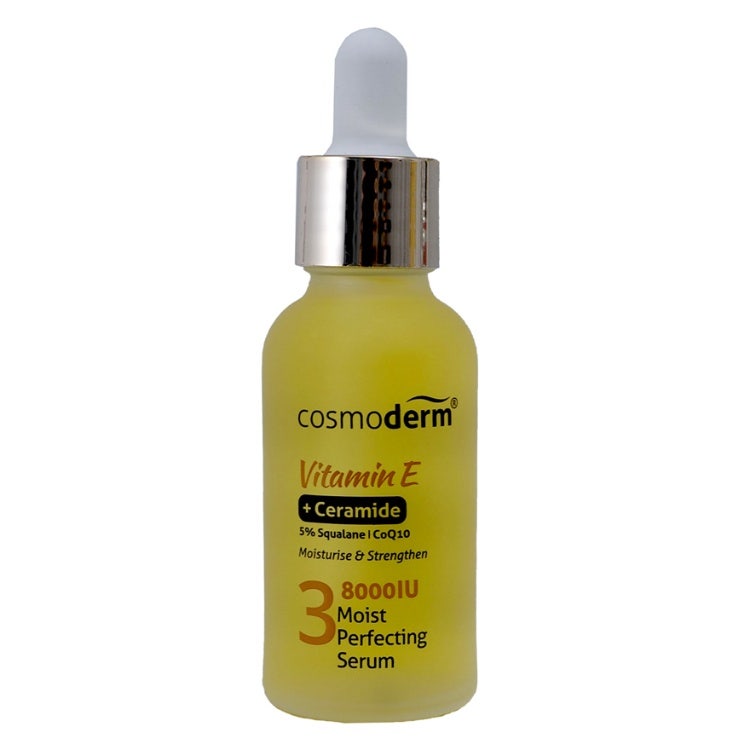
Cosmoderm Vitamin E Moist-Perfecting Serum 30Ml

Cosmoderm Vitamin E Moist-Perfecting Serum 30Ml
COSMODERM
cosmoderm-vitamin-e-moist-perfecting-serum-30ml
Serum
10084993433893
Morning or Evening?
How often will you use this product?
Notes


Highlights
WHAT IS IT?
Serum, ingredient count unavailable
FEATURES
Gentle Exfoliation, Easy to Rinse off, Maintain Skin Moisture, Improve Skin Texture and Softness, Removal of Dead Skin Cells, Refine pores, Removal of blackheads and whiteheads
BEST FOR
normal, dry, sensitive
CHECKS
Avoid use on sensitive or broken skin, discontinue use if irritation, redness, or discomfort occurs
Who Is It For?
No Specific Age Or Gender MentionedWhat Does It Help With?
Exfoliation Skin Moisture Texture Improvement Dead Skin Removal Pore Refining Blackhead And Whitehead RemovalBudget
Mid-range ($30-$75)How To Use
Which routine should it be used in?
Instructions:
Key Information


What COSMODERM Says
Product Description:
COSMODERM Vitamin E Gentle Exfoliating Gel 50ml. For normal to dry & sensitive skin. Gentle Exfoliation, Easy to Rinse off, Maintain Skin Moisture, Improve Skin Texture and Softness, Removal of Dead Skin Cells, Refine pores, Removal of blackheads and whiteheads.
About the Brand:
Ingredients Overview
Ingredients List
Caprylic/capric triglyceride, tocopheryl acetate, isononyl isononanoate, cyclopentasiloxane, ethylhexylstearate, squalene, ubidecarenone, coenzyme Q10, tocopherol, ceramide 3, PEG-7 glyceryl cocoate
Key Ingredients
Vitamin E, Ceramide
Ingredients Details
Caprylic/capric Triglyceride
Common Name(s): Mct oil,fractionated coconut oil,c8/c10 triglyceride
CAS Number: 73398-61-5
DESCRIPTION
What It Does: Lightweight, stable emollient that solubilizes oil-soluble actives for excellent delivery without greasy feel.
Why It's Used: Universal lightweight emollient base and solubilizer for oil-soluble actives in serums and low-viscosity formulations where mineral oil or petrolatum would be too heavy.
How It Works: Medium-chain length provides ideal balance of spreading coefficient, penetration rate, and barrier-sealing properties. excellent solubilizer for vitamin e, retinoids, and other lipophilic actives.
Typically Found In: Serums,facial oils,sunscreens,anti-aging products,hair products
TECHNICAL DETAILS
Primary Category: Active ingredient – medium-chain triglyceride emollient
Secondary Functions: Active solubilizer,spreading agent
Application Areas:

Facial Skincare
Body Care
Hair Care

Beard Care
Color Cosmetics (Makeup)
Dietary/Oral Supplements
Typical Concentration Range: 1%–50%
SOURCING & ETHICS
Vegan Status: Yes – from coconut/palm kernel oil
Halal Status: Yes
Source Notes: Fractionated by hydrolysis and re-esterification of coconut oil. only c8 and c10 fatty acids retained.
SKIN COMPATIBILITY
Irritancy Rating: 1/5 – very low
Comedogenicity Rating: 1/5 – very low; medium-chain length generally non-comedogenic
Sensitivity Concerns: Non-irritating.
Safe for Sensitive Skin: Yes
SAFETY & COMPATIBILITY
Safety Profile: Excellent safety profile. ewg score: 1.
Works Well With: Humectants,ceramides,actives as carrier
Avoid Combining With: No significant incompatibilities
SCIENTIFIC NOTE
Mct oil's medium-chain length (c8/c10) provides superior oxidative stability vs longer polyunsaturated chains and better skin aesthetics (lighter, less greasy) vs longer chain emollients (c16/c18). excellent solubilizer for retinoic acid, tocopheryl esters, and other lipophilic actives.
Last Verified: Cosing database,cir safety assessment,ewg skin deep
Primary Sources: 2026-03-12
Ceramide 3
Common Name(s): Ceramide 3
DESCRIPTION
What It Does: Provides antioxidant protection, soothing anti-inflammatory effects, and skin-conditioning benefits through plant-derived polyphenols and phytochemicals.
Why It's Used: Plant extracts concentrate bioactive phytochemicals evolved for environmental protection — uv, microbial, and oxidative stressors — that translate to skin benefits.
How It Works: Polyphenols (flavonoids, phenolic acids) inhibit nf-κb-mediated inflammatory signaling, scavenge reactive oxygen species through electron donation, and chelate pro-oxidant metal ions to reduce oxidative skin damage.
Typically Found In: Lipsticks,balms,creams,deodorants
TECHNICAL DETAILS
Primary Category: Waxes
Secondary Functions: Emollient,film former
Application Areas:
Facial Skincare
Body Care
Hair Care
Beard Care
Color Cosmetics (Makeup)
Dietary/Oral Supplements
Typical Concentration Range: 1–40%
SOURCING & ETHICS
Vegan Status: Yes
Halal Status: Yes
Source Notes: Plant-derived or synthetic wax; check source for vegan status.
SKIN COMPATIBILITY
Irritancy Rating: 1
Comedogenicity Rating: 1
Sensitivity Concerns: Low sensitization potential at recommended use concentrations.
Safe for Sensitive Skin: Yes
SAFETY & COMPATIBILITY
Safety Profile: Well-characterized cosmetic ingredient with established safety profile. generally non-irritating at typical use concentrations. suitable for leave-on and rinse-off cosmetics.
Works Well With: Other waxes,emollients,pigments
Avoid Combining With: Strongly alkaline conditions
SCIENTIFIC NOTE
Plant secondary metabolites (flavonoids, terpenes, phenolic acids) are biosynthesized as defense compounds against uv, herbivores, and pathogens. their anti-inflammatory activity typically derives from competitive inhibition of cox-2 and 5-lox enzymes (ic50 1–50 µm), while antioxidant activity involves single electron transfer (set) and hydrogen atom transfer (hat) mechanisms with structure-dependent rate constants.
Last Verified: Cosing eu database; pcpc cosmetic ingredient safety reviews; ingredient-specific safety and efficacy literature
Primary Sources: 2025-01-15
Coenzyme Q10
Common Name(s): Coq10,coenzyme q10,ubiquinol-10
CAS Number: 303-98-0
DESCRIPTION
What It Does: Replenishes age-declining coq10 for mitochondrial energy support and membrane antioxidant protection.
Why It's Used: The only cosmetic ingredient directly targeting mitochondrial function decline in aging – coq10 skin levels decrease significantly after age 30 and topical supplementation directly addresses this documented deficiency.
How It Works: Ubiquinone/ubiquinol cycle (oxidized/reduced forms) carries electrons in mitochondrial complexes i-iii for atp production. reduced ubiquinol quenches lipid peroxyl radicals in inner mitochondrial membrane and plasma membrane. coq10 depletion in aging skin reduces atp production capacity and membrane antioxidant defense simultaneously.
Typically Found In: Anti-aging serums,mitochondrial skincare,antioxidant products
TECHNICAL DETAILS
Primary Category: Active ingredient – antioxidant
Secondary Functions: Mitochondrial electron transport,membrane lipid antioxidant
Application Areas:
Facial Skincare
Body Care
Hair Care
Beard Care
Color Cosmetics (Makeup)
Dietary/Oral Supplements
Typical Concentration Range: 0.01%–1%
SOURCING & ETHICS
Vegan Status: Yes – from fermentation (rhizobium radiobacter) or synthetic
Halal Status: Yes
Source Notes: Ubiquinol (reduced, active form) provides better bioavailability than ubiquinone, though skin converts ubiquinone to ubiquinol enzymatically. requires oil-phase formulation for stability.
SKIN COMPATIBILITY
Irritancy Rating: 1/5 – very low
Comedogenicity Rating: 0/5 – non-comedogenic
Sensitivity Concerns: Non-irritating; well-tolerated.
Safe for Sensitive Skin: Yes
SAFETY & COMPATIBILITY
Safety Profile: Excellent safety profile. ewg score: 1.
Works Well With: Vitamin c,vitamin e,ferulic acid,spf,other antioxidants
Avoid Combining With: No significant incompatibilities
SCIENTIFIC NOTE
Coq10's role in the mitochondrial electron transport chain places it at the nexus of aging biology – mitochondrial coq10 declines approximately 50% from age 20 to 80, and this decline is mechanistically linked to reduced atp production, increased mitochondrial superoxide leak, and mtdna damage that collectively constitute the 'mitochondrial theory of aging' at the cellular level.
Last Verified: Cosing database,crane ubiquinone review,shindo et al. coq10 skin aging study
Primary Sources: 2026-03-12
Cyclopentasiloxane
Common Name(s): Cyclopentasiloxane,cyclic volatile silicone,dry-touch carrier solvent
CAS Number: N/a
DESCRIPTION
What It Does: Provides a dry, weightless application vehicle that evaporates cleanly leaving actives and non-volatile silicones deposited on skin — eliminating the residual heaviness of conventional liquid carrier solvents.
Why It's Used: Cyclosiloxanes are the unique volatile silicone solvents that dissolve non-volatile silicones (dimethicone, cyclomethicone), organic uv filters, and lipophilic actives, providing the sensory-superior dry-touch application experience in premium formulations.
How It Works: Cyclosiloxane vapour pressure (d5 cyclopentasiloxane ~0.3 mmhg at 25°c) provides clean evaporation at body temperature. the cyclic ring structure provides lower boiling point than equivalent linear dimethicone, enabling faster evaporation while the ring conformation maintains the silicone's low surface energy for smooth application.
Typically Found In: Primers,antiperspirants,sunscreens
TECHNICAL DETAILS
Primary Category: Functional ingredient – emollient
Secondary Functions: Barrier sealing,softening
Application Areas:
Facial Skincare
Body Care
Hair Care
Beard Care
Color Cosmetics (Makeup)
Dietary/Oral Supplements
Typical Concentration Range: 1%–50%
SOURCING & ETHICS
Vegan Status: Yes
Halal Status: Yes
Source Notes: Plant-derived, synthetic or animal-derived. verify source.
SKIN COMPATIBILITY
Irritancy Rating: 1/5 – very low
Comedogenicity Rating: 1/5 – low; formulation-dependent
Sensitivity Concerns: Non-irritating.
Safe for Sensitive Skin: Yes
SAFETY & COMPATIBILITY
Safety Profile: Excellent safety profile. ewg score: 1.
Works Well With: Humectants,ceramides,actives as carrier
Avoid Combining With: No significant incompatibilities
SCIENTIFIC NOTE
Cyclopentasiloxane (d5) and cyclohexasiloxane (d6) are under eu regulatory review for potential environmental persistence (pbt assessment) — formulators should monitor eu regulation 2018/35 implementation for restrictions in wash-off products.
Last Verified: Cosing database,eu cyclosiloxane regulatory review
Primary Sources: 2026-03-12
