

COSRX
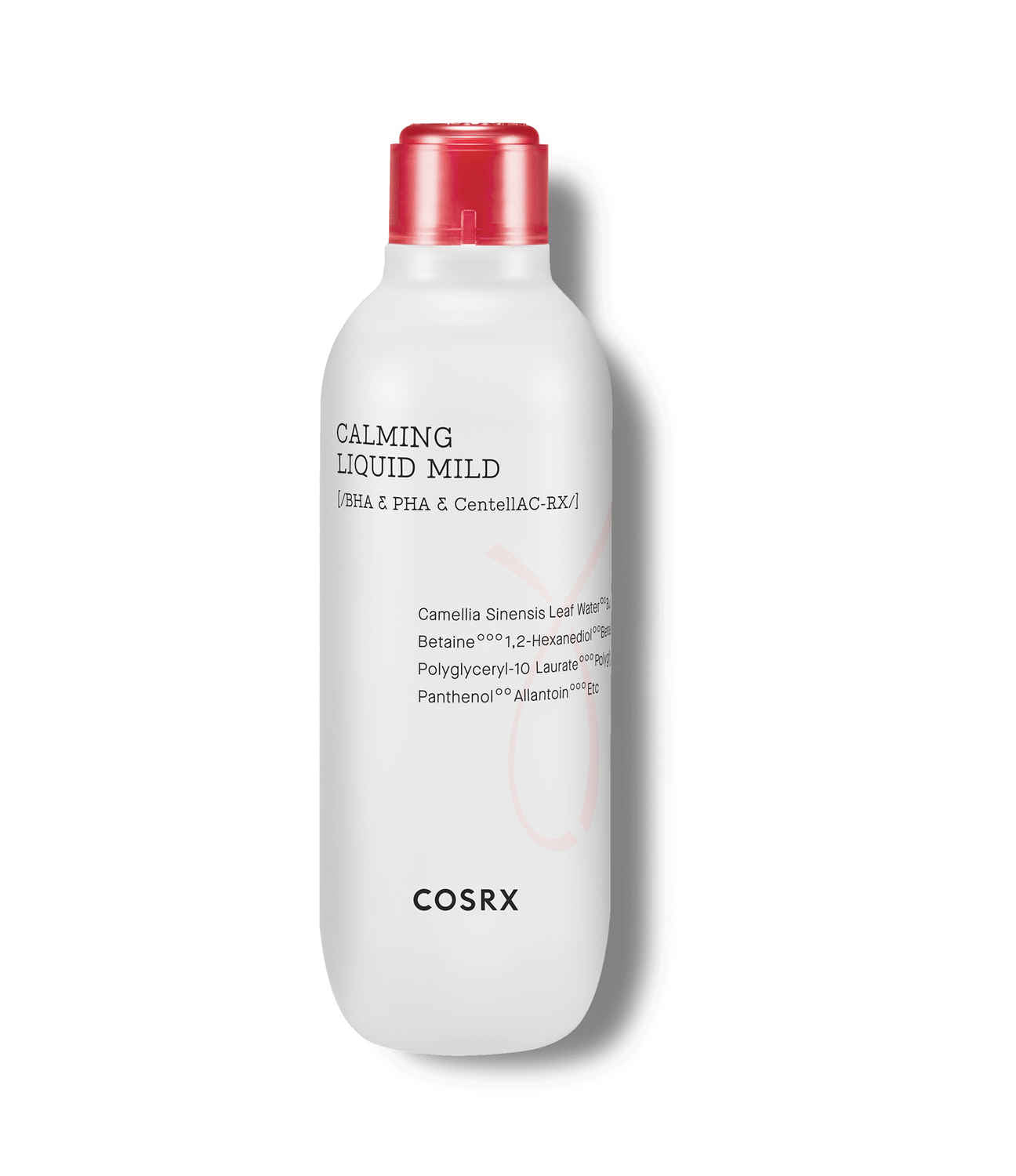
COSRX AC Collection Calming Liquid Mild (125 ml)

COSRX AC Collection Calming Liquid Mild (125 ml)
COSRX
cosrx-ac-collection-calming-liquid-mild-125-ml
Tone
10084756455717
Morning or Evening?
How often will you use this product?
Notes


Highlights
WHAT IS IT?
Toner with ingredients derived from centella asiatica and soothing agents including Green Tea, BHA and PHA
FEATURES
Refreshing, gentle, soothing daily toner, controls excess sebum, soothes irritation, prevents breakouts, alcohol-free, uses EWG green grade ingredients, non-comedogenic, free of fragrance, oil, silicone and gluten
BEST FOR
sensitive
CHECKS
No fragrance, no oil, no silicone, no gluten, alcohol-free
Who Is It For?
What Does It Help With?
Calms Acne Reduces Redness And Irritation Controls Excess Sebum Exfoliates Dead Skin Cells Maintains Oil-moisture BalanceBudget
Mid-range ($30-$75)How To Use
Which routine should it be used in?
Instructions:
Key Information


What COSRX Says
Product Description:
The COSRX AC Collection Calming Liquid Mild is a refreshing toner that helps calm acne and reduce redness or skin irritation. It is a gentle, soothing daily toner that removes excess sebum, calms irritation and prevents further breakouts. It also helps the skin maintain an optimum oil-moisture balance. Formulated with soothing Green Tea, BHA and PHA, it helps heal acne while exfoliating dead skin cells and fighting excess sebum. Made as an alcohol-free liquid with EWG green grade ingredients, the mild liquid is non-comedogenic and free of fragrance, oil, silicone, and gluten. The COSRX AC Collection is a special skin care line formulated with CentellAC-RX, three ingredients derived from centella asiatica (Asiatic Acid, Asiaticoside, Madecassic Acid), designed specially to heal acne and strengthen sensitive or acne-prone skin.
About the Brand:
Ingredients Overview
Ingredients List
Camellia Sinensis Leaf Water, Butylene Glycol, Dimethyl Sulfone, Betaine, 1,2-Hexanediol, Betaine Salicylate, Gluconolactone, Polyglyceryl-10 Laurate, Polyglyceryl-10 Myristate, Glycerin, Panthenol, Allantoin, Arginine, Sodium Hyaluronate, Melaleuca Alternifolia (Tea Tree) Leaf Oil , Asiaticoside, Asiatic Acid, Madecassic Acid
Key Ingredients
Green Tea,BHA,PHA,CentellAC-RX,Asiatic Acid,Asiaticoside,Madecassic Acid
Ingredients Details
1-2-hexanediol
Common Name(s): 1-2-hexanediol,cosmetic active,functional ingredient
CAS Number: N/a
DESCRIPTION
What It Does: Delivers characteristic cosmetic function at recommended use concentration.
Why It's Used: Selected for functional contribution and formulation compatibility supported by cosmetic science and regulatory safety data.
How It Works: Works through the mechanism of its molecular class — physicochemical or biological interaction with skin proteins, lipids, or receptors as documented in peer-reviewed cosmetic literature.
Typically Found In: Skin care formulations
TECHNICAL DETAILS
Primary Category: Active ingredient – cosmetic active
Secondary Functions: Skin conditioning
Application Areas:

Facial Skincare

Body Care
Hair Care
Beard Care
Color Cosmetics (Makeup)
Dietary/Oral Supplements
Typical Concentration Range: 0.1%–10%
SOURCING & ETHICS
Vegan Status: Conditional
Halal Status: Yes
Source Notes: Commercially produced for cosmetic use. verify vegan/halal status with supplier.
SKIN COMPATIBILITY
Irritancy Rating: 1/5 – very low
Comedogenicity Rating: 0/5 – non-comedogenic
Sensitivity Concerns: Well-tolerated by most skin types.
Safe for Sensitive Skin: Yes
SAFETY & COMPATIBILITY
Safety Profile: Good safety profile at recommended concentrations. ewg score: 1–2.
Works Well With: Standard skincare actives
Avoid Combining With: No known significant incompatibilities
SCIENTIFIC NOTE
1-2-hexanediol has an established safety and efficacy profile within the cosmetic regulatory framework at standard use concentrations.
Last Verified: Cosing database,1-2-hexanediol technical literature
Primary Sources: 2026-03-12
Allantoin
Common Name(s): 5-ureidohydantoin,glyoxyldiureide,aluminum dihydroxy allantoinate
CAS Number: 97-59-6
DESCRIPTION
What It Does: Soothes irritation, accelerates wound healing, promotes skin cell renewal, and provides mild keratolytic exfoliation.
Why It's Used: Gold standard multi-function soothing active – one of the most widely used cosmetic ingredients across all product types for its exceptional tolerability and clinically proven multi-action skin conditioning.
How It Works: Promotes keratinocyte proliferation and fibroblast migration for wound healing. mild keratolytic activity by disrupting corneocyte binding. anti-irritant via direct protein binding and anti-inflammatory cytokine reduction. humectant activity via hydroxyl groups.
Typically Found In: Post-procedure products,sensitive skin formulas,wound care,anti-acne treatments,baby products
TECHNICAL DETAILS
Primary Category: Active ingredient – soothing / anti-inflammatory
Secondary Functions: Wound healing,keratolytic,anti-irritant
Application Areas:
Facial Skincare
Body Care
Hair Care
Beard Care
Color Cosmetics (Makeup)
Dietary/Oral Supplements
Typical Concentration Range: 0.1%–2%
SOURCING & ETHICS
Vegan Status: Yes – synthetic or comfrey-derived
Halal Status: Yes
Source Notes: Plant-derived extract or synthetic.
SKIN COMPATIBILITY
Irritancy Rating: 1/5 – very low
Comedogenicity Rating: 0/5 – non-comedogenic
Sensitivity Concerns: Exceptionally well-tolerated; suitable for all skin types including baby and compromised skin.
Safe for Sensitive Skin: Yes – particularly recommended for sensitive skin
SAFETY & COMPATIBILITY
Safety Profile: Excellent safety profile. ewg score: 1.
Works Well With: Ceramides,panthenol,allantoin,hyaluronic acid,centella asiatica
Avoid Combining With: No significant incompatibilities
SCIENTIFIC NOTE
Allantoin's keratinocyte proliferation stimulation occurs via receptor-mediated signaling (possibly machr activation) rather than non-specific irritation-driven proliferation, making it a true wound-healing stimulant rather than a pro-inflammatory proliferative signal.
Last Verified: Cosing database,cir safety assessment,araújo et al. allantoin review
Primary Sources: 2026-03-12
Arginine
Common Name(s): L-arginine,2-amino-5-guanidinopentanoic acid
CAS Number: 74-79-3
DESCRIPTION
What It Does: Conditions skin, attracts moisture, supports wound healing, and improves microcirculation via no synthesis.
Why It's Used: Multi-functional amino acid for skin hydration, conditioning, and wound healing in peptide and nmf formulations.
How It Works: Guanidinium group binds water (humectant). substrate for nitric oxide synthase (enos) producing nitric oxide that vasodilates capillaries improving skin nutrition. stimulates fibroblast proliferation for wound healing.
Typically Found In: Anti-aging serums,wound healing products,nmf moisturizers,scalp treatments
TECHNICAL DETAILS
Primary Category: Active ingredient – amino acid
Secondary Functions: Wound healing,microcirculation,nmf component
Application Areas:
Facial Skincare
Body Care
Hair Care
Beard Care
Color Cosmetics (Makeup)
Dietary/Oral Supplements
Typical Concentration Range: 0.5%–5%
SOURCING & ETHICS
Vegan Status: Yes – plant-derived or synthetic
Halal Status: Yes
Source Notes: Fermentation-derived or synthetic. natural skin component.
SKIN COMPATIBILITY
Irritancy Rating: 1/5 – very low
Comedogenicity Rating: 0/5 – non-comedogenic
Sensitivity Concerns: Non-irritating; endogenous skin molecule.
Safe for Sensitive Skin: Yes
SAFETY & COMPATIBILITY
Safety Profile: Excellent safety profile. natural skin nmf component. ewg score: 1.
Works Well With: Hyaluronic acid,ceramides,peptides,other amino acids
Avoid Combining With: No significant incompatibilities
SCIENTIFIC NOTE
Arginine is a conditionally essential amino acid in wound healing where local demand exceeds synthesis capacity. topical arginine provides the nos substrate locally for no-mediated vasodilation and immune cell function in healing tissue.
Last Verified: Cosing database,cir safety assessment,witte & barbul arginine wound healing review
Primary Sources: 2026-03-12
Asiatic Acid
Common Name(s): Brahmic acid,centella active
CAS Number: 464-92-6
DESCRIPTION
What It Does: Stimulates normal wound healing collagen synthesis while preventing excessive fibrosis and hypertrophic scar formation.
Why It's Used: Unique anti-fibrotic wound healing ingredient – stimulates collagen i and iii while reducing excessive tgf-β-driven fibrosis, making it ideal for preventing hypertrophic scars.
How It Works: Stimulates col1a1/col3a1 transcription in normal fibroblasts while inhibiting tgf-β-induced myofibroblast differentiation that drives hypertrophic scar formation. also inhibits nf-kb for anti-inflammatory activity.
Typically Found In: Scar prevention products,post-procedure recovery,wound healing
TECHNICAL DETAILS
Primary Category: Active ingredient – soothing / anti-inflammatory
Secondary Functions: Anti-fibrotic,scar prevention,collagen regulation
Application Areas:
Facial Skincare
Body Care
Hair Care
Beard Care
Color Cosmetics (Makeup)
Dietary/Oral Supplements
Typical Concentration Range: 0.01%–1%
SOURCING & ETHICS
Vegan Status: Yes – from centella asiatica
Halal Status: Yes
Source Notes: Plant-derived extract or synthetic.
SKIN COMPATIBILITY
Irritancy Rating: 1/5 – very low
Comedogenicity Rating: 0/5 – non-comedogenic
Sensitivity Concerns: Non-irritating; ideal for reactive and sensitive skin.
Safe for Sensitive Skin: Yes – particularly recommended for sensitive skin
SAFETY & COMPATIBILITY
Safety Profile: Excellent safety profile. ewg score: 1.
Works Well With: Ceramides,panthenol,allantoin,hyaluronic acid,centella asiatica
Avoid Combining With: No significant incompatibilities
SCIENTIFIC NOTE
The paradox of asiatic acid is its ability to both stimulate collagen synthesis (anti-aging) and prevent fibrosis (anti-scarring) from the same compound. this selective effect occurs because asiatic acid stimulates normal fibroblast collagen synthesis while specifically inhibiting tgf-β1-driven myofibroblast transformation – the cell type responsible for excessive scar tissue.
Last Verified: Cosing database,maquart et al. asiatic acid study
Primary Sources: 2026-03-12
