

Nykaa E retail limited
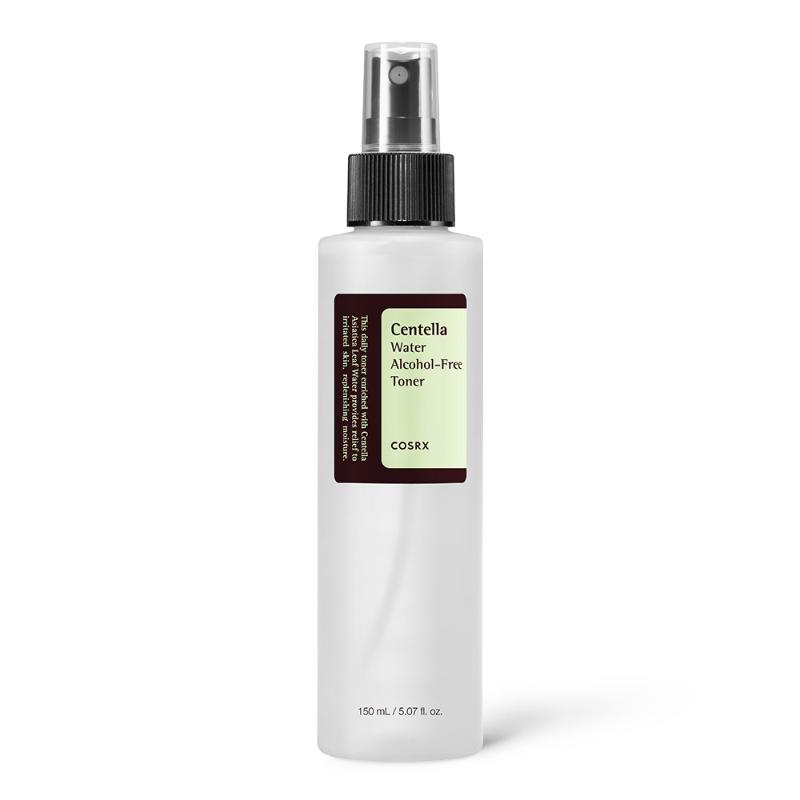
COSRX Centella Water Alcohol-Free Toner

COSRX Centella Water Alcohol-Free Toner
Nykaa E retail limited
cosrx-centella-water-alcohol-free-toner
Tone
10084723065125
Morning or Evening?
How often will you use this product?
Notes


Highlights
WHAT IS IT?
Alcohol-Free Toner with 10% Centella Asiatica Leaf Water and 84% Jeju Mineral Water, 150ml
FEATURES
Soothing and hydrating toner for irritated, dehydrated skin; Centella asiatica leaf water helps soothe irritated and calm inflamed skin; Jeju mineral water nourishes skin and provides glowing, smooth look; Watery texture hydrates without heaviness; Refreshing and cooling spray bottle; COSRX products are cruelty-free
BEST FOR
sensitive
CHECKS
Does not contain alcohol, fragrance, sulfates (SLS), mineral oil, parabens
Who Is It For?
No Explicit Age Range Given; Suitable For Sensitive Skin Types; Unisex ProductWhat Does It Help With?
Soothes Irritated And Inflamed Skin Hydrates Nourishes Reduces Appearance Of PoresBudget
Mid-range ($30-$75)How To Use
Which routine should it be used in?
Instructions:
Key Information


What Nykaa E retail limited Says
Product Description:
The COSRX Centella Water Alcohol-Free Toner helps alleviate inflammation in troubled, sensitive skin and cools the skin surface. It is formulated with 10% centella asiatica leaf water, which is a healing ingredient that helps soothe irritated skin, and 84% mineral water from Jeju Island, which provides a glowing, smooth look by hydrating and nourishing the skin. Its soothing ingredients significantly hydrate the skin, infuse skin with nourishment, and reduce the appearance of pores.
About the Brand:
Ingredients Overview
Ingredients List
Water,Centella-Asiatica-Leaf-Water,Butylene-Glycol,1,2-Hexanediol,Betaine,Panthenol,Allantoin,Ethyl-Hexanediol,Sodium-Hyaluronate
Key Ingredients
Jeju Mineral Water, Centella Asiatica Leaf Water
Ingredients Details
1-2-hexanediol
Common Name(s): 1-2-hexanediol,cosmetic active,functional ingredient
CAS Number: N/a
DESCRIPTION
What It Does: Delivers characteristic cosmetic function at recommended use concentration.
Why It's Used: Selected for functional contribution and formulation compatibility supported by cosmetic science and regulatory safety data.
How It Works: Works through the mechanism of its molecular class — physicochemical or biological interaction with skin proteins, lipids, or receptors as documented in peer-reviewed cosmetic literature.
Typically Found In: Skin care formulations
TECHNICAL DETAILS
Primary Category: Active ingredient – cosmetic active
Secondary Functions: Skin conditioning
Application Areas:

Facial Skincare

Body Care
Hair Care
Beard Care
Color Cosmetics (Makeup)
Dietary/Oral Supplements
Typical Concentration Range: 0.1%–10%
SOURCING & ETHICS
Vegan Status: Conditional
Halal Status: Yes
Source Notes: Commercially produced for cosmetic use. verify vegan/halal status with supplier.
SKIN COMPATIBILITY
Irritancy Rating: 1/5 – very low
Comedogenicity Rating: 0/5 – non-comedogenic
Sensitivity Concerns: Well-tolerated by most skin types.
Safe for Sensitive Skin: Yes
SAFETY & COMPATIBILITY
Safety Profile: Good safety profile at recommended concentrations. ewg score: 1–2.
Works Well With: Standard skincare actives
Avoid Combining With: No known significant incompatibilities
SCIENTIFIC NOTE
1-2-hexanediol has an established safety and efficacy profile within the cosmetic regulatory framework at standard use concentrations.
Last Verified: Cosing database,1-2-hexanediol technical literature
Primary Sources: 2026-03-12
Allantoin
Common Name(s): 5-ureidohydantoin,glyoxyldiureide,aluminum dihydroxy allantoinate
CAS Number: 97-59-6
DESCRIPTION
What It Does: Soothes irritation, accelerates wound healing, promotes skin cell renewal, and provides mild keratolytic exfoliation.
Why It's Used: Gold standard multi-function soothing active – one of the most widely used cosmetic ingredients across all product types for its exceptional tolerability and clinically proven multi-action skin conditioning.
How It Works: Promotes keratinocyte proliferation and fibroblast migration for wound healing. mild keratolytic activity by disrupting corneocyte binding. anti-irritant via direct protein binding and anti-inflammatory cytokine reduction. humectant activity via hydroxyl groups.
Typically Found In: Post-procedure products,sensitive skin formulas,wound care,anti-acne treatments,baby products
TECHNICAL DETAILS
Primary Category: Active ingredient – soothing / anti-inflammatory
Secondary Functions: Wound healing,keratolytic,anti-irritant
Application Areas:
Facial Skincare
Body Care
Hair Care
Beard Care
Color Cosmetics (Makeup)
Dietary/Oral Supplements
Typical Concentration Range: 0.1%–2%
SOURCING & ETHICS
Vegan Status: Yes – synthetic or comfrey-derived
Halal Status: Yes
Source Notes: Plant-derived extract or synthetic.
SKIN COMPATIBILITY
Irritancy Rating: 1/5 – very low
Comedogenicity Rating: 0/5 – non-comedogenic
Sensitivity Concerns: Exceptionally well-tolerated; suitable for all skin types including baby and compromised skin.
Safe for Sensitive Skin: Yes – particularly recommended for sensitive skin
SAFETY & COMPATIBILITY
Safety Profile: Excellent safety profile. ewg score: 1.
Works Well With: Ceramides,panthenol,allantoin,hyaluronic acid,centella asiatica
Avoid Combining With: No significant incompatibilities
SCIENTIFIC NOTE
Allantoin's keratinocyte proliferation stimulation occurs via receptor-mediated signaling (possibly machr activation) rather than non-specific irritation-driven proliferation, making it a true wound-healing stimulant rather than a pro-inflammatory proliferative signal.
Last Verified: Cosing database,cir safety assessment,araújo et al. allantoin review
Primary Sources: 2026-03-12
Betaine
Common Name(s): Trimethylglycine,tmg,natural betaine
CAS Number: 107-43-7
DESCRIPTION
What It Does: Provides osmoprotective humectant conditioning with anti-irritant and mild foam-boosting activity.
Why It's Used: Natural-origin multifunctional osmolyte from sugar beet providing hydration, anti-irritancy, and conditioning in virtually every cosmetic category.
How It Works: Quaternary ammonium betaine provides zwitterionic character for water binding via ionic hydration. osmoprotective function at 100–500mm as compatible solute protecting cells from osmotic stress. reduces surfactant irritation by competing with sls for protein binding sites. mild foam enhancement.
Typically Found In: Virtually all categories — moisturisers, shampoos, cleansers
TECHNICAL DETAILS
Primary Category: Functional ingredient – humectant
Secondary Functions: Tewl reduction,skin plumping
Application Areas:
Facial Skincare
Body Care
Hair Care
Beard Care
Color Cosmetics (Makeup)
Dietary/Oral Supplements
Typical Concentration Range: 0.5%–10%
SOURCING & ETHICS
Vegan Status: Yes – from beta vulgaris (sugar beet) molasses
Halal Status: Yes
Source Notes: Synthetic or naturally derived. excellent aqueous solubility.
SKIN COMPATIBILITY
Irritancy Rating: 1/5 – very low
Comedogenicity Rating: 0/5 – non-comedogenic
Sensitivity Concerns: Non-irritating; suitable for all skin types.
Safe for Sensitive Skin: Yes
SAFETY & COMPATIBILITY
Safety Profile: Excellent safety profile. ewg score: 1.
Works Well With: Ceramides,emollients,occlusives,glycerin,hyaluronic acid
Avoid Combining With: No significant incompatibilities
SCIENTIFIC NOTE
Betaine's anti-irritant mechanism for surfactant systems involves competitive protein protection: betaine at high concentrations preferentially interacts with skin proteins, occupying binding sites that would otherwise be occupied by surfactant molecules causing protein denaturation. this competition reduces available protein binding for irritating surfactants, explaining betaine's well-documented ability to reduce sls irritation when co-formulated.
Last Verified: Cosing database,craig betaine osmoprotective review,cir safety assessment
Primary Sources: 2026-03-12
Panthenol
Common Name(s): Provitamin b5,d-panthenol,dl-panthenol,d-pantothenyl alcohol,(r)-2,4-dihydroxy-n-(3-hydroxypropyl)-3,3-dimethylbutanamide
DESCRIPTION
What It Does: Panthenol deeply moisturizes skin and hair, soothes irritation, accelerates wound healing, strengthens the skin barrier, and improves hair elasticity and shine.
Why It's Used: It is used because it is exceptionally versatile, working in both skin and hair formulations. it is gentle enough for sensitive and post-procedure skin, and converts to the active vitamin b5 within the skin.
How It Works: Panthenol penetrates skin and hair, where it is oxidized to pantothenic acid (vitamin b5), a coenzyme a precursor essential to metabolism. in skin, it acts as a humectant and stimulates fibroblast proliferation. in hair, it coats the shaft, improving manageability.
Typically Found In: Moisturizers,serums,toners,after-sun products,wound healing products,shampoos,conditioners,hair masks,beard care
TECHNICAL DETAILS
Primary Category: Active ingredient – provitamin b5
Secondary Functions: Anti-inflammatory,wound healing,hair conditioning
Application Areas:
Facial Skincare
Body Care
Hair Care
Beard Care
Color Cosmetics (Makeup)
Dietary/Oral Supplements
Typical Concentration Range: 0.5%–5% (typical: 1–3%)
SOURCING & ETHICS
Vegan Status: Yes – synthetically produced
Halal Status: Yes
Source Notes: Commercially synthesized. both d- and dl-forms used in cosmetics; d-panthenol is the biologically active isomer but dl-panthenol is less expensive and widely used.
SKIN COMPATIBILITY
Irritancy Rating: 1/5 – very low; one of the most soothing ingredients in cosmetics
Comedogenicity Rating: 0/5 – non-comedogenic
Sensitivity Concerns: Extremely rare contact allergy; considered one of the safest cosmetic ingredients. suitable for all skin types.
Safe for Sensitive Skin: Yes – ideal for sensitive, reactive, and post-procedure skin
SAFETY & COMPATIBILITY
Safety Profile: Exceptionally safe. ewg hazard score: 1. no significant concerns for irritation, sensitization, or systemic toxicity. safe during pregnancy.
Works Well With: Hyaluronic acid,ceramides,allantoin,niacinamide,centella asiatica,retinol (reduces irritation),glycerin
Avoid Combining With: No known significant incompatibilities
SCIENTIFIC NOTE
Panthenol has demonstrated wound-healing properties in clinical studies, stimulating fibroblast proliferation and migration. its dual humectant and anti-inflammatory action makes it particularly effective in barrier-repair formulations.
Last Verified: Cosing database,cir safety assessment,ebner et al. (2002) skin pharmacology and applied skin physiology
Primary Sources: 2026-03-12
