

Nykaa E retail limited
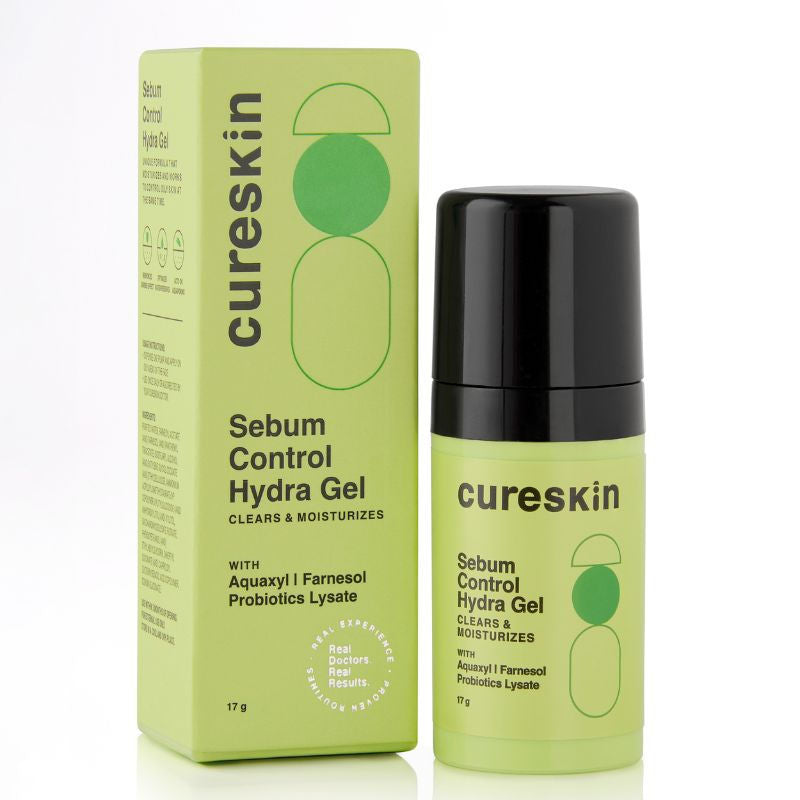
Cureskin Sebum Control Hydra Gel - Hydration & Shine Control

Cureskin Sebum Control Hydra Gel - Hydration & Shine Control
Nykaa E retail limited
cureskin-sebum-control-hydra-gel-hydration-shine-control
Moisturize
10084874977573
Morning or Evening?
How often will you use this product?
Notes


Highlights
WHAT IS IT?
Hydra Gel with 13 ingredients
FEATURES
Hydrating gel that improves moisture retention, Infused with aquaxyl, farnesol, and probiotics lysate, Sebum regulation for balanced oil control, Supports a healthy skin barrier with probiotics, Minimizes shine and reduces breakouts, Lightweight, non-greasy formula perfect for oily and combination skin, Free from parabens and sulphates, Cruelty-free
BEST FOR
combination
CHECKS
Parabens,Sulphates
Who Is It For?
What Does It Help With?
Sebum Control Shine Reduction Breakout Reduction Hydration Healthy Skin BarrierBudget
Affordable (under $30)How To Use
Which routine should it be used in?
Instructions:
Key Information


What Nykaa E retail limited Says
Product Description:
Cureskin Sebum Control Hydra Gel is the ultimate solution for oily and combination skin, delivering lasting hydration without the grease. This lightweight, oil-free formula features aquaxyl for deep hydration and enhanced moisture retention, farnesol to regulate sebum production and control oil, and probiotics lysate to balance the skin’s microbiome for a healthier barrier. It effectively minimizes shine and breakouts, making it the perfect companion for smooth, radiant, and oil-free skin.
About the Brand:
Ingredients Overview
Ingredients List
Water,Farnesol,Farnesyl-Acetate,Panthenyl-Triacetate,Propylene-Glycol-Monolaurate,Ethylcellulose,Propylene-Glycol-Isostearate,Ammonium-Acryloyldimethyltaurate/VP-Copolymer,Xylitylglucoside,Anhydroxylitol,Xylitol,Saccharomyces-Lysate-Filtrate,Diheptyl-Succinate,Capryloyl-Glycerin/Sebacic-Acid-Copolymer,Phenoxyethanol,Ethylhexylglycerin,Sodium-Gluconate
Key Ingredients
Farnesol,Xylitylglucoside,Anhydroxylitol,Xylitol,Saccharomyces Lysate Filtrate
Ingredients Details
Anhydroxylitol
Common Name(s): Anhydroxylitol,cosmetic active,functional ingredient
CAS Number: N/a
DESCRIPTION
What It Does: Delivers characteristic cosmetic function at recommended use concentration.
Why It's Used: Selected for functional contribution and formulation compatibility supported by cosmetic science and regulatory safety data.
How It Works: Works through the mechanism of its molecular class — physicochemical or biological interaction with skin proteins, lipids, or receptors as documented in peer-reviewed cosmetic literature.
Typically Found In: Skin care formulations
TECHNICAL DETAILS
Primary Category: Active ingredient – cosmetic active
Secondary Functions: Skin conditioning
Application Areas:

Facial Skincare

Body Care
Hair Care
Beard Care
Color Cosmetics (Makeup)
Dietary/Oral Supplements
Typical Concentration Range: 0.1%–10%
SOURCING & ETHICS
Vegan Status: Conditional
Halal Status: Yes
Source Notes: Commercially produced for cosmetic use. verify vegan/halal status with supplier.
SKIN COMPATIBILITY
Irritancy Rating: 1/5 – very low
Comedogenicity Rating: 0/5 – non-comedogenic
Sensitivity Concerns: Well-tolerated by most skin types.
Safe for Sensitive Skin: Yes
SAFETY & COMPATIBILITY
Safety Profile: Good safety profile at recommended concentrations. ewg score: 1–2.
Works Well With: Standard skincare actives
Avoid Combining With: No known significant incompatibilities
SCIENTIFIC NOTE
Anhydroxylitol has an established safety and efficacy profile within the cosmetic regulatory framework at standard use concentrations.
Last Verified: Cosing database,anhydroxylitol technical literature
Primary Sources: 2026-03-12
Ethylcellulose
Common Name(s): Ec,ethocel,cellulose ethyl ether
CAS Number: 9004-57-3
DESCRIPTION
What It Does: Provides water-resistant cellulose film for sustained film formation and active encapsulation.
Why It's Used: Water-resistant cellulose film former for long-lasting topical products and active ingredient microencapsulation.
How It Works: Ethyl substitution makes cellulose hydrophobic. dissolves in organic solvents for application, depositing water-resistant film on evaporation. thermoplastic character enables heat processing. used in controlled-release applications for gradual active delivery.
Typically Found In: Long-lasting products,active encapsulation,film-coating applications
TECHNICAL DETAILS
Primary Category: Functional ingredient – cellulose film former
Secondary Functions: Skin conditioning
Application Areas:
Facial Skincare
Body Care
Hair Care
Beard Care
Color Cosmetics (Makeup)
Dietary/Oral Supplements
Typical Concentration Range: 0.1%–10%
SOURCING & ETHICS
Vegan Status: Yes – from cellulose (plant)
Halal Status: Yes
Source Notes: Commercially produced for cosmetic use. verify vegan/halal status with supplier.
SKIN COMPATIBILITY
Irritancy Rating: 1/5 – very low
Comedogenicity Rating: 0/5 – non-comedogenic
Sensitivity Concerns: Well-tolerated by most skin types.
Safe for Sensitive Skin: Yes
SAFETY & COMPATIBILITY
Safety Profile: Good safety profile at recommended concentrations. ewg score: 1–2.
Works Well With: Standard skincare actives
Avoid Combining With: No known significant incompatibilities
SCIENTIFIC NOTE
Ethylcellulose's hydrophobic character (ethyl groups replacing hydroxyl groups) is in complete contrast to its parent cellulose (highly water-soluble hec or cmc). this inversion from hydrophilic to hydrophobic demonstrates that cellulose ether chemistry can produce nearly any desired polarity by choosing the substituting group – providing a family of cellulose derivatives spanning from highly hydrophilic (cmc) to highly hydrophobic (ethylcellulose).
Last Verified: Cosing database,dow ethocel technical data,cir safety assessment
Primary Sources: 2026-03-12
Ethylhexylglycerin
Common Name(s): Octylglycerin,2-ethylhexyl glycerol ether,sensiva sc 10
CAS Number: 70445-33-9
DESCRIPTION
What It Does: Provides antimicrobial skin conditioning with deodorant activity and preservation system enhancement.
Why It's Used: Multifunctional clean beauty preservation active — ethylhexylglycerin provides antimicrobial, deodorant, and skin conditioning in a single ingredient accepted in most natural cosmetic certification schemes.
How It Works: Glycerol ether provides antimicrobial via bacterial membrane phospholipid disruption. deodorant activity via reduction of underarm lipase enzyme activity (similar mechanism to triethyl citrate). skin conditioning from glycerol humectant component. synergistic with phenoxyethanol and diols.
Typically Found In: Natural preservation systems,deodorants,skin conditioning products
TECHNICAL DETAILS
Primary Category: Functional ingredient – antimicrobial glycerol ether
Secondary Functions: Skin conditioning
Application Areas:
Facial Skincare
Body Care
Hair Care
Beard Care
Color Cosmetics (Makeup)
Dietary/Oral Supplements
Typical Concentration Range: 0.1%–0.5%
SOURCING & ETHICS
Vegan Status: Yes – synthetic
Halal Status: Yes
Source Notes: Commercially produced for cosmetic use. verify vegan/halal status with supplier.
SKIN COMPATIBILITY
Irritancy Rating: 1/5 – very low
Comedogenicity Rating: 0/5 – non-comedogenic
Sensitivity Concerns: Well-tolerated by most skin types.
Safe for Sensitive Skin: Yes
SAFETY & COMPATIBILITY
Safety Profile: Good safety profile at recommended concentrations. ewg score: 1–2.
Works Well With: Standard skincare actives
Avoid Combining With: No known significant incompatibilities
SCIENTIFIC NOTE
Ethylhexylglycerin's deodorant mechanism is pharmacologically identical to triethyl citrate: both inhibit skin surface microbial lipase enzymes that convert odourless triglycerides to odorous free fatty acids. the glycerol ether structure of ethylhexylglycerin, combined with the 2-ethylhexyl chain, provides lipase inhibition similar to ester-based lipase inhibitors from a different chemical class.
Last Verified: Cosing database,schülke sensiva sc 10 technical data,cir safety assessment
Primary Sources: 2026-03-12
Farnesol
Common Name(s): Fragrance ingredient,eu allergen or aromatic component,olfactory/flavour
CAS Number: N/a
DESCRIPTION
What It Does: Provides specific aromatic character and olfactory experience contributing to product sensory experience and consumer appeal.
Why It's Used: Fragrance components are the primary cause of cosmetic contact sensitisation — eu requires individual label declaration of 26 identified fragrance allergens above threshold concentrations.
How It Works: Terpenoid and phenylpropanoid aromatic chemicals interact with olfactory receptor neurons (orns) in the nasal epithelium — small volatile molecules (logp 2–5, mw 100–300) bind g-protein coupled olfactory receptors triggering neurological scent perception. sensitisation risk from electrophilic reactivity of certain functional groups (aldehydes, α,β-unsaturated carbonyls) with skin proteins.
Typically Found In: All fragrance products
TECHNICAL DETAILS
Primary Category: Active ingredient – cosmetic active
Secondary Functions: Skin conditioning
Application Areas:
Facial Skincare
Body Care
Hair Care
Beard Care
Color Cosmetics (Makeup)
Dietary/Oral Supplements
Typical Concentration Range: Declare on label above threshold (eu)
SOURCING & ETHICS
Vegan Status: Conditional
Halal Status: Yes
Source Notes: Commercially produced for cosmetic use. verify vegan/halal status with supplier.
SKIN COMPATIBILITY
Irritancy Rating: 1/5 – very low
Comedogenicity Rating: 0/5 – non-comedogenic
Sensitivity Concerns: Well-tolerated by most skin types.
Safe for Sensitive Skin: Yes
SAFETY & COMPATIBILITY
Safety Profile: Good safety profile at recommended concentrations. ewg score: 1–2.
Works Well With: Standard skincare actives
Avoid Combining With: No known significant incompatibilities
SCIENTIFIC NOTE
Eu 1223/2009 annex iii allergen threshold: >0.001% in rinse-off, >0.0001% in leave-on — any listed allergen exceeding these levels requires individual inci label declaration separate from the generic fragrance/parfum declaration.
Last Verified: Eu regulation 1223/2009 annex iii,fragrance allergen declaration requirements
Primary Sources: 2026-03-12
