
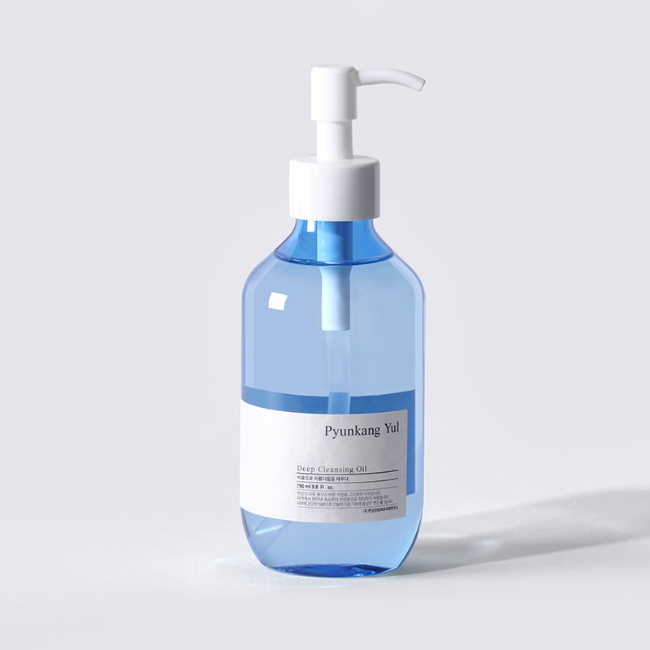

Pyunkang Yul
Deep Cleansing Oil 290ml

Deep Cleansing Oil 290ml
Pyunkang Yul
deep-cleansing-oil-290ml
Cleanse
9706814341413
Morning or Evening?
How often will you use this product?
Notes


Highlights
WHAT IS IT?
Cleansing oil with natural ingredients
FEATURES
Effectively removes makeup and impurities, maintains skin's moisture balance, soothes and calms skin, preserves moisture barrier
BEST FOR
Sensitive skin
CHECKS
Free of parabens, artificial fragrances, colorants
Who Is It For?
Adults (18+) Both Women And MenWhat Does It Help With?
Makeup Removal Cleansing Maintaining Skin HydrationBudget
Mid-rangeHow To Use
Which routine should it be used in?
Instructions:
Key Information

What Pyunkang Yul Says
Product Description:
The Pyunkang Yul Deep Cleansing Oil effectively removes makeup, dirt, and impurities with natural oils like Jojoba and Avocado, while maintaining the skin's moisture balance. Its gentle formula, enriched with Soapwort and Centella Asiatica Extracts, soothes and calms the skin, making it ideal for sensitive skin. Additionally, the inclusion of Panthenol and Hyaluronic Acid helps preserve the skin's moisture barrier, ensuring the skin remains hydrated and soft even after cleansing.
About the Brand:
Ingredients Overview
Ingredients List
Ethylhexyl Stearate, Isopropyl Myristate, Sorbeth-30 Tetraoleate, Water, Diisostearyl Malate, Tocopherol, Simmondsia Chinensis (Jojoba) Seed Oil, Helianthus Annuus (Sunflower) Seed Oil, Macadamia Ternifolia Seed Oil, Prunus Amygdalus Dulcis (Sweet Almond) Oil, Persea Gratissima (Avocado) Oil, Olea Europaea (Olive) Fruit Oil, Allantoin, Panthenol, Coptis Japonica Root Extract, Centella Asiatica Extract, Portulaca Oleracea Extract, Camellia Sinensis Leaf Extract, Saponaria Officinalis Leaf Extract, Melaleuca Alternifolia (Tea Tree) Leaf Extract, Sodium Hyaluronate, Butylene Glycol, 1,2-Hexanediol, Pentylene Glycol, Caprylyl Glycol, Glycerin
Key Ingredients
Jojoba Oil, Avocado Oil, Soapwort Extract, Centella Asiatica Extract, Panthenol, Hyaluronic Acid
Ingredients Details
Diisostearyl Malate
Common Name(s): Diisostearyl malate,cosmetic active,functional ingredient
CAS Number: N/a
DESCRIPTION
What It Does: Delivers characteristic cosmetic function at recommended use concentration.
Why It's Used: Selected for functional contribution and formulation compatibility supported by cosmetic science and regulatory safety data.
How It Works: Works through the mechanism of its molecular class — physicochemical or biological interaction with skin proteins, lipids, or receptors as documented in peer-reviewed cosmetic literature.
Typically Found In: Skin care formulations
TECHNICAL DETAILS
Primary Category: Active ingredient – cosmetic active
Secondary Functions: Skin conditioning
Application Areas:

Facial Skincare

Body Care
Hair Care
Beard Care
Color Cosmetics (Makeup)
Dietary/Oral Supplements
Typical Concentration Range: 0.1%–10%
SOURCING & ETHICS
Vegan Status: Conditional - supplier confirmation required
Halal Status: Unverified - supplier confirmation required
Source Notes: Commercially produced for cosmetic use. verify vegan/halal status with supplier. [audit 2026-07-29 rev2: the record's own source_notes does not assert a non-animal origin, or instructs the reader to verify with the supplier; "yes" asserts knowledge the record does not hold. determination requires shariah-panel sign-off.]
SKIN COMPATIBILITY
Irritancy Rating: 1/5 – very low
Comedogenicity Rating: 0/5 – non-comedogenic
Sensitivity Concerns: Well-tolerated by most skin types.
Safe for Sensitive Skin: Yes
SAFETY & COMPATIBILITY
Safety Profile: Good safety profile at recommended concentrations. ewg score: 1–2.
Works Well With: Standard skincare actives
Avoid Combining With: No known significant incompatibilities
SCIENTIFIC NOTE
Diisostearyl malate has an established safety and efficacy profile within the cosmetic regulatory framework at standard use concentrations.
Last Verified: 2026-03-12
Primary Sources: Cosing database,diisostearyl malate technical literature
Ethylhexyl Stearate
Common Name(s): Ethylhexyl stearate,cosmetic active,functional ingredient
CAS Number: N/a
DESCRIPTION
What It Does: Delivers characteristic cosmetic function at recommended use concentration.
Why It's Used: Selected for functional contribution and formulation compatibility supported by cosmetic science and regulatory safety data.
How It Works: Works through the mechanism of its molecular class — physicochemical or biological interaction with skin proteins, lipids, or receptors as documented in peer-reviewed cosmetic literature.
Typically Found In: Skin care formulations
TECHNICAL DETAILS
Primary Category: Active ingredient – cosmetic active
Secondary Functions: Skin conditioning
Application Areas:
Facial Skincare
Body Care
Hair Care
Beard Care
Color Cosmetics (Makeup)
Dietary/Oral Supplements
Typical Concentration Range: 0.1%–10%
SOURCING & ETHICS
Vegan Status: Conditional - feedstock declaration required
Halal Status: Unverified - feedstock declaration required (plant, animal and petrochemical routes all exist)
Source Notes: Commercially produced for cosmetic use. verify vegan/halal status with supplier. [audit 2026-07-29 rev2: origin-dependent: the same inci exists in plant, animal and petrochemical versions and the name does not discriminate. determination requires shariah-panel sign-off.]
SKIN COMPATIBILITY
Irritancy Rating: 1/5 – very low
Comedogenicity Rating: 0/5 – non-comedogenic
Sensitivity Concerns: Well-tolerated by most skin types.
Safe for Sensitive Skin: Yes
SAFETY & COMPATIBILITY
Safety Profile: Good safety profile at recommended concentrations. ewg score: 1–2.
Works Well With: Standard skincare actives
Avoid Combining With: No known significant incompatibilities
SCIENTIFIC NOTE
Ethylhexyl stearate has an established safety and efficacy profile within the cosmetic regulatory framework at standard use concentrations.
Last Verified: 2026-03-12
Primary Sources: Cosing database,ethylhexyl stearate technical literature
Helianthus Annuus (sunflower) Seed Oil
Common Name(s): Helianthus annuus (sunflower) seed oil,botanical oil,phytochemical active
CAS Number: N/a
DESCRIPTION
What It Does: Provides antioxidant protection from reactive oxygen species, reduces inflammatory cytokine production in skin, and conditions skin through the plant's phytochemical complex.
Why It's Used: Natural origin narrative, traditional use heritage, and multi-functional phytochemical profile supporting concurrent skin care claims from one ingredient.
How It Works: Polyphenols, terpenoids, and alkaloids scavenge ros via h• donation, inhibit nf-kb or cox-2 inflammatory pathways, and interact with skin surface proteins for conditioning.
Typically Found In: Botanical skin care,natural products
TECHNICAL DETAILS
Primary Category: Active ingredient – antioxidant
Secondary Functions: Free radical scavenging,anti-aging
Application Areas:
Facial Skincare
Body Care
Hair Care
Beard Care
Color Cosmetics (Makeup)
Dietary/Oral Supplements
Typical Concentration Range: 0.1%–10%
SOURCING & ETHICS
Vegan Status: Conditional - supplier confirmation required
Halal Status: Yes
Source Notes: Plant-derived extract or synthetic. [audit 2026-07-29 rev2: status downgraded on audit. determination requires shariah-panel sign-off.]
SKIN COMPATIBILITY
Irritancy Rating: 1/5 – very low
Comedogenicity Rating: 0/5 – non-comedogenic
Sensitivity Concerns: Non-irritating; well-tolerated.
Safe for Sensitive Skin: Yes
SAFETY & COMPATIBILITY
Safety Profile: Excellent safety profile. ewg score: 1.
Works Well With: Vitamin c,vitamin e,ferulic acid,spf,other antioxidants
Avoid Combining With: No significant incompatibilities
SCIENTIFIC NOTE
Plant secondary metabolites evolved as photoprotectants and antimicrobials — mechanisms directly applicable to cosmetic antioxidant and anti-inflammatory activity in human skin.
Last Verified: 2026-03-12
Primary Sources: Cosing database,helianthus annuus (sunflower) seed botanical review
Isopropyl Myristate
Common Name(s): Ipm,isopropyl tetradecanoate
CAS Number: 110-27-0
DESCRIPTION
What It Does: Provides dry, non-greasy emolliency with spreading and penetration enhancement from an ester vehicle.
Why It's Used: Standard ester emollient for dry-touch formulations requiring spreading enhancement and non-greasy after-feel.
How It Works: Isopropyl ester of myristic acid provides low viscosity (4-5 cp) and low surface tension for excellent spreading. penetration enhancement via temporary stratum corneum lipid disruption. dry skin feel from rapid absorption without occlusive film.
Typically Found In: Dry-touch lotions,penetration-enhanced products,light skin care
TECHNICAL DETAILS
Primary Category: Functional ingredient – ester emollient
Secondary Functions: Barrier sealing,softening
Application Areas:
Facial Skincare
Body Care
Hair Care
Beard Care
Color Cosmetics (Makeup)
Dietary/Oral Supplements
Typical Concentration Range: 1%–10%
SOURCING & ETHICS
Vegan Status: Conditional - feedstock declaration required
Halal Status: Unverified - feedstock declaration required (plant, animal and petrochemical routes all exist)
Source Notes: Plant-derived, synthetic or animal-derived. verify source. [audit 2026-07-29 rev2: origin-dependent: the same inci exists in plant, animal and petrochemical versions and the name does not discriminate. determination requires shariah-panel sign-off.]
SKIN COMPATIBILITY
Irritancy Rating: 1/5 – very low
Comedogenicity Rating: 3/5 – moderate comedogenic potential
Sensitivity Concerns: Non-irritating.
Safe for Sensitive Skin: Yes
SAFETY & COMPATIBILITY
Safety Profile: Excellent safety profile. ewg score: 1.
Works Well With: Humectants,ceramides,actives as carrier
Avoid Combining With: No significant incompatibilities
SCIENTIFIC NOTE
Ipm's dry-touch emolliency arises from rapid penetration into the stratum corneum leaving no surface film – unlike occlusive oils that remain on the surface, ipm is quickly absorbed, providing conditioning from within the barrier without leaving greasy residue. this 'self-disappearing' emolliency made ipm revolutionary when introduced in cosmetics in the 1950s.
Last Verified: 2026-03-12
Primary Sources: Cosing database,cir safety assessment