
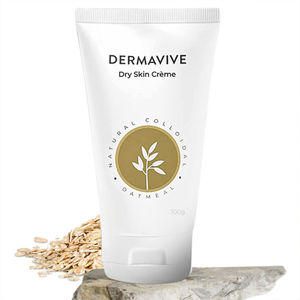

Dermavive
Dermavive Dry Skin Creme (100 gm)

Dermavive Dry Skin Creme (100 gm)
Dermavive
dermavive-dry-skin-creme-100-gm
Moisturize
10085487411493
Morning or Evening?
How often will you use this product?
Notes


Highlights
WHAT IS IT?
Dry Skin Creme, 4 ingredients mentioned
FEATURES
pH balanced, moisturising properties of Colloidal Oatmeal, Sodium PCA and Vitamin E, deep penetrating absorption qualities of Jojoba oil, unclogs pores, protects skin, reduces wrinkles
BEST FOR
dry
CHECKS
Who Is It For?
What Does It Help With?
Moisturizing Dry Skin Unclogging Pores Protecting Skin Wrinkle ReductionBudget
Premium ($76-$150)How To Use
Which routine should it be used in?
Instructions:
Key Information

What Dermavive Says
Product Description:
A unique preparation being pH balanced and combining the moisturising properties of Colloidal Oatmeal Sodium PCA and Vitamin E along with the deep penetrating absorption qualities of Jojoba oil to unclog pores. Colloidal Oatmeal also forms an adherent barrier to protect the skin from harmful substances as well as reduces wrinkles
About the Brand:
Ingredients Overview
Ingredients List
colloidal-oatmeal,sodium-pca,vitamin-e,jojoba-oil
Key Ingredients
Colloidal Oatmeal, Sodium PCA, Vitamin E, Jojoba oil
Ingredients Details
Colloidal Oatmeal
Common Name(s): Colloidal oatmeal,cosmetic active,established function
CAS Number: N/a
DESCRIPTION
What It Does: Delivers characteristic cosmetic function — skin conditioning, antioxidant protection, active biological benefit, or formulation function — at recommended use concentration.
Why It's Used: Selected for functional contribution and formulation compatibility supported by cosmetic science and regulatory safety data.
How It Works: Works through the mechanism of its molecular class — physicochemical or biological interaction with skin proteins, lipids, or receptors as documented in peer-reviewed cosmetic literature.
Typically Found In: Skin care formulations
TECHNICAL DETAILS
Primary Category: Active ingredient – cosmetic active
Secondary Functions: Skin conditioning
Application Areas:

Facial Skincare

Body Care
Hair Care
Beard Care
Color Cosmetics (Makeup)
Dietary/Oral Supplements
Typical Concentration Range: 0.1%–10%
SOURCING & ETHICS
Vegan Status: Conditional
Halal Status: Yes
Source Notes: Commercially produced for cosmetic use. verify vegan/halal status with supplier.
SKIN COMPATIBILITY
Irritancy Rating: 1/5 – very low
Comedogenicity Rating: 0/5 – non-comedogenic
Sensitivity Concerns: Well-tolerated by most skin types.
Safe for Sensitive Skin: Yes
SAFETY & COMPATIBILITY
Safety Profile: Good safety profile at recommended concentrations. ewg score: 1–2.
Works Well With: Standard skincare actives
Avoid Combining With: No known significant incompatibilities
SCIENTIFIC NOTE
Colloidal oatmeal has an established safety and efficacy profile within the cosmetic regulatory framework at standard use concentrations.
Last Verified: Cosing database,colloidal oatmeal technical literature
Primary Sources: 2026-03-12
Jojoba Oil
Common Name(s): Jojoba oil,jojoba seed oil
CAS Number: 61789-91-1
DESCRIPTION
What It Does: Provides sebum-identical emolliency with outstanding oxidative stability and non-comedogenic profile.
Why It's Used: The most sebum-compatible plant oil – its wax ester composition mimics human sebum for superior skin compatibility across all skin types including oily and acne-prone.
How It Works: Liquid wax ester composition (primarily c20:1 and c22:1 wax esters) provides exceptional molecular mimicry of human sebum wax esters. regulates sebum production via negative feedback to sebaceous glands. remarkable oxidative stability from fully unsaturated wax ester structure vs polyunsaturated triglycerides.
Typically Found In: Facial oils,hair oils,serums,body care,lip care,virtually all product categories
TECHNICAL DETAILS
Primary Category: Functional ingredient – emollient
Secondary Functions: Sebum balancing,oxidative stability,non-comedogenic
Application Areas:
Facial Skincare
Body Care
Hair Care
Beard Care
Color Cosmetics (Makeup)
Dietary/Oral Supplements
Typical Concentration Range: 1%–100%
SOURCING & ETHICS
Vegan Status: Yes – from simmondsia chinensis (jojoba) seeds
Halal Status: Yes
Source Notes: Cold-pressed from jojoba seeds. among the most oxidation-stable plant oils (shelf life 5+ years). desert-grown, drought-resistant crop.
SKIN COMPATIBILITY
Irritancy Rating: 1/5 – very low
Comedogenicity Rating: 0/5 – non-comedogenic; sebum-identical composition
Sensitivity Concerns: Non-irritating.
Safe for Sensitive Skin: Yes
SAFETY & COMPATIBILITY
Safety Profile: Excellent safety profile. ewg score: 1.
Works Well With: Humectants,ceramides,actives as carrier
Avoid Combining With: No significant incompatibilities
SCIENTIFIC NOTE
Jojoba oil's wax ester composition is uniquely different from all other plant oils (which are triglycerides). human sebum contains approximately 25% wax esters – the proportion matched by jojoba. this structural identity explains jojoba's superior skin and hair compatibility versus conventional triglyceride oils.
Last Verified: Cosing database,gad et al. jojoba review,cir safety assessment
Primary Sources: 2026-03-12
Sodium Pca
Common Name(s): Sodium pyroglutamate,sodium 5-oxoproline,pca sodium salt
CAS Number: 28874-51-3
DESCRIPTION
What It Does: Provides the most effective natural nmf humectant as the largest component of the skin's natural moisturising factor.
Why It's Used: The primary nmf humectant — sodium pca is the dominant single component of natural moisturising factor, providing the most effective humectant hydration of any nmf component.
How It Works: Pyrrolidone carboxylic acid (pca) forms from glutamine at the skin surface by enzymatic cyclisation during cornification. sodium salt provides strong hygroscopic water binding from both ionic and pyrrolidone ring interactions. 12% of total nmf by dry weight. declines with age and in dry skin conditions.
Typically Found In: Premium moisturisers,nmf-based products,anti-aging hydration
TECHNICAL DETAILS
Primary Category: Functional ingredient – humectant
Secondary Functions: Tewl reduction,skin plumping
Application Areas:
Facial Skincare
Body Care
Hair Care
Beard Care
Color Cosmetics (Makeup)
Dietary/Oral Supplements
Typical Concentration Range: 0.5%–5%
SOURCING & ETHICS
Vegan Status: Yes – synthetic or from glutamine fermentation
Halal Status: Yes
Source Notes: Synthetic or naturally derived. excellent aqueous solubility.
SKIN COMPATIBILITY
Irritancy Rating: 1/5 – very low
Comedogenicity Rating: 0/5 – non-comedogenic
Sensitivity Concerns: Non-irritating; suitable for all skin types.
Safe for Sensitive Skin: Yes
SAFETY & COMPATIBILITY
Safety Profile: Excellent safety profile. ewg score: 1.
Works Well With: Ceramides,emollients,occlusives,glycerin,hyaluronic acid
Avoid Combining With: No significant incompatibilities
SCIENTIFIC NOTE
Sodium pca's dominance in nmf (12% by dry weight vs next largest ha contribution of ~0.1%) makes it quantitatively the most important single nmf humectant. its decline in aged and dry skin (measurable by stratum corneum tape-strip amino acid analysis) provides both a biomarker of skin hydration state and a therapeutic target — replenishing what declining nmf production fails to provide.
Last Verified: Cosing database,rawlings & matts nmf review,cir safety assessment
Primary Sources: 2026-03-12
Vitamin E
Common Name(s): Vitamin e,cosmetic active,functional ingredient
CAS Number: N/a
DESCRIPTION
What It Does: Delivers characteristic cosmetic function at recommended use concentration.
Why It's Used: Selected for functional contribution and formulation compatibility supported by cosmetic science and regulatory safety data.
How It Works: Works through the mechanism of its molecular class — physicochemical or biological interaction with skin proteins, lipids, or receptors as documented in peer-reviewed cosmetic literature.
Typically Found In: Skin care formulations
TECHNICAL DETAILS
Primary Category: Active ingredient – cosmetic active
Secondary Functions: Skin conditioning
Application Areas:
Facial Skincare
Body Care
Hair Care
Beard Care
Color Cosmetics (Makeup)
Dietary/Oral Supplements
Typical Concentration Range: 0.1%–10%
SOURCING & ETHICS
Vegan Status: Conditional
Halal Status: Yes
Source Notes: Commercially produced for cosmetic use. verify vegan/halal status with supplier.
SKIN COMPATIBILITY
Irritancy Rating: 1/5 – very low
Comedogenicity Rating: 0/5 – non-comedogenic
Sensitivity Concerns: Well-tolerated by most skin types.
Safe for Sensitive Skin: Yes
SAFETY & COMPATIBILITY
Safety Profile: Good safety profile at recommended concentrations. ewg score: 1–2.
Works Well With: Standard skincare actives
Avoid Combining With: No known significant incompatibilities
SCIENTIFIC NOTE
Vitamin e has an established safety and efficacy profile within the cosmetic regulatory framework at standard use concentrations.
Last Verified: Cosing database,vitamin e technical literature
Primary Sources: 2026-03-12
