

DERMDOC
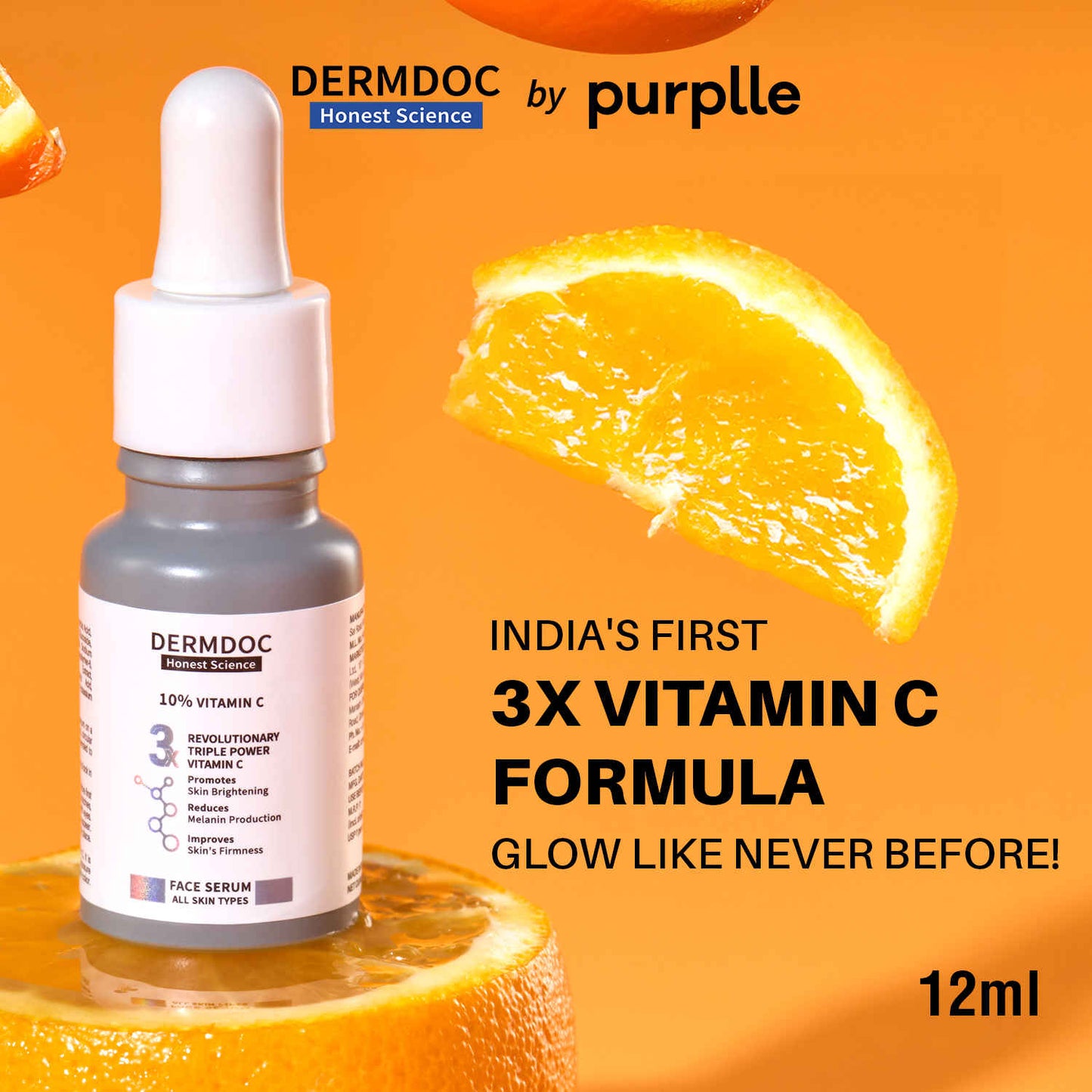
DERMDOC 10% Vitamin C Face Serum for Glowing Skin (12 ml) | Brightening Face Serum | Fight Dark Spots, Pigmentation & Dull Skin

DERMDOC 10% Vitamin C Face Serum for Glowing Skin (12 ml) | Brightening Face Serum | Fight Dark Spots, Pigmentation & Dull Skin
DERMDOC
dermdoc-10-vitamin-c-face-serum-for-glowing-skin-12-ml-brightening-face-serum-fight-dark-spots-pigmentation-dull-skin
Serum
10084761927973
Morning or Evening?
How often will you use this product?
Notes


Highlights
WHAT IS IT?
Face Serum with 3 Vitamin C derivatives
FEATURES
Contains triple Vitamin C derivatives - Ascorbyl Glucoside, Ascorbosilane C, 3-O Ethyl Ascorbic Acid for brightening, anti-aging and antioxidant protection; Lightweight, non-greasy, quick absorption; Suitable for all skin types including sensitive; Diminishes dark spots; Evens skin tone; Restores youthful glow
BEST FOR
sensitive
CHECKS
Does not contain irritation-causing Vitamin C forms
Who Is It For?
All Genders Adult Age Range Not SpecifiedWhat Does It Help With?
Dull Skin Dark Spots Pigmentation Uneven Skin Tone Fine Lines Oxidative StressBudget
Affordable (under $30)How To Use
Which routine should it be used in?
Instructions:
Key Information


What DERMDOC Says
Product Description:
Unlike conventional serums, this powerful elixir features not just one, but three potent Vitamin C derivatives: Ascorbyl Glucoside, Ascorbosilane C, and 3-O Ethyl Ascorbic Acid. Each derivative works in harmony to brighten, protect, and rejuvenate the skin, offering the transformative benefits of Vitamin C in its most stable and effective forms. Ascorbyl Glucoside gently brightens, enhancing skin tone without irritation, while Ascorbosilane C boosts collagen production, fighting the visible signs of aging such as fine lines and wrinkles. The star of the trio, 3-O Ethyl Ascorbic Acid, is a potent antioxidant that reduces oxidative stress and protecting your skin from environmental damage. With regular use, this serum visibly diminishes dark spots, evens out skin tone, and restores a youthful glow. Lightweight and non-greasy, the formula absorbs quickly, leaving your skin feeling fresh and hydrated. Perfect for all skin types, even sensitive skin, this serum is your daily defense against dullness and discoloration. Reveal brighter, more radiant skin with our innovative 10% Vitamin C Face Serum, the ultimate glow-boosting essential!
About the Brand:
Ingredients Overview
Ingredients List
Aqua (Water), 3-O-Ethyl Ascorbic Acid, Ethoxydiglycol, Butylene Glycol, Ascorbyl Glucoside, Glycerin, Ascorbyl Methylsilanol Pectinate, Sodium Citrate, Ethylhexylglycerin, Polyacrylate Crosspolymer-6, Citrus Reticulata (Tangerine) Fruit Extract, Hydroxyethylcellulose, Phenoxyethanol, Citric Acid, Chondrus Crispus Extract, T-Butyl Alcohol, Potassium Sorbate
Key Ingredients
ascorbyl-glucoside, ascorbosilane-c, 3-o-ethyl-ascorbic-acid
Ingredients Details
3-o-ethyl Ascorbic Acid
Common Name(s): 3-o-ethyl ascorbic acid
DESCRIPTION
What It Does: Loosens corneocyte adhesion in the stratum corneum, accelerating cell turnover, refining skin texture, and improving radiance.
Why It's Used: Organic acids at cosmetic ph values provide controlled keratolytic exfoliation that improves skin texture, pore appearance, and radiance without mechanical irritation.
How It Works: At appropriate ph, the acid's undissociated form penetrates the stratum corneum and dissolves the ionic bonds between corneocyte desmosomes (calcium chelation mechanism), facilitating controlled desquamation and cell renewal.
Typically Found In: Toners,exfoliants,serums,peels,cleansers
TECHNICAL DETAILS
Primary Category: Exfoliants
Secondary Functions: Brightening,keratolytic
Application Areas:

Facial Skincare

Body Care
Hair Care
Beard Care
Color Cosmetics (Makeup)
Dietary/Oral Supplements
Typical Concentration Range: 0.5–20%
SOURCING & ETHICS
Vegan Status: Yes
Halal Status: Yes
Source Notes: Synthetic or plant-derived acid; no animal components.
SKIN COMPATIBILITY
Irritancy Rating: 2
Comedogenicity Rating: 0
Sensitivity Concerns: May cause irritation or stinging in sensitive or barrier-compromised skin at high concentrations; patch test recommended.
Safe for Sensitive Skin: Conditional
SAFETY & COMPATIBILITY
Safety Profile: Safe within recommended ph and concentration ranges. sensitization risk increases above 10% aha. patch test recommended for sensitive skin. mildly irritating to some individuals at typical cosmetic use concentrations.
Works Well With: Niacinamide,hyaluronic acid,ceramides,vitamin c
Avoid Combining With: High concentrations on sensitive/broken skin; avoid with physical exfoliants
SCIENTIFIC NOTE
Cosmetic acids function at the pka boundary: only the undissociated acid (rcooh) penetrates the stratum corneum lipid barrier, while the ionized carboxylate (rcoo⁻) does not. the henderson-hasselbalch equation governs the fraction of active species at formulation ph; typically 0.5–3.0% undissociated acid provides efficacy while minimizing irritation.
Last Verified: 2025-01-15
Primary Sources: Cosing eu database; pcpc cosmetic ingredient safety reviews; ingredient-specific safety and efficacy literature
Ascorbyl Glucoside
Common Name(s): Aa2g,2-o-alpha-d-glucopyranosyl-l-ascorbic acid
CAS Number: 129499-78-1
DESCRIPTION
What It Does: Provides stable gradual-release vitamin c activity for brightening and antioxidant protection.
Why It's Used: Most formulation-stable vitamin c derivative — ascorbyl glucoside remains stable in aqueous formulations where pure ascorbic acid oxidises within days, providing sustained vitamin c delivery over weeks of shelf life.
How It Works: Alpha-glucoside bond resists oxidation until cleaved by skin alpha-glucosidase enzymes. releases free l-ascorbic acid in viable epidermis. released ascorbic acid inhibits tyrosinase, stimulates collagen synthesis, and provides antioxidant activity. glucose group provides enhanced water solubility vs ascorbic acid.
Typically Found In: Stable vitamin c serums,brightening products,anti-aging
TECHNICAL DETAILS
Primary Category: Active ingredient – stable vitamin c glucoside
Secondary Functions: Tyrosinase inhibitor,collagen cofactor
Application Areas:
Facial Skincare
Body Care
Hair Care
Beard Care
Color Cosmetics (Makeup)
Dietary/Oral Supplements
Typical Concentration Range: 1%–5%
SOURCING & ETHICS
Vegan Status: Yes – enzymatic synthesis from ascorbic acid and glucose
Halal Status: Yes
Source Notes: Synthetically produced vitamin c derivative.
SKIN COMPATIBILITY
Irritancy Rating: 1/5 – very low
Comedogenicity Rating: 0/5 – non-comedogenic
Sensitivity Concerns: Non-irritating; suitable for all skin types.
Safe for Sensitive Skin: Yes
SAFETY & COMPATIBILITY
Safety Profile: Excellent safety profile. ewg score: 1.
Works Well With: Tocopherol,ferulic acid,niacinamide,spf
Avoid Combining With: No significant incompatibilities
SCIENTIFIC NOTE
Ascorbyl glucoside's stability advantage (18+ months in aqueous formulation vs days for ascorbic acid) arises from the glucose group's steric protection of ascorbic acid's c2 enediol that is the primary oxidation site. glucosidase cleavage in skin removes this protection in situ, releasing active ascorbic acid only where enzymatic activity exists — providing both formulation stability and bioactivation where needed.
Last Verified: ##########
Primary Sources: Cosing database,yamamoto et al. ascorbyl glucoside stability study
Ascorbyl Methylsilanol Pectinate
Common Name(s): Vitamin c pectin complex,methylsilanol ascorbate
CAS Number: N/a
DESCRIPTION
What It Does: Delivers vitamin c antioxidant and brightening alongside firming and hydrating benefits.
Why It's Used: Multi-functional anti-aging for combined antioxidant, firming, and hydration effects from one ingredient.
How It Works: Methylsilanol promotes collagen fiber organization; pectin provides hydration and film-forming; ascorbate provides antioxidant and brightening activity.
Typically Found In: Multi-active anti-aging serums,firming creams
TECHNICAL DETAILS
Primary Category: Active ingredient – vitamin c derivative
Secondary Functions: Skin firming,hydrating
Application Areas:
Facial Skincare
Body Care
Hair Care
Beard Care
Color Cosmetics (Makeup)
Dietary/Oral Supplements
Typical Concentration Range: 0.5%–3%
SOURCING & ETHICS
Vegan Status: Yes – synthetic
Halal Status: Yes
Source Notes: Synthetically produced vitamin c derivative.
SKIN COMPATIBILITY
Irritancy Rating: 1/5 – very low
Comedogenicity Rating: 0/5 – non-comedogenic
Sensitivity Concerns: Non-irritating; suitable for all skin types.
Safe for Sensitive Skin: Yes
SAFETY & COMPATIBILITY
Safety Profile: Excellent safety profile. ewg score: 1.
Works Well With: Tocopherol,ferulic acid,niacinamide,spf
Avoid Combining With: No significant incompatibilities
SCIENTIFIC NOTE
Methylsilanol compounds interact with collagen hydroxyl groups promoting fiber organization. combined with ascorbate's collagen synthesis support, this complex provides synergistic collagen quality improvement.
Last Verified: ##########
Primary Sources: Cosing database,cir safety assessment
Butylene Glycol
Common Name(s): 1,3-butanediol,bg,1,3-butylene glycol
CAS Number: 107-88-0
DESCRIPTION
What It Does: Provides humectant hydration and active ingredient solubilization with excellent skin feel.
Why It's Used: Preferred glycol humectant in premium and k-beauty formulations for superior skin feel vs propylene glycol with equivalent functionality.
How It Works: Two hydroxyl groups at 1,3-positions provide water binding and solvent activity. better tolerated than propylene glycol with minimal sensitization risk. 4-carbon backbone provides slightly greater hydrophobic character enabling dissolution of less polar actives vs pg.
Typically Found In: Toners,essences,serums,k-beauty formulas
TECHNICAL DETAILS
Primary Category: Functional ingredient – glycol humectant
Secondary Functions: Tewl reduction,skin plumping
Application Areas:
Facial Skincare
Body Care
Hair Care
Beard Care
Color Cosmetics (Makeup)
Dietary/Oral Supplements
Typical Concentration Range: 1%–10%
SOURCING & ETHICS
Vegan Status: Yes – synthetic
Halal Status: Yes
Source Notes: Synthetic or naturally derived. excellent aqueous solubility.
SKIN COMPATIBILITY
Irritancy Rating: 1/5 – very low
Comedogenicity Rating: 0/5 – non-comedogenic
Sensitivity Concerns: Non-irritating; suitable for all skin types.
Safe for Sensitive Skin: Yes
SAFETY & COMPATIBILITY
Safety Profile: Excellent safety profile. ewg score: 1.
Works Well With: Ceramides,emollients,occlusives,glycerin,hyaluronic acid
Avoid Combining With: No significant incompatibilities
SCIENTIFIC NOTE
K-beauty's preference for butylene glycol over propylene glycol is driven by two factors: bg's superior skin feel (less tacky than pg's higher viscosity) and its lower sensitization potential (1,3-bg has better spatial distribution of hydroxyl groups that reduces protein interaction vs pg's 1,2-position oh groups).
Last Verified: 2026-03-12
Primary Sources: Cosing database,cir safety assessment