

Design Essentials
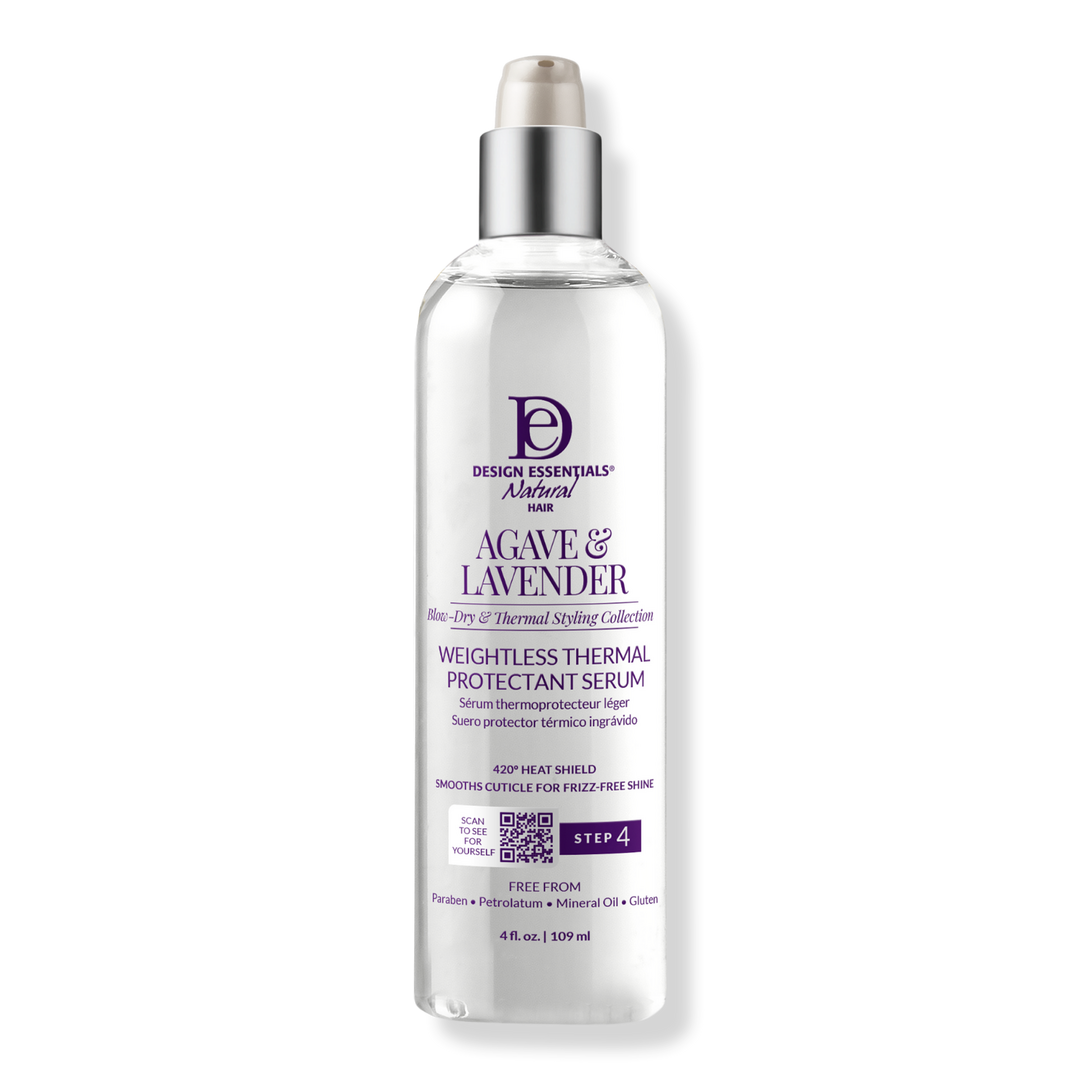
Design Essentials Agave & Lavender Serum
A lightweight serum that seals moisture in the hair cuticle, protecting strands from thermal damage without weighing down fine to normal, and color-treated hair.
Sulfate-free
Paraben-free
Color-safe
Silicone-free
Damage Repair
Breakage
Optimized for Your Environment & Lifestyle
Nykaa
In stock
Recommended

Design Essentials Agave & Lavender Serum
Design Essentials
design-essentials-agave-lavender-serum
Hair Serum
10355402703141
Morning or Evening?
How often will you use this product?
Notes


Secure payment protection
Your Biodata Compatibility Analysis
Based on your 6 hair health indices and environmental factors
Poor Match
Significant incompatibilities
Growth Cycle Health Index
Hair Match
Hair Health Index Alignment
Optimal for OSI, SSI, DI, HSI
Ingredient Efficacy
Matching Ingredient Score
Environment Compatibility
Current UV, Air Quality & Humidity
Why This Works for Your Specific Profile
Damage Index:
Damage levels outside specified range may not benefit optimally from product formulation
Water Quality:
Fine hair becomes weighed down and greasy from heavy formulation
Hair:
Closed cuticles resist product penetration causing surface buildup without internal benefits
Active Lifestyle:
Activity levels outside optimal range affect product performance and maintenance requirements
Your Hair Profile Integration
Your Hair Archetype

Density Level

Washing Frequency

Shedding Level

Oil Level
Your Hair Health Indices
Oil Secretion (OSI)
Very low oil production
Scalp Sensitivity (SSI)
Very low sensitivity
Growth Rate (CMR)
Poor metabolism rate
Damage Index (DI)
Minimal damage
Hair Strength (HSI)
Very weak strength
Softness Index (SI)
Significant improvement needed
Water & Environmental Integration

Water:


Expected Results & Timeline
Key Highlights

What is it?
A lightweight thermal protectant serum with 10 ingredients.

Who Is It For
Adults

Budget
Rs. 862.61 - Rs. 1,725.22

Timeline
Immediate protection upon application
Why You’ll Love It

What Does It Help With?
Shedding, Breakage, Thermal Damage

Best for
Damage Repair

Features
Promotes healthy hair growth by preventing shedding and breakage; Free from sulfates, parabens, paraffin, mineral oil, petrolatum, and DEA; Provides a layer of potent protection from thermal styling; Increases tensile strength and improves hair's density.

Checks
Cruelty Free
Ingredients Overview
Ingredients List
Cyclopentasiloxane, Cyclotetrasiloxane, Dimethicone, Dimethiconol, Cyclohexasiloxane, C12-15-Alkyl-Benzoate, Fragrance-Parfum, Ethylhexyl-Methoxycinnamate, Alcohol, Citronellol, Coumarin, Geraniol, Limonene, Linalool, Alpha-Isomethyl-Ionone
Key Ingredients
Agave Extract, Lavender Extract, Mango Butter
Ingredients Details
Alcohol
Common Name(s): Alcohol,cosmetic active,functional ingredient
CAS Number: N/a
DESCRIPTION
What It Does: Delivers characteristic cosmetic function at recommended use concentration.
Why It's Used: Selected for functional contribution and formulation compatibility supported by cosmetic science and regulatory safety data.
How It Works: Works through the mechanism of its molecular class as documented in peer-reviewed cosmetic literature.
Typically Found In: Skin care formulations
TECHNICAL DETAILS
Primary Category: Active ingredient – cosmetic active
Secondary Functions: Skin conditioning
Application Areas:

Facial Skincare

Body Care
Hair Care
Beard Care
Color Cosmetics (Makeup)
Dietary/Oral Supplements
Typical Concentration Range: 0.1%–10%
SOURCING & ETHICS
Vegan Status: Yes - standard ethanol routes are non-animal; confirm denaturant origin
Halal Status: Conditional - ethanol production route and residual concentration; jurisdiction-dependent, refer to certifier stance
Source Notes: Commercially produced for cosmetic use. verify vegan/halal status with supplier. [audit 2026-07-29 rev2: ethanol pathway; determination depends on route, on whether the plant also produces beverage alcohol, and on residual concentration. determination requires shariah-panel sign-off.]
SKIN COMPATIBILITY
Irritancy Rating: 1/5 – very low
Comedogenicity Rating: 0/5 – non-comedogenic
Sensitivity Concerns: Well-tolerated by most skin types.
Safe for Sensitive Skin: Yes
SAFETY & COMPATIBILITY
Safety Profile: Good safety profile at recommended concentrations. ewg score: 1–2.
Works Well With: Standard skincare actives
Avoid Combining With: No known significant incompatibilities
SCIENTIFIC NOTE
Alcohol has an established safety profile within the cosmetic regulatory framework at standard use concentrations.
Last Verified: 2026-03-12
Primary Sources: Cosing database,alcohol technical literature
Citronellol
Common Name(s): (r)-3,7-dimethyl-6-octen-1-ol,rhodinol
CAS Number: 106-22-9
DESCRIPTION
What It Does: Provides soft, lasting rose-floral fragrance note.
Why It's Used: Essential rose fragrance monoterpene for lasting smooth floral notes in high-quality perfumery and cosmetic fragrances.
How It Works: Allylic alcohol monoterpene provides fixative property in fragrance blends. good skin substantivity for lasting scent. softer, rounder rose note vs geraniol's fresher character. natural in rose otto at 18-34%.
Typically Found In: Rose perfumes,floral fragrances,luxury skincare
TECHNICAL DETAILS
Primary Category: Fragrance component – monoterpene alcohol
Secondary Functions: Skin conditioning
Application Areas:
Facial Skincare
Body Care
Hair Care
Beard Care
Color Cosmetics (Makeup)
Dietary/Oral Supplements
Typical Concentration Range: 0.001%–1%
SOURCING & ETHICS
Vegan Status: Conditional - supplier confirmation required
Halal Status: Unverified - supplier confirmation required
Source Notes: Commercially produced for cosmetic use. verify vegan/halal status with supplier. [audit 2026-07-29 rev2: the record's own source_notes does not assert a non-animal origin, or instructs the reader to verify with the supplier; "yes" asserts knowledge the record does not hold. determination requires shariah-panel sign-off.]
SKIN COMPATIBILITY
Irritancy Rating: 1/5 – very low
Comedogenicity Rating: 0/5 – non-comedogenic
Sensitivity Concerns: Well-tolerated by most skin types.
Safe for Sensitive Skin: Yes
SAFETY & COMPATIBILITY
Safety Profile: Eu cosmetics regulation: declared fragrance allergen. ifra guidelines apply.
Works Well With: Standard skincare actives
Avoid Combining With: No known significant incompatibilities
SCIENTIFIC NOTE
Citronellol's r-enantiomer (natural) vs s-enantiomer (synthetic) provide meaningfully different scent character – a remarkable demonstration of chiral scent discrimination by olfactory receptors. the (r) form provides the characteristic rose note while the (s) form has a distinctly different, less pleasant character. this enantiomeric scent difference means that the biological handedness of naturally-sourced vs racemic synthetic citronellol produces perceptibly different fragrance quality.
Last Verified: 2026-03-12
Primary Sources: Cosing database,ifra standards
Coumarin
Common Name(s): 2h-chromen-2-one,1,2-benzopyrone,tonka bean compound
CAS Number: 91-64-5
DESCRIPTION
What It Does: Provides the characteristic sweet hay-vanilla warmth central to fougère fragrance compositions.
Why It's Used: The fougère fragrance family-defining compound – coumarin is the essential warm-sweet note in lavender-oakmoss-coumarin fougère compositions that define men's cologne classics.
How It Works: Bicyclic lactone provides sweet hay-vanilla scent from its conjugated carbonyl system. good skin absorption for lasting fragrance. low volatility provides fixative properties.
Typically Found In: Fougère fragrances,men's cologne,warm oriental fragrances
TECHNICAL DETAILS
Primary Category: Fragrance component – lactone
Secondary Functions: Skin conditioning
Application Areas:
Facial Skincare
Body Care
Hair Care
Beard Care
Color Cosmetics (Makeup)
Dietary/Oral Supplements
Typical Concentration Range: 0.001%–1%
SOURCING & ETHICS
Vegan Status: Conditional - supplier confirmation required
Halal Status: Unverified - supplier confirmation required
Source Notes: Commercially produced for cosmetic use. verify vegan/halal status with supplier. [audit 2026-07-29 rev2: the record's own source_notes does not assert a non-animal origin, or instructs the reader to verify with the supplier; "yes" asserts knowledge the record does not hold. determination requires shariah-panel sign-off.]
SKIN COMPATIBILITY
Irritancy Rating: 1/5 – very low
Comedogenicity Rating: 0/5 – non-comedogenic
Sensitivity Concerns: Well-tolerated by most skin types.
Safe for Sensitive Skin: Yes
SAFETY & COMPATIBILITY
Safety Profile: Eu cosmetics regulation: declared fragrance allergen. ifra guidelines restrict due to hepatotoxicity at high oral doses (not from topical use).
Works Well With: Standard skincare actives
Avoid Combining With: No known significant incompatibilities
SCIENTIFIC NOTE
Coumarin's natural source (tonka beans, dipteryx odorata) led to its historical use in food flavouring until toxicological studies revealed hepatotoxicity at high oral doses. the restriction of coumarin from food flavouring (eu and fda) drove fragrance reformulation in some cosmetic categories, though topical exposure levels from cosmetics are orders of magnitude below hepatotoxic doses.
Last Verified: 2026-03-12
Primary Sources: Cosing database,ifra standards
Cyclohexasiloxane
Common Name(s): D6,cyclomethicone d6,hexamethylcyclotrisiloxane
CAS Number: 540-97-6
DESCRIPTION
What It Does: Provides volatile silicone delivery with longer contact time than d5 for extended active delivery.
Why It's Used: Longer-evaporation volatile silicone for formulations requiring extended delivery contact time vs d5's rapid evaporation.
How It Works: Larger ring (6 silicone units) provides lower vapor pressure than d5 (5 units). slower evaporation rate (2-3× longer than d5) provides extended delivery window. same dry-touch after complete evaporation.
Typically Found In: Longer-duration volatile vehicles,serum formulations
TECHNICAL DETAILS
Primary Category: Functional ingredient – volatile cyclic silicone
Secondary Functions: Skin conditioning
Application Areas:
Facial Skincare
Body Care
Hair Care
Beard Care
Color Cosmetics (Makeup)
Dietary/Oral Supplements
Typical Concentration Range: 1%–30%
SOURCING & ETHICS
Vegan Status: Conditional - supplier confirmation required
Halal Status: Unverified - supplier confirmation required
Source Notes: Commercially produced for cosmetic use. verify vegan/halal status with supplier. [audit 2026-07-29 rev2: the record's own source_notes does not assert a non-animal origin, or instructs the reader to verify with the supplier; "yes" asserts knowledge the record does not hold. determination requires shariah-panel sign-off.]
SKIN COMPATIBILITY
Irritancy Rating: 1/5 – very low
Comedogenicity Rating: 0/5 – non-comedogenic
Sensitivity Concerns: Well-tolerated by most skin types.
Safe for Sensitive Skin: Yes
SAFETY & COMPATIBILITY
Safety Profile: Eu restrictions on d5 do not apply to d6 – d6 may be used in rinse-off products without restriction.
Works Well With: Standard skincare actives
Avoid Combining With: No known significant incompatibilities
SCIENTIFIC NOTE
The different evaporation rates of d4 (methylcyclosiloxane), d5, and d6 provide formulators with a toolkit of volatile silicone delivery windows: d4 evaporates in ~1 minute, d5 in ~5 minutes, d6 in ~15 minutes. blending these provides precisely tunable evaporation kinetics for specific delivery timing requirements.
Last Verified: 2026-03-12
Primary Sources: Cosing database,dow silicone technical data,cir safety assessment
Personalized Usage Instructions
How to Use
Step 1
Place a few drops of the Weightless Thermal Protectant Serum into palms and emulsify
Step 2
Apply to hair from mid-shaft to ends
Step 3
Flat-iron or thermal style hair as desired
Medical Chemicals

Protein/Moisture
- Moisture
pH Level
- Acidic

Porosity Taget
- Normal Porosity
Customized for Your Profile
Scalp Condtions
Sensitive Scalp, pH Balanced
Climate Suitability
Humid, Dry, UV Protection
Clinical Claims
Frequency
Place a few drops of the Weightless Thermal Protectant Serum into palms and emulsify. Apply to hair from mid-shaft to ends. Flat-iron or thermal style hair as desired.
Product Information

Cruelty Free