

Divi
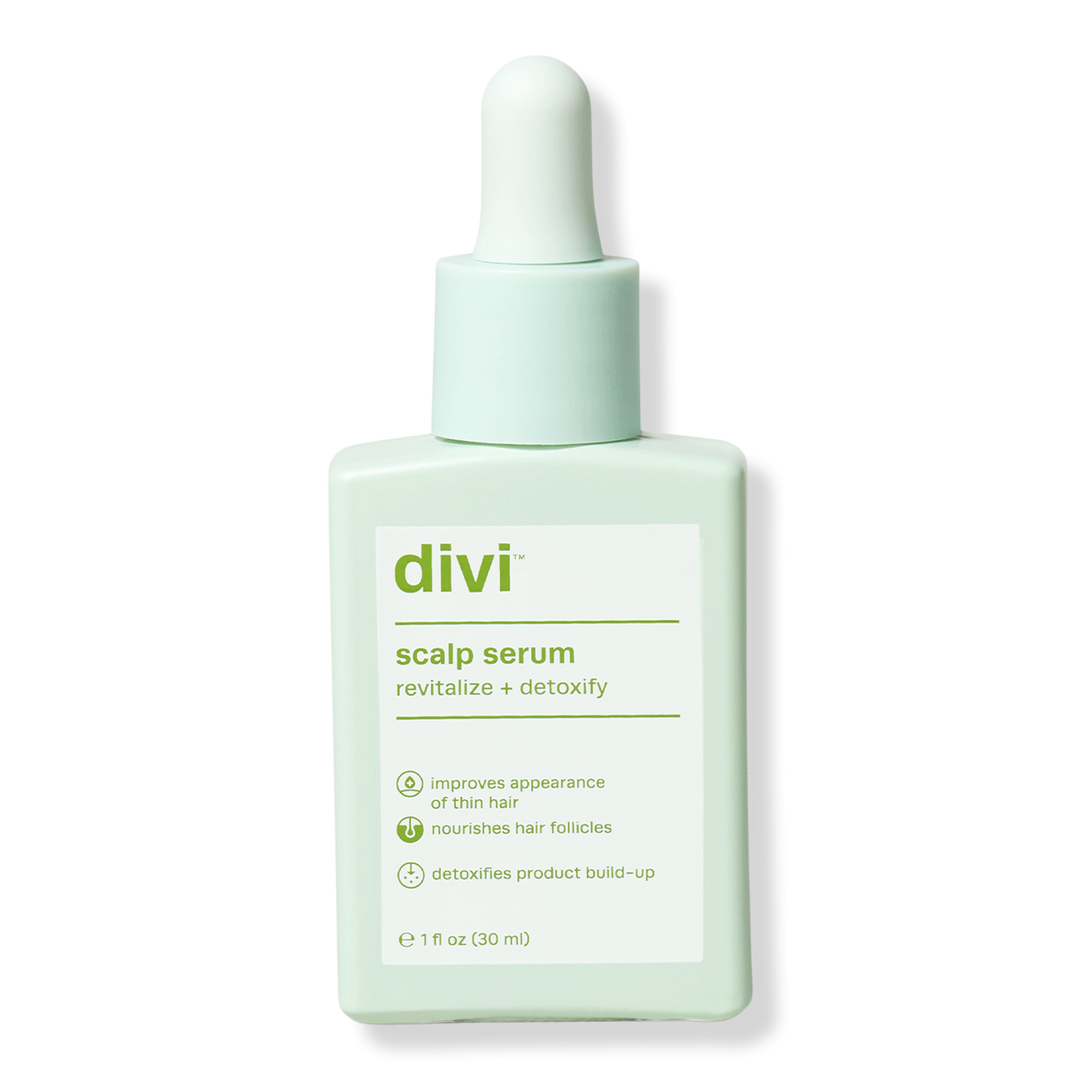
Divi Scalp Serum
Divi's Scalp Serum is a clinically tested treatment designed to improve the appearance of thinning hair by nourishing and hydrating the scalp. It features a water-based, non-greasy formula with an invigorating peppermint and tea tree scent, formulated without parabens, sulfates, alcohols, and synthetic fragrances. The serum is vegan and cruelty-free.
Sulfate-free
Paraben-free
Color-safe
Silicone-free
Natural
Protein-free
Optimized for Your Environment & Lifestyle
Nykaa
In stock
Recommended

Divi Scalp Serum
Divi
divi-scalp-serum
Scalp Serum
10365021126949
Morning or Evening?
How often will you use this product?
Notes


Secure payment protection
Your Biodata Compatibility Analysis
Based on your 6 hair health indices and environmental factors
Poor Match
Significant incompatibilities
Growth Cycle Health Index
Hair Match
Hair Health Index Alignment
Optimal for OSI, SSI, DI, HSI
Ingredient Efficacy
Matching Ingredient Score
Environment Compatibility
Current UV, Air Quality & Humidity
Why This Works for Your Specific Profile
Damage Index:
Damage levels outside specified range may not benefit optimally from product formulation
Water Quality:
No scalp sensitivity-specific conflicts
Hair:
No porosity-specific conflicts
Active Lifestyle:
Activity levels outside optimal range affect product performance and maintenance requirements
Your Hair Profile Integration
Your Hair Archetype

Density Level

Washing Frequency

Shedding Level

Oil Level
Your Hair Health Indices
Oil Secretion (OSI)
Very low oil production
Scalp Sensitivity (SSI)
Very low sensitivity
Growth Rate (CMR)
Poor metabolism rate
Damage Index (DI)
Minimal damage
Hair Strength (HSI)
Very weak strength
Softness Index (SI)
Significant improvement needed
Water & Environmental Integration

Water:


Expected Results & Timeline
Key Highlights

What is it?
Scalp Serum with 10 ingredients

Who Is It For
Adults, Unisex

Budget
Rs. 4,702.62 - Rs. 9,405.24

Timeline
6 weeks
Why You’ll Love It

What Does It Help With?
Thinning hair, Dry scalp, Oily scalp, Frizz, Breakage, Split ends, Dullness, Scalp issues, Color fading, Hair loss

Best for
Thinning hair and scalp health

Features
Improves the appearance of thinning hair, Invigorating peppermint and tea tree scent, Water-based, non-greasy formula, Removes product & oil buildup, Nourishes and hydrates the scalp, Made without parabens, sulfates, alcohols, and synthetic fragrance, Vegan and Cruelty-Free

Checks
Vegan, Cruelty-Free, Paraben-Free, Sulfate-Free, Alcohol-Free, Synthetic Fragrance-Free
Ingredients Overview
Ingredients List
Water, Glycerin, Ascorbic Acid, Caffeine, Melaleuca Alternifolia (Tea Tree) Leaf Oil, Camellia Sinensis (Green Tea) Leaf Extract, Rosemary Officinalis (Rosemary) Leaf Extract, Peppermint (Mentha Arvensis) Oil, Eucalyptus Globulus (Eucalyptus) Oil, Acetyl Tetrapeptide-3, Copper Tripeptide-1, Biotin, Hyaluronic Acid, Menthol, Sodium PCA, Sodium Lactate, Arginine, Aspartic Acid, Glycine, Serine, Valine, Proline, Threonine, Isoleucine, Copper Gluconate, Histidine, Phenylalanine
Key Ingredients
Copper Tripeptide-1, Caffeine, Tea Tree Oil, Amino Acids, Hyaluronic Acid
Ingredients Details
Acetyl Tetrapeptide-3
Common Name(s): Procapil peptide component,hair follicle stem cell peptide
CAS Number: 827306-88-7
DESCRIPTION
What It Does: Provides wnt/beta-catenin hair follicle stem cell activation for follicle regeneration.
Why It's Used: Wnt-activating hair peptide — acetyl tetrapeptide-3 activates the fundamental molecular switch initiating each new hair growth cycle (wnt/beta-catenin), providing stem cell-level follicle regeneration beyond simple follicle stimulation.
How It Works: Wnt/beta-catenin activation in hair follicle bulge stem cells → stem cell proliferation and differentiation. anti-dht signalling interference preventing stem cell exhaustion. combined with apigenin and biotinoyl tripeptide-1 as procapil system.
Typically Found In: Anti-alopecia serums,procapil products
TECHNICAL DETAILS
Primary Category: Active ingredient – signal peptide
Secondary Functions: Collagen stimulation,skin firming,anti-aging
Application Areas:

Facial Skincare
Body Care

Hair Care
Beard Care
Color Cosmetics (Makeup)
Dietary/Oral Supplements
Typical Concentration Range: 0.0001%–0.005%
SOURCING & ETHICS
Vegan Status: Yes
Halal Status: Yes
Source Notes: Synthetically produced by solid-phase peptide synthesis (spps). may be palmitoylated for stability.
SKIN COMPATIBILITY
Irritancy Rating: 1/5 – very low
Comedogenicity Rating: 0/5 – non-comedogenic
Sensitivity Concerns: Non-irritating; suitable for all skin types.
Safe for Sensitive Skin: Yes
SAFETY & COMPATIBILITY
Safety Profile: Exceptional safety profile. ewg score: 1.
Works Well With: Hyaluronic acid,ceramides,retinol,vitamin c,niacinamide
Avoid Combining With: Avoid mixing with high-concentration ahas at same ph (may hydrolyze peptide bonds)
SCIENTIFIC NOTE
Wnt/beta-catenin is the master regulator of hair follicle stem cell activation — every hair growth cycle begins with wnt signal activation of the bulge stem cell compartment. acetyl tetrapeptide-3 targets this fundamental initiating step, providing the most upstream possible intervention in the hair growth cycle.
Last Verified: Cosing database,sederma procapil technical data
Primary Sources: 2026-03-12
Amino Acids
Common Name(s): Amino acids,cosmetic active,functional ingredient
CAS Number: N/a
DESCRIPTION
What It Does: Delivers characteristic cosmetic function — skin conditioning, protection, preservation, or active biological benefit — at recommended use concentration.
Why It's Used: Selected for its functional contribution and formulation compatibility — supported by cosmetic science literature and regulatory safety assessment.
How It Works: Works through the mechanism of its molecular class — physicochemical interaction with the formulation or biological interaction with skin proteins, lipids, or receptors as documented in peer-reviewed literature.
Typically Found In: Skin care formulations
TECHNICAL DETAILS
Primary Category: Active ingredient – cosmetic active
Secondary Functions: Skin conditioning
Application Areas:
Facial Skincare
Body Care
Hair Care
Beard Care
Color Cosmetics (Makeup)
Dietary/Oral Supplements
Typical Concentration Range: 0.1%–10%
SOURCING & ETHICS
Vegan Status: Conditional
Halal Status: Yes
Source Notes: Commercially produced for cosmetic use. verify vegan/halal status with supplier.
SKIN COMPATIBILITY
Irritancy Rating: 1/5 – very low
Comedogenicity Rating: 0/5 – non-comedogenic
Sensitivity Concerns: Well-tolerated by most skin types.
Safe for Sensitive Skin: Yes
SAFETY & COMPATIBILITY
Safety Profile: Good safety profile at recommended concentrations. ewg score: 1–2.
Works Well With: Standard skincare actives
Avoid Combining With: No known significant incompatibilities
SCIENTIFIC NOTE
Amino acids delivers documented functional benefit with an established safety profile within the cosmetic regulatory framework (cosing eu, cir usa).
Last Verified: Cosing database,amino acids technical literature
Primary Sources: 2026-03-12
Arginine
Common Name(s): L-arginine,2-amino-5-guanidinopentanoic acid
CAS Number: 74-79-3
DESCRIPTION
What It Does: Conditions skin, attracts moisture, supports wound healing, and improves microcirculation via no synthesis.
Why It's Used: Multi-functional amino acid for skin hydration, conditioning, and wound healing in peptide and nmf formulations.
How It Works: Guanidinium group binds water (humectant). substrate for nitric oxide synthase (enos) producing nitric oxide that vasodilates capillaries improving skin nutrition. stimulates fibroblast proliferation for wound healing.
Typically Found In: Anti-aging serums,wound healing products,nmf moisturizers,scalp treatments
TECHNICAL DETAILS
Primary Category: Active ingredient – amino acid
Secondary Functions: Wound healing,microcirculation,nmf component
Application Areas:
Facial Skincare
Body Care
Hair Care
Beard Care
Color Cosmetics (Makeup)
Dietary/Oral Supplements
Typical Concentration Range: 0.5%–5%
SOURCING & ETHICS
Vegan Status: Yes – plant-derived or synthetic
Halal Status: Yes
Source Notes: Fermentation-derived or synthetic. natural skin component.
SKIN COMPATIBILITY
Irritancy Rating: 1/5 – very low
Comedogenicity Rating: 0/5 – non-comedogenic
Sensitivity Concerns: Non-irritating; endogenous skin molecule.
Safe for Sensitive Skin: Yes
SAFETY & COMPATIBILITY
Safety Profile: Excellent safety profile. natural skin nmf component. ewg score: 1.
Works Well With: Hyaluronic acid,ceramides,peptides,other amino acids
Avoid Combining With: No significant incompatibilities
SCIENTIFIC NOTE
Arginine is a conditionally essential amino acid in wound healing where local demand exceeds synthesis capacity. topical arginine provides the nos substrate locally for no-mediated vasodilation and immune cell function in healing tissue.
Last Verified: Cosing database,cir safety assessment,witte & barbul arginine wound healing review
Primary Sources: 2026-03-12
Ascorbic Acid
Common Name(s): Vitamin c,l-ascorbic acid,l-ascorbate
CAS Number: 50-81-7
DESCRIPTION
What It Does: Ascorbic acid neutralizes free radicals, stimulates collagen production, inhibits melanin synthesis for a brighter complexion, and supports skin repair.
Why It's Used: It is used because it offers comprehensive antioxidant and brightening benefits supported by extensive clinical evidence. it is the most bioavailable form of vitamin c for topical application.
How It Works: As an antioxidant, it donates electrons to neutralize reactive oxygen species. it is an essential cofactor for the hydroxylation of proline and lysine in collagen synthesis. it inhibits tyrosinase, the enzyme responsible for melanin production, reducing hyperpigmentation.
Typically Found In: Vitamin c serums,brightening moisturizers,antioxidant formulations,spf products,eye creams
TECHNICAL DETAILS
Primary Category: Active ingredient – vitamin c
Secondary Functions: Collagen booster,tyrosinase inhibitor,ph adjuster
Application Areas:
Facial Skincare
Body Care
Hair Care
Beard Care
Color Cosmetics (Makeup)
Dietary/Oral Supplements
Typical Concentration Range: 5%–20% (effective range: 10–20%; ph must be below 3.5 for activity)
SOURCING & ETHICS
Vegan Status: Yes – synthetically produced or corn/plant-derived
Halal Status: Yes
Source Notes: Commercially produced by reichstein synthesis or guangxi fermentation process from glucose. some plant-derived versions exist.
SKIN COMPATIBILITY
Irritancy Rating: 2/5 – low to moderate; low ph formulations can cause initial tingling or stinging, especially at concentrations above 15%
Comedogenicity Rating: 0/5 – non-comedogenic
Sensitivity Concerns: Acidic ph can irritate sensitive or compromised skin barriers. highly unstable – oxidizes rapidly when exposed to air, light, and heat (turns orange/brown). use in the morning under spf.
Safe for Sensitive Skin: Use with caution – start at lower concentrations (5–10%). stabilized derivative forms (vitamin c derivatives) may be better tolerated.
SAFETY & COMPATIBILITY
Safety Profile: Very safe; well-studied. key concern is formulation stability, not safety. ewg hazard score: 1.
Works Well With: Vitamin e (tocopherol) – synergistic antioxidant effect,ferulic acid – stabilizing and boosting,spf,hyaluronic acid,niacinamide (use at different times if concentrations are high)
Avoid Combining With: Retinol (use at separate times – ph incompatibility),benzoyl peroxide (oxidizes vitamin c),ahas/bhas (cumulative irritation risk)
SCIENTIFIC NOTE
L-ascorbic acid is the only form of vitamin c that is proven bioactive in skin at the molecular level. its instability (rapid oxidation) has driven development of numerous stable derivatives including ascorbyl glucoside, magnesium ascorbyl phosphate, and ascorbyl tetraisopalmitate.
Last Verified: Cosing database,cir safety assessment,pinnell et al. studies,journal of the american academy of dermatology
Primary Sources: 2026-03-12
Personalized Usage Instructions
How to Use
Step 1
Use once daily, morning or night
Step 2
Shake well before use
Step 3
Apply 1 dropperful of serum directly to dry or towel-dried scalp wherever results are desired
Step 4
Massage into your scalp and let it sink in
Step 5
Do not rinse out
Medical Chemicals

Protein/Moisture
- Moisture
pH Level
- Acidic

Porosity Taget
- Normal Porosity
Customized for Your Profile
Scalp Condtions
Anti-Dandruff, Seborrheic Dermatitis Safe, Sensitive Scalp, pH Balanced, Oil Control, Dry Scalp
Climate Suitability
Humid, Dry, Winter, Summer
Clinical Claims
90% noticed an improvement in the look of fullness of their hair, 87% noticed an increase in how dense their hair looked, 82% noticed their scalp felt less dry
Frequency
Use once daily, morning or night. Shake well before use. Apply 1 dropperful of serum directly to dry or towel-dried scalp wherever results are desired. Massage into your scalp and let it sink in. Do not rinse out.
Product Information

Vegan
Cruelty-Free
Paraben-Free
Sulfate-Free
Alcohol-Free
Synthetic Fragrance-Free
