

Dot & Key
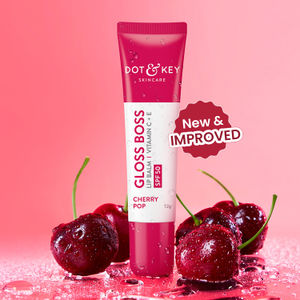
Dot & Key Gloss Boss Cherry Pop SPF 50 Lip Balm for Smooth Soft Lips, Shea Butter with Vitamin C+E, Tinted Lip Balm For glossy, Buttery Soft Lips With Vitamin C For Dark Lips For Women, 12 gm

Dot & Key Gloss Boss Cherry Pop SPF 50 Lip Balm for Smooth Soft Lips, Shea Butter with Vitamin C+E, Tinted Lip Balm For glossy, Buttery Soft Lips With Vitamin C For Dark Lips For Women, 12 gm
Dot & Key
dot-key-gloss-boss-cherry-pop-spf-50-lip-balm-for-smooth-soft-lips-shea-butter-with-vitamin-c-e-tinted-lip-balm-for-glossy-buttery-soft-lips-with-vitamin-c-for-dark-lips-for-women-12-gm
Lip care
10084953391397
Morning or Evening?
How often will you use this product?
Notes


Highlights
WHAT IS IT?
Tinted lip balm with Vitamin C+E and SPF 50, multiple shades available
FEATURES
Contains Shea Butter, Vitamin C+E, SPF 50, moisturizes, provides sun protection, tinted for glossy, buttery soft lips, helps with dark lip pigmentation and dryness
BEST FOR
sensitive
CHECKS
No parabens, no sulfates (implied safe ingredients), cruelty-free
Who Is It For?
Women All Adult AgesWhat Does It Help With?
Smooth Soft Lips Hydration Moisturizing Pigmentation Fading Sun ProtectionBudget
Affordable (under $30)How To Use
Which routine should it be used in?
Instructions:
Key Information


What Dot & Key Says
Product Description:
While Vitamin A derivative Retinol works on a cellular level to brighten and exfoliate dull skin moisture boosting ceramides and hyaluronic acid enhance skin's natural cell turnover to effectively hydrate and eliminate dryness. Also formulated with vitamin C and antioxidant rich Hibiscus flower this anti ageing night cream makes skin firmer and youthful. It not only encourages fresher and smoother looking skin but also fights dark spots and acne breakouts promoting a radiant spotless complexion.
About the Brand:
Ingredients Overview
Ingredients List
Ricinus Communis (Castor) Seed Oil, Octocrylene, Ethylhexyl Methoxycinnamate, Hydrogenated Soy Polyglycerides (and) C15-23 Alkanes, Sorbitan Olivate, Hydrogenated Polyisobutene, Butyrospermum Parkii (Shea) Butter, Color, Ascorbyl Palmitate, Tocopheryl Acetate, Theobroma Cacao (Cocoa) Seed Butter, Persea Gratissima (Avocado) Oil, Caprylic/Capric Triglyceride (and) Polyurethane-79, Flavour, Pentaerythrityl Tetra-Di-T-Butyl Hydroxyhydrocinnamate, Sucralose
Key Ingredients
Shea Butter, Vitamin C, Vitamin E, SPF 50
Ingredients Details
Ascorbyl Palmitate
Common Name(s): L-ascorbyl-6-palmitate,vitamin c palmitate,fat-soluble vitamin c
CAS Number: 137-66-6
DESCRIPTION
What It Does: Provides lipid-soluble antioxidant protection in skin and oil-based formulations.
Why It's Used: Oil-based formulations as fat-soluble vitamin c active and formulation antioxidant preservative (e304).
How It Works: Skin esterases cleave the bond releasing ascorbic acid and palmitic acid. lipophilic form may integrate into cell membranes for lipid-phase antioxidant protection.
Typically Found In: Oil serums,emulsions,sunscreens,anti-aging creams
TECHNICAL DETAILS
Primary Category: Active ingredient – vitamin c derivative
Secondary Functions: Lipid-soluble antioxidant,formulation preservative
Application Areas:

Facial Skincare

Body Care
Hair Care
Beard Care
Color Cosmetics (Makeup)
Dietary/Oral Supplements
Typical Concentration Range: 0.1%–1%
SOURCING & ETHICS
Vegan Status: Yes – synthetic
Halal Status: Yes
Source Notes: Esterification of ascorbic acid with palmitic acid. gras food additive (e304).
SKIN COMPATIBILITY
Irritancy Rating: 1/5 – very low
Comedogenicity Rating: 1/5 – very low; palmitic acid minor concern
Sensitivity Concerns: Non-irritating; suitable for all skin types.
Safe for Sensitive Skin: Yes
SAFETY & COMPATIBILITY
Safety Profile: Excellent safety profile. ewg score: 1.
Works Well With: Tocopherol,ferulic acid,niacinamide,spf
Avoid Combining With: No significant incompatibilities
SCIENTIFIC NOTE
Debate exists about efficiency of ester hydrolysis in intact skin and prooxidant potential of uv degradation products. formulating with the antioxidant triad (c+e+ferulic) mitigates this concern.
Last Verified: Cosing database,cir safety assessment,ewg skin deep
Primary Sources: 2026-03-12
Ethylhexyl Methoxycinnamate
Common Name(s): Ethylhexyl methoxycinnamate,organic uv filter,photostabilising sunscreen active
CAS Number: N/a
DESCRIPTION
What It Does: Absorbs uv radiation at specific wavelengths (uva 320–400 nm, uvb 290–320 nm) and dissipates photon energy as heat rather than skin-damaging photochemical reactions.
Why It's Used: Organic uv filters are chosen for their high molar extinction coefficient, specific spectral coverage, and formulation compatibility — individual filters are combined to provide broad-spectrum coverage across uva+uvb.
How It Works: Uv photon absorption by the aromatic chromophore π-system excites the molecule from s₀ ground state to s₁ excited state. rapid internal conversion or photoisomerisation dissipates energy as vibrational heat before it can initiate skin photodamage.
Typically Found In: Sunscreens,photoprotective products
TECHNICAL DETAILS
Primary Category: Active ingredient – cosmetic active
Secondary Functions: Skin conditioning
Application Areas:
Facial Skincare
Body Care
Hair Care
Beard Care
Color Cosmetics (Makeup)
Dietary/Oral Supplements
Typical Concentration Range: Check local sunscreen regulations
SOURCING & ETHICS
Vegan Status: Yes
Halal Status: Yes
Source Notes: Commercially produced for cosmetic use. verify vegan/halal status with supplier.
SKIN COMPATIBILITY
Irritancy Rating: 1/5 – very low
Comedogenicity Rating: 0/5 – non-comedogenic
Sensitivity Concerns: Well-tolerated by most skin types.
Safe for Sensitive Skin: Yes
SAFETY & COMPATIBILITY
Safety Profile: Good safety profile at recommended concentrations. ewg score: 1–2.
Works Well With: Standard skincare actives
Avoid Combining With: No known significant incompatibilities
SCIENTIFIC NOTE
Organic uv filters require photostabilisation (by avobenzone-octocrylene pairing, or triazine stabilisers) as some absorbers degrade on uv exposure — formulator must verify photostability of the chosen filter combination.
Last Verified: Cosing database,ethylhexyl methoxycinnamate organic uv filter review
Primary Sources: 2026-03-12
Hydrogenated Polyisobutene
Common Name(s): Polyisobutylene hydrogenated,pib,hpib
DESCRIPTION
What It Does: Provides viscous tacky-free emolliency with excellent adhesion for lip care and occlusive moisturisation.
Why It's Used: The lip care emollient standard — hydrogenated pib provides the ideal lip gloss and lip balm texture: high gloss, high adhesion, long-lasting, and tacky-free in a single hydrocarbon ingredient.
How It Works: Saturated branched polymer provides high viscosity without tackiness (unlike glycols). excellent adhesion to mucous membrane and skin from polymer chain entanglement. occlusive moisture barrier from dense hydrocarbon structure. mineral oil-like properties with higher molecular weight for longer retention.
Typically Found In: Lip gloss,lip balm,occlusive moisturisers,body products
TECHNICAL DETAILS
Primary Category: Functional ingredient – synthetic wax emollient
Secondary Functions: Barrier sealing,softening
Application Areas:
Facial Skincare
Body Care
Hair Care
Beard Care
Color Cosmetics (Makeup)
Dietary/Oral Supplements
Typical Concentration Range: 1%–40%
SOURCING & ETHICS
Vegan Status: Yes – synthetic
Halal Status: Yes
Source Notes: Plant-derived, synthetic or animal-derived. verify source.
SKIN COMPATIBILITY
Irritancy Rating: 1/5 – very low
Comedogenicity Rating: 1/5 – low; formulation-dependent
Sensitivity Concerns: Non-irritating.
Safe for Sensitive Skin: Yes
SAFETY & COMPATIBILITY
Safety Profile: Excellent safety profile. ewg score: 1.
Works Well With: Humectants,ceramides,actives as carrier
Avoid Combining With: No significant incompatibilities
SCIENTIFIC NOTE
Hydrogenated pib's tacky-free high gloss is attributable to its narrow molecular weight distribution (vs natural waxes' broad distribution) providing uniform polymer chain length. uniform chain length creates ordered surface films that reflect light specularly (high gloss) while the branched polymer structure prevents the intermolecular attractions that cause tackiness in linear polymers.
Last Verified: Cosing database,cir safety assessment
Primary Sources: 2026-03-12
Octocrylene
Common Name(s): 2-ethylhexyl 2-cyano-3,3-diphenylacrylate
CAS Number: 6197-30-4
DESCRIPTION
What It Does: Provides uvb-uva-ii uv protection and essential avobenzone photostabilisation.
Why It's Used: The essential combination partner — octocrylene's dual uv filter + avobenzone photostabilisation function makes it virtually irreplaceable for durable broad-spectrum chemical sunscreens requiring uva-i coverage.
How It Works: Cyanocinnamate chromophore absorbs uvb-uva-ii (λmax 303nm). triplet energy transfer from excited avobenzone to octocrylene photostabilises avobenzone (>90% efficiency at 3:1 avobenzone:octocrylene ratio). hydrophobic character enhances water resistance.
Typically Found In: Broad-spectrum sunscreens,avobenzone-containing formulas
TECHNICAL DETAILS
Primary Category: Active ingredient – uv filter and photostabiliser
Secondary Functions: Skin conditioning
Application Areas:
Facial Skincare
Body Care
Hair Care
Beard Care
Color Cosmetics (Makeup)
Dietary/Oral Supplements
Typical Concentration Range: Up to 10% (eu), 10% (us fda)
SOURCING & ETHICS
Vegan Status: Yes – synthetic
Halal Status: Yes
Source Notes: Commercially produced for cosmetic use. verify vegan/halal status with supplier.
SKIN COMPATIBILITY
Irritancy Rating: 1/5 – very low
Comedogenicity Rating: 0/5 – non-comedogenic
Sensitivity Concerns: Well-tolerated by most skin types.
Safe for Sensitive Skin: Yes
SAFETY & COMPATIBILITY
Safety Profile: Eu max 10%. fda: 10%. ewg score: 3. recent benzophenone impurity concerns from aged product hydrolysis under study.
Works Well With: Standard skincare actives
Avoid Combining With: No known significant incompatibilities
SCIENTIFIC NOTE
Octocrylene's triplet energy transfer photostabilisation of avobenzone operates via a dexter electron exchange mechanism: excited-state avobenzone (triplet) transfers excitation energy to octocrylene via orbital overlap, allowing avobenzone to return to its ground state uv-absorbing form without photodegradation. this energy transfer is only efficient at close molecular proximity — requiring intimate mixing of the two compounds in the formulation oil phase.
Last Verified: Cosing database,fda uv filter otc monograph,sccs octocrylene opinion
Primary Sources: 2026-03-12
