
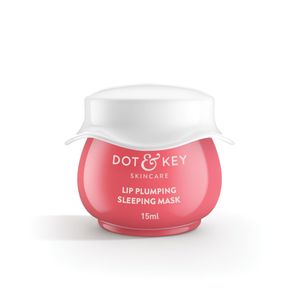

Dot & Key
Dot & Key LIP PLUMPING SLEEPING MASK Vitamin C + E MINI, 15ml, Lip mask for dry lips (15 ml)

Dot & Key LIP PLUMPING SLEEPING MASK Vitamin C + E MINI, 15ml, Lip mask for dry lips (15 ml)
Dot & Key
dot-key-lip-plumping-sleeping-mask-vitamin-c-e-mini-15ml-lip-mask-for-dry-lips-15-ml
Lip care
10084959912229
Morning or Evening?
How often will you use this product?
Notes


Highlights
WHAT IS IT?
Lip mask with Vitamin C + E ingredients, 3 variants
FEATURES
Leave-on treatment, restores moisture, rejuvenates dry and chapped lips, contains vitamin C, antioxidant-rich lingonberry extracts, turmeric oil, fades stubborn pigmentation, leaves lips even toned and pink
BEST FOR
dry
CHECKS
Who Is It For?
What Does It Help With?
Dry Lips Pigmentation Uneven Lip ToneBudget
Affordable (under $30)How To Use
Which routine should it be used in?
Instructions:
Key Information


What Dot & Key Says
Product Description:
A leaveon treatment that can be worn during the day or night to help restore moisture and rejuvenate dry chapped lips. Made with vitamin C antioxidant rich lingonberry extracts and turmeric oil it fades away stubborn pigmentation leaving lips delightfully even toned and more pink
About the Brand:
Ingredients Overview
Ingredients List
Ricinus Communis (Castor) Seed Oil, Butyrospermum Parkii (Shea) Butter, Petrolatum, Bees Wax, PEG-40 Hydrogenated Castor Oil, Isopropyl Palmitate, Cocos Nucifera (Coconut) Oil, Tocopheryl Acetate, Prunus Amygdalus Dulcis (Almond) Oil, Curcuma Longa (Turmeric) Root Oil, Honey Extract, Citrus Medica Limonum (Lemon) Peel Oil, Vaccinium Vitis-Idaea (Lingonberry) Seed Oil, Silanetriol (and) Hyaluronic Acid, Sodium Ascorbyl Phosphate, Butylated Hydroxytoluene, Fragrance, CI 16255:1
Key Ingredients
vitamin-c, vitamin-e, lingonberry-extracts, turmeric-oil
Ingredients Details
Bees Wax
Common Name(s): Bees wax
DESCRIPTION
What It Does: Provides antioxidant protection, soothing anti-inflammatory effects, and skin-conditioning benefits through plant-derived polyphenols and phytochemicals.
Why It's Used: Plant extracts concentrate bioactive phytochemicals evolved for environmental protection — uv, microbial, and oxidative stressors — that translate to skin benefits.
How It Works: Polyphenols (flavonoids, phenolic acids) inhibit nf-κb-mediated inflammatory signaling, scavenge reactive oxygen species through electron donation, and chelate pro-oxidant metal ions to reduce oxidative skin damage.
Typically Found In: Lipsticks,balms,creams,deodorants
TECHNICAL DETAILS
Primary Category: Waxes
Secondary Functions: Emollient,film former
Application Areas:

Facial Skincare

Body Care
Hair Care
Beard Care
Color Cosmetics (Makeup)
Dietary/Oral Supplements
Typical Concentration Range: 1–40%
SOURCING & ETHICS
Vegan Status: Conditional - supplier confirmation required
Halal Status: Unverified - supplier confirmation required
Source Notes: Contains animal-derived components (bees wax...); not suitable for vegan formulations. [audit 2026-07-29 rev2: the record's own source_notes does not assert a non-animal origin, or instructs the reader to verify with the supplier; "yes" asserts knowledge the record does not hold. determination requires shariah-panel sign-off.]
SKIN COMPATIBILITY
Irritancy Rating: 1899-12-31 00:00:00 -0800
Comedogenicity Rating: 1899-12-31 00:00:00 -0800
Sensitivity Concerns: Low sensitization potential at recommended use concentrations.
Safe for Sensitive Skin: Conditional
SAFETY & COMPATIBILITY
Safety Profile: Well-characterized cosmetic ingredient with established safety profile. generally non-irritating at typical use concentrations. suitable for leave-on and rinse-off cosmetics.
Works Well With: Other waxes,emollients,pigments
Avoid Combining With: Strongly alkaline conditions
SCIENTIFIC NOTE
Plant secondary metabolites (flavonoids, terpenes, phenolic acids) are biosynthesized as defense compounds against uv, herbivores, and pathogens. their anti-inflammatory activity typically derives from competitive inhibition of cox-2 and 5-lox enzymes (ic50 1–50 µm), while antioxidant activity involves single electron transfer (set) and hydrogen atom transfer (hat) mechanisms with structure-dependent rate constants.
Last Verified: 2025-01-15
Primary Sources: Cosing eu database; pcpc cosmetic ingredient safety reviews; ingredient-specific safety and efficacy literature
Cocos Nucifera (coconut) Oil
Common Name(s): Cocos nucifera (coconut) oil,cosmetic active,functional ingredient
CAS Number: N/a
DESCRIPTION
What It Does: Delivers characteristic cosmetic function — skin conditioning, protection, preservation, or active biological benefit — at recommended use concentration.
Why It's Used: Selected for its functional contribution and formulation compatibility — supported by cosmetic science literature and regulatory safety assessment.
How It Works: Works through the mechanism of its molecular class — physicochemical interaction with the formulation or biological interaction with skin proteins, lipids, or receptors as documented in peer-reviewed literature.
Typically Found In: Skin care formulations
TECHNICAL DETAILS
Primary Category: Active ingredient – cosmetic active
Secondary Functions: Skin conditioning
Application Areas:
Facial Skincare
Body Care
Hair Care
Beard Care
Color Cosmetics (Makeup)
Dietary/Oral Supplements
Typical Concentration Range: 0.1%–10%
SOURCING & ETHICS
Vegan Status: Conditional - supplier confirmation required
Halal Status: Unverified - supplier confirmation required
Source Notes: Commercially produced for cosmetic use. verify vegan/halal status with supplier. [audit 2026-07-29 rev2: the record's own source_notes does not assert a non-animal origin, or instructs the reader to verify with the supplier; "yes" asserts knowledge the record does not hold. determination requires shariah-panel sign-off.]
SKIN COMPATIBILITY
Irritancy Rating: 1/5 – very low
Comedogenicity Rating: 0/5 – non-comedogenic
Sensitivity Concerns: Well-tolerated by most skin types.
Safe for Sensitive Skin: Yes
SAFETY & COMPATIBILITY
Safety Profile: Good safety profile at recommended concentrations. ewg score: 1–2.
Works Well With: Standard skincare actives
Avoid Combining With: No known significant incompatibilities
SCIENTIFIC NOTE
Cocos nucifera (coconut) oil delivers documented functional benefit with an established safety profile within the cosmetic regulatory framework (cosing eu, cir usa).
Last Verified: 2026-03-12
Primary Sources: Cosing database,cocos nucifera (coconut) oil technical literature
Fragrance
Common Name(s): Fragrance ingredient,eu allergen or aromatic component,olfactory/flavour
CAS Number: N/a
DESCRIPTION
What It Does: Provides the complete fragrance profile contributing to product sensory experience and consumer appeal.
Why It's Used: Fragrance is a major consumer purchase driver — up to 70% of consumers make purchasing decisions partially based on product scent.
How It Works: Fragrance blends interact with olfactory receptors providing the sensory profile — complex mixtures activate multiple receptor types for rich, multidimensional scent experiences.
Typically Found In: All fragrance products
TECHNICAL DETAILS
Primary Category: Active ingredient – cosmetic active
Secondary Functions: Skin conditioning
Application Areas:
Facial Skincare
Body Care
Hair Care
Beard Care
Color Cosmetics (Makeup)
Dietary/Oral Supplements
Typical Concentration Range: Standard use levels
SOURCING & ETHICS
Vegan Status: Conditional - supplier confirmation required
Halal Status: Unverified - supplier confirmation required
Source Notes: Commercially produced for cosmetic use. verify vegan/halal status with supplier. [audit 2026-07-29 rev2: the record's own source_notes does not assert a non-animal origin, or instructs the reader to verify with the supplier; "yes" asserts knowledge the record does not hold. determination requires shariah-panel sign-off.]
SKIN COMPATIBILITY
Irritancy Rating: 1/5 – very low
Comedogenicity Rating: 0/5 – non-comedogenic
Sensitivity Concerns: Well-tolerated by most skin types.
Safe for Sensitive Skin: Yes
SAFETY & COMPATIBILITY
Safety Profile: Good safety profile at recommended concentrations. ewg score: 1–2.
Works Well With: Standard skincare actives
Avoid Combining With: No known significant incompatibilities
SCIENTIFIC NOTE
Ifra guidelines set usage limits for fragrance ingredients based on skin sensitisation and phototoxicity assessment for each application category.
Last Verified: 2026-03-12
Primary Sources: Eu regulation 1223/2009 annex iii,ifra standards,fragrance allergen declaration requirements
Honey Extract
Common Name(s): Honey extract,bee honey extract,natural honey
CAS Number: 8028-66-8
DESCRIPTION
What It Does: Provides h2o2 antimicrobial and osmotic healing alongside gluconic acid and flavonoid anti-inflammatory.
Why It's Used: The most ancient healing substance — honey's documented wound healing use spans 8,000 years across all civilisations, with modern research validating the h2o2, osmotic, ph, and mgo antimicrobial mechanisms.
How It Works: Diluted honey releases h2o2 via glucose oxidase for antimicrobial activity. very low water activity (0.56) provides osmotic drawing in wounds. gluconic acid provides mild acidic ph (3.5-4.5) inhibiting bacteria. manuka honey mgo (methylglyoxal) provides antibiotic-independent antimicrobial. flavonoids provide anti-inflammatory activity.
Typically Found In: Wound healing products,natural antimicrobials,humectant masks
TECHNICAL DETAILS
Primary Category: Active ingredient – soothing / anti-inflammatory
Secondary Functions: Redness reduction,anti-inflammatory,calming
Application Areas:
Facial Skincare
Body Care
Hair Care
Beard Care
Color Cosmetics (Makeup)
Dietary/Oral Supplements
Typical Concentration Range: 1%–20%
SOURCING & ETHICS
Vegan Status: No - animal-derived
Halal Status: Conditional - bee-derived; widely held permissible, confirm certifier stance
Source Notes: Plant-derived extract or synthetic. [audit 2026-07-29 rev2: bee-derived; permissibility widely accepted but fatwa varies by jurisdiction. determination requires shariah-panel sign-off.]
SKIN COMPATIBILITY
Irritancy Rating: 1/5 – very low
Comedogenicity Rating: 0/5 – non-comedogenic
Sensitivity Concerns: Non-irritating; ideal for reactive and sensitive skin.
Safe for Sensitive Skin: Yes – particularly recommended for sensitive skin
SAFETY & COMPATIBILITY
Safety Profile: Excellent safety profile. ewg score: 1.
Works Well With: Ceramides,panthenol,allantoin,hyaluronic acid,centella asiatica
Avoid Combining With: No significant incompatibilities
SCIENTIFIC NOTE
Honey is the oldest documented medical treatment with continuous evidence spanning from egyptian ebers papyrus (1550 bc) through islamic medicine (al-qanun fi at-tibb, ibn sina) to modern cochrane reviews confirming wound healing superiority over conventional dressings. medical-grade manuka honey (medihoney) has fda 510(k) clearance for wound care — making honey the only cosmetic humectant with concurrent fda medical device approval for wound management.
Last Verified: 2026-03-12
Primary Sources: Cosing database,molan honey wound review,cochrane review honey vs wound dressings